
Tabelog 100 #76
Our verdict
Akasaka’s Korean dining scene has a serious crab specialist in Pro Ganjang Gejang Akasaka ten, selected for Tabelog 100 Asian cuisine / Ethnic cuisine Tokyo 2024. The draw is ganjang gejang, soy-marinated raw crab, framed by a 66-seat table-service room, private-room options, take-out, and a price tier that places it above casual Korean lunch counters in the area.

Pearl is the En Primeur Club membership app, where members save venues, book tables and use the concierge.
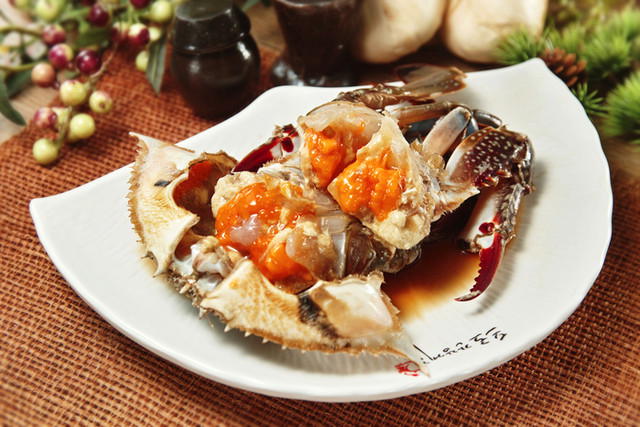
Within Tokyo’s dense dining scene, Pro Ganjang Gejang Akasaka ten signals a Korean meal with a more specific identity than a generic night out. Its public listing places it in the Korean category, and the restaurant is best understood through that focused positioning rather than as a catch-all dining room. In Tokyo, where Korean restaurants can range widely in format and mood, a clearly identified specialist address occupies a narrower lane: planned, category-led, and useful for diners who want a more defined reason to book.
Soy-marinated crab as the measure of a Korean table in Tokyo
Ganjang gejang is a distinctive Korean preparation, and the restaurant’s name makes that reference central to how many diners will read it. Rather than treating the venue as simply another Korean option in Tokyo, it is more useful to approach it as a restaurant with a clearly signposted specialty identity.
Pro Ganjang Gejang Akasaka ten is clearest when read through its category and recognition. The listing category is Korean, and the name itself points diners toward ganjang gejang as the organising reference. That places it in a more specific Korean bracket rather than the broader field of Tokyo restaurants that are chosen mainly for heat, grills, drinks, or all-purpose group dining.
The 2024 Tabelog Hyakumeiten selection matters in a crowded, uneven category. Tokyo is strong on Korean food, but recognition in a Tabelog genre list signals more than casual popularity. Its Tabelog score of 3.58 adds context: not a Michelin-style luxury number, but a credible marker in a city where genre specialists are judged by repeat users as much as by ceremony.
Tokyo explains the format. Restaurants here often need to handle family meals, business dinners, and planned group dining without becoming anonymous banquet rooms. Pro Ganjang Gejang Akasaka ten suits diners looking for a focused Korean meal rather than a counter-theatre performance. Compared with Cheonggyehwa Honkan, it occupies a different planning lane; compared with Akasaka Misuji, it gives diners another Korean option with a distinct reason to choose it.
Reputation here is built on category focus, not tasting-menu choreography
Tokyo’s premium restaurant culture often rewards precision formats: omakase sushi, tempura counters, kappo rooms, and tasting-menu French. Korean dining is judged differently. Range, comfort, group usability, and one or two anchor ideas can matter more than course architecture. The restaurant’s category focus is therefore a serious editorial signal: a reason to exist beyond “Korean in Tokyo,” and a clear decision point for diners who want a more defined meal.
The restaurant should not be read as a micro-counter where scarcity creates prestige; it is better understood as a specialist Korean address with a clear centre of gravity. For diners choosing among Tokyo Korean restaurants, that focus is useful. The question is not whether it offers every familiar comfort, but whether the meal fits the kind of Korean dining experience the group wants that night.
The award should be read precisely. Tabelog’s Hyakumeiten lists are useful because they sort by genre and city rather than a single fine-dining hierarchy. For a Korean restaurant, that matters more than comparison with sushi counters or French rooms elsewhere in Tokyo. The better frame is Tokyo’s Korean and Asian specialist field, where a clear identity gives it a more legible reason to be chosen over broader menus.
That focus also simplifies planning. The central idea is to treat Pro Ganjang Gejang Akasaka ten as a Korean specialist rather than as an all-purpose stop. In a city where diners can easily overbuild an evening around too many dishes, drinks, and side plans, this kind of meal benefits from deciding what the restaurant is for, then matching the booking to appetite, group size, and budget.
How to place it within a wider Tokyo dining itinerary
For visitors mapping Tokyo by food style, this restaurant offers a useful counterpoint to the city’s more familiar dining scripts. It is less about spectacle than specificity, and less about luxury signalling than choosing a defined Korean category. That makes it practical: a serious planned meal without needing to frame the evening as formal fine dining.
Budget is part of the planning. Tabelog lists dinner at JPY 8,000 - JPY 9,999 and lunch at JPY 4,000 - JPY 4,999, placing the restaurant above casual Korean comfort dining while still below many of Tokyo’s formal fine-dining rooms. For groups, the key decision is whether everyone wants the same Korean-led centrepiece; in Tokyo, room fit and menu focus can shape the meal as much as the dish itself.
Readers building a broader Tokyo shortlist can contrast this Korean meal with other genre-specific dining in the city: seafood specialists, charcoal-grill rooms, yakitori counters, cafés, and curry shops all represent different ways Tokyo turns a narrow idea into a destination. The useful comparison is not prestige for its own sake, but whether a restaurant gives a clear reason to choose it on a particular night.
For citywide planning, Tokyo restaurant guides can place Pro Ganjang Gejang Akasaka ten alongside other Tokyo tables, while hotels, bars, and experiences frame the rest of the trip. Beyond Tokyo, the same specialist lens applies generically: the strongest dining itineraries often come from choosing one clear format at a time rather than stacking unrelated names for variety alone.
The editorial case is narrow, and that is the point. Pro Ganjang Gejang Akasaka ten is most convincing for diners who want a Korean restaurant with a defined centre of gravity, backed by a 2024 Tabelog Hyakumeiten selection, rather than a general night out chosen only for convenience. In Tokyo, that specificity is its advantage.
Just the Basics
Comparable venues by price and recognition.
| Venue | Cuisine | Price | Awards | Notes |
|---|---|---|---|---|
| Pro Ganjang Gejang Akasaka tenThis venue (the venue you are viewing) | Traditional Korean Ganjang Gejang Specialist | $50–100 | Tabelog 100 #76 | Not listed |
| Oboro | Japanese Izakaya | $20–30 | Not listed | Not listed |
| Cheonggyehwa Honkan | Traditional Korean Yakiniku & Cold Noodles | $30–50 | Tabelog 100 #84 | JPY 4,000 - JPY 4,999 JPY 1,000 - JPY 1,999 |
| Akasaka Misuji | Modern Yakiniku (Japanese BBQ) by Yoroniku | $50–100 | Tabelog 100 #15 | JPY 8,000 - JPY 9,999 |
| Akanezaka Onuma | Traditional Seasonal Kaiseki | $200–300 | Michelin Plate · Tabelog Bronze #339 | Japanese |
Recognition history
Dated appearances from independent guides and award organizations, with the underlying list record or original source where available.
Tabelog 100 #76 · No. 76
Tabelog · Tabelog 100 - Asian cuisine / Ethnic cuisine - TOKYO - 2024
Continue exploring
More in Tokyo
Restaurants in Tokyo
All restaurants in Tokyo →


Bars in Tokyo
All bars in Tokyo →




Details
- Group Dining
- After Work
- Casual Hangout
- Standalone
- A La Carte
Current opening hours
- Monday
- 11:30 AM–10:30 PM
- Tuesday
- 11:30 AM–10:30 PM
- Wednesday
- 11:30 AM–10:30 PM
- Thursday
- 11:30 AM–10:30 PM
- Friday
- 11:30 AM–10:30 PM
- Saturday
- 11:30 AM–10:30 PM
- Sunday
- 11:30 AM–10:30 PM
Hours can change for holidays and private events. Hours as of .