Siena Restaurant

Wine Spectator Award of Excellence
Our verdict
Siena Restaurant occupies a notable address on North Capital of Texas Highway, positioning itself within Austin's maturing fine-dining tier rather than its celebrated barbecue circuit. For a city increasingly measured against coastal peers, Siena represents the quieter, European-inflected current running beneath Austin's louder culinary reputation. Reservations and planning intelligence are covered below.

Pearl is the En Primeur Club membership app — saves, bookings, and concierge access live there. Same editors, same standards.
- Address
- 6203 N Capital of Texas Hwy, Austin, TX 78731
- Phone
- (512) 349-7667
- Hours
- Mon–Thu 4:30–8:30 PMFri–Sat 4:30–9 PMSun Closed
- Website
- sienaaustin.com
- Directions
- Get directions
- Booking
- Book on OpenTable
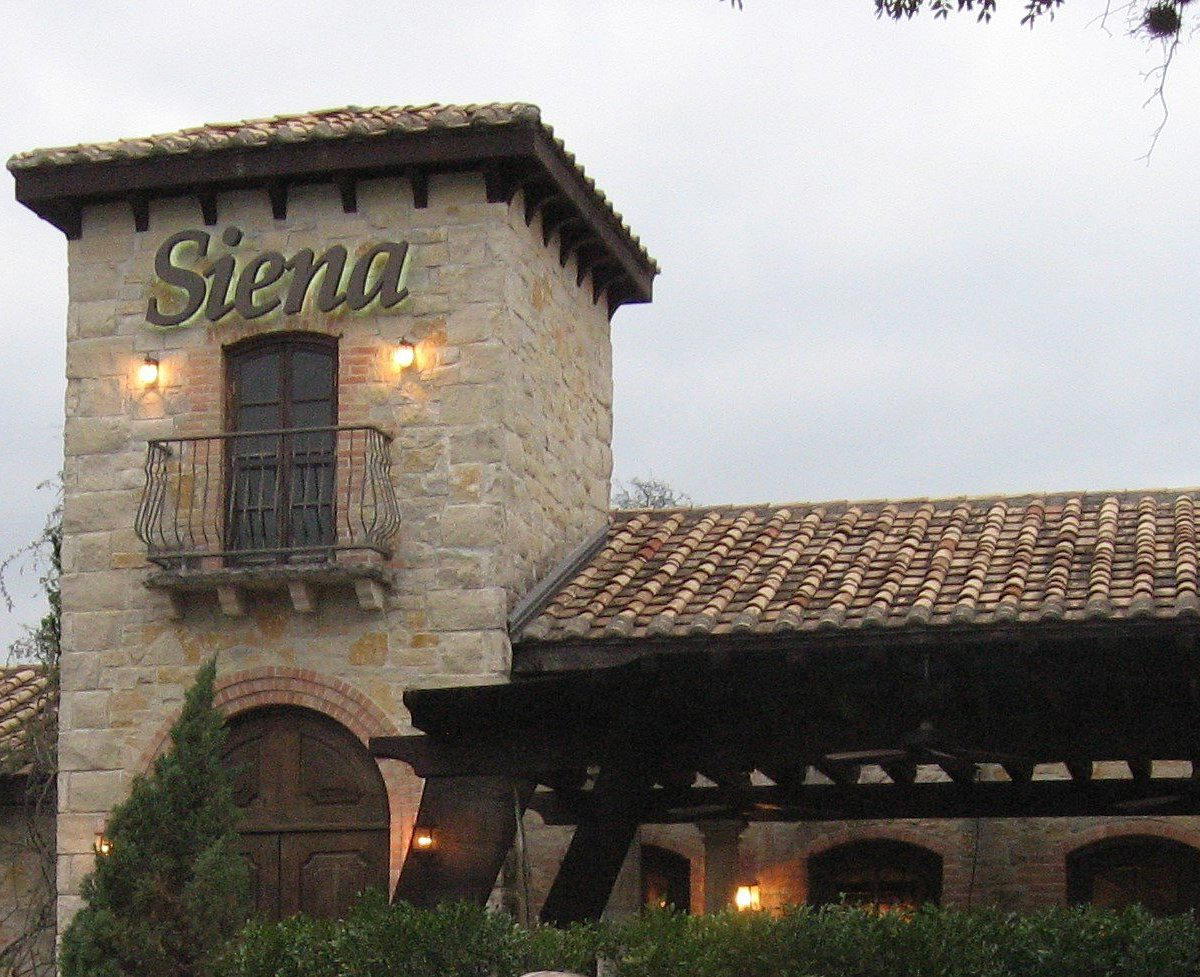
The menu
What to order
- Bistecca alla Fiorentina
- Pecan Crusted Trout
- Wild Boar Ragu
- Calamari Siciliano
The Northwest Austin Fine-Dining Register
Austin's dining conversation tends to default to a handful of familiar registers: the smoked-meat tradition anchored by spots like la Barbecue and InterStellar BBQ, the ingredient-forward New American format represented by Barley Swine, and the live-fire ambition of Hestia. What receives comparatively less attention is the city's European-inflected tier, the restaurants drawing from Italian and broadly Mediterranean traditions and operating at a remove from Austin's more aggressively Texan culinary identity. Siena Restaurant, positioned along North Capital of Texas Highway in the 78731 zip code, belongs to that quieter current.
The address itself signals something about the venue's intended audience. North Capital of Texas Highway is not a dining destination strip in the way South Congress or East Sixth Street function; it is a corridor serving established northwest Austin neighborhoods, where the dining economy rewards consistency and repeat custom over novelty tourism. Restaurants that survive in that context tend to do so because residents return, not because out-of-town visitors discover them. That dynamic shapes the character of the room and the priorities of the floor team in ways that distinguish these venues from the downtown prestige circuit.
Where Siena Sits in the Austin Competitive Set
Framing Siena against Austin's broader fine-dining picture requires some precision about what that picture looks like. The city has developed a recognizable upper tier, with venues drawing comparisons to nationally reviewed operations at Lazy Bear in San Francisco, Alinea in Chicago, or Blue Hill at Stone Barns in Tarrytown. Siena operates below that trophy tier, in a mid-to-upper bracket where the value proposition is reliable execution rather than conceptual ambition. That is not a criticism; it describes a segment of the market that cities genuinely need and that travellers often undervalue when assembling an itinerary around headline venues.
The comparison set is instructive. Against Craft Omakase, which operates on a counter format with fixed sequencing, Siena offers a different contract with the diner: more choice, more flexibility, a room designed for conversation rather than concentration. Against Olamaie, which prices in the $$$ bracket and draws from Southern American traditions, Siena's Italian register offers a distinct alternative for visitors working through the city's fine-dining options across multiple nights.
The Collaborative Floor: How Service Architecture Defines the Experience
In European-style dining rooms of Siena's type, the relationship between the kitchen and the floor team tends to be more visible than in concept-driven tasting-menu operations. At venues like Le Bernardin in New York City, Providence in Los Angeles, or The French Laundry in Napa, the sommelier and captain function as co-authors of the experience, not as support staff for the kitchen's vision. The leading Italian-leaning rooms in American cities tend to operate with a similar logic: the wine list and the floor knowledge around it carry as much weight as the menu itself in determining whether a table feels fully realized.
That team dynamic matters particularly for a restaurant like Siena, where the cuisine type (Italian or broadly Mediterranean) involves a wine culture with genuine depth and regional specificity. Italian wine literacy on a floor team is not a given even in well-resourced rooms; when it exists, it changes the quality of the recommendation conversation significantly. The difference between a sommelier who can explain why a specific Barolo producer suits a particular protein preparation and one who is reading from a script is the difference between a dinner that teaches you something and one that simply feeds you adequately. Venues at Siena's address and apparent market position succeed or fail largely on that axis.
The same logic applies to front-of-house coordination more broadly. Restaurants operating in residential-corridor locations, serving a repeat-customer base, develop institutional memory about regular guests that shapes the floor experience in ways that high-turnover tourist operations cannot replicate. The staff at venues of this type tend to know which tables a regular prefers, which wines they have already worked through on the list, and which preparations need no explanation. That familiarity is a form of service intelligence that does not show up in awards citations but registers clearly in the experience of sitting down.
The Italian-American Fine-Dining Tradition in Context
Italian restaurants in American cities occupy an unusually wide spectrum. At the leading end, venues like 8 1/2 Otto e Mezzo Bombana in Hong Kong demonstrate what Italian cuisine looks like when treated with the same formal apparatus as French fine dining. At the other end, the category shades into neighborhood trattoria territory where the value is comfort and familiarity rather than execution precision. Siena sits somewhere in the middle register of that spectrum, which is where most diners actually spend their time and money.
That middle register is worth defending editorially. The city's dining scene benefits from the presence of restaurants that prioritize consistency over novelty and that serve communities rather than moments. Single Thread Farm in Healdsburg, Addison in San Diego, and The Inn at Little Washington in Washington represent the apex of American fine dining ambition; Siena represents something more durable and arguably more necessary: a room that functions as a reliable anchor for the northwest Austin dining community across years rather than seasons.
For a fuller picture of where Siena fits within Austin's restaurant range, the EP Club Austin restaurants guide maps the city's dining tiers from barbecue to tasting-menu operations, with peer comparisons across price and format. Comparisons to Emeril's in New Orleans and Atomix in New York City illustrate how the Italian-American and New American fine-dining traditions diverge at the level of service philosophy and menu architecture.
Know Before You Go
- Address: 6203 N Capital of Texas Hwy, Austin, TX 78731
- Hours: Confirm current service times before visiting
- Parking: North Capital of Texas Highway corridor typically offers surface lot parking adjacent to restaurant addresses
Frequently asked questions
Where exactly is Siena Restaurant?
Siena Restaurant is located at 6203 N Capital of Texas Hwy, Austin, TX 78731, Austin.
Is Siena Restaurant a good option for Italian fine dining outside downtown Austin?
Siena Restaurant at 6203 N Capital of Texas Hwy occupies a segment of northwest Austin where European-style dining rooms are sparse, making it one of the few Italian fine-dining options in that corridor. Diners based in the 78731 zip code or traveling from the Domain and Arboretum areas have fewer comparable alternatives nearby. That geographic positioning gives Siena a practical draw that centrally located restaurants in Austin's denser dining districts do not have.
What dish is Siena Restaurant famous for?
The restaurant's Italian-inflected positioning in northwest Austin places it within a tradition where house-made pasta and regional Italian preparations tend to anchor menus at this category level. For the most current menu details, contacting the restaurant directly before visiting is the most reliable approach.
How far ahead should I plan for Siena Restaurant?
Siena Restaurant sits at 6203 N Capital of Texas Hwy in a residential northwest Austin corridor where fine-dining options are limited relative to the city center, which typically compresses local reservation availability. For weekend tables and special occasions, booking one to three weeks in advance is a reasonable baseline for restaurants at this tier without a nationally publicized award profile. Weekday reservations tend to have more flexibility.
What's the defining dish or idea at Siena Restaurant?
That positioning tends to reward preparations rooted in regional Italian technique applied to American sourcing, a format that defines the upper end of the Italian-American dining register in mid-sized U.S. cities.
At a Glance
Comparable venues nearby, for context on price, style, and recognition.
| Venue | Cuisine | Price | Awards | Notes |
|---|---|---|---|---|
| Siena RestaurantThis venue — the venue you are viewing | Authentic Tuscan Italian | $30–50 | Wine Spectator Award of Excellence | Not listed |
| Prélude | Modern Canapé Lounge | Not listed | Not listed | Market District, Modern Canapé Lounge |
| Mattie's | Seasonal American with Southern Influences | $50–100 | Not listed | Bouldin Creek, Seasonal American with Southern Influences |
| Gino's East of Chicago | Chicago Deep-Dish Pizza | Not listed | Not listed | Downtown Austin, Chicago Deep-Dish Pizza |
| La Wagyeria - Austin | American Wagyu Steakhouse | $50–100 | Not listed | East Congress, American Wagyu Steakhouse |
Recognition history
Dated appearances from independent guides and award organizations, with the underlying list record or original source where available.
Wine Spectator Award of Excellence
Wine Spectator