
Tabelog 100 #66
Our verdict
Sichuan Hashoku puts Sichuan cooking into a compact Asakusa dining room with an 18-seat format, fish-focused kitchen signals, and a wine-aware service setup. Its 2026 Tabelog 100 selection for Chinese cuisine in Tokyo places it in a serious competitive bracket, while the stated lunch and dinner bands keep the value conversation sharper than many small-format Tokyo Chinese counters.

Pearl is the En Primeur Club membership app, where members save venues, book tables and use the concierge.
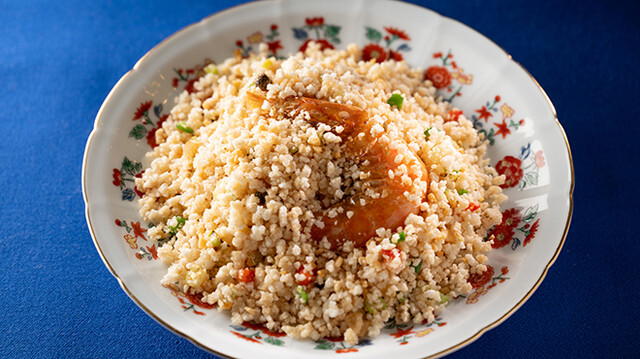
Tokyo changes tone quickly from one dining pocket to the next: busy commercial polish gives way to quieter streets, smaller restaurants, and a slower local rhythm. In that setting, Sichuan cooking can read differently. The genre is often flattened abroad into chilli heat, but Tokyo’s stronger Chinese restaurants increasingly treat Sichuan as a technical cuisine of oil, aroma, fermentation, texture, and pacing.
Sichuan Hashoku belongs to that more disciplined end of the category. The restaurant is listed as Sichuan, a label that says more in contemporary Tokyo Chinese dining than any generic description could. This is not the big-room banquet model, and it is not a casual mapo-to-noodle stop. It sits in the more focused bracket where the meal is judged on control, sequence, and whether the kitchen can make intensity feel deliberate rather than blunt.
Tokyo gives Sichuan cooking a quieter frame
Tokyo’s Chinese dining scene is split across several identities: old-school banquet rooms, hotel dining rooms, neighborhood noodle shops, and compact independent restaurants that borrow some of the seriousness of kappo and counter dining. Sichuan has benefited from that last category because the cuisine rewards precision. Chilli oil, doubanjiang, dried aromatics, vinegar, stock, and texture have to move in proportion; otherwise the cooking becomes noise.
The Tokyo location matters because it places the restaurant within one of the world’s most competitive restaurant cities while keeping the focus on a specific category rather than a broad luxury script. For travelers, that changes the equation. Dinner here can be planned as a destination meal rather than folded into a general shopping or nightlife itinerary. It also positions the restaurant against a different kind of Tokyo value: not cheaper dining, but a more focused spend. At this level, the question is not whether Sichuan Hashoku costs less than the city’s prestige restaurants. It is whether the format gives enough culinary specificity for the spend.
The 2026 Tabelog Hyakumeiten recognition answers part of that question. Tabelog’s Hyakumeiten lists are not Michelin stars, but in Japan they are useful signals for category depth, especially in cuisines where local diners compare small differences closely. A 3.93 Tabelog score adds another data point: this is not just a restaurant with a fashionable concept, but one that has earned measurable recognition inside a crowded Tokyo field.
The value is in format control, not luxury theatre
The appeal is more about focus than spectacle. More concentrated restaurants can keep seasoning, pacing, and service close to the kitchen’s intent, while larger Chinese dining rooms often trade that intimacy for breadth and private-room flexibility. Here, the value proposition is about concentration: a clear Sichuan identity, award-list validation, and a dining experience that rewards attention rather than excess.
That combination is meaningful in Tokyo because serious Chinese dining often competes with omakase, tempura, kappo, and French tasting menus for the same discretionary meal. Sichuan Hashoku’s listed dinner budget is JPY 10,000 - JPY 14,999, while lunch is listed at JPY 5,000 - JPY 5,999. The practical implication is clear: diners are paying for a specialized Sichuan meal with category recognition, not for ceremony, celebrity, or a hotel setting.
Planning still matters more here than it would at a casual diner. Restaurants in this bracket often benefit from a little advance intent, and Sichuan cuisine makes that focus more valuable than a broad, always-available menu. Treat the meal as a considered choice rather than a spontaneous fallback, especially if it is one of the anchor dinners of a Tokyo trip.
There is also a useful comparison inside Tokyo’s price spectrum. Chinya operates in a similar dinner band but belongs to a different tradition, while nacol sits higher at dinner and lunch. Casual outliers such as Konohana or grill GRAND occupy other dining categories entirely. Sichuan Hashoku’s case is narrower: it is for diners choosing Sichuan cuisine as the main event, not as a convenient neighborhood fallback.
How to place it in a Tokyo eating plan
For a Tokyo trip built around restaurants, this is a dedicated Sichuan stop rather than a cross-town afterthought. The cuisine’s layered seasoning is better treated as the center of the meal than squeezed between other commitments. The restaurant’s recognized standing and focused category make it easy to justify in a serious dining itinerary, but the same focus means it should be planned with intent.
Readers mapping a wider Tokyo itinerary can compare the city’s range through Our full Tokyo restaurants guide, then branch into other Tokyo dining rooms and contrasting categories across the city. For the rest of the trip, the city files extend beyond restaurants: Our full Tokyo hotels guide, Our full Tokyo bars guide, Our full Tokyo wineries guide, and Our full Tokyo experiences guide.
For travelers extending the same editorial lens across Japan and beyond, the contrasts are useful in a broader sense: other dining rooms can show how different cities handle casual formats, specialist counters, bars, and category-led restaurants. Sichuan Hashoku should be read within that wider map as a Tokyo restaurant with a clear identity rather than as a generic Chinese meal.
The editorial call is simple: choose Sichuan Hashoku when the brief is focused Sichuan cooking in Tokyo with award-list support and a composed dining frame. It is not the answer for a flexible, walk-in Chinese meal or a large private-room banquet. It is the stronger choice when value is measured by culinary concentration, category credibility, and a price structure that leaves room in the itinerary for another serious Tokyo meal.
Side-by-Side Snapshot
Comparable venues for cuisine and category context.
| Venue | Cuisine | Price | Awards | Notes |
|---|---|---|---|---|
| Sichuan HashokuThis venue (the venue you are viewing) | Traditional Sichuan Chinese | Not listed | Tabelog 100 #66 | Not listed |
| Nanxiang Steamed Bun Restaurant (南翔饅頭店) | Shanghai Xiaolongbao | $20–30 | Not listed | Roppongi |
| Fushue | Chinese restaurant | Not listed | Tabelog 100 #55 | Chūō |
| Chinkai Rou | Traditional Chinese dumpling house & izakaya | $20–30 | Tabelog 100 #15 | Shinagawa |
| chuukaryouri tokutake | Modern Chinese & Ramen | $30–50 | Tabelog 100 #33 | Sumida |
| Akasaka Minmin | Traditional Chinese Gyoza & Dumpling House | $20–30 | Tabelog 100 #25 | Minato |
Recognition history
Dated appearances from independent guides and award organizations, with the underlying list record or original source where available.
Tabelog 100 #66 · No. 66
Tabelog · Tabelog 100 - Chinese cuisine - TOKYO - 2026
Continue exploring
More in Tokyo
Restaurants in Tokyo
All restaurants in Tokyo →










Details
- Classic
- Sophisticated
- Date Night
- Business Dinner
- Solo
- Special Occasion
- Standalone
- A La Carte
A small, refined neighborhood restaurant with an intimate feel; sources emphasize authentic, traditional Sichuan dining rather than a loud or casual atmosphere.