
A Michelin Plate-recognised Chinese restaurant in central Nara, SHUN-GYO holds consecutive Michelin distinctions from 2024 and 2025, placing it among a small tier of Chinese dining addresses the guide acknowledges in the Kansai region. At the ¥¥¥ price point, it competes with Nara's broader fine-dining set rather than casual Chinese options, drawing visitors who treat the city as more than a day-trip detour from Kyoto or Osaka.
Pearl is the En Primeur Club membership app — saves, bookings, and concierge access live there. Same editors, same standards.
- Address
- 1 Chome-4-12 Omiyacho, Nara, 630-8115, Japan
- Phone
- +81 742-36-1011
- Website
- shungyo.jp
- Directions
- Get directions
 Saves & bookings on Pearl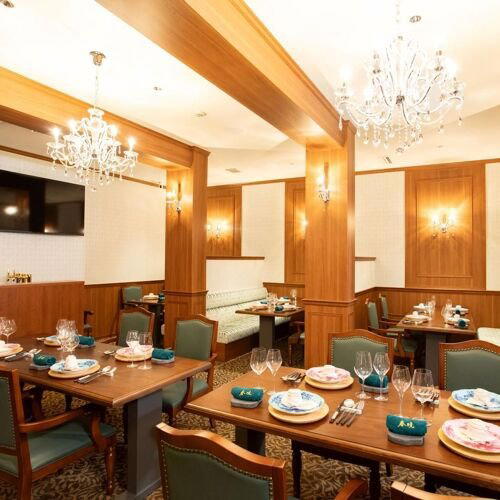
Chinese Fine Dining in a City Better Known for Deer and Temples
Nara's dining identity is built, almost entirely, around Japanese tradition: kaiseki houses, soba counters, and tofu-centred menus that reference the city's Buddhist history. Against that backdrop, a Chinese restaurant holding consecutive Michelin Plate recognition in 2024 and 2025 is a genuine anomaly worth examining. SHUN-GYO, at 1 Chome-4-12 Omiyacho in central Nara, occupies a category that the Michelin Guide rarely highlights in smaller Japanese cities, where Chinese restaurants tend to be either budget neighbourhood fixtures or overlooked entirely by the guide's inspectors. The fact that SHUN-GYO appears twice in succession signals consistent kitchen output rather than a one-year anomaly.
The Omiyacho address places the restaurant within walking distance of Nara's main temple and shrine corridor, a neighbourhood that sees substantial foot traffic from day-trippers but which also supports a quieter local dining circuit in the evenings. In that context, a ¥¥¥ Chinese restaurant is positioned not as a tourist convenience but as a destination for residents and overnight visitors with more deliberate dining plans.
What Two Michelin Plates Actually Signal
Michelin Plate recognition marks restaurants that Michelin inspectors consider worth the visit, a category the guide introduced in 2017 to distinguish quality addresses that fall short of a star. It marks restaurants that Michelin's inspectors believe serve food that is carefully prepared and worth the visit, a recognition the guide introduced in 2017 to distinguish quality addresses that fall short of a star but sit well above the guide's threshold for inclusion. In Japan, where Michelin coverage is exhaustive and the competition density within any city is high, a Plate for a Chinese restaurant in Nara carries more weight than the same designation might in a larger, more internationally varied food city.
For comparative reference: the Kansai region's Chinese fine dining scene is anchored by a handful of addresses in Osaka and Kyoto, where higher population density and more international visitor flow have supported the category for longer. Nara's Chinese restaurant scene is a fraction of that scale, which makes SHUN-GYO's consecutive recognition a marker of relative distinction within its immediate context. Visitors arriving from Osaka, where addresses like HAJIME operate at the starred end of the spectrum, or from Kyoto, where Gion Sasaki anchors the kaiseki tradition, will find the restaurant positioned a tier below those starred rooms but meaningfully above the mid-market bracket.
Placing SHUN-GYO in Nara's Fine-Dining Tier
At ¥¥¥, the restaurant prices at the same level as Nara's other recognised fine-dining addresses. akordu, the Spanish innovative restaurant also in the city, operates at ¥¥¥ and competes for the same evening-out decision. NARA NIKON and Oryori Hanagaki represent the Japanese fine-dining end of the same price tier. What separates the restaurant is the cuisine category: it is the only Michelin-acknowledged Chinese address in a city where Japanese formats dominate the recognised dining list. For a traveller building a multi-day Nara itinerary who wants to eat across different traditions without leaving the city, that distinction matters.
In a restaurant of this type, where the diner base skews toward deliberate visitors rather than casual walk-ins, review volumes tend to be lower than they would be for a high-footfall casual venue.
Elsewhere in Japan, Chinese fine dining has found recognition in cities with more established international dining scenes. Harutaka in Tokyo operates in a city where Chinese restaurants have long competed in the same tier as leading Japanese formats. Further afield, Goh in Fukuoka and 1000 in Yokohama reflect how regional Japanese cities have developed their own fine-dining layers outside the Tokyo-Osaka axis. The restaurant sits in a similar position relative to Nara's much smaller scale.
Chinese Dining in Japan: A Category with Its Own Logic
Chinese cuisine in Japan has evolved along a distinct track from the versions found in Chinese diaspora communities elsewhere. Japanese-Chinese cooking, broadly called chuka ryori, has absorbed local ingredient preferences, presentation standards, and service sensibilities over decades. At the Michelin-acknowledged tier, the category tends to emphasise technique, sourcing, and format discipline rather than the volume-driven approach of casual Chinese restaurants. Internationally, the same tension between Chinese cooking as fine-dining subject and Chinese cooking as casual format has been addressed in restaurants like Restaurant Tim Raue in Berlin and Mister Jiu's in San Francisco, both of which use Chinese culinary frameworks within a fine-dining structure.
Within Nara specifically, two other Chinese addresses occupy adjacent positions in the city's dining map: Chugokusai Naramachi Kuko and Shunsai Chuka Bar Mitsukan. These three addresses form the recognisable layer of Chinese dining in the city, each occupying a different format and price position. The restaurant's Michelin acknowledgment separates it from the others in terms of critical standing.
Planning a Visit: What to Know
The restaurant is located at 1 Chome-4-12 Omiyacho, Nara, 630-8115, within the central city and accessible from both Kintetsu Nara Station and JR Nara Station on foot. For visitors using Nara as a base rather than a day trip, the restaurant's ¥¥¥ pricing positions it as an evening destination rather than a lunchtime stop. Advance booking is essential.
For those extending the trip across the Kansai region, 6 in Okinawa represents a further point on the Japanese regional fine-dining map worth tracking.
A Tight Comparison
Comparable venues nearby, for context on price, style, and recognition.
| Venue | Cuisine | Price | Notes |
|---|---|---|---|
| SHUN-GYOThis venue — the venue you are viewing | Nara, Nara-Chinese Fusion Fine Dining | $$$ | Not listed |
| BANCHETTI | Nara, Italian with Japanese Fusion | $$$ | Not listed |
| Kawanami | Nara, Farm-to-Table Kaiseki | $$$ | Not listed |
| Camino | Nara, Japanese-Italian Fusion | $$$ | Not listed |
| Kappo Risuke | Kashihara, Traditional Japanese Kaiseki | $$$$ | Not listed |
| RISTORANTE Borgo KONISHI | Not listed | $$$ | Nara, Yamato Italian - Italian-Nara Fusion |
Recognition history
Dated appearances from independent guides and award organizations, with the underlying list record or original source where available.
Michelin Plate
Michelin
Michelin Plate
Michelin
Michelin Plate
Michelin
Continue exploring
More in Nara




Bars in Nara
Browse all →


Hotels in Nara
Browse all →




Wineries in Nara
Browse all →
At a Glance
- Elegant
- Sophisticated
- Cozy
- Intimate
- Business Dinner
- Special Occasion
- Celebration
- Private Dining
- Sake Program
- Local Sourcing
Current opening hours
- Monday
- 11:30 AM–2:30 PM, 5:30–9:30 PM
- Tuesday
- Closed
- Wednesday
- 11:30 AM–2:30 PM, 5:30–9:30 PM
- Thursday
- 11:30 AM–2:30 PM, 5:30–9:30 PM
- Friday
- 11:30 AM–2:30 PM, 5:30–9:30 PM
- Saturday
- 11:30 AM–2:30 PM, 5:30–9:30 PM
- Sunday
- 11:30 AM–2:30 PM, 5:30–9:30 PM
Hours can change for holidays and private events. Last verified .
Tranquil, relaxing, stylish space with historic ambience and private rooms.