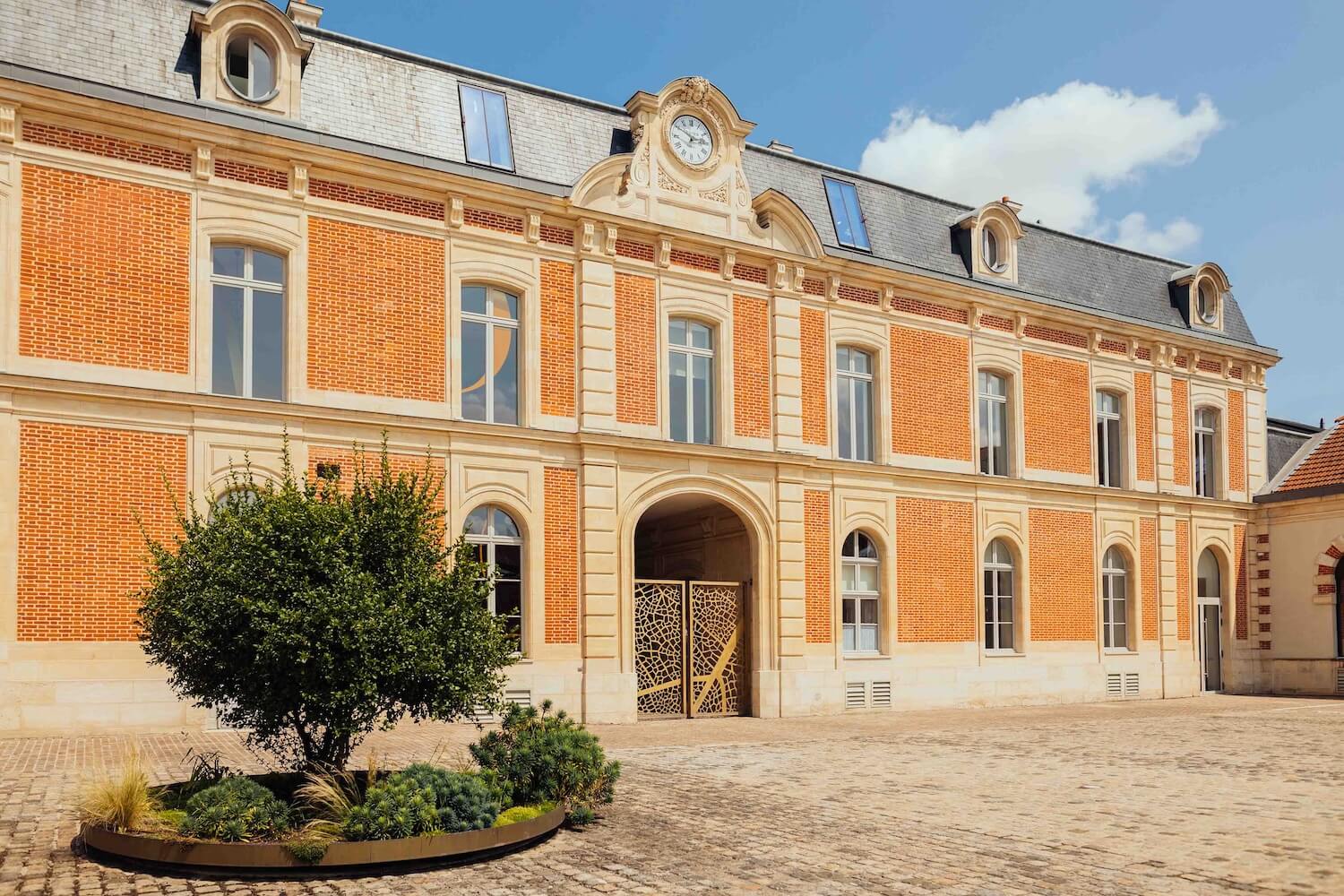
On the Boulevard Saint-Germain, SHIRO occupies one of Paris's most closely watched dining addresses, bringing a distinct sensibility to a stretch of the 6th arrondissement where competition is measured in Michelin stars and decades of critical attention. With sustainability framing its approach to sourcing and waste, SHIRO positions itself at an intersection that fewer Paris restaurants have occupied as explicitly as the conversation now demands.
Pearl is the En Primeur Club membership app — saves, bookings, and concierge access live there. Same editors, same standards.
- Address
- 168 Bd Saint-Germain, 75006 Paris, France
- Phone
- +33171252693
- Website
- restaurantshiro.fr
- Directions
- Get directions
 Saves & bookings on Pearl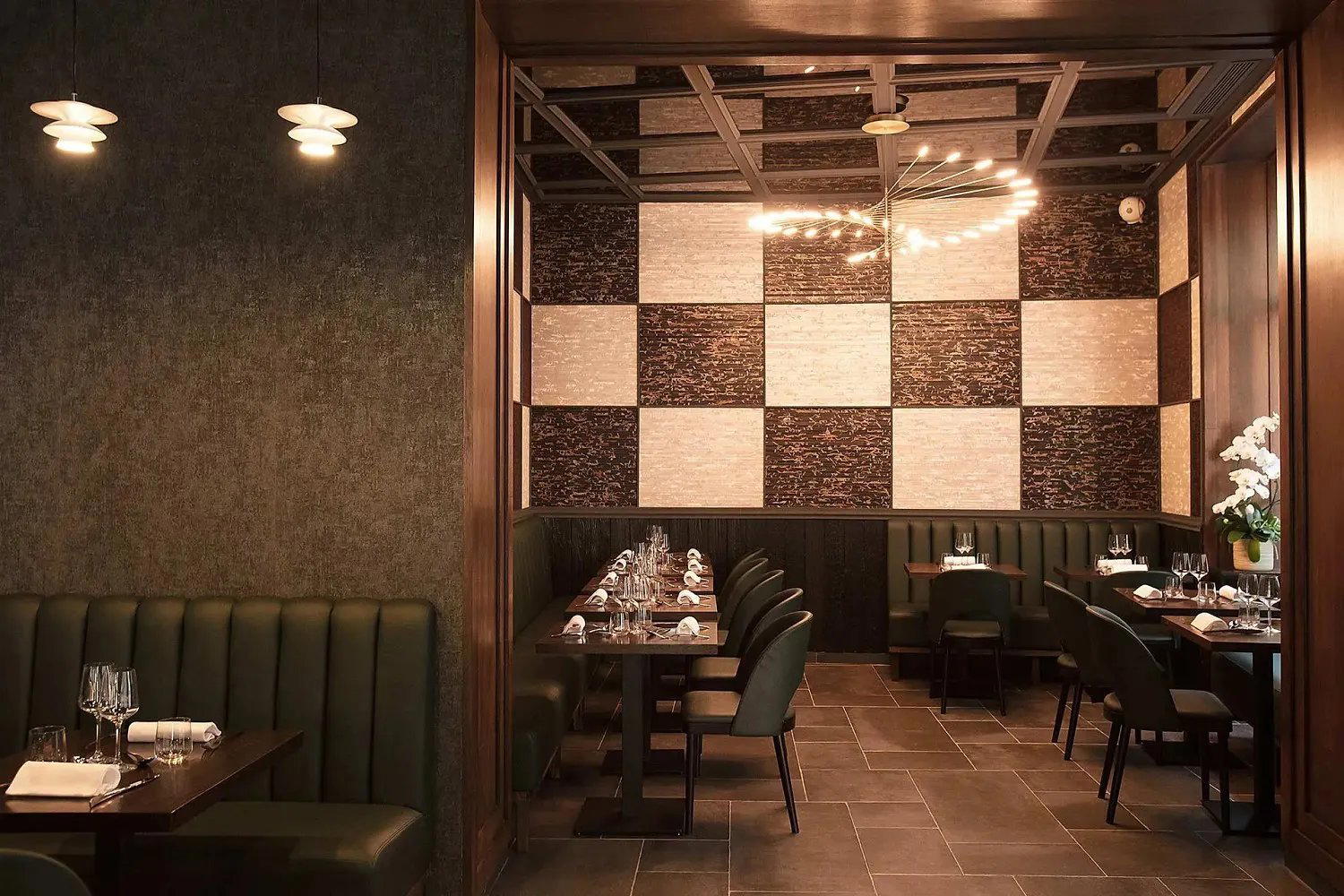
Boulevard Saint-Germain and the Question of Ethical Ambition
The 6th arrondissement has long operated as a proving ground for restaurants that want critical credibility alongside neighbourhood permanence. Boulevard Saint-Germain, at number 168, is not a quiet side street where a concept can develop without scrutiny. It is one of the most observed dining corridors in Paris, where the proximity of serious competition — from three-star institutions to boundary-pushing contemporary kitchens — sets an implicit standard before a single cover is turned. Into this context, SHIRO arrives with a proposition that the Paris fine dining circuit has been circling without fully resolving: how does sustainability function not as marketing positioning but as structural kitchen discipline?
That question matters more than it might appear. Across the French fine dining tier, from Arpège, where Alain Passard has spent three decades making vegetables the centre of the argument, to Bras in Laguiole, where foraging and terroir have defined the kitchen's identity since the 1990s, ethical sourcing has moved from niche signal to expected credential. The difference between a restaurant that mentions sustainability and one that builds its operating logic around it is measurable in procurement decisions, menu flexibility, and the willingness to let ingredient availability determine the offer rather than the other way around.
The Saint-Germain Setting and What It Implies
Positioning a restaurant at this address in the 6th places it within a competitive set that includes some of the most decorated kitchens in the capital. L'Ambroisie on Place des Vosges, Alléno Paris au Pavillon Ledoyen near the Champs-Élysées, and Le Cinq at the Four Seasons George V all operate at the €€€€ tier where the assumption is technical mastery as a baseline, not a differentiator. What separates restaurants within that tier increasingly comes down to narrative coherence: what does the kitchen believe, and does the plate make that argument convincingly?
For a restaurant whose address signals ambition at this level, the sustainability angle is not softening or approachable positioning. It is a harder editorial challenge. Waste reduction in a kitchen operating at this price point means discipline around whole-animal use, nose-to-tail vegetable processing, and relationships with suppliers built over seasons rather than invoices. Those commitments produce constraints that cheaper, more casual formats never face, and navigating them at fine dining standards is where the genuine difficulty lies.
Sustainability as Kitchen Architecture, Not Afterthought
France's most credible sustainability-forward restaurants have made the argument through structure, not through prose on a menu card. Mirazur in Menton, which reached the best of the World's 50 Best list in 2019, built its sourcing around its own biodynamic garden and a lunar calendar for harvest decisions, the kind of operational specificity that moves sustainability from concept to practice. Troisgros in Ouches has maintained multigenerational supplier relationships that effectively mean the kitchen's sourcing network pre-dates most of its current competition. Flocons de Sel in Megève applies Alpine hyper-locality as a sourcing principle that limits its pantry by geography rather than trend.
What these examples share is that sustainability shapes the constraints the kitchen accepts, not just the language it uses. For SHIRO on Boulevard Saint-Germain, the relevant question for any serious diner is the same one worth asking of any restaurant that frames itself through environmental consciousness: where does that principle show up in the actual decision-making, and how does it alter what arrives at the table?
Within Paris specifically, the comparison point offered by Kei, a Michelin-starred kitchen that applies a cross-cultural sensibility to French technique, illustrates a different version of the same challenge. Kitchens that operate at the intersection of multiple traditions face sourcing questions that monocultural French kitchens avoid. The broader French fine dining circuit, from Auberge de l'Ill in Illhaeusern to Auberge du Vieux Puits in Fontjoncouse, has demonstrated that the most durable kitchens are those with a coherent relationship to place and season that extends beyond any single chef's tenure.
Reading the Address Against the Category
Paris's fine dining circuit has been in an extended conversation about what comes after the classical French kitchen. Restaurants like AM par Alexandre Mazzia in Marseille and Assiette Champenoise in Reims have staked out positions in that conversation from outside Paris, which has the counterintuitive effect of making the capital's own additions more scrutinised, not less. Any restaurant opening or operating on Boulevard Saint-Germain at serious price points is read against that backdrop.
The sustainability frame also intersects with questions of cuisine identity that Paris kitchens at this address cannot sidestep. French fine dining has been absorbing external influences at an accelerating pace, from the Japanese-French synthesis explored by chefs like those behind Kei, to the Atlantic-French bridge represented by Le Bernardin in New York, to the Korean-American fine dining argument made by Atomix. That cross-pollination has changed what Paris diners expect when a restaurant enters the serious tier, regardless of its specific cuisine identity.
For the broader context of where SHIRO sits relative to comparable Paris addresses and the wider French fine dining circuit, our full Paris restaurants guide maps the current competitive field in detail. Historically documented reference points, from Paul Bocuse's Auberge du Pont de Collonges to the Alsatian institution Au Crocodile in Strasbourg, provide the lineage against which new entrants on high-profile addresses are, consciously or not, measured.
Planning Your Visit
Given the address and category, SHIRO operates in a tier where advance planning is standard practice.
| Venue | Price Tier | Cuisine Approach | Booking Lead Time | Address |
|---|---|---|---|---|
| SHIRO | Confirm on booking | Sustainability-forward | Confirm on booking | 168 Bd Saint-Germain, 75006 |
| Kei | €€€€ | Contemporary French / Modern | Several weeks | 5 Rue Coq Héron, 75001 |
| L'Ambroisie | €€€€ | French Classic | Several weeks | 9 Pl. des Vosges, 75004 |
| Alléno Paris | €€€€ | Creative | Several weeks | 8 Av. Dutuit, 75008 |
How SHIRO Paris compares with similar nearby venues.
| Venue | Cuisine | Price |
|---|---|---|
| Semilla | Modern Cuisine | €€€ |
Continue exploring
More in Paris
Restaurants in Paris
Browse all →
Bars in Paris
Browse all →
Hotels in Paris
Browse all →



At a Glance
- Elegant
- Modern
- Sophisticated
- Intimate
- Date Night
- Business Dinner
- Special Occasion
- Open Kitchen
- Sake Program
Current opening hours
- Monday
- 12–2 PM, 7–10:30 PM
- Tuesday
- 12–2 PM, 7–10:30 PM
- Wednesday
- 12–2 PM, 7–10:30 PM
- Thursday
- 12–2 PM, 7–10:30 PM
- Friday
- 12–2 PM, 7–10:30 PM
- Saturday
- 12–2 PM, 7–10:30 PM
- Sunday
- 12–2 PM, 7–10:30 PM
Hours can change for holidays and private events. Last verified .
Carefully decorated two-floor space inspired by izakaya and chic Parisian bistros, offering a warm, elegant atmosphere with energetic noise levels.
Know Before You Go
- Getting there
- 168 Bd Saint-Germain, 75006 Paris, France