On Rue de Londres in the 8th arrondissement, Canopé occupies a position in one of Paris's most competitive dining corridors, where sourcing credentials and seasonal discipline increasingly separate serious kitchens from the rest. The address places it within reach of the Grands Boulevards and Saint-Lazare, in a neighbourhood where the gap between ambitious bistro and destination dining has narrowed considerably in recent years.
Pearl is the En Primeur Club membership app — saves, bookings, and concierge access live there. Same editors, same standards.
- Address
- 42 Rue de Londres, 75008 Paris, France
- Phone
- +33143870507
- Website
- canopeparis.fr
- Directions
- Get directions
 Saves & bookings on Pearl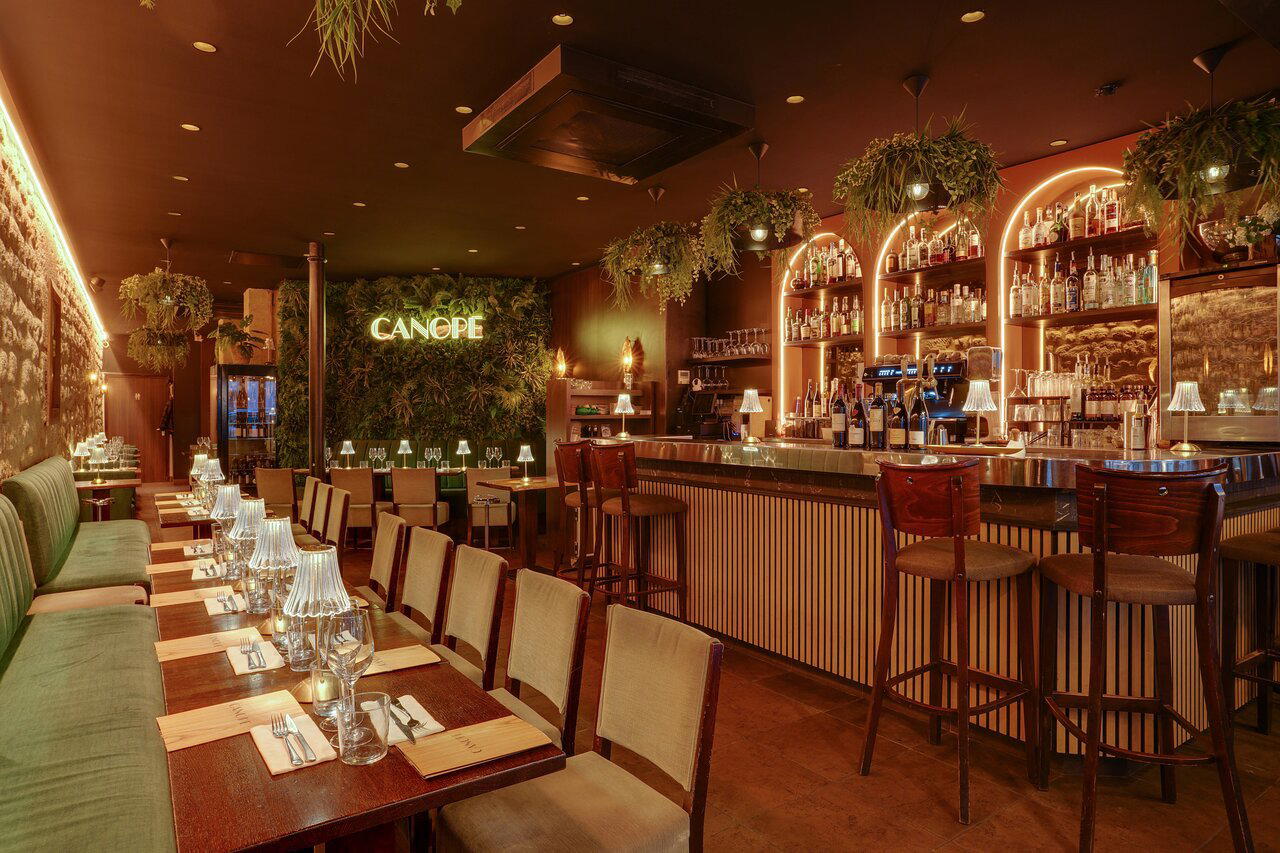
Rue de Londres and the 8th's Shifting Table
The 8th arrondissement has long run on two separate tracks. One follows the palace hotels and their grand dining rooms — Le Cinq at the Four Seasons George V and the white-tablecloth formality that defined French haute cuisine for the better part of a century. The other, quieter track runs through streets like Rue de Londres, where smaller, less-announced rooms have gradually built reputations on the strength of what arrives in the kitchen each morning rather than what hangs on the wall. Canopé sits on that second track, at 42 Rue de Londres, in a part of the 8th that pulls toward Saint-Lazare rather than the Champs-Élysées.
Across France's serious restaurant tier, the most consequential shift of the past decade has been the repositioning of sourcing from background detail to primary editorial statement. Kitchens that once led with technique now lead with provenance. That shift is most visible in Paris, where the density of competition makes differentiation through ingredients a practical necessity as much as a philosophical stance. Canopé enters that conversation from the 8th, a neighbourhood not traditionally associated with producer-led cooking but increasingly hospitable to it.
The Sourcing Framework That Defines the Category
Ingredient-led restaurants in Paris operate inside a well-established logic: the shorter and more specific the supply chain, the more the kitchen's decisions are constrained by season and availability rather than by menu design. This is a discipline, not merely a marketing position. The restaurants that have made it work at the highest level — from Arpège, where Alain Passard famously reorganised an entire three-star menu around vegetables from his own gardens, to Mirazur in Menton, which structures its menus around biodynamic calendar cycles, share a common characteristic: the sourcing decision precedes every other creative decision.
At the regional level, this approach has deep roots. Bras in Laguiole built its identity on the Aubrac plateau's specific flora. Auberge du Vieux Puits in Fontjoncouse draws from the Corbières' particular terroir. Flocons de Sel in Megève roots its cooking in Alpine altitude and seasonality. What these kitchens demonstrate is that sourcing specificity produces a kind of editorial clarity that generic fine dining cannot replicate: the menu becomes a document of a particular place at a particular time of year.
Paris-based kitchens face a different version of this challenge. They are, almost by definition, at a remove from primary production. The best of them compensate through rigorous supplier relationships, direct contracts with small farms, fishermen who call before the boat docks, cheese affineurs who allocate to specific tables. The credibility of a sourcing-led restaurant in Paris depends almost entirely on the quality and specificity of those relationships, since the countryside itself is hours away.
Paris's €€€€ creative tier is anchored by rooms with long institutional histories and substantial award recognition: Alléno Paris au Pavillon Ledoyen, L'Ambroisie on the Place des Vosges, and Kei in the 1st, which holds three Michelin stars for its French-Japanese synthesis. These are reference points, not direct competitors, for a room at Canopé's address and apparent positioning. The more useful comparison set is the generation of Paris restaurants that have built followings without immediate recourse to guide recognition, kitchens where the conversation among local food professionals runs ahead of the published ratings.
In the 8th specifically, that conversation has grown more active as the neighbourhood's demographic has shifted. The corridor between Saint-Lazare and the Grands Boulevards now supports a range of dining ambitions that would have seemed unlikely fifteen years ago. Canopé's address at number 42 places it in a section of Rue de Londres that is residential enough to feel untheatrical, a quality that sourcing-led kitchens tend to prefer, since the room's atmosphere should direct attention toward the plate rather than the décor.
Seasonal Timing and What It Means for the Table
For ingredient-led cooking in Paris, timing is not incidental. The city's market calendar turns on a handful of inflection points: white asparagus from the Loire in April, Breton lobster through summer, cèpes from the southwest in autumn, and the game season that structures October menus across the serious French table. Kitchens that organise themselves around these rhythms produce menus that look substantially different across a calendar year, which is both the appeal and the operational complexity of the model.
Visitors planning around these windows get a categorically different experience than those who arrive outside peak seasonal moments. A table at a sourcing-led Paris restaurant in late November, when root vegetables and aged game dominate, reads differently than the same table in June, when early summer produce creates a lighter, more spontaneous set of options. For Canopé, this seasonality argument is the strongest reason to plan a visit with some care about timing rather than availability alone.
Across France more broadly, the restaurants that have maintained the longest institutional commitments to seasonal sourcing, Troisgros in Ouches, Les Prés d'Eugénie in Eugénie-les-Bains, Auberge de l'Ill in Illhaeusern, demonstrate that ingredient-led cooking requires a generational commitment to supplier relationships, not a seasonal menu rewrite. The kitchens that sustain this over decades tend to anchor themselves in specific regions and specific producers. Paris-based restaurants that attempt the same model do so under greater pressure, with supply chains that require more active maintenance.
Planning Your Visit
Canopé is located at 42 Rue de Londres, 75008 Paris, a short walk from Gare Saint-Lazare and the Saint-Lazare metro hub, which connects to multiple lines. The 8th arrondissement's dining options range across price points and formats; for a fuller picture of where Canopé sits relative to other Paris addresses worth considering, see our full Paris restaurants guide. Booking details, current hours, and pricing are best confirmed directly with the venue, as specific operational data is not available at time of publication.
Quick reference: 42 Rue de Londres, 75008 Paris. Nearest major transit: Gare Saint-Lazare.
How Canopé Paris compares with similar nearby venues.
| Venue | Cuisine | Price |
|---|---|---|
| Argile | Modern Cuisine | €€ |
Continue exploring
More in Paris
Restaurants in Paris
Browse all →
Bars in Paris
Browse all →
Hotels in Paris
Browse all →

At a Glance
- Cozy
- Elegant
- Business Dinner
- Group Dining
- Special Occasion
- Private Dining
- Local Sourcing
Current opening hours
- Monday
- 12–2:30 PM, 7–10:30 PM
- Tuesday
- 12–2:30 PM, 7–10:30 PM
- Wednesday
- 12–2:30 PM, 7–10:30 PM
- Thursday
- 12–2:30 PM, 7–10:30 PM
- Friday
- 12–2:30 PM, 7–10:30 PM
- Saturday
- 7–10:30 PM
- Sunday
- Closed
Hours can change for holidays and private events. Last verified .
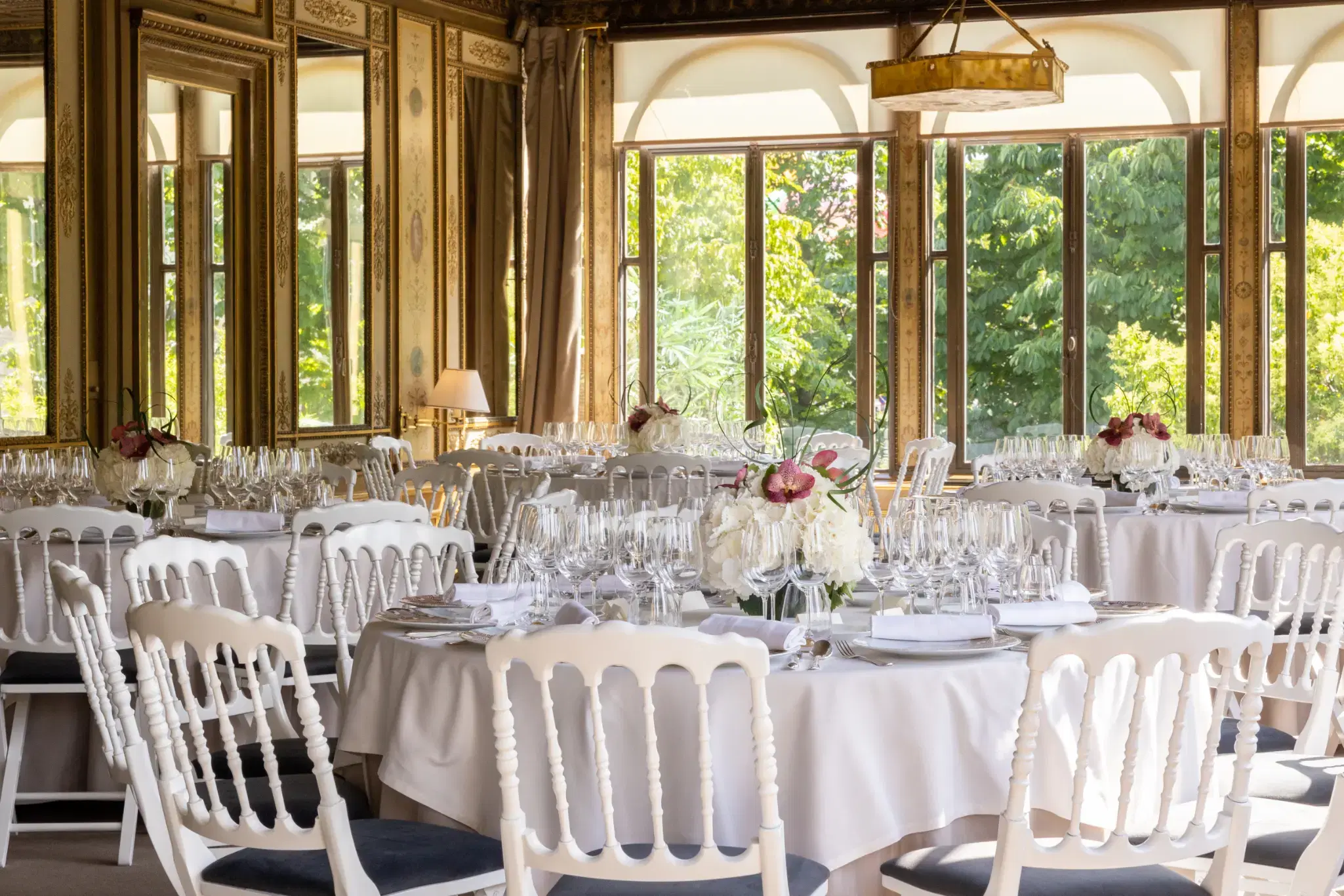
Atmosphère apaisante et chaleureuse avec écrin de verdure, calme et raffinée selon les convives.
Know Before You Go
- Getting there
- 42 Rue de Londres, 75008 Paris, France