
Itsukaichi Hassho places Hiroshima-style okonomiyaki in its proper setting: everyday food treated with serious craft. The Saeki Ward room combines counter cooking and tatami seating, with Tabelog 100 Okonomiyaki recognition in 2025 supporting its place within Hiroshima’s competitive okonomiyaki culture.
Pearl is the En Primeur Club membership app — saves, bookings, and concierge access live there. Same editors, same standards.
- Address
- 1 Chome-3-33 Itsukaichichuo, Saeki Ward, Hiroshima, 731-5128, Japan
- Phone
- +81 82-921-4840
- Website
- instagram.com
 Saves & bookings on Pearl
Hiroshima’s okonomiyaki rooms announce themselves before the first order: hotplate heat, the scrape of metal spatulas, cabbage hitting steel, noodles folded into the rhythm of a service that feels closer to workshop than dining room theatre. Itsukaichi Hassho belongs to that civic tradition. The room is built around the grammar of Hiroshima-style okonomiyaki, where the cooking surface is not backstage equipment but the centre of the meal.
That distinction matters in Hiroshima. Okonomiyaki here is not a snack category borrowed from elsewhere; it is a local food language with its own structure. The Hiroshima style layers batter, cabbage, noodles and egg rather than mixing everything into a single pancake, which makes timing and heat control the real test. A competent version fills a stomach. A serious version shows how texture, steam and browning can be managed without turning the dish into spectacle.
Hiroshima-style okonomiyaki as local craft, not tourist shorthand
The city’s dining identity often gets compressed into oysters, sake-adjacent drinking, and okonomiyaki. The last of those is the hardest to judge from a distance because the format looks casual by design. Itsukaichi Hassho’s inclusion in Tabelog 100 Okonomiyaki 2025 gives the address a useful signal in a category where reputation is often built through repeat local custom rather than international awards. Its Tabelog score of 3.65 places it in a serious everyday bracket, not the luxury tier occupied by destination tasting menus.
That makes the comparison with Hiroshima’s broader dining range instructive. A meal at CHILAN sits in a far higher spend category, while restaurants such as Akai (Creative Cuisine) speak to the city’s more composed contemporary cooking. Okonomiyaki operates by different rules. It prizes repetition, speed, heat discipline and a form of hospitality that is comfortable with families, regulars and visitors sharing the same room.
The Hassho name also carries weight in Hiroshima’s okonomiyaki culture, where lineage can mean a recognizable handling of cabbage, noodles and griddle work. That point should not be over-romanticised. What matters for the diner is the practical result: this is a specialist format in a city that can tell the difference between an average plate and one made by cooks trained in the local idiom.
A counter-and-tatami room for an everyday Hiroshima meal
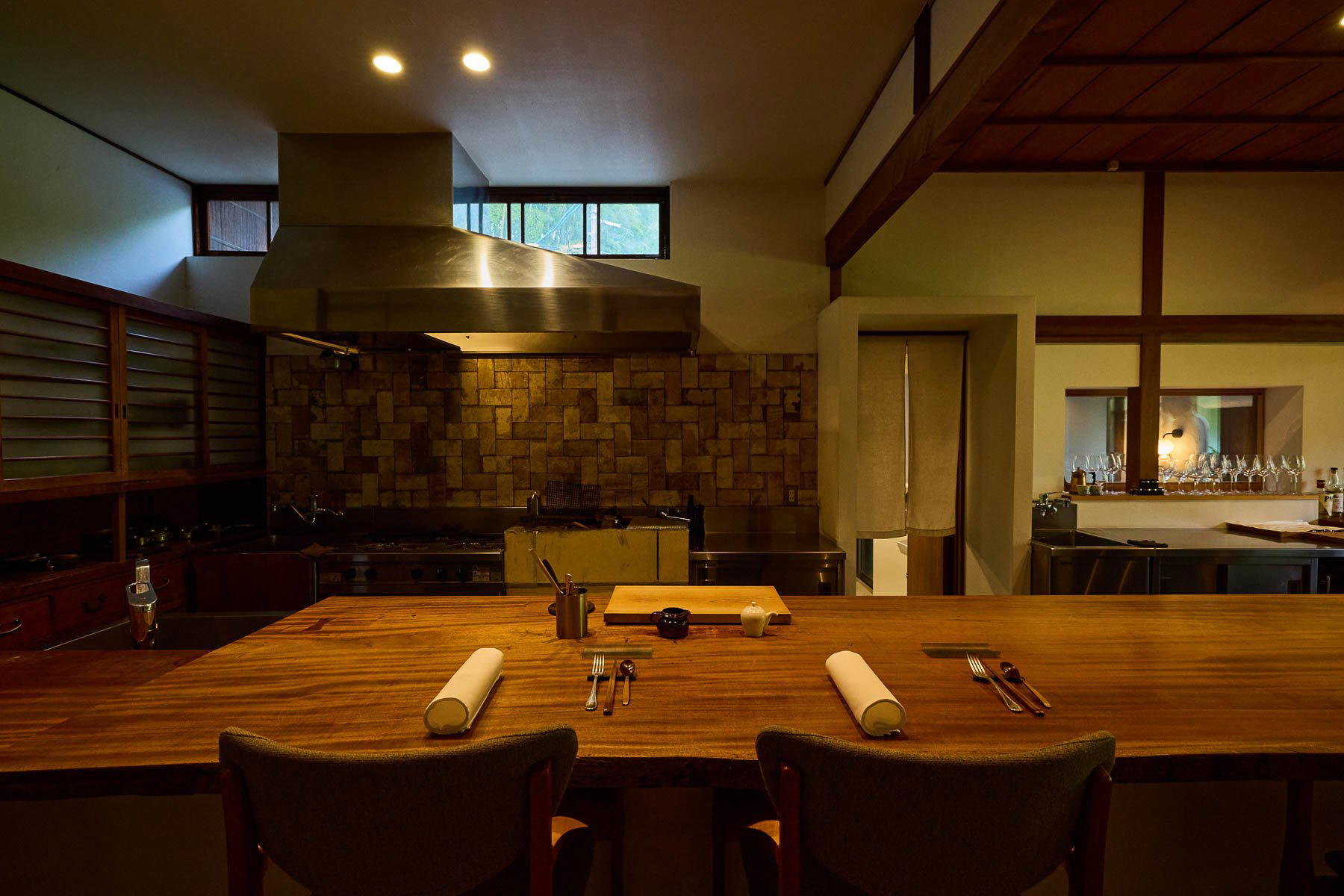
The room’s split between counter seating and tatami tables captures two sides of the genre. Counter seats suit diners who want the griddle as the focus, with the cooking process functioning as the meal’s visual structure. Tatami tables make the experience more social, especially for groups or families who want okonomiyaki without treating it as a stand-up quick bite. In a city where the dish cuts across age and occasion, that flexibility is part of the point.
Itsukaichi Hassho is also useful because it sits outside the narrow tourist core. Saeki Ward gives the meal a neighbourhood frame rather than a sightseeing one, and that changes the read of the place. This is not the Hiroshima of a single-night itinerary built around Peace Memorial Park and a central restaurant cluster. It is a suburban dining pattern: arrive for a specific local dish, eat within a room designed for turnover and regular use, and understand why okonomiyaki remains a working food rather than a preserved culinary object.
The city rewards that wider lens. ANDERSEN shows another side of Hiroshima’s food culture through bakery and café habits; Bishu Bikou Hamai points toward drinking and small-plate sensibilities; Butter Cake no Nagasaki Do belongs to the city’s gift-and-sweets circuit. Read together, these places make Hiroshima feel less like a checklist and more like a set of daily rituals.
Where it fits in a Hiroshima itinerary
For travellers building a Hiroshima food day, the restaurant works well as the okonomiyaki anchor rather than a side stop between higher-spend reservations. The point is not ceremony. It is calibration: tasting the city through a dish that locals measure instinctively, then placing that experience against more formal meals, bars and cafés. Our full Hiroshima restaurants guide is the useful next layer for that mapping, especially when pairing casual regional food with a more composed dinner.
The broader trip can then widen beyond restaurants. Our full Hiroshima hotels guide helps decide whether to stay central or build in more neighbourhood movement. Our full Hiroshima bars guide, Our full Hiroshima wineries guide and Our full Hiroshima experiences guide give the city a fuller shape after the griddle meal is done.
For readers using EP Club across Japan and beyond, the through-line is specificity rather than prestige alone. A focused okonomiyaki room in Hiroshima belongs in the same planning universe as -Grilled beef Sukiyaki- KAMAKURA TANUKIAN 鎌倉 たぬき庵 in Kamakura. 鮪と炭火焼き うお炭 秋葉原店 in Tokyo.cafe in Osaka.know in Kumamoto, (Shoku) Vietnam in Kawasaki, [Curry Senmon Ten] Maruyama Kyoju. in Sapporo, Jōdo Saké Bar in Los Angeles and Onigiri Time in Pasadena: each is useful when it teaches something concrete about place, format and appetite.
The editorial case for the restaurant is simple. Hiroshima-style okonomiyaki deserves to be judged where it is cooked as a local staple, not only where it is packaged for visitors. This address gives the dish a credible neighbourhood setting, a recognized specialist signal, and a room suited to both counter watching and family eating. That is enough reason to treat it as part of Hiroshima’s food culture rather than a casual detour.
A Pricing-First Comparison
Nearby venues at a similar price tier for orientation.
| Venue | Cuisine | Price | Notes |
|---|---|---|---|
| Itsukaichi HasshoThis venue — the venue you are viewing | Saeki, Hiroshima-style Okonomiyaki | $ | Not listed |
| Jidan | Higashi, Hiroshima-style okonomiyaki | $ | Not listed |
| Okonomiyaki Junior | Not listed | $ | Naka, Hiroshima-style okonomiyaki & teppanyaki counter |
| Soba Kiri Gin | Minami, Traditional Japanese Soba | $ | Not listed |
| Icchan Honten | Higashi, Hiroshima-Style Okonomiyaki | $ | Not listed |
| Masaru | Higashi, Hiroshima Okonomiyaki | $$ | Not listed |
Recognition history
Dated appearances from independent guides and award organizations, with the underlying list record or original source where available.
Tabelog 100 #51 · No. 51
Tabelog · Tabelog 100 - Okonomiyaki - 2025
Continue exploring
More in Hiroshima
Restaurants in Hiroshima
Browse all →
Bars in Hiroshima
Browse all →
At a Glance
- Lively
- Cozy
- Casual Hangout
- Group Dining
- Solo
- After Work
- Family
- Chefs Counter
- Standalone
Current opening hours
- Monday
- Closed
- Tuesday
- 11 AM–2:30 PM, 5–8:30 PM
- Wednesday
- 11 AM–2:30 PM, 5–8:30 PM
- Thursday
- 11 AM–2:30 PM, 5–8:30 PM
- Friday
- 11 AM–2:30 PM, 5–8:30 PM
- Saturday
- 11 AM–2:30 PM, 5–8:30 PM
- Sunday
- 11 AM–2:30 PM, 5–8:30 PM
Hours can change for holidays and private events. Last verified .
A compact, busy local okonomiyaki spot with counter seating around the griddle and a few tatami tables, where the sounds and aromas of the teppan create a bustling, casual neighborhood feel.