


On the 12th floor of a Ginza tower, Shin Harada makes a pointed argument for Italian cooking through Japanese domestic ingredients. Chef Shinji Harada's guiding principle, which he calls the 'shortest distance to the ingredients,' shapes both the sourcing philosophy and the table height itself, engineered to bring the diner's face closer to the plate and its aromas.
Pearl is the En Primeur Club membership app — saves, bookings, and concierge access live there. Same editors, same standards.
- Address
- 12F, 2-6-5 Ginza, Chuo-ku
- Phone
- +81 3-3535-6667
- Website
- aromafresca-afsa.com
 Saves & bookings on Pearl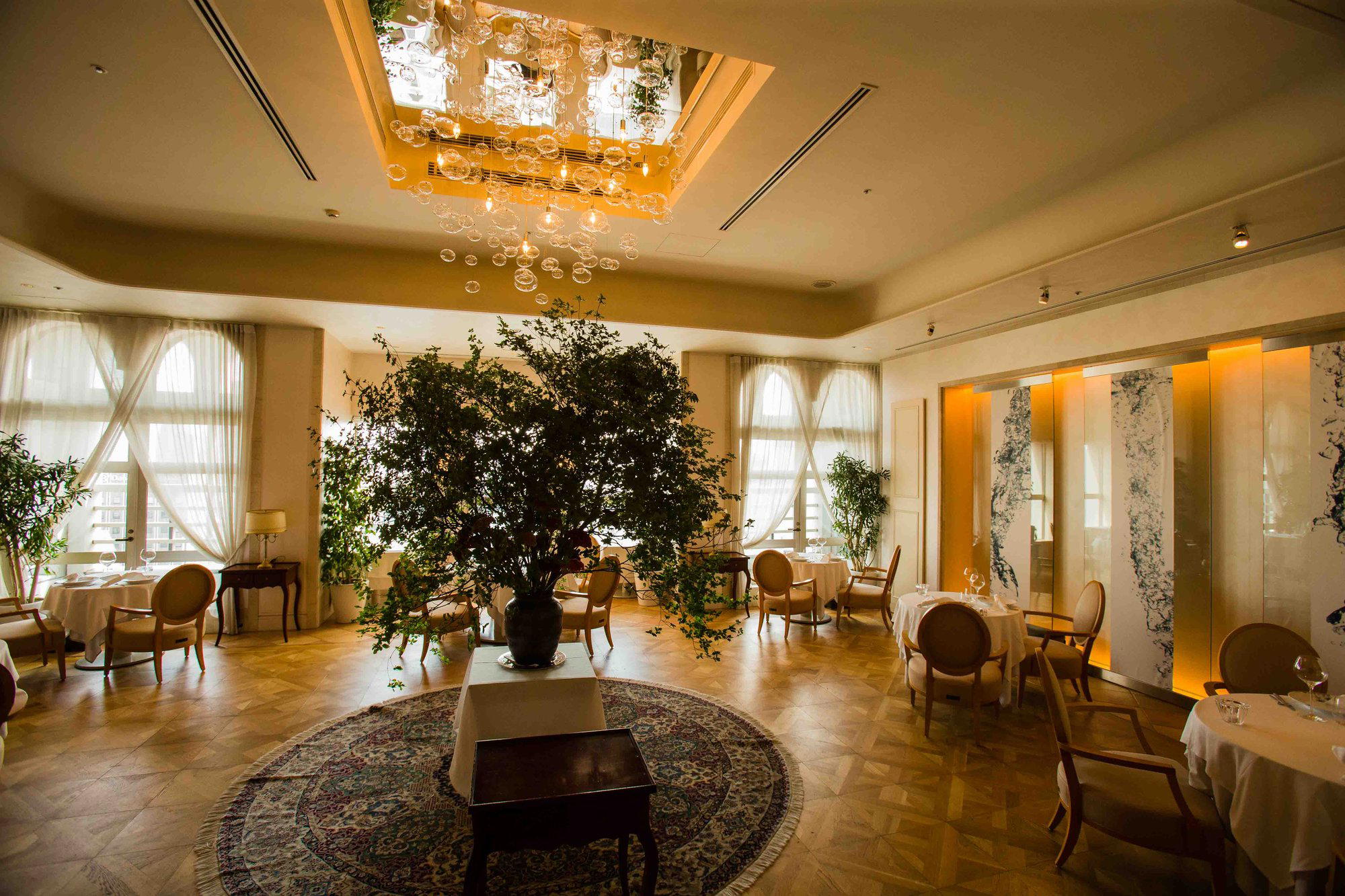
The Room Before the Meal
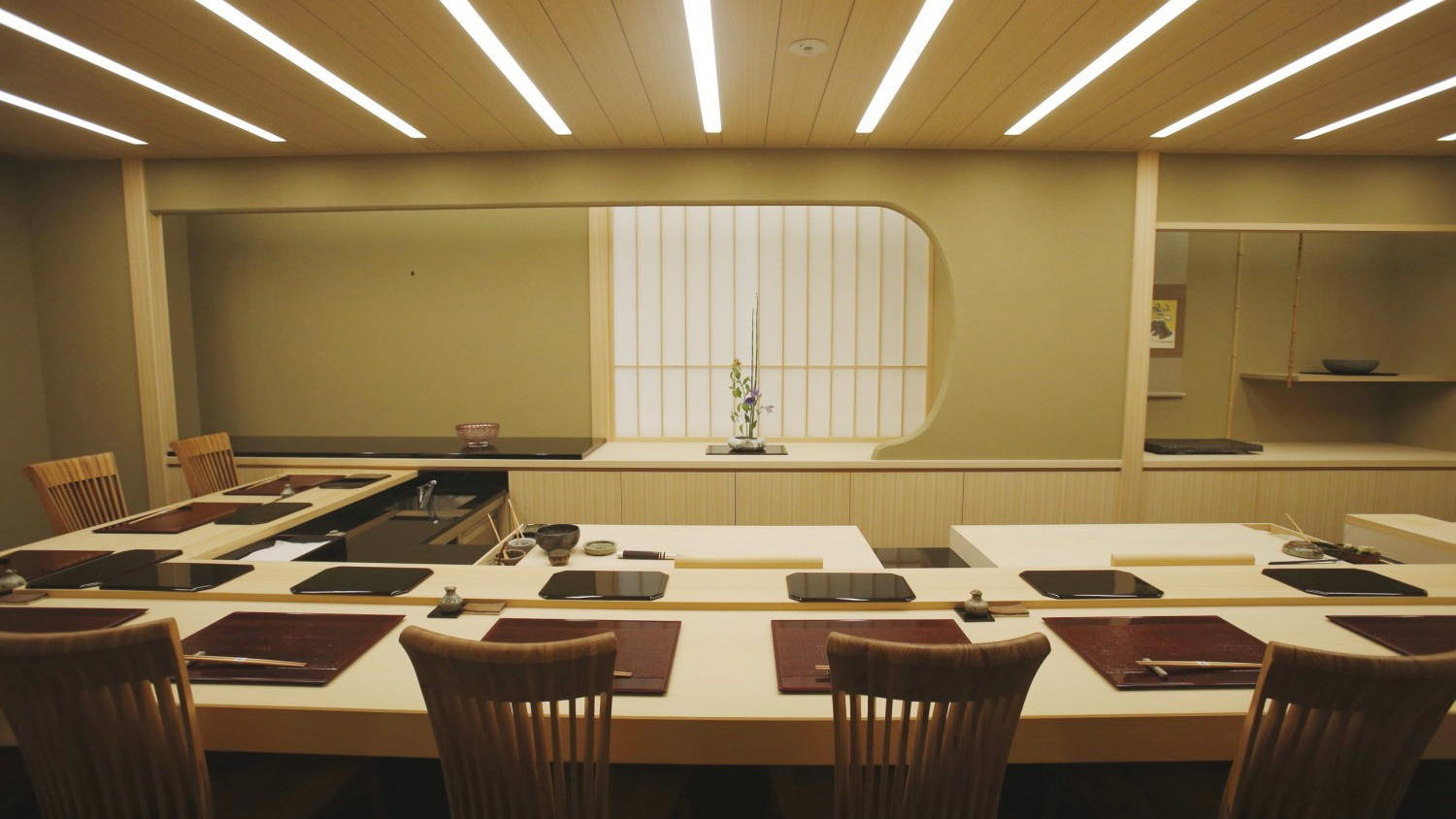
Ginza's upper floors have long housed a particular tier of Japanese fine dining: small, deliberate rooms where the design is a statement about what the kitchen believes. Shin Harada, on the 12th floor of a building at 2-6-5 Ginza, belongs to that tradition in form but operates in a different culinary register. The dining room is white throughout, a palette that reads less as minimalism for its own sake and more as a controlled environment, stripping out visual noise so that the dishes arriving at the table occupy the full field of attention.
The tables themselves are set higher than convention dictates. This is not incidental. The refined surface brings the plate closer to the face, closing the physical distance between the diner and the food's aroma at the moment it arrives. In a kitchen defined by the principle that the shortest distance to the ingredient is the point of highest quality, the furniture is an extension of the cooking philosophy. Few restaurants in Ginza make the physical act of being seated feel this deliberate.
Italian Cooking, Japanese Ingredients, One Governing Idea
Ginza accommodates a broad range of European fine dining, from kaiseki-adjacent French tasting menus at places like Sézanne to the ingredient-forward French approach at L'Effervescence. Italian cooking at the summit of the market occupies a smaller, more specialized position in this city, and Shin Harada sits within that niche. The kitchen applies Italian technique and structure to domestic Japanese ingredients, a cross-disciplinary approach that has become more common across Tokyo's high-end independent scene over the past decade but remains less saturated in the Italian format than in French.
The governing idea here is aroma. Chef Shinji Harada's stated theory of the 'shortest distance to the ingredients' operates on two levels simultaneously: the sourcing level, where reducing the journey from producer to kitchen preserves the volatile aromatic compounds that define a product at its peak, and the physical level, where the geometry of the room ensures those aromas reach the diner intact. This kind of cooking philosophy, where the sensory sequence of a dish is engineered from farm through to the angle of the plate, places Shin Harada in conversation with technically rigorous kitchens elsewhere in Tokyo, including the kaiseki precision at RyuGin and the produce-led inventiveness at Crony, even if the culinary languages are entirely different.
Ginza as the Right Address for This Kind of Restaurant
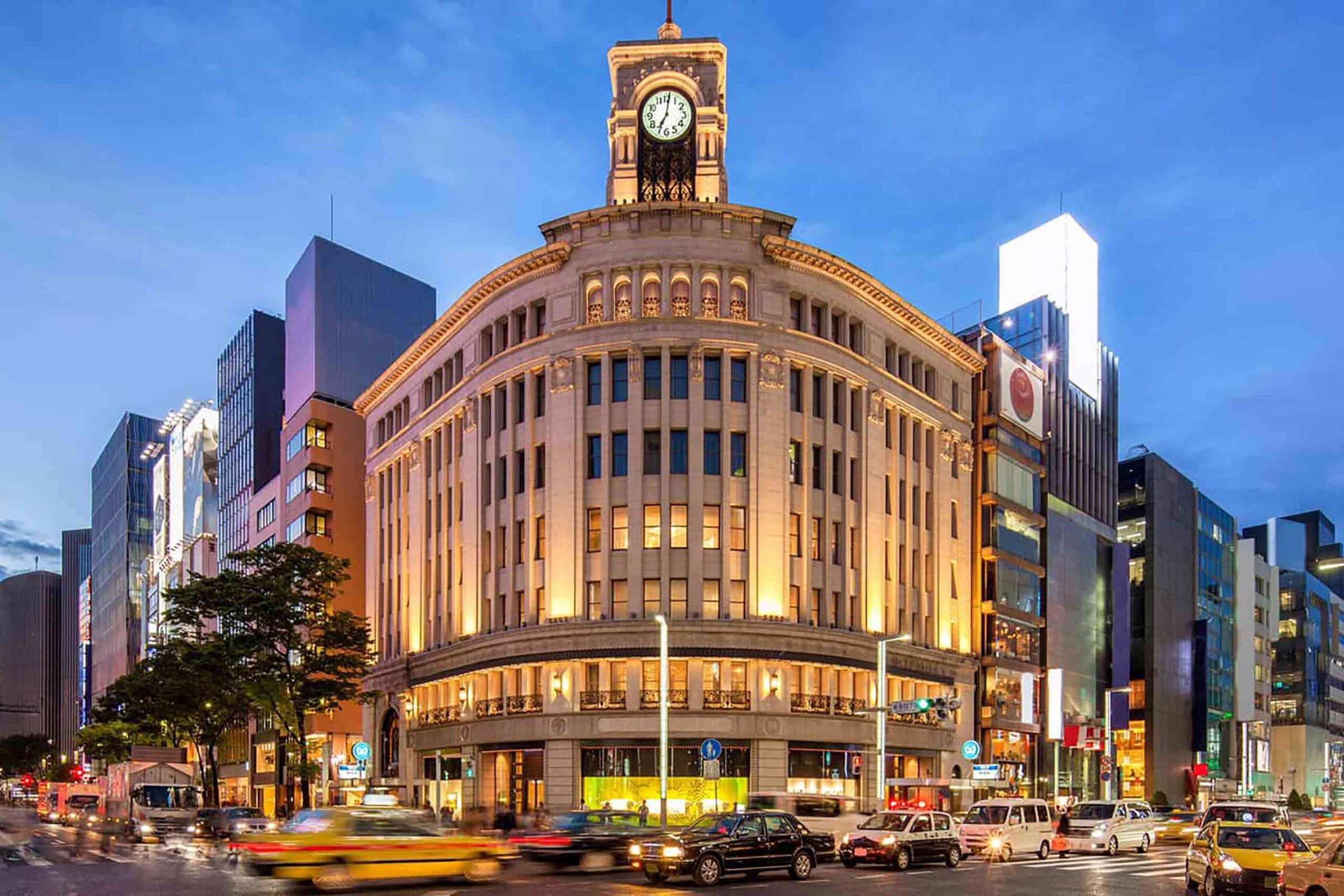
The address matters for context. Ginza's restaurant culture skews toward formality, expense, and long-established pedigree. It is a neighbourhood where Harutaka commands upper-tier sushi prices at an eight-seat counter, and where the surrounding blocks reward careful research over spontaneous discovery. The restaurant fits that orientation: a restaurant that operates at the upper end of the market, shaped by a specific and non-negotiable culinary point of view, and positioned for diners who have already decided what kind of evening they want before booking.
That said, the Italian framework makes the restaurant a counterpoint to the kaiseki and sushi counters that dominate Ginza's fine dining conversation. Compared to the wider Japanese fine dining circuit, which encompasses standout regional addresses like Gion Sasaki in Kyoto, HAJIME in Osaka, or Goh in Fukuoka, the restaurant offers something Tokyo-specific: European technique applied to Japanese ingredients at a Ginza address, for a city that has more appetite for that combination than almost anywhere else on earth.
Planning the Visit
Practically speaking, the restaurant requires advance planning in the way that any restaurant operating in Ginza's upper tier does. The room is on the 12th floor at 2-6-5 Ginza, Chuo-ku, accessible from Ginza Station on the Tokyo Metro Ginza, Marunouchi, and Hibiya lines. Reservations are essential.
Expect to spend about $200 per person. Budgeting accordingly before you arrive avoids the specific awkwardness of being surprised by a bill at a restaurant that does not invite that kind of surprise. The dress code is smart casual.
For visitors building a broader Tokyo itinerary around serious restaurants, the restaurant pairs well with nearby Ginza addresses and connects to a wider network of high-ambition cooking across the city and country.
Booking and Cost Snapshot
Comparable venues nearby, for context on price, style, and recognition.
| Venue | Cuisine | Price | Awards | Notes |
|---|---|---|---|---|
| Shin HaradaThis venue — the venue you are viewing | Chūō, Aroma-Focused Modern Italian | $$$$ | Michelin Plate | Not listed |
| Cignale Enoteca | Meguro, Italian-Japanese Fusion Omakase | $$$$ | Not listed | Not listed |
| TACUBO Shirokanedai | Minato, Wood-Fired Italian | $$$$ | Michelin Plate | Not listed |
| commedia | Kōtō, Modern Italian Omakase | $$$$ | Michelin Plate | Not listed |
| JINBO MINAMI AOYAMA | Not listed | $$$$ | Michelin Plate | Minato, Modern Italian with Japanese Seasonal Ingredients |
| LE PRISTINE TOKYO | Minato, New Italian | $$$$ | Michelin Plate | Not listed |
Recognition history
Dated appearances from independent guides and award organizations, with the underlying list record or original source where available.
Michelin Plate
Michelin · 2026 Michelin Plate
Opinionated About Dining Top Restaurants in Japan Recommended
Opinionated About Dining
Tabelog 100 #47 · No. 47
Tabelog · Tabelog 100 - Italian - TOKYO - 2025




At a Glance
- Elegant
- Intimate
- Sophisticated
- Minimalist
- Date Night
- Special Occasion
- Business Dinner
- Chefs Counter
- Extensive Wine List
- Sake Program
- Local Sourcing
Current opening hours
- Monday
- 5:30–8:30 PM
- Tuesday
- 5:30–8:30 PM
- Wednesday
- 11:30 AM–1 PM, 5:30–8:30 PM
- Thursday
- 11:30 AM–1 PM, 5:30–8:30 PM
- Friday
- 11:30 AM–1 PM, 5:30–8:30 PM
- Saturday
- 11:30 AM–1 PM, 5:30–8:30 PM
- Sunday
- Closed
Hours can change for holidays and private events. Last verified .
Spare white interior with soft clear lighting, high tables for optimal aroma appreciation, and acoustic management for private conversations.