Shiku

Our verdict
Operating out of a Broadway address in Downtown Los Angeles's Historic Core, Shiku has built a steady critical reputation for Korean cooking under chef Kwang Uh, earning consecutive Opinionated About Dining Casual North America rankings in 2024 and 2025. The format runs daytime hours only, positioning it within a small tier of serious Korean kitchens that operate outside the evening-only dining convention. OAD's upward trajectory from Recommended to #488 in two years signals a kitchen gaining broader recognition.

Pearl is the En Primeur Club membership app, where members save venues, book tables and use the concierge.
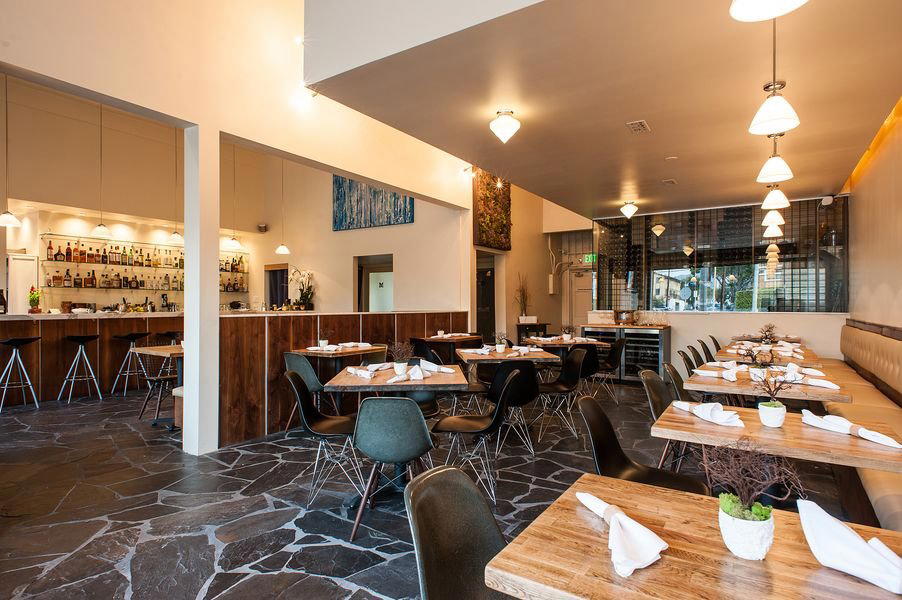
The menu
What to order
- LA Galbi
- Maekjuk Chicken
- Kimchi-Braised Pork Belly
- Kimchi’d corn
Korean Cooking in Downtown Los Angeles: A Different Register
Los Angeles has one of the most consequential Korean food ecosystems in the Western world. Koreatown, roughly two miles west of Downtown, delivers the density: twenty-four-hour tofu stew at BCD Tofu House, hand-cut noodles at Hangari Kalguksu, galbi at Jeong Yuk Jeom. But a quieter counter-movement has been taking shape elsewhere in the city: Korean kitchens that operate at lower volume, in more unlikely addresses, and at a register closer to contemporary dining than to the traditional banquet hall. Shiku, on South Broadway in the Historic Core, belongs to that smaller cohort.
The address alone places it in a different conversation. South Broadway's ground-floor commercial strip runs through one of Downtown's oldest blocks, flanked by Beaux-Arts and Art Deco facades that predate the city's postwar sprawl. It is not the neighborhood most Angelenos associate with Korean food, which is precisely the point. Kitchens like Shiku, Danbi, and Dha Rae Oak are part of a dispersal pattern in which serious Korean cooking is no longer geographically anchored to one neighborhood.
The Cultural Weight Behind the Format
Korean cuisine carries a long tradition of fermentation, preservation, and seasonal discipline that predates any contemporary food trend by centuries. The pantry logic, gochujang, doenjang, ganjang aged over months or years, kimchi timed to seasons and household need, is among the most technically demanding in East Asian cooking, and it operates on timelines that resist the quarterly menu rotation common in Western restaurants. What makes newer Korean kitchens in Los Angeles interesting is how they translate that underlying rigor into formats that a broader dining public can access without losing the cultural specificity that gives the food its character.
This is the tension that defines serious Korean cooking outside Korea. The highest end in Seoul, at places like Mingles or Kwonsooksoo, has spent the past decade formalizing that pantry logic into tasting menus that can hold their own against any European reference point. In Los Angeles, the translation takes a different shape, less ceremony, more directness, but with the same insistence on fermented depth and ingredient integrity. Shiku operates closer to that directness. It runs daytime hours, which is an atypical choice for a kitchen with serious critical recognition, and that decision shapes everything about the experience: the light, the pace, the kind of hunger a guest arrives with.
What the OAD Rankings Signal
Opinionated About Dining's Casual North America list is a useful calibration tool because it aggregates assessments from a defined group of informed diners rather than anonymous crowd-sourcing. Shiku entered the list as Recommended in 2023, moved to #530 in 2024, and climbed to #488 in 2025. That upward trajectory over three consecutive cycles is meaningful. It suggests a kitchen that is maintaining its standards or improving them, rather than trading on an early burst of attention.
For context within the broader Los Angeles critical conversation: the city's $$$$ tier includes technically ambitious kitchens like Kato, Hayato, Vespertine, and Camphor, each holding national or international recognition. Shiku operates in a different price register and a different format, but its OAD standing puts it in a category where the quality argument is no longer speculative. That credentialing matters in a city where new openings arrive faster than critical consensus can form. Nationally, the conversation about rigorous casual dining includes institutions like Lazy Bear in San Francisco, while fine dining anchors like Le Bernardin in New York City, Alinea in Chicago, The French Laundry in Napa, and Single Thread Farm in Healdsburg define a ceiling that casual Korean cooking approaches from a different direction, through depth of fermentation and ingredient sourcing rather than formal service architecture.
Chef Kwang Uh and the Kitchen's Orientation
The Korean-American kitchen in Los Angeles has produced a generation of chefs who trained in European or American fine-dining contexts and then returned to Korean form. That training lineage matters less as biography than as a signal about how a kitchen reasons through flavor and technique. Chef Kwang Uh's name is attached to Shiku, and his presence in a daytime Korean format on South Broadway rather than in an evening tasting menu room says something about the kind of cooking he is interested in. The choice to operate in a casual, accessible register is itself a culinary position, a statement that Korean cooking does not require fine-dining framing to carry weight.
That positioning has parallels at the opposite extreme. Emeril's in New Orleans and similar American chef-driven institutions built their identities partly on asserting that regional cooking deserved serious treatment. The parallel is inexact but the logic rhymes: a cuisine that carries deep cultural specificity is being argued for on its own terms, without deference to a European frame.
Planning a Visit
Shiku sits at 317 S Broadway in Downtown Los Angeles, in the Historic Core district. The kitchen operates daytime hours across the full week: Monday through Thursday from 11am to 6pm, Friday through Sunday from 11am to 7pm. Those hours make Shiku a lunch or early-afternoon destination, which is a useful counterpoint to an evening schedule heavy in Korean barbecue or izakaya formats. Arriving around midday on a weekday typically offers the clearest access in most Downtown kitchens of this type, though no specific booking data is published.
Parking in this part of Broadway can be managed via the Historic Core's surface lots and structures, though DTLA Metro access via the Red or Purple Line at Pershing Square places the block within easy reach without a car. For those building a broader Los Angeles itinerary, our full Los Angeles restaurants guide covers the city's dining range in detail, alongside our full Los Angeles hotels guide, our full Los Angeles bars guide, our full Los Angeles wineries guide, and our full Los Angeles experiences guide.
Frequently asked questions
What days is Shiku closed?
Hours at Shiku: Hours: Monday 11 am–6 pm Tuesday 11 am–6 pm Wednesday 11 am–6 pm Thursday 11 am–6 pm Friday 11 am–7 pm Saturday 11 am–7 pm Sunday 11 am–7 pm.
What distinctions does Shiku have?
Shiku has received recognition including: Opinionated About Dining Casual in North America Ranked #488 (2025); Opinionated About Dining Casual in North America Ranked #530 (2024); Opinionated About Dining Casual in North America Recommended (2023).
What should I eat at Shiku?
Shiku operates under chef Kwang Uh, whose kitchen has drawn three consecutive years of recognition from Opinionated About Dining's Casual North America list, most recently ranking #488 in 2025. That track record signals a menu rooted in Korean culinary discipline rather than fusion detours. Given the daytime-only format and the OAD evaluator base that rewards precision over novelty, dishes rooted in fermentation, preserved ingredients, or grain-forward preparations are the logical focus. Arriving at opening or within the first hour, when prep is freshest, is the practical move.
What kind of cuisine does Shiku serve?
Where do I go for Shiku?
Shiku is located at 317 S Broadway, Los Angeles, CA 90013, Los Angeles.
Cuisine Lens
| Venue | Cuisine | Price | Awards | Notes |
|---|---|---|---|---|
| ShikuThis venue (the venue you are viewing) | Korean Comfort Food | $10–20 | Not listed | Not listed |
| Kato | Modern Taiwanese Fine Dining | $300–500 | 2 Michelin Stars · World's 50 Best #49 | New Taiwanese, Asian |
| Hayato | Traditional Japanese Kaiseki | $300–500 | 2 Michelin Stars · La Liste Top Restaurants | Japanese |
| Vespertine | Avant-Garde Tasting Menu | $200–300 | 2 Michelin Stars · La Liste Top Restaurants | Progressive, Contemporary |
| Camphor | Modern French with Southeast Asian influences | $150–200 | Michelin Plate · World Best Burgers World's 101 Best Burgers #15 | French-Asian, French |
| Gwen | Contemporary American Steakhouse | $50–100 | Michelin Plate · Wine Spectator Best of Award of Excellence | New American, Steakhouse |
Recognition history
Dated appearances from independent guides and award organizations, with the underlying list record or original source where available.
Opinionated About Dining Casual in North America Recommended
Opinionated About Dining
Full recognition history (4 entries)
Opinionated About Dining Casual in North America Ranked #488
Opinionated About Dining
Opinionated About Dining Casual in North America Ranked #530
Opinionated About Dining
Opinionated About Dining Casual in North America Recommended
Opinionated About Dining