Surawon Tofu House

LA Times 101 Best Restaurants #96
Our verdict
A Koreatown fixture ranked on the LA Times 101 Best Restaurants list in both 2024 and 2025, Surawon Tofu House has built its reputation around in-house soondubu jjigae made with both classic white and black-soybean tofu. The black-soybean variation, which carries notes of sesame and peanut, is produced from soybeans sourced through traditional Korean methods. Group meals here follow a clear ritual: individual stews first, then shared plates of grilled mackerel, seafood-leek pancake, and stone-pot bibimbap.

Pearl is the En Primeur Club membership app — saves, bookings, and concierge access live there. Same editors, same standards.
The menu
What to order
- Black_soybean_soondubu
- Seafood_kimchi_pancake
Constancy as a Culinary Value
Los Angeles dining in the 2020s rewards novelty. The city has developed a tier of technically ambitious, reservation-scarce restaurants — Kato, Hayato, Somni — where the menu changes seasonally and the chef's current thinking is the product. Against that backdrop, a restaurant that has been doing the same thing, extremely well, for years represents a different kind of achievement. The LA Times, in ranking Surawon Tofu House at number 97 on its 2024 list and number 96 on its 2025 list, framed this directly: some restaurants earn their place through mercurial talent and seasonal change; others earn it through comforting constancy. Surawon belongs to the second category, and in a city that sometimes treats consistency as a lesser virtue, that placement matters.
What Soondubu Jjigae Actually Is
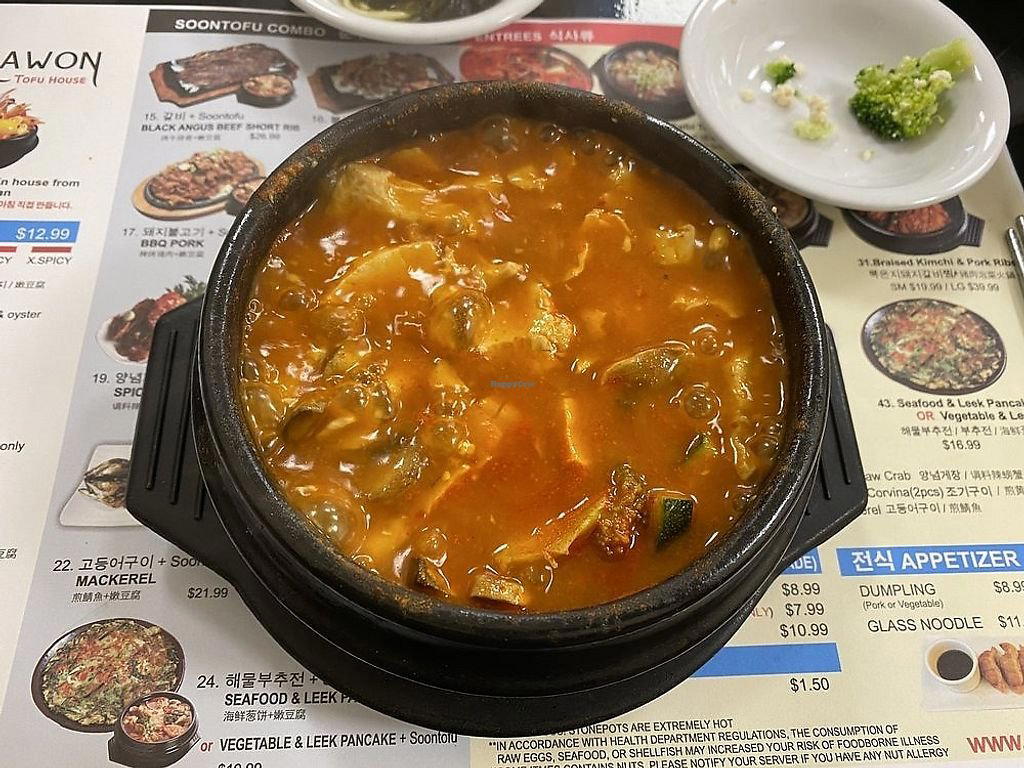
Korean tofu stew occupies a specific register in the country's food culture: it is not a starter, not a side, and not a light dish. Soondubu jjigae arrives at the table still boiling in its stone pot, the surface moving like, as the LA Times put it, a lake of lava. The stew is built on a base of stock and gochugaru, with silken tofu added late so it holds its texture, and proteins and vegetables layered in according to what the diner has ordered. Customization is deep and genuine. At Surawon, the options extend from kimchi and vegetables through oysters, oxtail, intestines, and mixed meat-and-seafood combinations. Heat is calibrated across a range from plain to extra spicy, with the mid-level spicy landing at a point the LA Times describes as releasing endorphins without feeling punishing. This is not a dish that rewards passive eating. It asks the diner to make choices before it arrives and engage with it properly once it does.
The Black-Soybean Variable
The detail that separates Surawon from the broad category of Korean tofu restaurants in Los Angeles is the in-house production of two distinct tofu types. Most soondubu operations source their tofu externally or work with a single variety. Here, both classic white tofu and a black-soybean version are made on the premises. The black-soybean tofu carries flavors that suggest sesame and peanut, a richer, slightly nuttier profile than the clean neutrality of standard silken tofu. The technique behind it traces to traditional Korean tofu-making practice, studied directly in Korea by the restaurant's founder. In a category where the tofu itself is often treated as a neutral carrier for broth and heat, the in-house production and the black-soybean option represent a genuine point of differentiation. The LA Times reviewer names it as a clear preference.
How the Meal Unfolds
The ritual of eating at a soondubu house follows a specific logic, and understanding it changes the meal. Individual stews are the anchor, each person orders their own, selecting protein, tofu type, and heat level. This part of the meal is personal and non-negotiable; the stew is served in individual stone pots and is not designed for sharing. The shared plates come alongside or after: at Surawon, the LA Times recommends the crisp-edged grilled mackerel, a seafood-leek pancake described as even crunchier, and the bibimbap served sizzling in a stone pot. These dishes follow a group dining logic where contrast matters, the crunch of the pancake against the soft tofu, the dry heat of the bibimbap crust against the wet heat of the jjigae. Coming with a group, as the LA Times explicitly advises, is not just a practical suggestion but a structural one. The meal is built for that format.
Timing also shapes the experience. Soondubu jjigae is a cold-weather dish in the way that ramen is a cold-weather dish, it works year-round, but it delivers something specific on a rainy Los Angeles evening that it cannot quite replicate on a warm one. The LA Times reviewer notes its particular power on rainy nights and tough days. This is not a marketing claim. It is a description of how the dish functions emotionally and physically, which is itself a form of culinary intelligence worth taking seriously.
Where Surawon Sits in Koreatown and in the City
Koreatown, centered on and around Olympic Boulevard in the Mid-Wilshire area, functions as one of the densest restaurant corridors in Los Angeles. The neighborhood supports multiple tiers of Korean dining, from fast-casual tofu chains through mid-range tabletop barbecue restaurants to a smaller set of specialist operations with genuine depth. Surawon, at 2833 W Olympic Blvd, sits within walking distance of numerous competitors in the tofu-stew category, which makes its consecutive appearances on the LA Times 101 list more meaningful as a competitive signal. Holding that position for two consecutive years, while ranked within two spots of itself, suggests the kind of stability that is hard to fake.
For visitors approaching Los Angeles through its fine-dining tier, Providence, Osteria Mozza, or the more progressive end represented by restaurants comparable to Alinea in Chicago or Le Bernardin in New York City, Surawon represents a different but equally deliberate dining proposition. It does not compete on luxury signals. It competes on craft, consistency, and the specific pleasure of a dish executed with accumulated expertise. That is a meaningful distinction in a city where restaurants across the price spectrum earn serious critical attention. The LA Times list places it alongside restaurants at every price point, which is exactly the right framing.
For a broader view of what Los Angeles dining currently offers, see our full Los Angeles restaurants guide. The city's hotel, bar, winery, and experience options are covered separately in our Los Angeles hotels guide, our Los Angeles bars guide, our Los Angeles wineries guide, and our Los Angeles experiences guide.
Planning Your Visit
Surawon Tofu House is located at 2833 W Olympic Blvd, Los Angeles, CA 90006, in Koreatown. The meal format works well for groups of two or more, given the combination of individual stews and shared plates.
Frequently asked questions
Does Surawon Tofu House have a Michelin star or similar recognition?
Surawon Tofu House has received recognition including: LA Times 101 Best Restaurants #96 (2025); LA Times 101 Best Restaurants 2024 - Ranked #97. Some restaurants we treasure for the mercurial talents and seasonality on display; others, like Surawon, we value for their comforting constancy in a….
What's the address for Surawon Tofu House?
Surawon Tofu House is located at 2833 W Olympic Blvd, Los Angeles, CA 90006, Los Angeles.
What do people recommend at Surawon Tofu House?
The soondubu jjigae is the anchor of every meal, and the LA Times reviewer who ranked Surawon #96 on the 2025 101 Best Restaurants list names the black-soybean tofu version as the clear preference over standard white tofu. Beyond individual stews, grilled mackerel, the seafood-leek pancake, and bibimbap cooked in a stone pot are worth ordering for the table. Heat levels run from plain to extra spicy, with 'spicy' cited as the point where flavor and intensity balance.
Should I book Surawon Tofu House in advance?
What is confirmed is that Surawon has appeared on the LA Times 101 Best Restaurants list in both 2024 and 2025, which drives consistent foot traffic to the Olympic Boulevard address. Arriving early or during off-peak hours is the practical approach until booking details are confirmed.
Where It Fits
| Venue | Cuisine | Price | Awards | Notes |
|---|---|---|---|---|
| Surawon Tofu HouseThis venue (the venue you are viewing) | Korean Tofu House | $20–30 | LA Times 101 Best Restaurants #96 | Not listed |
| Kato | Modern Taiwanese Fine Dining | $300–500 | 2 Michelin Stars · World's 50 Best #49 | New Taiwanese, Asian |
| Hayato | Traditional Japanese Kaiseki | $300–500 | 2 Michelin Stars · La Liste Top Restaurants | Japanese |
| Vespertine | Avant-Garde Tasting Menu | $200–300 | 2 Michelin Stars · La Liste Top Restaurants | Progressive, Contemporary |
| Camphor | Modern French with Southeast Asian influences | $150–200 | Michelin Plate · World Best Burgers World's 101 Best Burgers #15 | French-Asian, French |
| Gwen | Contemporary American Steakhouse | $50–100 | Michelin Plate · Wine Spectator Best of Award of Excellence | New American, Steakhouse |
Recognition history
Dated appearances from independent guides and award organizations, with the underlying list record or original source where available.
LA Times 101 Best Restaurants #96
LA Times
Full recognition history (2 entries)
LA Times 101 Best Restaurants #97
LA Times