California Market
California Market sits at 450 S Western Ave in Los Angeles's Koreatown, a stretch where the city's Korean-American dining identity runs deepest. The venue draws a loyal local following whose return visits say more about the kitchen's consistency than any formal credential. For the full picture of how it fits into LA's broader dining scene, context matters as much as the address.
Pearl is the En Primeur Club membership app — saves, bookings, and concierge access live there. Same editors, same standards.
- Address
- 450 S Western Ave #1, Los Angeles, CA 90020
- Phone
- +1 213 382 9444
- Website
- gaju-market.com
- Directions
- Get directions
 Saves & bookings on Pearl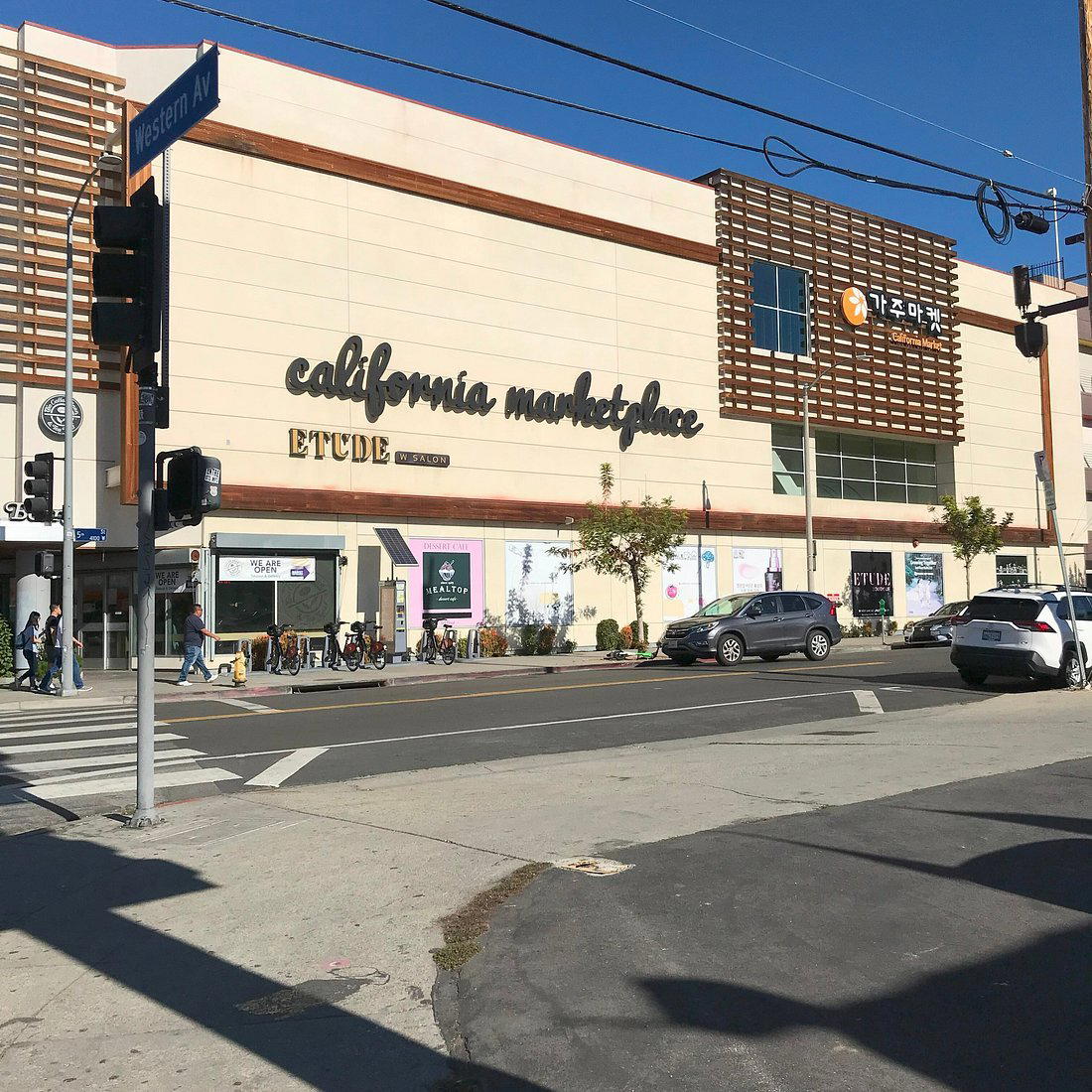
Koreatown's Gravitational Pull
Western Avenue through Koreatown operates on its own logic. The stretch running south from Wilshire into the mid-Twenties blocks is dense with the kind of restaurants that don't require visibility from the street, places sustained by word of mouth, family loyalty, and the specific confidence that comes from feeding the same people week after week. California Market is a restaurant serving Korean Gimbap & Udon at 450 S Western Ave #1, Los Angeles, CA 90020. It sits inside that world. The address alone positions it within one of Los Angeles's most self-contained dining communities, a neighborhood where the repeat customer is the real arbiter of quality and the tourist is an afterthought.
Koreatown's dining density is among the highest in Los Angeles by square footage, with dozens of full-service restaurants, banchan counters, and late-night grills within a few walkable blocks. In that environment, survival over time is the credential that counts. Newcomers compete; regulars decide.
The Scene That Produces Regulars
Los Angeles has two distinct registers of dining loyalty. One belongs to the destination restaurants, places like Providence or Kato, where tasting menus and Michelin recognition pull diners from across the city and beyond. The other register belongs to neighborhood anchors: venues where loyalty is built through consistency, not novelty or seasonal pivots. California Market occupies this second register.
The two registers serve different needs, and the regulars-first model often produces a more accurate signal of kitchen reliability than award cycles do. A counter that fills every Friday with the same faces from the surrounding blocks is running a different operation than one whose reservations spike around a Michelin announcement and go quiet six months later. Koreatown's dining infrastructure is built for the former. Compare this to the more rarefied tier occupied by venues like Hayato or Somni, those rooms require advance booking windows and command price points that make them event dining, not weekly routine. California Market's positioning is categorically different: it belongs to the rhythm of a neighborhood, not the calendar of a special occasion.
What the Unwritten Menu Tells You
In any restaurant community with a stable loyal base, there is always an unwritten menu, a set of preparations, combinations, or timing preferences that regulars know and first-timers don't. This is particularly true in Korean-American dining contexts, where banchan composition, protein choice, and accompaniment preferences often run ahead of what's listed on any printed menu. The knowledge of when to arrive, what to ask for, and how to sequence a meal is passed laterally through the regular community, not communicated top-down by front-of-house.
For a venue at 450 S Western Ave in the Koreatown corridor, that dynamic is almost certainly in play. The neighborhood's culinary culture emphasizes shared plates, interactive cooking formats like tabletop grilling, and meal structures that reward familiarity with the kitchen's rhythm. First-time visitors often underorder; regulars know the pacing. That gap between the first visit and the fifth is where a restaurant like this earns its following. It's a model that rewards patience and repetition, and it's the reason that venues with loyal local bases in dense ethnic dining corridors can sustain themselves for years outside the spotlight of formal recognition.
This dynamic is not distinctive to Koreatown. You see it at neighborhood institutions across American dining cities, at places like Emeril's in New Orleans or at the more casual end of the tier below The French Laundry in Napa. The difference is that in Koreatown, the regulars-first model isn't a marketing position, it's simply how the neighborhood eats.
Placing California Market in LA's Broader Map
Los Angeles's restaurant geography rewards navigation by neighborhood rather than by a single ranked list. The Westside's Italian dining tier, anchored by places like Osteria Mozza, operates on different economics than Koreatown's Korean-American corridor. Downtown's omakase tier, with counters that price into the $$$$ bracket alongside venues like Kato, serves a different clientele than Western Avenue's lunch and dinner anchors. The restaurant belongs to the Koreatown tier: mid-density, neighborhood-dependent, and oriented toward the practical appetite of people who live within a short drive.
For visitors building an LA itinerary, that context matters. The experience at the restaurant will read differently depending on what surrounds it in the schedule. Pairing it with a high-format tasting counter, the kind of evening that Somni or Hayato delivers, would produce a sharp contrast in register, price, and pacing. That contrast can be instructive. It shows the range of LA dining more honestly than staying within a single tier. For the diner who has also sat at counters like Le Bernardin in New York City, Smyth in Chicago, or Addison in San Diego, a meal at a Koreatown neighborhood anchor offers a different kind of intelligence: what a city actually eats.
Other American restaurants with comparable community-anchor dynamics, Frasca Food & Wine in Boulder, Lazy Bear in San Francisco, Single Thread Farm in Healdsburg, Blue Hill at Stone Barns in Tarrytown, The Inn at Little Washington, or internationally, Atelier Moessmer Norbert Niederkofler in Brunico, operate in different price tiers and formats, but share the structural quality of sustained local investment over years. The restaurant's version of that investment is neighborhood-scale and unpretentious, which is exactly the point. See our full Los Angeles restaurants guide for broader city coverage, including where venues like Atomix in New York City fit as a cross-city comparison for Korean-American fine dining at the opposite end of the format spectrum.
Planning a Visit
The restaurant is located at 450 S Western Ave #1, Los Angeles, CA 90020, in the heart of Koreatown. Street parking on Western Avenue is available but competitive during peak dinner hours; the surrounding blocks typically have additional street parking with some patience. Koreatown is accessible from the Metro B and D lines at Wilshire/Western station, a short walk north of the address. Given the neighborhood-anchor character of the venue, walk-in visits are more consistent with how the regular clientele engages, the restaurant is open daily from 7 AM to 12 AM and is walk-in friendly.
Budget and Context
Comparable venues nearby, for context on price, style, and recognition.
| Venue | Cuisine | Price |
|---|---|---|
| California MarketThis venue — the venue you are viewing | Wilshire Center, Korean Gimbap & Udon | $$ |
| Eight Korean BBQ | Koreatown, Modern Korean BBQ | $$ |
| JAE BU DO | East Hollywood, Korean Seafood BBQ | $$ |
| Dong Il Jang | Koreatown, Traditional Korean BBQ | $$ |
| K-Team BBQ | Koreatown, Korean BBQ | $$ |
| Origin Korean Barbecue | Wilshire Center, Authentic Korean BBQ | $$ |
Continue exploring
More in Los Angeles
Restaurants in Los Angeles
Browse all →
Bars in Los Angeles
Browse all →
Hotels in Los Angeles
Browse all →

Wineries in Los Angeles
Browse all →
At a Glance
- Casual Hangout
Current opening hours
- Monday
- 7 AM–12 AM
- Tuesday
- 7 AM–12 AM
- Wednesday
- 7 AM–12 AM
- Thursday
- 7 AM–12 AM
- Friday
- 7 AM–12 AM
- Saturday
- 7 AM–12 AM
- Sunday
- 7 AM–12 AM
Hours can change for holidays and private events. Last verified .