
Shien belongs to Aichi’s serious ramen conversation rather than the quick-stop noodle category. The draw is ingredient-led shoyu and shio ramen, with local Chita Peninsula tamari noted in the shop’s own description, plus a small-room format that suits solo diners, friends, and families without turning ramen into ceremony.
Pearl is the En Primeur Club membership app — saves, bookings, and concierge access live there. Same editors, same standards.
- Address
- 愛知県東海市加木屋町石塚11-1
- Phone
- +81562342332
- Website
- tabelog.com
 Saves & bookings on Pearl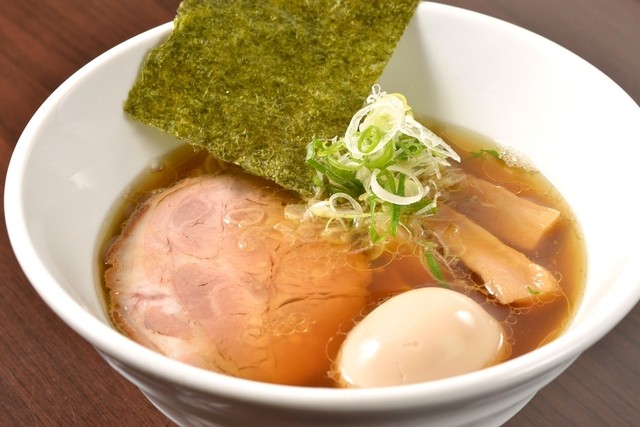
Approaching a house-style ramen shop in Tokai changes the meal’s rhythm before the bowl arrives. This is not Nagoya station dining or the late-night neon ramen circuit built for turnover and after-work crowds. The scale is local, the room compact, and the promise narrow: a carefully made bowl in a residential-fringe setting where the seasoning source matters as much as the category on the sign.
Aichi ramen has a different centre of gravity from Tokyo’s hyper-specialised counter culture. The prefecture’s noodle scene often rewards balance, accessibility, and regional seasoning over theatrical minimalism. Shien fits that register. Its place in the Tabelog 100 Ramen AICHI 2025 list puts it among the prefecture’s notable ramen addresses, but the stronger signal is local taste: Aichi diners reward shops that make everyday ramen feel considered without turning it into luxury dining.
Chita Peninsula tamari gives the bowl its regional argument
The key detail is the soy sauce base. Shien’s own description cites several types of tamari from the Chita Peninsula, important in Aichi, where soy production and darker, deeper seasonings have long regional presence. In ramen terms, this is not just seasoning. It locates the bowl in its prefecture, using local fermentation culture rather than treating shoyu as a generic brown note.
That ingredient angle explains why Shien reads differently from a simple low-cost ramen stop. The listed categories are ramen and dumpling, but the editorial interest lies in how a small Tokai shop uses familiar formats to express a local pantry. Shoyu and shio ramen are described as made without chemical seasonings, giving the kitchen a tighter margin for error. Without that shortcut, broth, tare, and aroma oil must carry the structure. For diners used to Japan’s heavier ramen styles, this bowl asks attention to seasoning and finish rather than sheer weight.
The Aichi comparison is useful. RAMEN Burosu, Men Tamayura Kariya ten, and Menya Sakura sit in a similar ramen price band outside Tokai, showing a competitive field where recognition is not bought through high spend. The question is not whether a bowl costs like fine dining; it is whether a modest ticket feels specific. Shien’s Chita Peninsula tamari reference gives it that specificity. Nearby non-ramen comparators such as Konasu and Nigiri Zushi 150 operate in different dining categories and higher spend brackets, underscoring how ramen in Aichi remains one of the region’s most democratic quality formats.
A compact Tokai room built for everyday seriousness
Format matters because ramen is as much choreography as cuisine. Four counter seats, one two-seat table, and two four-seat tables serve solo diners and families without losing the close-focus feeling of a noodle shop. That mix matters in Tokai, where dining serves local households as much as destination eaters crossing a prefecture for a named bowl. Children are welcome, private rooms are not part of the setup, and the atmosphere is practical and calm rather than performative.
There is a distinction between intimacy and exclusivity. Shien is small, but not staged as a members’ club or tasting counter. Reservations are unavailable, preserving ramen’s walk-in tradition. The shop opened in 2013, giving it more than a decade of local operating history before its 2025 Tabelog 100 selection. In a category where openings can burn bright and disappear quickly, that duration is a stronger signal than hype.
The family-friendly positioning also separates it from the harsher end of ramen culture, where narrow counters and rapid turnover can make children feel out of place. Here, the seating mix and no-smoking policy make the meal more flexible. Solo diners still get the counter; small groups get tables; families need not translate ramen etiquette into a silent, single-file exercise.
How to place Shien within a Tokai dining day
Tokai does not ask every visitor to build a full culinary itinerary around one meal. Its dining value is quieter: regional specialisation, everyday restaurants with long local memory, and proximity to broader Aichi food culture. Shien works as the ramen anchor in that kind of day, especially for travellers interested in how local seasoning traditions appear in casual food, not only formal restaurants.
For broader planning, Our full Tokai restaurants guide is the natural companion. Travellers staying nearby can pair it with Our full Tokai hotels guide, while drink-focused readers should use Our full Tokai bars guide for the evening side of the city. The wider region also rewards slower routing through Our full Tokai wineries guide and Our full Tokai experiences guide, especially for visitors using food to read local production rather than simply fill a schedule.
Japan’s casual dining map is broad enough that ramen benefits from contrast. A sukiyaki meal such as -Grilled beef Sukiyaki- KAMAKURA TANUKIAN 鎌倉 たぬき庵 in Kamakura, a Tokyo izakaya-grill format like . 鮪と炭火焼き うお炭 秋葉原店 in Tokyo, or a Kyoto address such as [ki:] in Kyoto all sit in different traditions. That spread clarifies what Tokai ramen offers: speed, affordability, and a direct line from local seasoning to bowl.
The wider EP Club restaurant map shows how ingredient identity changes by city: .cafe in Osaka.know in Kumamoto, (Shoku) Vietnam in Kawasaki, [Curry Senmon Ten] Maruyama Kyoju. in Sapporo, #肉といえば松田 奈良本店 in Kashihara, 1/3 HAMBURGER FACTORY in Kanazawa, 1000 in Yokohama, and 1000mヒュッテ 1000m Hut in Kutchan each make sense in their local frame. Across the Pacific, Jōdo Saké Bar in Los Angeles and Onigiri Time in Pasadena show how Japanese formats travel; Shien is the counterpoint, a regional Japanese shop whose value comes from staying close to home.
The editorial case is clear: this is Aichi ramen with a local seasoning argument, not a luxury detour or chef-driven mythology. The useful diner notices tare, regional soy culture, and small-room rhythm. In Tokai, that is enough to make a modest bowl carry more weight than its price category suggests.
A Quick Peer Check
Comparable venues by cuisine and price in the same metro.
| Venue | Cuisine | Price | Notes |
|---|---|---|---|
| ShienThis venue — the venue you are viewing | Ramen & Dumplings | $ | Not listed |
| Arry 8Bites | Japanese Small Bites | $ | Tokyo |
| Umemura | Japanese Soul Food | $ | Koto |
| 中華そば 速水 | 和歌山ラーメン | $ | 緑ヶ丘 |
| Yakiimo Maru Jun | Roasted sweet potato & Japanese sweets shop | $ | Tsurumicho |
| Hana Ichi | Traditional Chinese Soba & Ramen Shop | $ | Toyoake |
Recognition history
Dated appearances from independent guides and award organizations, with the underlying list record or original source where available.
Tabelog 100 #64 · No. 64
Tabelog · Tabelog 100 - Ramen - AICHI - 2025
Continue exploring
More in Tokai
Restaurants in Tokai
Browse all →
At a Glance
- Cozy
- Casual
- Casual Hangout
- Family
- Solo
- After Work
- Group Dining
- Standalone