
Hana Ichi puts Toyoake into Aichi’s serious ramen conversation: a 10-seat counter recognized in Tabelog 100 - Ramen - AICHI - 2025, working across ramen, tsukemen, and Taiwanese mixed noodles. Its appeal is not luxury theatre but ingredient discipline, compact pacing, and the local ramen-shop format at a price tier that keeps the focus on the bowl rather than ceremony.
Pearl is the En Primeur Club membership app — saves, bookings, and concierge access live there. Same editors, same standards.
- Address
- Osada-1-18 Nishigawacho, Toyoake, Aichi 470-1122, Japan
- Phone
- +81 562-95-1331
- Website
- youtube.com
- Directions
- Get directions
 Saves & bookings on Pearl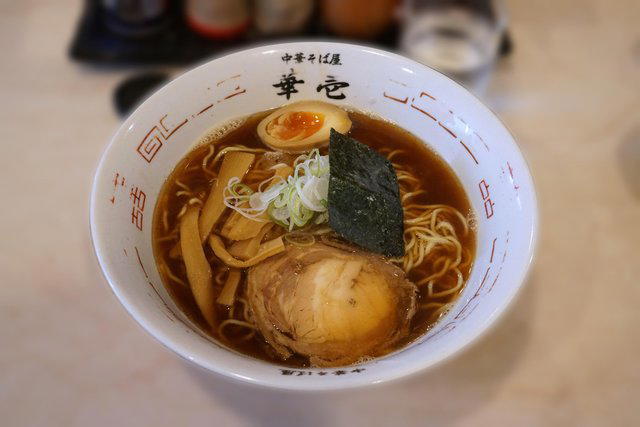
Approach this kind of suburban Aichi ramen counter and the room tells the story before the menu does: a narrow field of seats, a short exchange at the counter, and a meal built around speed, heat, and repetition rather than a long-form restaurant performance. Hana Ichi belongs to that disciplined register. In Toyoake, where dining skews local and practical rather than destination-polished, a counter-only ramen shop recognized in Tabelog 100 - Ramen - AICHI - 2025 carries a different kind of weight: it signals consistency in a category where small variations in broth, noodle texture, tare, oil, and topping balance decide whether a bowl disappears into routine or earns regional attention.
Aichi’s ramen culture is not a single style. Nagoya’s influence brings Taiwan ramen and mazesoba into the broader regional vocabulary, while suburbs around the city support shops that serve workers, families, solo diners, and regulars with equal efficiency. Hana Ichi sits inside that ecosystem rather than above it. The categories attached to the shop, ramen, tsukemen, and Taiwanese mixed noodles, say more than a broad cuisine label would. They point to three different ways of controlling concentration: soup carried through broth and tare, dipping noodles built around intensity and temperature contrast, and mixed noodles that rely on seasoning, fat, and texture without the same volume of soup.
Aichi ramen, read through concentration rather than ceremony
Ingredient sourcing matters in ramen because the final bowl leaves nowhere to hide. Noodles expose flour choice and hydration; broth exposes time, extraction, and seasoning; tsukemen exposes whether a dipping sauce has enough density to cling without turning heavy. Taiwanese mixed noodles, common in the Nagoya orbit, add another test: minced topping, spice, aromatics, and noodle chew have to carry the meal without soup doing the balancing work. Hana Ichi’s range across these formats places it in a practical Aichi tradition where the menu is less about breadth for its own sake and more about distinct expressions of salt, fat, wheat, and umami.
The Tabelog 100 recognition is useful because ramen awards in Japan tend to reward repeatable execution rather than luxury cues. This is not a category where linen, wine service, or a tasting-menu arc can create cover. A shop with 10 counter seats is judged in close quarters, bowl by bowl, with turnover and scrutiny built into the format. That scale also changes the experience: the counter compresses decision-making, service, and cooking into one visible line. For diners used to reservation-led restaurants, this can feel abrupt; for ramen regulars, it is part of the grammar.
Within Toyoake, the comparison is telling. Taiyaki Murasakiya occupies a sweeter, snack-led lane at a lower spend, while the restaurant operates in the everyday-meal band that serious ramen shops across Aichi often share with peers such as Ramen mellow, Bebe, and Kondo Meshinosuke. The point is not extravagance. The point is whether a modestly priced bowl can justify attention beyond immediate convenience. Recognition in the 2025 Aichi ramen selection suggests that this counter has moved beyond being merely local.
The counter format suits solo diners, families, and noodle-focused meals
Ramen counters in Japan are often misunderstood by travelers as solitary spaces only. The better reading is more functional: counter seating lets the kitchen control pacing, keeps the meal short, and removes the friction of a full-service dining room. The restaurant’s listed occasions include solo dining, friends, and family use, with children welcome, which places it in a more accessible register than the austere counter stereotype. That matters in Toyoake, where a restaurant has to serve neighborhood life as much as visitors chasing a list.
The room’s compactness also sharpens the editorial proposition. This is not a place to stretch an evening around courses; it is a place to evaluate a kitchen through one bowl and, for repeat diners, through the differences between soup ramen, dipping noodles, and mixed noodles. Tsukemen rewards diners who like stronger seasoning and a more tactile noodle experience. Soup ramen gives a clearer read on broth balance. Taiwanese mixed noodles belong to Aichi’s louder, more seasoned side, and fit the region’s appetite for dishes with direct impact rather than polite restraint.
For travelers building a Toyoake food day, the restaurant works as the savory anchor rather than the entire itinerary. The wider city edit sits in our full Toyoake restaurants guide, with lodging context in our full Toyoake hotels guide, drinking addresses in our full Toyoake bars guide, regional cellar coverage in our full Toyoake wineries guide, and cultural planning in our full Toyoake experiences guide. Read together, they make Toyoake less an add-on to Nagoya and more a compact local dining map with ramen, sweets, and everyday counters doing the heavy lifting.
How to place it in a Japan-wide dining itinerary
The restaurant is not trying to compete with Japan’s formal dining rooms, and that is the advantage. A country-wide itinerary needs contrast: counter ramen in Aichi, sukiyaki in Kamakura, izakaya-style seafood in Tokyo, compact cafe culture in Osaka, and specialist regional cooking elsewhere. For that broader comparison, EP Club’s Japan coverage ranges from -Grilled beef Sukiyaki- KAMAKURA TANUKIAN 鎌倉 たぬき庵 in Kamakura and . 鮪と炭火焼き うお炭 秋葉原店 in Tokyo to .cafe in Osaka.know in Kumamoto, (Shoku) Vietnam in Kawasaki, [Curry Senmon Ten] Maruyama Kyoju. in Sapporo, [ki:] in Kyoto, #肉といえば松田 奈良本店 in Kashihara, 1/3 HAMBURGER FACTORY in Kanazawa, and 1000 in Yokohama. For Japanese food culture abroad, the frame extends to Jōdo Saké Bar in Los Angeles and Onigiri Time in Pasadena.
The critical read is simple: the restaurant is strongest as a study in how regional ramen earns attention without expensive signals. The draw is the compact counter, the Aichi noodle vocabulary, and a selection that validates the shop within its own category. For diners who care about ingredient expression at everyday scale, that is the point. Wheat, broth, seasoning, and temperature do the work; the room just keeps the focus where it belongs.
Snapshot
Comparable venues by cuisine and price in the same metro.
| Venue | Cuisine | Price | Notes |
|---|---|---|---|
| Hana Ichi | Traditional Chinese Soba & Ramen Shop | $ | Toyoake |
| Taiyaki Murasakiya | Traditional Japanese taiyaki & obanyaki shop | $ | Toyoake |
| Pan no Mise Polka | Japanese neighborhood bakery | $ | Inba |
| Menya Ierou | Japanese Ramen | $ | Nakagawa |
| BUCYO COFFEE | Nagoya kissaten café with Ogura toast | $ | Nakamura |
| Tonkatsu Shokubo Atsumaru | Tonkatsu | $ | Moriyama |
Recognition history
Dated appearances from independent guides and award organizations, with the underlying list record or original source where available.
Tabelog 100 #30 · No. 30
Tabelog · Tabelog 100 - Ramen - AICHI - 2025

At a Glance
- Solo
- Casual Hangout
- After Work
- Standalone
Current opening hours
- Monday
- Closed
- Tuesday
- Closed
- Wednesday
- 11:30 AM–2 PM, 6–9 PM
- Thursday
- 11:30 AM–2 PM, 6–9 PM
- Friday
- 11:30 AM–2 PM, 6–9 PM
- Saturday
- 11:30 AM–2 PM
- Sunday
- 11 AM–2 PM
Hours can change for holidays and private events. Last verified .