
Michelin Plate
Our verdict
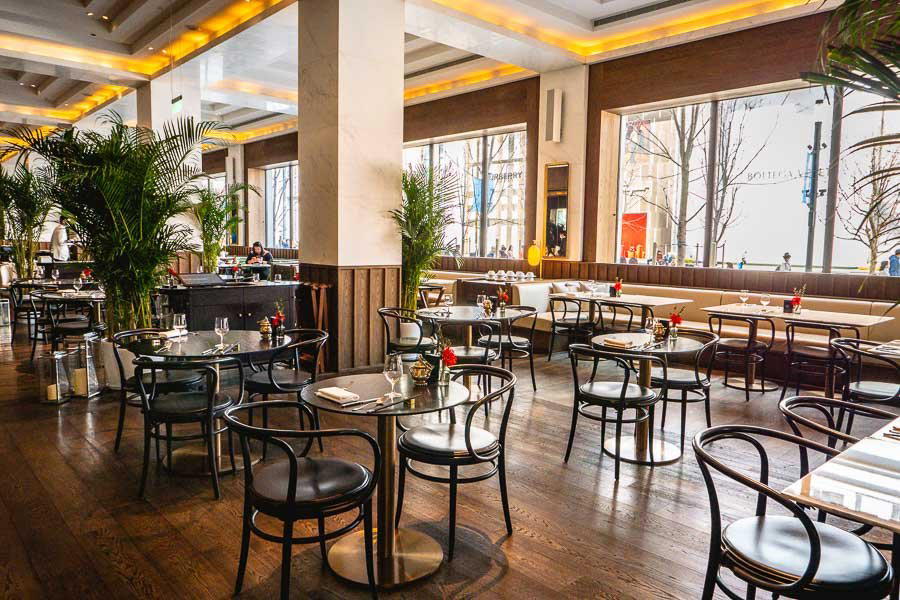
Inside the Shanghai Edition hotel on East Nanjing Road, Shanghai Tavern operates as a deliberate revival of mid-century grand café dining, complete with potted palms, white-jacketed waiters, a champagne chariot, and a dessert trolley. The menu spans clam Rockefeller, Josper-grilled steaks, and mac and cheese, covering the full range of a classic Western brasserie. For regulars, it is the room's unhurried formality and the consistency of service that keeps them returning.

Pearl is the En Primeur Club membership app, where members save venues, book tables and use the concierge.
The menu
What to order
- Ribeye steak
- Roast seabass
- Beef tartare
What the Room Remembers
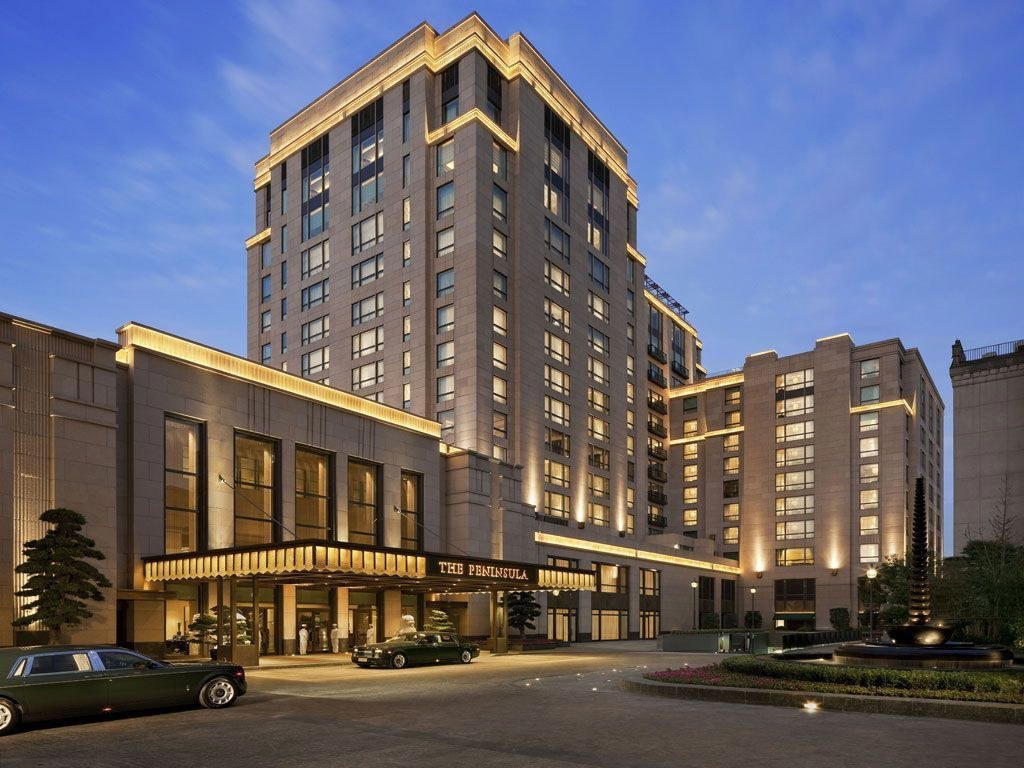
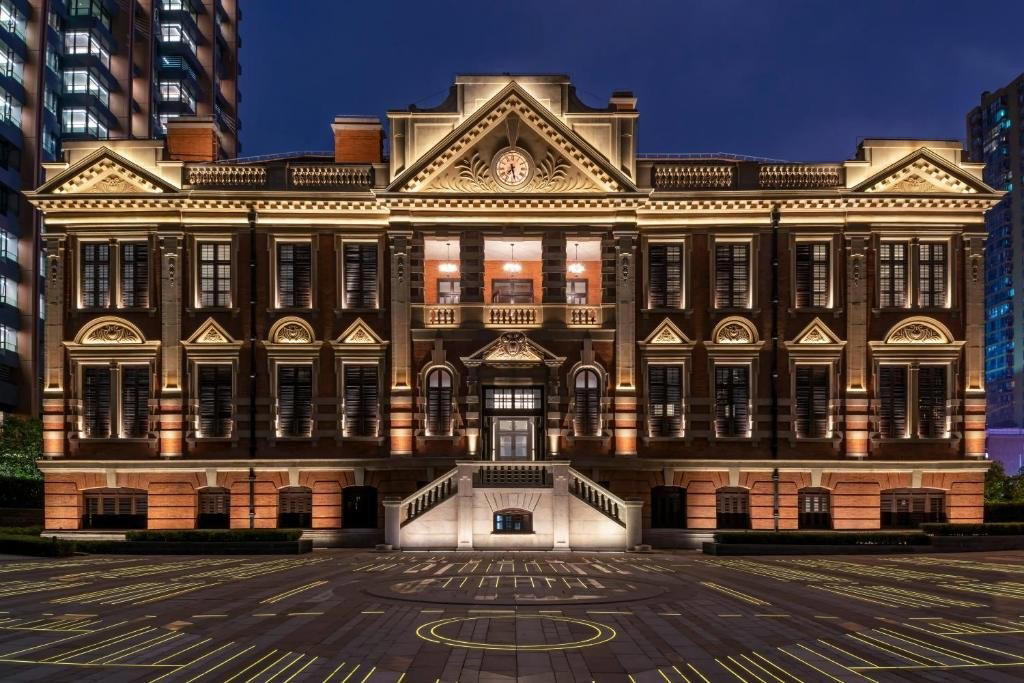
There is a particular quality to rooms that commit fully to a period and refuse to apologise for it. Shanghai Tavern, on the ground floor of the Shanghai Edition at 199 East Nanjing Road, is that kind of room. Potted palms frame the sightlines. Waiters in white jackets move with the measured pace of a hotel dining room from another era. A champagne chariot circulates, and a dessert trolley arrives tableside with the same theatricality you might expect from a grand European café circa 1935. The Edition itself is a contemporary hotel, and the contrast is the point: the Tavern is a deliberate act of preservation inside a building that is anything but.
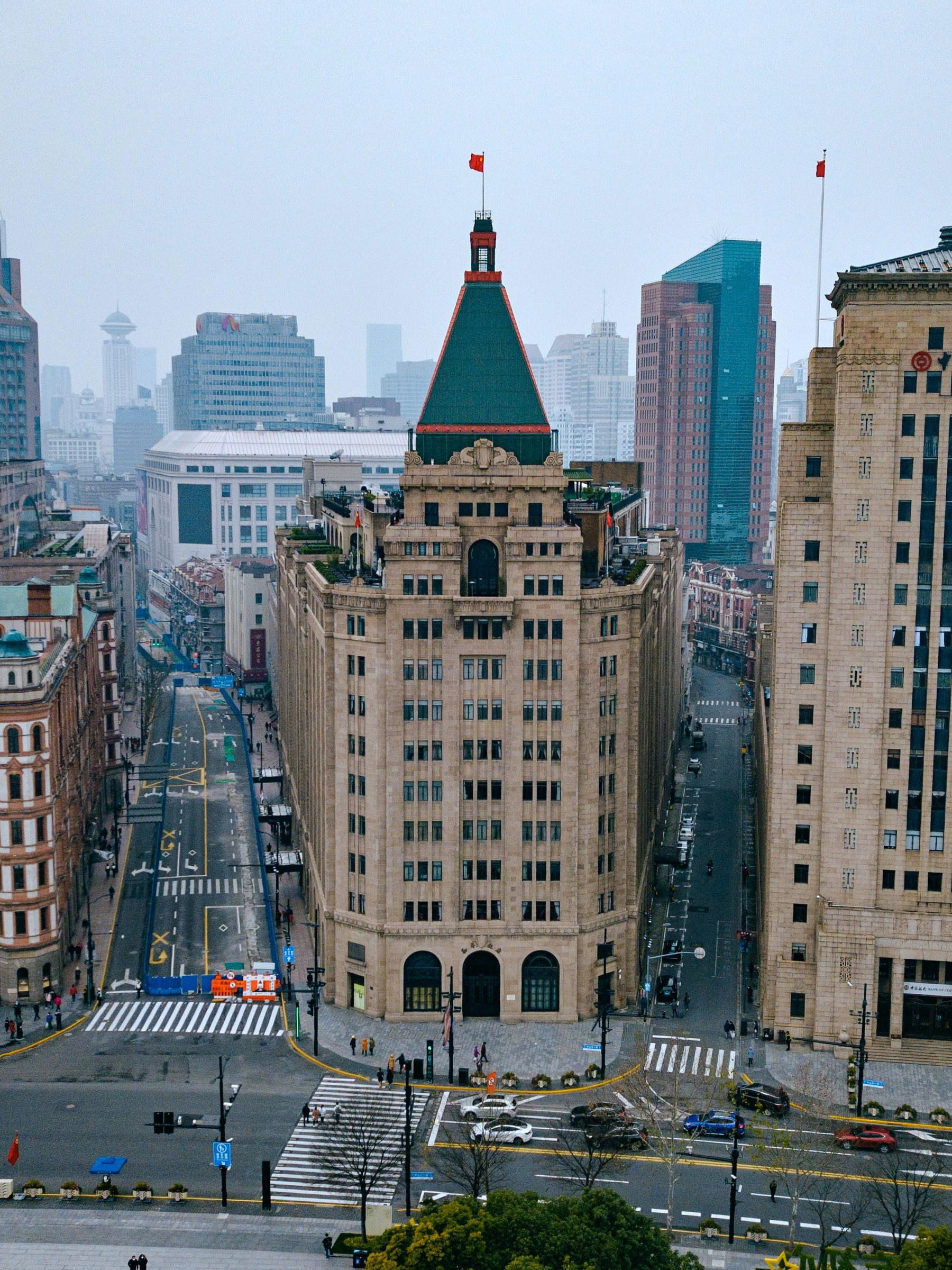
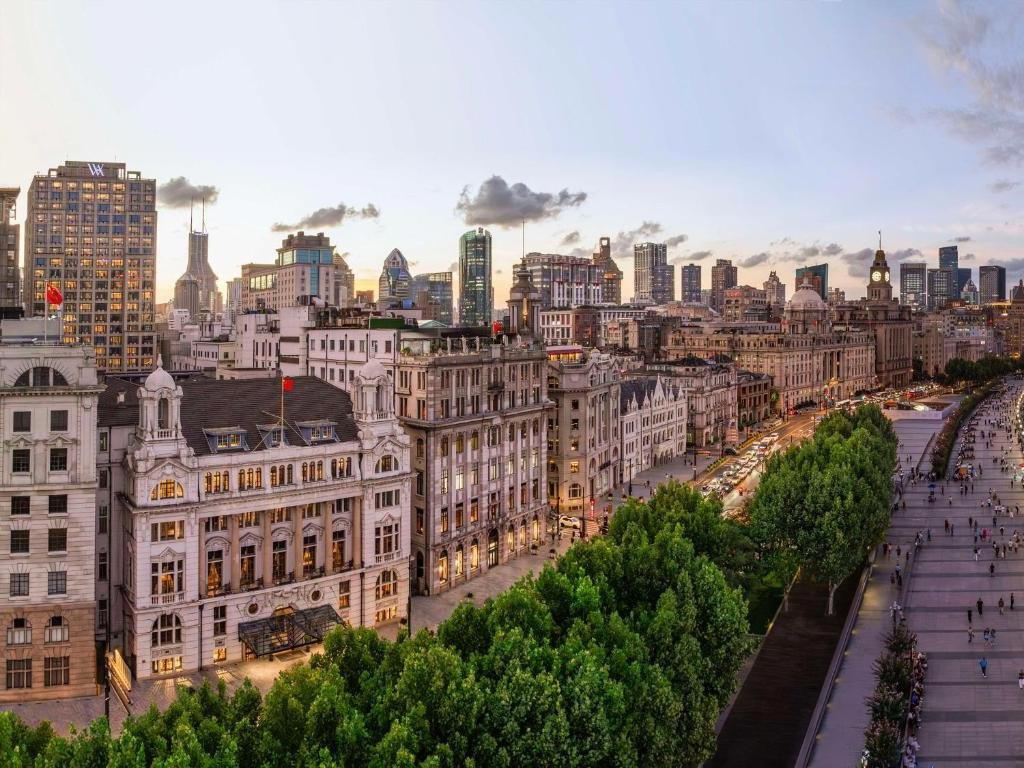
East Nanjing Road has been Shanghai's central commercial artery for over a century, and the buildings along it carry accumulated layers of history that most cities would trade almost anything to possess. Dining rooms that acknowledge that weight, rather than chasing the next trend, occupy a specific position in the city's hospitality map. Shanghai Tavern sits in that position with apparent confidence.
The Logic of Returning
The question worth asking of any room that trades on atmosphere is whether regulars are returning for the feeling or for the food, and at Shanghai Tavern the honest answer appears to be both, in roughly equal measure. The kitchen covers what might be called the full Western brasserie range: clam Rockefeller on the starter end, steaks from a Josper grill, and mac and cheese as a deliberate gesture toward comfort over pretension. That breadth is a considered choice. It signals that the Tavern is not trying to compete with the tasting-menu format restaurants that occupy the upper tier of Shanghai dining, places like Taian Table or the Chinese fine dining available at 102 House. Instead, it is building a different kind of loyalty: the loyalty of a room that knows what it is and executes it reliably.
Regulars in rooms like this tend to develop what amounts to an unwritten menu, a set of personal anchors that fall outside any printed list. The champagne chariot, for instance, is the kind of feature that becomes a ritual for certain tables: the opening pour that marks the beginning of an evening rather than simply a beverage choice. The dessert trolley functions similarly, as theatre as much as sustenance. For guests of the Edition hotel, the Tavern often becomes a default rather than a destination, but for a meaningful subset of Shanghai's dining public it operates the other way around: they book a table at the Tavern and the hotel is simply where it lives.
Placing It in Shanghai's Dining Picture
Shanghai's restaurant scene has developed a clear bifurcation over the past decade. On one side sit high-concept Chinese restaurants, from the vegetable-focused precision of Fu He Hui to the regional Taizhou cooking at Xin Rong Ji. On the other, a cohort of Western and international formats that range from the Italian fine dining of 8 1/2 Otto e Mezzo Bombana to more casual European brasseries. Shanghai Tavern occupies a niche within the Western category that few rooms in the city genuinely hold: the nostalgic grand café, executed with enough resource and attention to avoid feeling like pastiche.
The comparison set is not really other hotel restaurants in Shanghai, though the Edition's position gives it natural peers in that category. The more useful comparison is with rooms in other cities that have built identities around a specific historical dining register. Le Bernardin in New York City or Emeril's in New Orleans both demonstrate, in different registers, that a clearly defined dining identity produces a distinct kind of loyalty. Shanghai Tavern is working toward something analogous within its own city context.
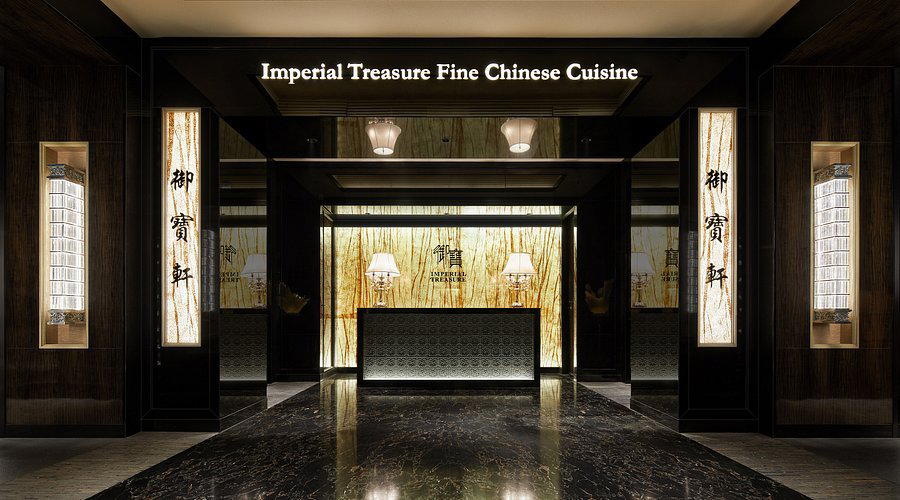
If you are building an itinerary across the region, it is worth noting the range available on EP Club: Chef Tam's Seasons in Macau, Ru Yuan in Hangzhou, and Imperial Treasure Fine Chinese Cuisine in Guangzhou each represent different points on the wider Chinese fine dining spectrum. For broader context in Shanghai itself, our full Shanghai restaurants guide covers the city's current range in depth.
The Sound and the Pace
Atmosphere in dining rooms is rarely accidental, and the Tavern's soundtrack, noted explicitly among its distinguishing features, is part of a deliberate sensory architecture. Hotel dining rooms that let their music choices drift toward generic background noise lose something that is difficult to articulate but immediately felt by returning guests. Rooms that get the register right, that calibrate volume and genre to the physical space and the expected pace of an evening, create conditions where conversation flows more naturally and the time at the table extends without effort. This is what the Tavern's regular clientele appears to return for as much as any specific dish.
Service warrants the same observation. White-jacketed waiters are a costume choice that only pays off if the underlying service culture supports it. Keen service, as the Tavern's record notes, is part of what sustains its reputation. In a city where the dining options at any price point are numerous, consistency of service is what converts occasional visitors into regulars.
Planning a Visit
Shanghai Tavern sits on the ground floor of the Shanghai Edition hotel at 199 East Nanjing Road, Huangpu, placing it directly on the Bund-adjacent corridor that connects some of the city's most recognised dining and drinking addresses. The East Nanjing Road metro station makes it direct to reach from most central Shanghai neighbourhoods. For those travelling with more time in the city, our Shanghai hotels guide covers the wider accommodation picture, and our Shanghai bars guide and Shanghai experiences guide round out the options for a full itinerary. For those with an interest in regional wine, our Shanghai wineries guide is worth consulting in parallel.
For dining beyond Shanghai, EP Club covers an expanding range of Chinese cities, including Xin Rong Ji in Beijing, Xin Rong Ji in Chengdu, and Dai Yuet Heen in Nanjing.
Frequently asked questions
Does Shanghai Tavern work for a family meal?
The menu spans clam Rockefeller, Josper-grilled steaks, and mac and cheese, which covers enough range that different preferences can be satisfied at the same table without negotiation. The brasserie format and attentive service in white-jacketed style keep the experience relaxed rather than ceremonial, which helps with mixed groups. The ground-floor location at 199 East Nanjing Road also makes logistics simple.
Is Shanghai Tavern better for a quiet night or a lively one?
Neither extreme applies here. The Tavern operates at a deliberate mid-register: the champagne chariot, dessert trolley, and curated soundtrack create energy, but the room's heritage proportions and white-jacketed service keep things composed rather than loud. It sits closer in tone to a classic hotel brasserie than to Shanghai's high-concept tasting counters or its more animated bar-dining rooms.
What distinctions does Shanghai Tavern have?
Shanghai Tavern has received recognition including: It may be located within the contemporary backdrop of the Edition Hotel but the Shanghai Tavern celebrates a bygone era; the elegant space shows off its original 20C heritage and there are potted palms, waiters in white jackets, a champagne….
What's the must-try dish at Shanghai Tavern?
The clam Rockefeller and the Josper-grilled steak are the two anchor points the venue is consistently identified with. The Josper grill, a charcoal-burning oven that runs at higher temperatures than a conventional broiler, produces a distinct crust that separates it from standard hotel steakhouse output. The clam Rockefeller, a dish rooted in late-19th-century American brasserie tradition, fits the room's period sensibility directly.
What's Shanghai Tavern's location?
Shanghai Tavern is located at 1F, Shanghai Edition, 199 East Nanjing Road, Huangpu, Shanghai.
A Lean Comparison
Comparable venues nearby, for context on price, style, and recognition.
| Venue | Cuisine | Price | Awards | Notes |
|---|---|---|---|---|
| Shanghai TavernThis venue (the venue you are viewing) | Contemporary European Brasserie | Not listed | Michelin Plate | Not listed |
| Canton Disco | Modern Cantonese Fusion | $50–100 | Michelin Plate | Lan Ni Du, Modern Cantonese Fusion |
| The Meat | Contemporary Steakhouse and Grill | $50–100 | Michelin Plate | Da Pu Qiao, Contemporary Steakhouse and Grill |
| Lost Heaven | Authentic Yunnanese | $20–30 | Not listed | Lan Ni Du, Authentic Yunnanese |
| The Commune Social | Modern Spanish Tapas | Not listed | Michelin Bib Gourmand | Jing'an, Modern Spanish Tapas |
Recognition history
Dated appearances from independent guides and award organizations, with the underlying list record or original source where available.
Michelin Plate
Michelin
Continue exploring
More in Shanghai
Restaurants in Shanghai
All restaurants in Shanghai →
Bars in Shanghai
All bars in Shanghai →
Details
- Elegant
- Modern
- Sophisticated
- Brunch
- Business Dinner
- Special Occasion
- Open Kitchen
- Hotel Restaurant
- Historic Building
- Extensive Wine List
- Street Scene
- A La Carte
- Set Menu
- Vegetarian Friendly
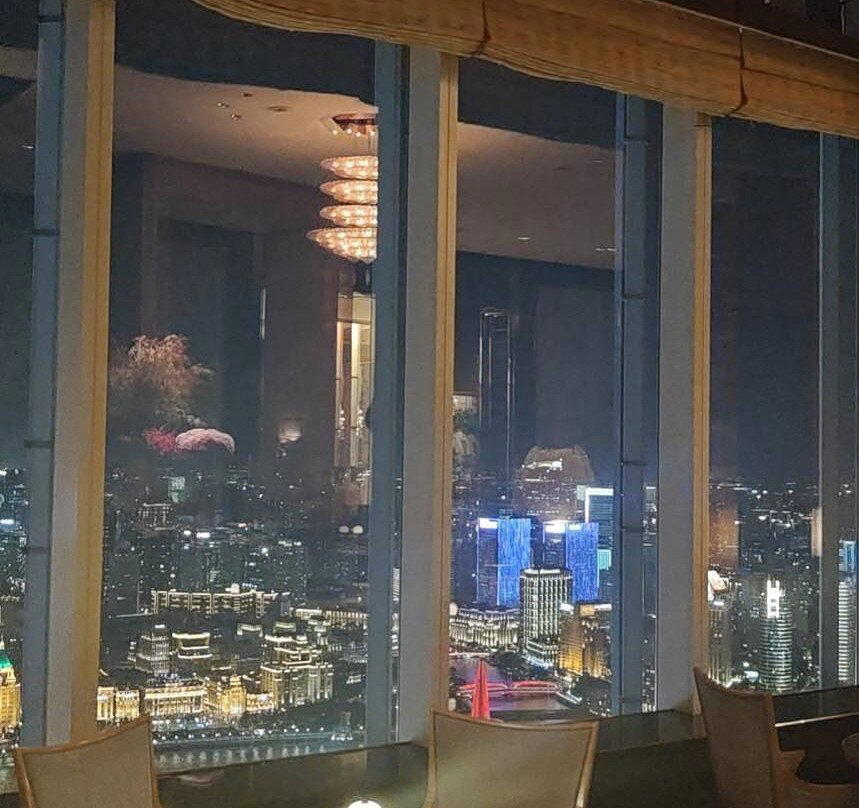
Airy and bright with high ceilings, potted palms, and an elegant heritage interior blending 20th-century history with modern intimacy.