Seoul Patch
Seoul Patch occupies a quiet corner of Potrero Hill at 1469 18th Street, where Korean-inflected cooking meets San Francisco's ingredient-led sensibility. Positioned outside the city's tasting-menu circuit but adjacent to its ethos, it draws a neighbourhood crowd that tends to return. For visitors cross-referencing the broader SF dining scene, it offers a different register from the flagship contemporary rooms downtown.
Pearl is the En Primeur Club membership app — saves, bookings, and concierge access live there. Same editors, same standards.
- Address
- 1469 18th St, San Francisco, CA 94107
- Phone
- (415) 278-0480
- Website
- mochicasf.com
- Directions
- Get directions
 Saves & bookings on Pearl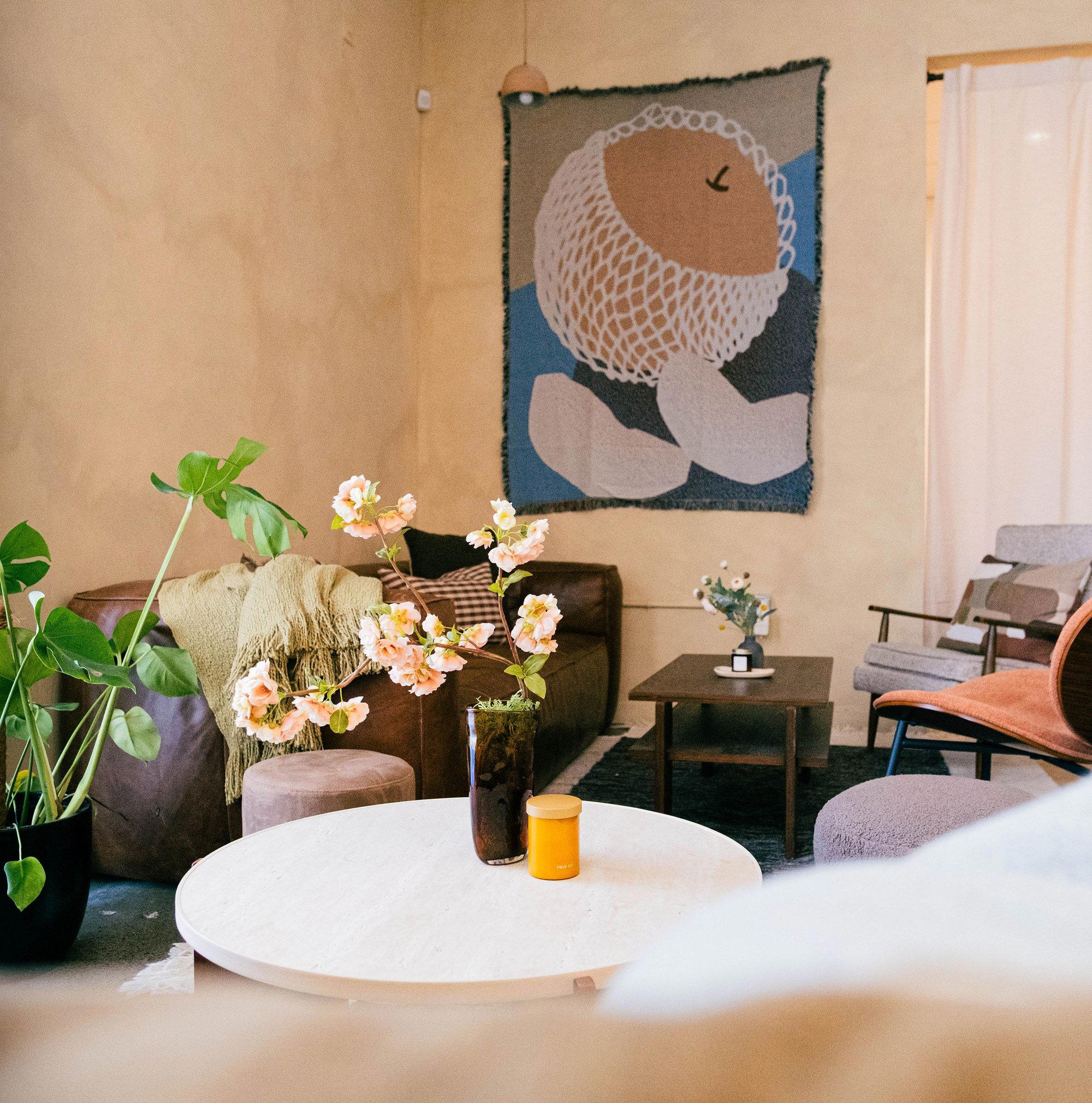
Potrero Hill and the Korean-California Cooking Question
San Francisco has spent the better part of two decades resolving a tension between its European fine-dining inheritance and the Pacific-facing cuisines that suit it better. The city's most-discussed contemporary rooms, Benu, Atelier Crenn, Lazy Bear, have each staked out positions in that debate, but they operate at price points and formality levels that remove them from everyday neighbourhood life. The more interesting question, for anyone mapping the city's food character in full, is what happens when Korean culinary logic meets the Californian preference for informality and local sourcing. That is the conversation Seoul Patch at 1469 18th Street, Potrero Hill, is positioned to join. Seoul Patch is an Authentic Korean restaurant in San Francisco with.
Potrero Hill has never carried the dining prestige of Hayes Valley or the Mission's taqueria belt, but it has accumulated a specific kind of resident: tech-adjacent professionals who eat seriously but resist ceremony. A restaurant here does not compete on room drama. It competes on what arrives at the table and whether the cooking has a coherent point of view. That competitive context shapes how Seoul Patch should be read, not against Quince or Saison, but against the working hypothesis that neighbourhood cooking in SF can carry genuine culinary ambition.
How the Menu Reveals Its Logic
Korean cooking, when transplanted into American cities, has historically sorted into two commercial formats: the KBBQ hall built around interactive grilling, and the banchan-heavy lunch counter aimed at efficiency. A third format has been slower to emerge, one that borrows Korean fermentation rhythms, punch-forward seasoning, and banchan's philosophy of abundance and contrast, and applies them to a sit-down dining structure that Western audiences recognise as a restaurant meal. New York has seen this most visibly at Atomix, where Korean technique has been formalized into one of the country's most discussed tasting menus. San Francisco's version of that conversation is less institutionalized, which is partly why a place like Seoul Patch warrants attention.
The menu architecture at a Korean-Californian restaurant is a useful diagnostic for what the kitchen actually believes. Does it treat Korean flavour as seasoning on otherwise Western plates, or does it accept that the structural logic of Korean meals, the layering, the fermented base notes, the expectation of multiplicity, requires a different approach to how dishes arrive and relate to each other? The former is fusion in the older, less interesting sense. The latter is something more demanding and more rewarding. For visitors comparing this category across American cities, the analogous exercise plays out at Blue Hill at Stone Barns with farm-to-table logic, or at Providence in Los Angeles with Japanese-inflected seafood: the question is always whether the organizing principle is deep enough to sustain a meal.
The 18th Street Address in Context
The physical address, 1469 18th Street, sits in a block where Potrero Hill transitions between residential quiet and the light commercial strip that services it. There is no valet parade, no line out the door that signals institutional success. The approach is low-key in the way that neighbourhood restaurants in this part of San Francisco tend to be, which means the room needs to do its work through cooking rather than theatre. That is a reasonable trade in a city where the theatre rooms, The French Laundry in Napa, Single Thread Farm in Healdsburg, already exist at the summit of the market and draw accordingly.
For the San Francisco visitor whose itinerary includes one of the city's flagship tasting rooms and is looking for a contrasting meal, Potrero Hill offers a register shift. The neighbourhood lacks the footfall of the Embarcadero or North Beach, which tends to keep restaurants here honest: they serve the people who live nearby and return weekly, not a rotating audience of first-timers who will not come back regardless of the experience. That dynamic generally produces tighter, more consistent cooking over time.
Seoul Patch Against the Wider American Korean Dining Moment
Korean food's trajectory in American fine dining has accelerated since roughly 2018, when a cluster of New York openings began treating it as a complete culinary tradition rather than a source of accent flavours. The question for San Francisco, which has strong Korean-American communities in the South Bay and a fine-dining culture that has absorbed Japanese, Chinese, and Southeast Asian influences unevenly, is whether that elevation has reached neighbourhood scale or remains confined to destination restaurants. Comparable moments in other cities are instructive: Alinea in Chicago did not produce a generation of neighbourhood successors operating at its level; Le Bernardin in New York shaped seafood cooking across price tiers. The filtering effect works differently depending on the cuisine and the city.
For context beyond the US west coast, Korean fine dining has developed most formally in Hong Kong's multi-cultural restaurant market, where venues like 8½ Otto e Mezzo Bombana demonstrate how a city with strong fine-dining infrastructure can absorb and formalize culinary traditions that began elsewhere. San Francisco's equivalent infrastructure, Michelin coverage, a media apparatus that tracks openings closely, a dining public with disposable income and curiosity, exists. Whether it is directing enough attention to Korean-Californian cooking at the neighbourhood level remains an open question. The restaurant is one data point in that inquiry. Elsewhere in the country, Addison in San Diego, Bacchanalia in Atlanta, and Emeril's in New Orleans each represent local institutions that absorbed outside culinary influence over time; the pattern of how that absorption happens is worth tracking. See our full San Francisco restaurants guide for broader context on where the city's dining is moving.
For visitors considering The Inn at Little Washington as a benchmark for what American regional cooking looks like when a neighbourhood institution reaches institutional status over decades, the comparison is useful: longevity and consistency are the mechanisms, and they begin with exactly the kind of low-ceremony neighbourhood commitment that a Potrero Hill address implies.
Planning Your Visit
The restaurant is located at 1469 18th Street, San Francisco, CA 94107, in the Potrero Hill neighbourhood. Given the sparse online presence, no website or phone number is currently indexed, one reliable approach is to visit directly or search for current reservation availability through third-party booking platforms. Potrero Hill is accessible by the 19-Polk and 22-Fillmore Muni lines; street parking is available on 18th Street and surrounding blocks.
Just the Basics
Comparable venues nearby, for context on price, style, and recognition.
| Venue | Cuisine | Price | Notes |
|---|---|---|---|
| Seoul PatchThis venue — the venue you are viewing | Potrero Hill, Authentic Korean | $$ | Not listed |
| Tonight Soju Bar | Sunset, Korean Soju Bar | $$ | Not listed |
| bibim bar | Not listed | $$ | Financial District, Korean Bibimbap Specialist |
| Gung Ho | Not listed | $$ | San Francisco (Chinatown area), Korean Street Food |
| Surisan | North Beach, Modern Korean Fusion | $$ | Not listed |
| Brothers Restaurant | Inner Richmond, Authentic Korean BBQ | $$ | Not listed |
Continue exploring
More in San Francisco
Restaurants in San Francisco
Browse all →
Bars in San Francisco
Browse all →
Hotels in San Francisco
Browse all →
At a Glance
- Casual
- Cozy
- Group Dining
- Family
- Casual Hangout
Current opening hours
- Monday
- Closed
- Tuesday
- 4–9 PM
- Wednesday
- 4–9 PM
- Thursday
- 4–9 PM
- Friday
- 10 AM–10 PM
- Saturday
- 10 AM–10 PM
- Sunday
- 10 AM–9 PM
Hours can change for holidays and private events. Last verified .
Casual and welcoming with large photos of classic Korean dishes as décor.