Seeds & Weeds @Tin Building

We're Smart World 3 Radishes
Our verdict
Seeds & Weeds occupies a corner of the Tin Building, Jean-Georges Vongerichten's sprawling Lower Manhattan food hall at 96 South Street, and focuses entirely on plant-based cooking. The menu draws across Mediterranean, Mexican, American, and Indian traditions, delivered as sharing plates designed for the table rather than the individual. It is one of the more focused concepts inside a complex built for range.
The menu
What to order
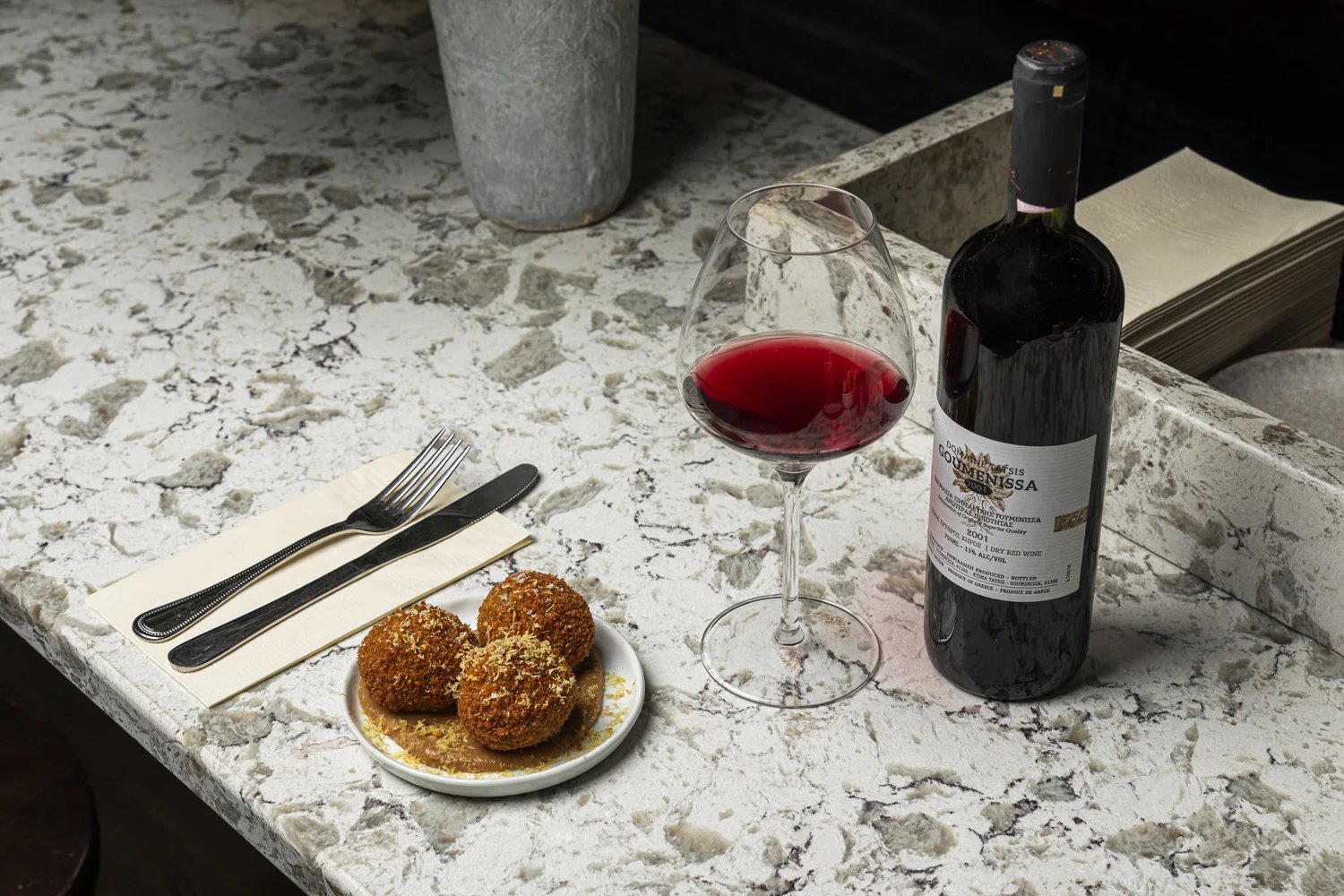
- Cornmeal crusted baby trumpet mushrooms
- Chocolate pudding
- Olive oil fried artichokes
A Food Hall Built Around Multiplicity, and One Counter That Chose Otherwise
The Tin Building at 96 South Street is a particular kind of project: a multi-concept food destination assembled under one roof by Jean-Georges Vongerichten, the chef whose name has been attached to dining rooms from New York to Shanghai for several decades. The building houses restaurants, market stalls, bars, and specialty counters, all operating within the renovated shell of the historic Fulton Fish Market on the East River waterfront in Lower Manhattan. In a structure designed around abundance and variety, Seeds & Weeds makes a different argument: that plant-based cooking, delivered across sharing plates and drawing from several culinary traditions at once, is a coherent enough proposition to anchor its own concept inside an already concept-heavy environment.
That contrast is worth sitting with. The broader food hall format, which has expanded aggressively across American cities over the past decade, typically works through diversity of offer. Each vendor or counter represents a different cuisine or format, and the guest assembles an experience from the range. Seeds & Weeds does something slightly different within that logic: it narrows the ingredient philosophy while widening the cultural references. The produce-first constraint is consistent; the culinary languages it draws from are not. Mediterranean preparations sit alongside Mexican techniques, Indian spicing, and American sensibilities, all on the same menu.
The Physical Container: Tin Building as Architecture and Context
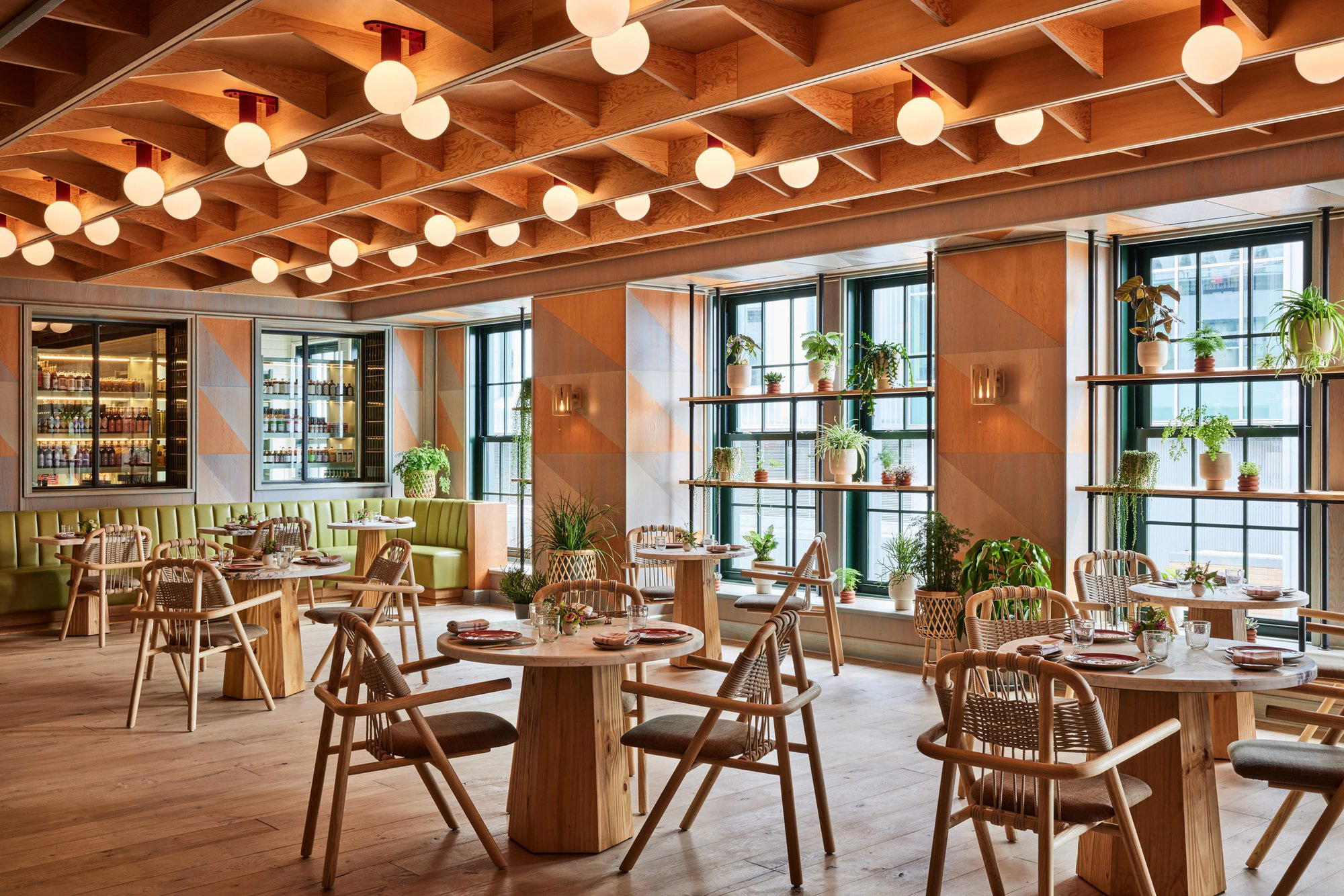
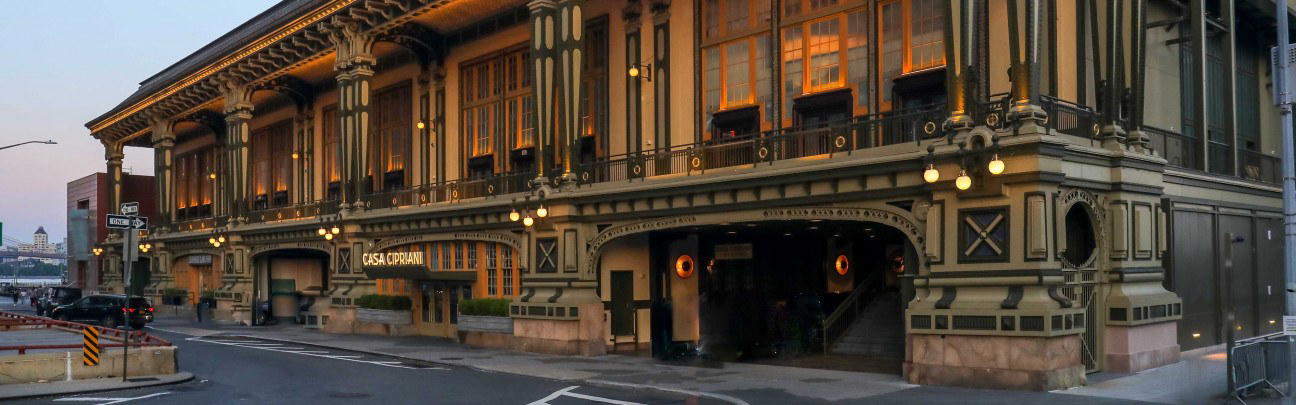
The Tin Building itself is a relevant frame for understanding what Seeds & Weeds is and is not. The structure at Pier 17 in the Seaport District was originally built in 1907 and served as the central trading hall for the Fulton Fish Market, which operated on this site for more than a century before relocating to the Bronx in 2005. The building's restoration for its current use preserved the industrial bones, the high ceilings, the broad spans, the material weight of a working market hall, while fitting out the interior for a contemporary hospitality program. The result is a physical environment that carries historical density even when the activity inside it is contemporary.
Within that larger container, individual concepts like Seeds & Weeds operate in defined zones rather than as standalone rooms. The design logic of a food hall assigns each concept a spatial identity within a shared envelope, which means the experience of visiting Seeds & Weeds is partially shaped by the broader energy of the building around it. For a plant-based concept, this is an interesting placement: the surrounding market atmosphere, with its references to trade, abundance, and the movement of food, provides an unintentional but fitting context for a menu built around what the land produces.
Cross-Cultural Plant-Based Cooking as a Menu Strategy
The genre of plant-based restaurant dining in American cities has moved through several phases. Early iterations leaned heavily on substitution logic, replacing animal proteins with plant analogues while keeping familiar dish formats intact. A more recent tendency, visible in higher-attention plant-based programs in cities including New York, San Francisco, and Los Angeles, moves away from substitution toward cuisine-specific techniques applied to vegetables, grains, legumes, and fermented ingredients on their own terms. Seeds & Weeds, as described, positions itself closer to the latter approach, with a menu that draws from Mediterranean, Mexican, American, and Indian traditions as distinct source points rather than as a blended fusion register.
The sharing format reinforces this. Dishes designed for the table rather than the plate allow a menu to move across multiple culinary registers within a single meal, which matters when the reference points are as geographically spread as this menu's appear to be. A table working through four or five sharing dishes can travel from one culinary tradition to another without the tonal whiplash that would accompany the same range on a single-portion menu. It is a format that suits range, and the menu's cross-cultural ambition requires it.
For New York diners, this positions Seeds & Weeds in a different competitive conversation than the city's major tasting-menu destinations. Le Bernardin, Masa, and Per Se represent the formalist, high-commitment end of New York dining, where a single cuisine tradition is executed at extreme depth over a structured progression. Saga and César operate in a contemporary American register with their own forms of intention. Seeds & Weeds works from a different premise: informal, shared, plant-focused, and deliberately pluralist in its culinary references.
Comparable formats elsewhere in American fine-casual dining include some of the market-adjacent concepts at venues like Emeril's in New Orleans and the produce-driven philosophy that informs Single Thread Farm in Healdsburg, though those operate in very different registers of formality and price. The plant-forward approach also has points of contact with concepts at Providence in Los Angeles, where ingredient sourcing and constraint shape the menu's identity even in a non-vegetarian context.
Lower Manhattan and the Seaport District as a Dining Destination
The Seaport District has changed considerably as a dining destination over the past decade. What was once a tourist-heavy stretch of the waterfront with limited serious dining has attracted a more considered set of operators, partly driven by the development of Pier 17 and the Tin Building project. The neighborhood sits at the southern edge of Manhattan, close to the Financial District, and draws a mix of office workers at lunch, visitors to the waterfront in the evening, and a growing number of locals from nearby residential areas including the lower East Side and Tribeca. The East River views and the proximity to the Brooklyn Bridge give the location a physical distinctiveness that most Midtown venues cannot match.
For visitors approaching the Tin Building from further afield, it sits within reasonable walking distance of major Lower Manhattan sights, and is accessible via the Fulton Street subway station. The combination of location, architectural context, and the range of concepts under one roof makes the building a logical planning stop for a day in lower Manhattan, with Seeds & Weeds functioning as a quieter, more focused point within that larger stop.
Those building a broader New York itinerary can find further guidance across our full New York City restaurants guide, hotels guide, bars guide, wineries guide, and experiences guide. For reference points in other major American dining cities, Lazy Bear in San Francisco, Alinea in Chicago, and The French Laundry in Napa each represent distinct approaches to ambitious American dining at the formal end of the register. Internationally, 8½ Otto e Mezzo Bombana in Hong Kong and Alain Ducasse at Louis XV in Monte Carlo offer useful comparative benchmarks for understanding where fine dining positions itself globally.
Know Before You Go
| Location | 96 South Street, New York, NY 10038 (Tin Building, Seaport District) |
|---|---|
| Concept | Plant-based sharing plates within the Tin Building food hall |
| Menu Style | Cross-cultural: Mediterranean, Mexican, American, Indian influences |
| Format | Sharing dishes designed for the table |
| Booking | Contact the Tin Building directly for reservation options |
| Access | Near Fulton Street subway station; walkable from Brooklyn Bridge |
Frequently asked questions
Does Seeds & Weeds @Tin Building have a Michelin star or similar recognition?
Seeds & Weeds @Tin Building has received recognition including: Tin building is project of renowned chef Jean-Georges Vongerichten and Seed & Weeds is one of the restaurants you will find there. In Tin, you will find many different restaurant concepts. But here, the focus is on pure plant-based! A nice ….
What part of town is Seeds & Weeds @Tin Building in?
Seeds & Weeds @Tin Building is located at 96 South Street, NY 10038 New York, United States, New York City.
How far ahead should I plan for Seeds & Weeds @Tin Building?
Reservations are recommended for Seeds & Weeds @Tin Building in New York City. Confirm current policy via the venue's official channels.
What do critics highlight about Seeds & Weeds @Tin Building?
Seeds & Weeds @Tin Building is best approached by focusing on the core concept and signature offerings.
What if I have allergies at Seeds & Weeds @Tin Building?
Dietary accommodations can vary. Flag restrictions in advance via the venue's official channels.
What do people recommend at Seeds & Weeds at the Tin Building?
The menu is structured around sharing dishes, so ordering broadly across the table works better than treating it as a single-plate dinner. The range spans Mediterranean, Mexican, American, and Indian culinary references, which means the combinations are genuinely varied rather than a single-cuisine plant-based format. Coming with two or more people allows you to move across more of the menu in a single sitting.
Credentials Lens
A quick peer check to anchor this venue’s price and recognition.
| Venue | Cuisine | Price | Awards | Notes |
|---|---|---|---|---|
| Seeds & Weeds @Tin BuildingThis venue (the venue you are viewing) | Modern Vegetarian | Not listed | We're Smart World 3 Radishes | Not listed |
| Le Bernardin | French Seafood Fine Dining | $300–500 | 3 Michelin Stars · World's 50 Best #13 | French, Seafood |
| Masa | Seasonal Hokkaido Tempura Omakase | $150–200 | Tabelog 100 #34 | Sushi, Japanese |
| Per Se | French Fine Dining Tasting Menu | $300–500 | 3 Michelin Stars · World's 50 Best #40 | French, Contemporary |
| The Chefs Table at Brooklyn Fare | Modern Japanese Seafood Omakase | $300–500 | 2 Michelin Stars · World's 50 Best #61 | Japanese - French, Contemporary |
| Estela | Modern American Small Plates | $50–100 | 1 Michelin Star · World's 50 Best #44 | Mediterranean, Contemporary |
Recognition history
Dated appearances from independent guides and award organizations, with the underlying list record or original source where available.
We're Smart World 3 Radishes
We're Smart World
Continue exploring
More in New York City
Restaurants in New York City
All restaurants in New York City →
Bars in New York City
All bars in New York City →





Details
- Modern
- Cozy
- Trendy
- Casual Hangout
- Open Kitchen
- Farm To Table
- Waterfront
- Small Plates
- Vegetarian Friendly
- Vegan Options
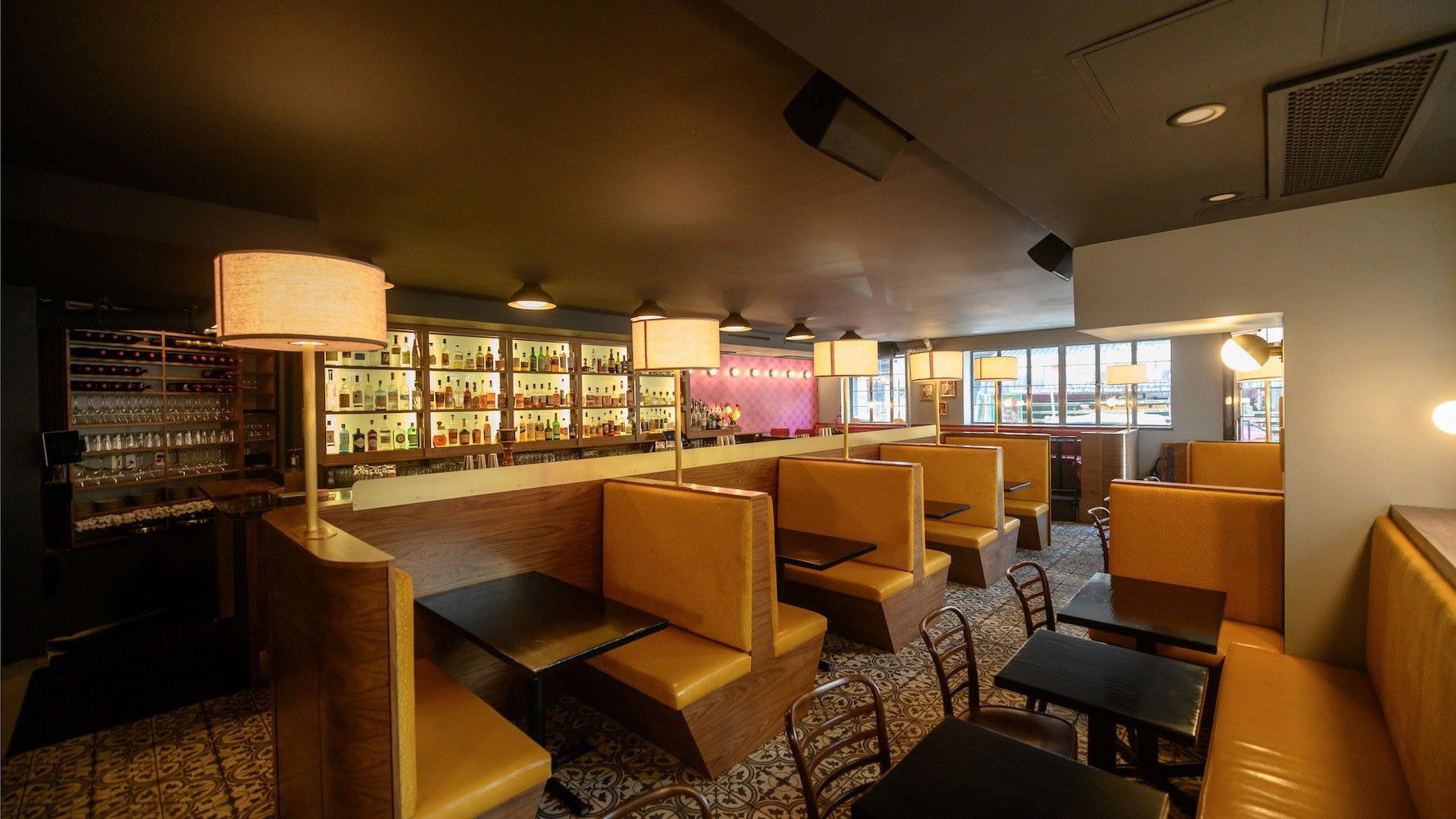
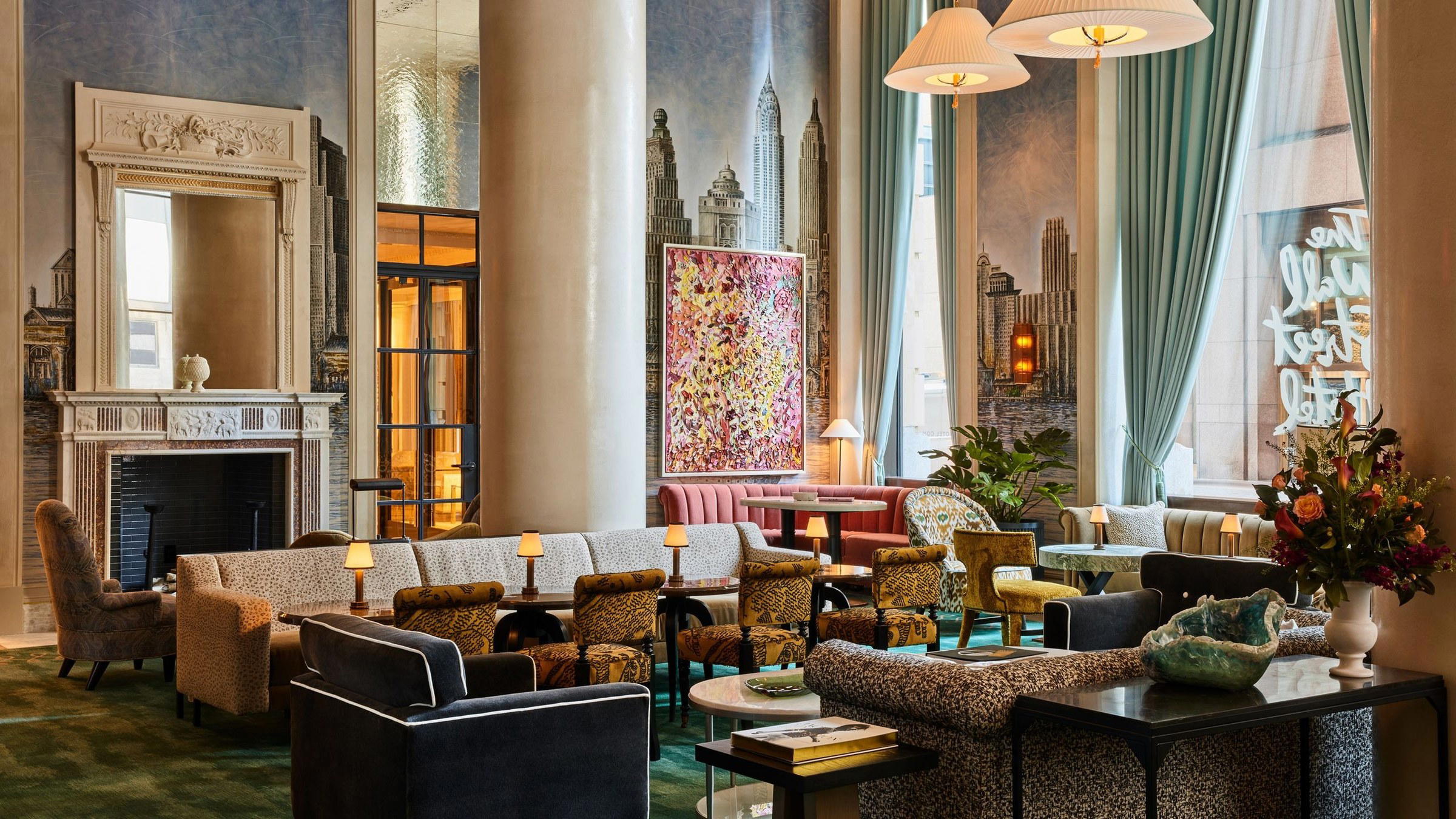
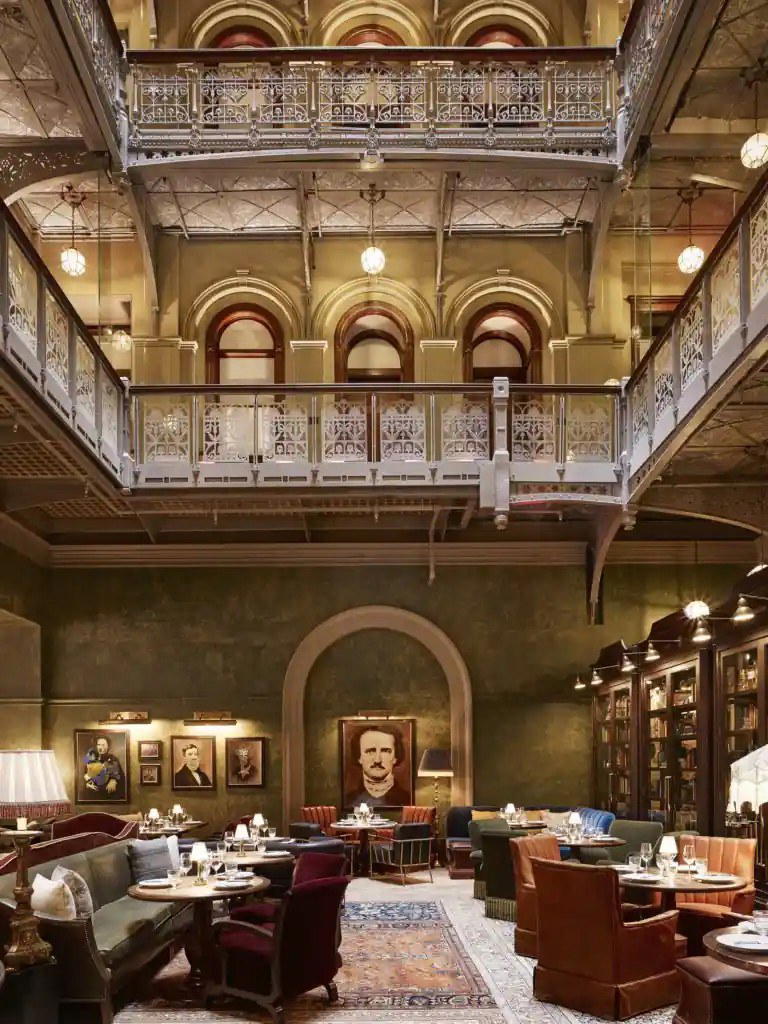
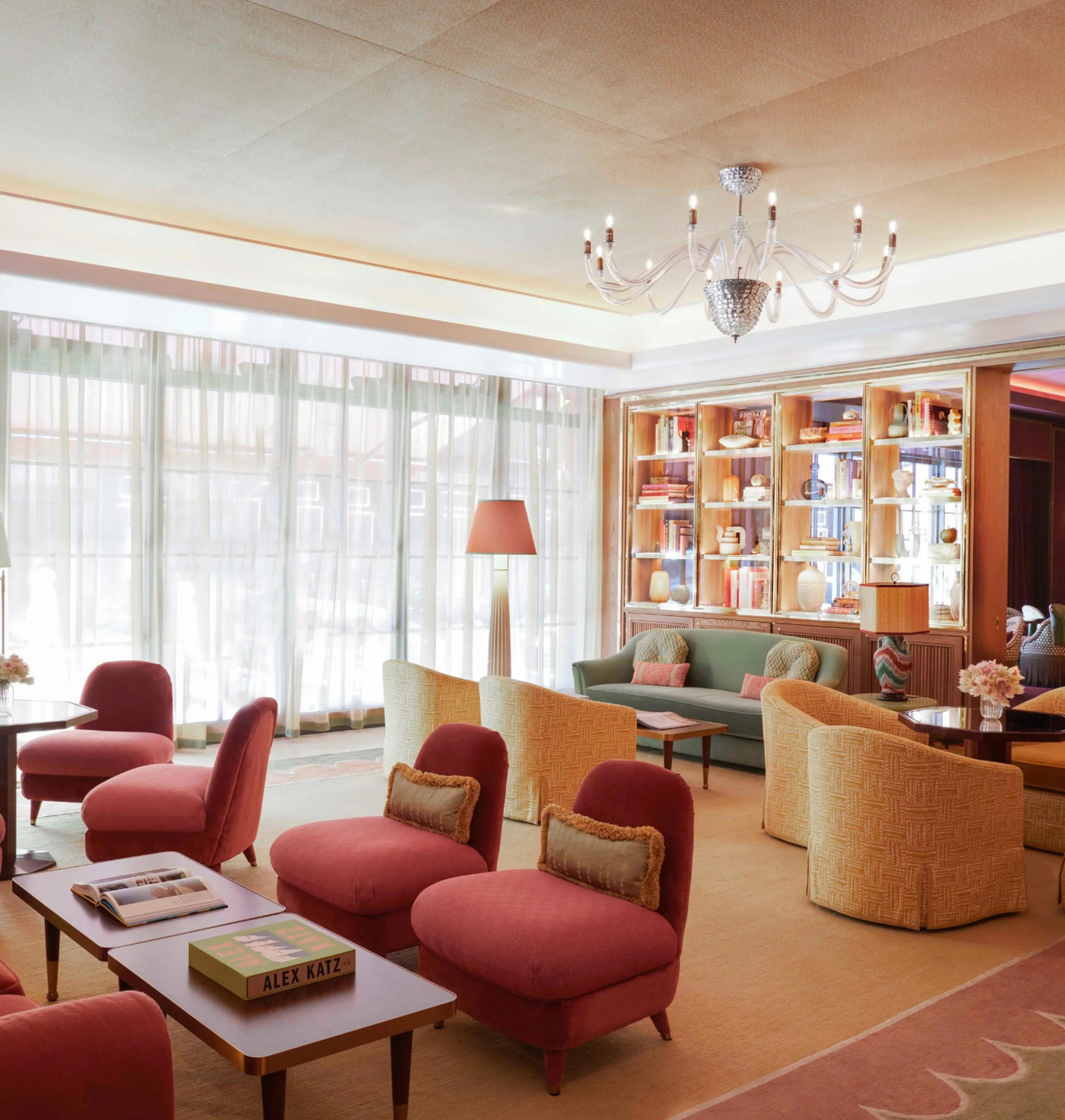
Open and bright with light wood furniture, pastel green seating, potted plants, and a zen atmosphere.