
Star Wine List
Our verdict
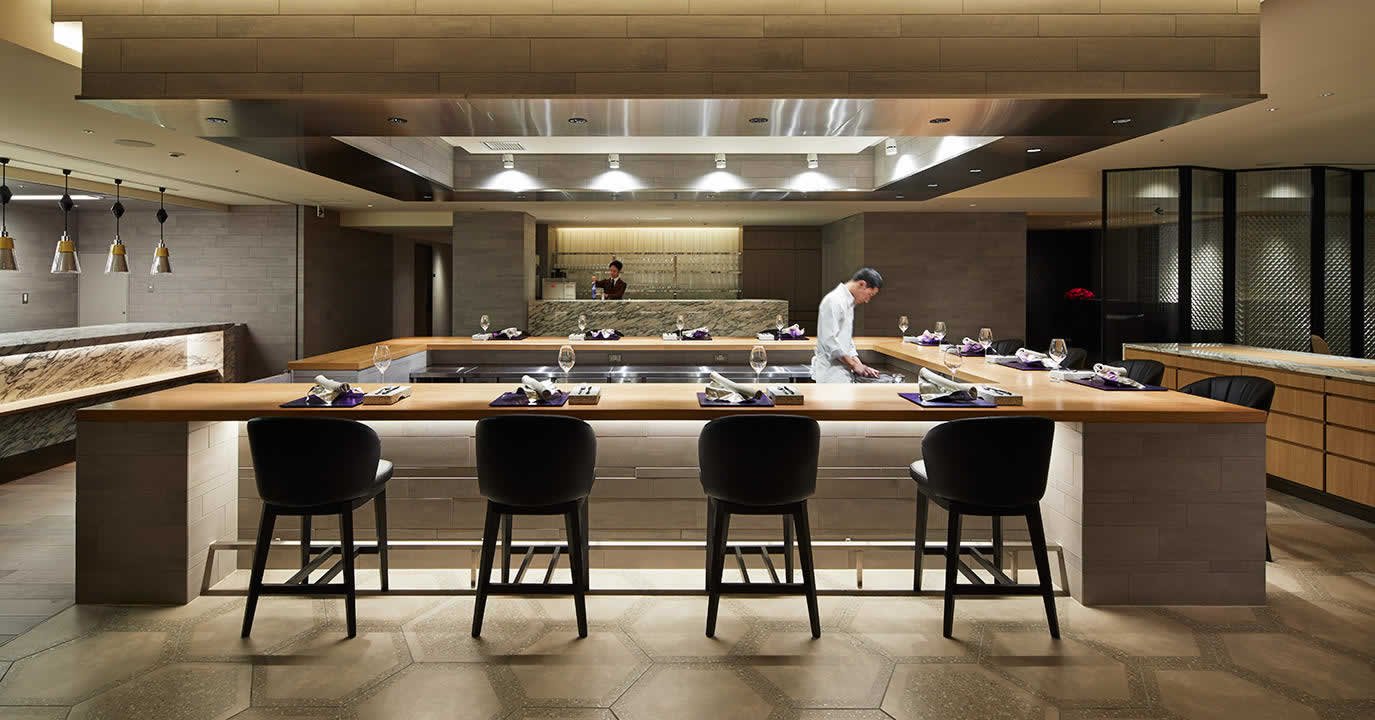
SCALAE is the Italian restaurant at THE THOUSAND KYOTO, a hotel immediately adjacent to Kyoto Station. Operating within one of the city's most transit-connected addresses, it serves classic-leaning modern Italian across weekday and weekend formats, including a special kitchen counter service on Saturdays and Sundays. For milestone dinners away from Kyoto's kaiseki circuit, it offers a western-format alternative with genuine hotel infrastructure behind it.

Pearl is the En Primeur Club membership app, where members save venues, book tables and use the concierge.
The menu
What to order
- Plant Forward Kitchen dishes
- Aria Course
- Terra Course
Italian at the Gateway: What SCALAE Represents in Kyoto's Dining Scene
Kyoto's restaurant identity is built on kaiseki. The city's most celebrated addresses, from Gion Sasaki and Hyotei to Kikunoi Honten and Mizai, frame the meal as a seasonal ritual governed by dashi, restraint, and centuries of accumulated technique. That tradition is formidable. It is also, for certain occasions, a constraint. Not every traveller arriving in Kyoto for an anniversary, a corporate dinner, or a milestone birthday wants to spend two hours inside that particular ritual. SCALAE, the Italian restaurant at THE THOUSAND KYOTO, addresses that gap directly.
The broader pattern is visible across Japan's major cities. Western-cuisine restaurants operating inside well-positioned hotels have carved out a distinct niche in urban dining, serving the segment of the market that wants occasion-dining infrastructure, a wine list with European depth, and a format their international guests will find immediately legible. In Kyoto, where western-format fine dining is thinner on the ground than in Tokyo or Osaka, a hotel Italian with serious intent occupies more competitive space than it might elsewhere. For comparison, HAJIME in Osaka and Harutaka in Tokyo illustrate how the top tier of non-Japanese cuisine embeds itself in Japanese cities: through location credibility, consistent technical standards, and formats that can carry a celebration without ambiguity.
The Physical Setting and What It Signals
THE THOUSAND KYOTO is positioned directly beside Kyoto Station, the Shinkansen hub that connects the city to Tokyo in roughly two hours and to Osaka in fifteen minutes. That address means something specific for occasion dining: guests travelling from other cities or arriving from abroad can walk from the bullet train platform to the restaurant without the logistics of a taxi queue or an unfamiliar neighbourhood. For a group gathering to mark something, that frictionlessness matters.
Restaurant occupies space within the hotel building, which places it in a category distinct from Kyoto's freestanding dining institutions. Hotel restaurants in this tier typically invest in service infrastructure, private room capacity, and reservations handling in ways that independent operators cannot always sustain at the same level. Those structural features are often exactly what a milestone dinner requires. Check our full Kyoto hotels guide if you're planning to stay nearby and want to map accommodation options to the same neighbourhood.
The Format: Classic and Modern Italian, With a Weekend Dimension
SCALAE's kitchen operates across a range of classic and modern Italian dishes, and on weekends it opens a special kitchen counter format that shifts the experience meaningfully. Counter dining in this mode brings the preparation into view and tightens the relationship between kitchen and table in a way that suits a small group celebrating something specific. The distinction between the weekday and weekend formats matters if you're planning around a particular date: the counter service is a Saturday and Sunday offering, so an anniversary that falls mid-week will be a different experience than one you can align to a weekend.
Italian cuisine at this level in Japan sits within a pattern worth understanding. The country has developed one of the most technically serious Italian dining cultures outside Italy itself, with chefs who have trained in both countries and a domestic audience that has followed the cuisine for decades. In Kyoto specifically, the Italian tier is smaller than in Tokyo or Osaka, which means fewer options but also less dilution. For a point of comparison, akordu in Nara represents how European-cuisine restaurants position themselves in smaller Kansai cities with strong traditional dining identities.
Occasion Dining: Where SCALAE Sits and Why It's Relevant
The question of where to eat for a significant occasion in Kyoto is harder than it looks. Kaiseki remains the city's default answer, but it is a format with specific requirements: a willingness to cede control over the meal's structure and pace, familiarity with the ingredients and their seasonal logic, and, often, a Japanese language intermediary to move through the reservation. For guests who want occasion-level formality without those friction points, the options narrow quickly.
SCALAE's position adjacent to Kyoto Station extends its catchment to the wider Kansai region. A group travelling from Nara, Osaka, or Kobe for a celebration dinner can treat the station location as a convenience rather than a compromise. That geometry is different from the celebrated kaiseki addresses that sit in Gion or Higashiyama, where the neighbourhood itself is part of the experience but the travel time from the station is a variable. For diners who want the meal to be the centrepiece rather than one leg of a longer itinerary, proximity to the Shinkansen network is a genuine consideration.
The hotel infrastructure also means that birthday or anniversary dinners that extend naturally into a stay are logistically simple. THE THOUSAND KYOTO's position in the market is as a full-service property at the city's main transit node, and SCALAE benefits from that configuration in terms of service continuity and room for private or semi-private arrangements. Browse our Kyoto experiences guide and Kyoto bars guide for what to build around an evening here.
Kyoto's Italian Scene in Context
Across Japan, Italian restaurants in secondary dining cities have followed a consistent trajectory: they start as appendages to hotel dining programs, develop technical independence, and eventually attract a local clientele that sustains them on their own terms. The strongest examples of this pattern outside Tokyo include Bleston Court Yukawatan in Nagano and giueme in Akita, both of which demonstrate how European-cuisine operations can develop genuine regional identity within Japanese cities that are not primarily associated with western food. Goh in Fukuoka provides another reference point for how ambitious western-format restaurants function outside Tokyo's gravitational pull.
In Kyoto, Italian remains a smaller category than in comparable cities. The kaiseki infrastructure dominates both attention and critical coverage. That concentration means that a well-run Italian restaurant inside a credible hotel occupies a clearer position in the local market than it might in Tokyo, where the competition is far denser. For those who want to understand the full range of what Kyoto's dining scene covers, our full Kyoto restaurants guide maps the kaiseki circuit alongside the western-format alternatives, and Isshisoden Nakamura is worth knowing as a traditional Japanese reference point in the same city.
Planning Your Visit
SCALAE sits inside THE THOUSAND KYOTO at Higashishiokojicho 570, Shimogyo Ward, putting it within walking distance of Kyoto Station's central exit. For occasion dining, the weekend kitchen counter is the format to target: it delivers a closer, more event-like experience than a standard weekday dinner. If you're planning a group celebration, the hotel's reservations infrastructure is the appropriate channel rather than walk-in. The connection to the Shinkansen network makes SCALAE a practical destination for diners arriving from across the Kansai region or from Tokyo. Our Kyoto wineries guide is worth checking if a post-dinner tasting is part of the plan. For international reference on occasion-dining standards at hotel-adjacent restaurants, Le Bernardin in New York City and Emeril's in New Orleans give a sense of the western-format occasion-dining tier that SCALAE draws from stylistically.
Frequently asked questions
Can I bring kids to SCALAE?
SCALAE operates within THE THOUSAND KYOTO, a full-service hotel beside Kyoto Station, and the setting skews toward adult occasion dining rather than family meals. The weekend kitchen counter format in particular is oriented around an attentive, composed dining experience that works better without young children in tow. Families visiting Kyoto are likely better served by the station district's broader restaurant options.
Is SCALAE better for a quiet night or a lively one?
Italian restaurants inside upscale Japanese hotels consistently run toward composed and quiet rather than convivial, and SCALAE at THE THOUSAND KYOTO is no exception. Kyoto as a city compounds this: the dining culture here rewards deliberate pacing over atmosphere. Expect conversation-level volume, particularly on weeknights, with the weekend counter format adding a degree of engagement without shifting into anything resembling a lively room.
What distinctions does SCALAE have?
SCALAE has received recognition including: SCALAE is an Italian restaurant operated by THE THOUSAND KYOTO hotel, located next to Kyoto Station. It serves a wide range of classic yet modern Italian dishes and, at weekends, opens a special kitc....
What do people recommend at SCALAE?
The weekend kitchen counter is the most distinctive element SCALAE offers, available Saturdays and Sundays, and it represents a meaningfully different experience from the standard dining room format. If your schedule allows, timing a visit around that format gives you the more focused, counter-driven interaction that sets SCALAE apart from standard hotel Italian dining in Kyoto.
Where do I go for SCALAE?
SCALAE is located at Japan, 〒600-8216 Kyoto, Shimogyo Ward, Higashishiokojicho, 570 番, Kyoto.
Style and Standing
Comparable venues nearby, for context on price, style, and recognition.
| Venue | Cuisine | Price | Awards | Notes |
|---|---|---|---|---|
| SCALAEThis venue (the venue you are viewing) | Modern Italian with Plant-Forward Options | $150–200 | Star Wine List | Not listed |
| La Locanda | Italian with Kyoto Seasonal Influences | $150–200 | Wine Spectator Best of Award of Excellence · Tabelog 100 #49 | Nakagyō |
| Chimera | Italian-Japanese Fusion Fine Dining | $100–150 | Tabelog 100 #38 | Higashiyama |
| RADICE | Modern Italian with Japanese Influences | $150–200 | Michelin Plate · Tabelog Bronze #351 | Nakagyō |
| måne | Creative Italian | $100–150 | Michelin Plate | Nakagyō |
| Ahbon | Modern Luxury Kushiage | $150–200 | Not listed | Minami |
Recognition history
Dated appearances from independent guides and award organizations, with the underlying list record or original source where available.
Star Wine List
Star Wine List
Continue exploring
More in Kyoto
Restaurants in Kyoto
All restaurants in Kyoto →
Bars in Kyoto
All bars in Kyoto →
Hotels in Kyoto
All hotels in Kyoto →
Wineries in Kyoto
Browse all →
SCALAE
The wine
- Wine program
- Deep wine list
- Extensive wine list
- Sommelier-led
- Craft cocktails
Details
- Elegant
- Modern
- Sophisticated
- Date Night
- Business Dinner
- Special Occasion
- Celebration
- Open Kitchen
- Chefs Counter
- Hotel Restaurant
- Private Dining
- Extensive Wine List
- Sommelier Led
- Craft Cocktails
- Local Sourcing
- Tasting Menu
- A La Carte
- Counter Dining
- Set Menu
- Wine
- Cocktails
- Vegetarian Friendly
- Vegan Options
- Allergy Accommodating
Current opening hours
- Monday
- 7–10 AM, 11:30 AM–3:30 PM, 5:30–9:30 PM
- Tuesday
- 7–10 AM, 11:30 AM–3:30 PM, 5:30–9:30 PM
- Wednesday
- Closed
- Thursday
- 7–10 AM, 11:30 AM–3:30 PM, 5:30–9:30 PM
- Friday
- 7–10 AM, 11:30 AM–3:30 PM, 5:30–9:30 PM
- Saturday
- 7–10 AM, 11:30 AM–3:30 PM, 5:30–9:30 PM
- Sunday
- 7–10 AM, 11:30 AM–3:30 PM, 5:30–9:30 PM
Hours can change for holidays and private events. Hours as of .
Stylish and relaxing space with an open kitchen counter, spacious seating, and contemporary design within a luxury hotel setting near Kyoto Station.