Saravanaa Bhavan
Saravanaa Bhavan at 81 Lexington Avenue sits at the edge of Murray Hill's Little India corridor, serving South Indian vegetarian cooking that draws a loyal cross-section of the neighborhood's Tamil diaspora and downtown office crowd. The format is canteen-speed with counter-style efficiency, placing it at the accessible end of a price spectrum that runs to Michelin-starred rooms a few blocks west.
Pearl is the En Primeur Club membership app — saves, bookings, and concierge access live there. Same editors, same standards.
- Address
- 81 Lexington Ave, New York, NY 10016
- Phone
- +12126847755
- Website
- saravanaabhavan.us
- Directions
- Get directions
 Saves & bookings on Pearl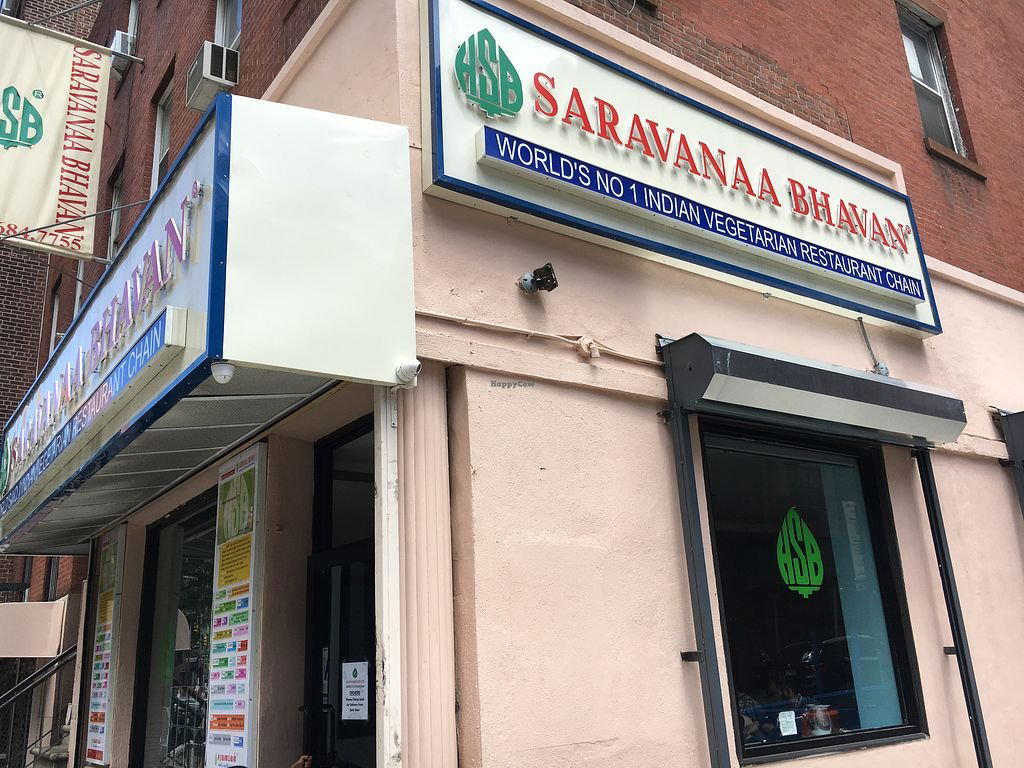
South Indian Vegetarian in Murray Hill: Where the Dosa Counter Sets the Standard
Murray Hill's stretch of Lexington Avenue between 26th and 29th Streets functions as one of the few remaining concentrations of South Asian restaurants in Manhattan where price, speed, and authenticity coexist without the friction of a reservation system. Within that corridor, vegetarian South Indian cooking occupies a specific and underserved tier. The cuisine demands technical precision, fermented batters, lentil ratios in sambar, the temperature at which ghee hits a cast-iron tawa, and the canteen-format restaurants that execute it well rarely have the dining-room theatrics that attract press coverage. Saravanaa Bhavan, at 81 Lexington Avenue, sits inside that tradition.
The broader context matters here. New York's most-discussed restaurant floor space in 2024 belongs to multi-course tasting menus at the $200-and-above tier, places like Atomix, Masa, and Per Se, all operating on the logic that scarcity and elaboration justify the cover charge. South Indian vegetarian canteens occupy a structurally different economy: high throughput, tight margins, and a return-visitor base that judges consistency above novelty. These are not competing formats, they are different contracts with the diner. Understanding which contract you are signing matters when choosing between them.
The Vegetarian South Indian Tradition and What It Asks of a Kitchen
South Indian vegetarian cooking is technically demanding in ways that are easy to underestimate from the outside. A proper dosa batter requires a fermentation window of 12 to 24 hours; the ratio of urad dal to rice determines texture and crispness. Sambar, the tamarind-laced lentil soup served alongside, varies by region: Tamil Nadu versions tend toward more tamarind acidity, while Karnataka iterations lean sweeter with added jaggery. Chutneys, typically coconut or tomato-based, function as the seasoning layer that ties the plate together. When any element is off, batter under-fermented, sambar over-sweetened, chutney too thin, the entire composition shifts.
The Saravanaa Bhavan name is shared across a small cluster of locations connected to the original Saravana Bhavan chain, which originated in Chennai in 1981 and grew into one of the more widely recognized South Indian vegetarian restaurant groups operating internationally. That lineage places the New York outpost inside a tradition with defined standards for dosa, idli, and thali formats that long predate the restaurant's Manhattan address. For diners unfamiliar with South Indian vegetarian cooking, the menu functions as a reference document for the category: what a masala dosa is supposed to taste like, how rasam differs from sambar, what proportion of rice to accompaniments constitutes a proper meals plate.
The Wine Question, and Why It Rarely Comes Up
The editorial angle of cellar depth and sommelier expertise applies cleanly to a room like Le Bernardin, where the wine program is an active part of the dining argument. At Saravanaa Bhavan, the beverage program is a different kind of story, and an honest one. South Indian vegetarian cooking at the canteen tier is not wine-list territory. The traditional beverage pairings are functional and food-forward: filter coffee prepared in the South Indian drip style, fresh lime soda, lassi, and coconut-based drinks. These are not consolation prizes for a missing cellar. Filter coffee prepared through a brass filter set, where the decoction drips slowly before being mixed with hot milk and frothed between two vessels, is a craft in its own right, with regional variation in roast profile and chicory ratio that mirrors the complexity wine enthusiasts apply to grape variety and terroir.
For diners who arrive from a format like Jungsik or Per Se expecting beverage pairing as part of the experience, the honest advice is to recalibrate expectations in the right direction: the filter coffee here is the equivalent conversation, just in a different language. Across the wider EP Club network, similar recalibrations apply at regional specialists from Emeril's in New Orleans to Lazy Bear in San Francisco, where the beverage program reflects the kitchen's priorities rather than a universal fine-dining script.
Placing Saravanaa Bhavan in New York's Wider Dining Map
New York's restaurant ecosystem has a compression problem at the mid-price tier. The range of serious, technically accomplished cooking available below the $50-per-person mark has narrowed in Manhattan over the past decade as rents have risen and smaller operators have consolidated or closed. South Indian vegetarian restaurants in Murray Hill are among the few remaining pockets where a diner can access food with genuine regional specificity at a price point that does not require planning a week in advance or budgeting against a tasting-menu evening.
This places the restaurant in a different competitive conversation from the Michelin-decorated rooms that anchor EP Club coverage in the city. The relevant comparable set is the handful of South Indian vegetarian operations scattered across Jackson Heights, Flushing, and the remaining Murray Hill cluster rather than the white-tablecloth rooms. Within that comparable set, consistency of batter fermentation, quality of tamarind sourcing, and the speed of the service cadence are the differentiating metrics. See our full New York City restaurants guide for a broader map of where the restaurant sits relative to the city's full spectrum.
For context across American fine dining more broadly, the distance between this format and rooms like Alinea in Chicago, The French Laundry in Napa, or Blue Hill at Stone Barns in Tarrytown is not just price but structural intent. Those rooms are theatrical, pre-planned experiences. The restaurant operates on a different logic: immediate access, familiar formats, and a diner base that returns weekly rather than annually. Both models are legitimate. Neither replaces the other.
Know Before You Go
| Address | 81 Lexington Avenue, New York, NY 10016 |
|---|---|
| Neighbourhood | Murray Hill / Curry Hill, Manhattan |
| Format | South Indian vegetarian, canteen-style |
| Price tier | Accessible; significantly below the city's tasting-menu tier |
| Reservations | Walk-in format typical for this category; no advance booking required |
| Dress code | Casual |
| Beverage focus | Filter coffee, fresh juices, lassi; no wine program |
What It’s Closest To
Comparable venues nearby, for context on price, style, and recognition.
| Venue | Cuisine | Price | Notes |
|---|---|---|---|
| Saravanaa BhavanThis venue — the venue you are viewing | Authentic South Indian Vegetarian | $$ | Not listed |
| Bukhara Grill: Indian Spice Rave & Catering NYC | North Indian Tandoor & Curry House | $$ | Murray Hill-Kips Bay |
| Bhatti Indian Grill | North Indian Kebab Grill | $$ | Murray Hill-Kips Bay |
| Spice Symphony Times Square | Authentic Indian with Indo-Chinese Fusion | $$ | Hell's Kitchen |
| Atithi Indian Cuisine | Authentic Indian Cuisine | $$ | Williamsburg |
| Kabab King | 24/7 Pakistani & Indian kebab diner | $ | Jackson Heights |
Continue exploring
More in New York City
Restaurants in New York City
Browse all →
Bars in New York City
Browse all →


Hotels in New York City
Browse all →





At a Glance
- Casual
- Family
- Casual Hangout
- Standalone
Current opening hours
- Monday
- 9 AM–10 PM
- Tuesday
- 9 AM–10 PM
- Wednesday
- 9 AM–10 PM
- Thursday
- 9 AM–10 PM
- Friday
- 9 AM–10:30 PM
- Saturday
- 9 AM–10:30 PM
- Sunday
- 9 AM–10 PM
Hours can change for holidays and private events. Last verified .
Sleek, airy, and clean with ivory-colored decor and high-backed comfortable chairs, though often crowded and loud.