
A former ice factory in Phra Nakhon, Sang Thatien holds consecutive Michelin Plates (2024 and 2025) for home-cooking-style Thai dishes built around seasonal fruit and regional ingredients. The menu skews personal and produce-driven, with dishes like strawberry salad with shrimp paste and spicy plum mango salad sitting alongside crab meat with fresh herbs. Priced at ฿฿฿, it sits below Bangkok's ฿฿฿฿ fine-dining tier but above casual neighbourhood eating.
Pearl is the En Primeur Club membership app — saves, bookings, and concierge access live there. Same editors, same standards.
- Address
- 75 พระบรมมหาราชวง Phra Nakhon, Bangkok 10200, Thailand
- Phone
- +66 62 169 6591
- Website
- facebook.com
- Directions
- Get directions
 Saves & bookings on Pearl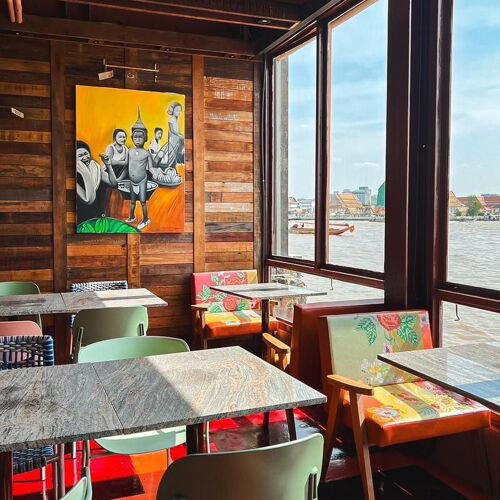
Where the Building Does Half the Work
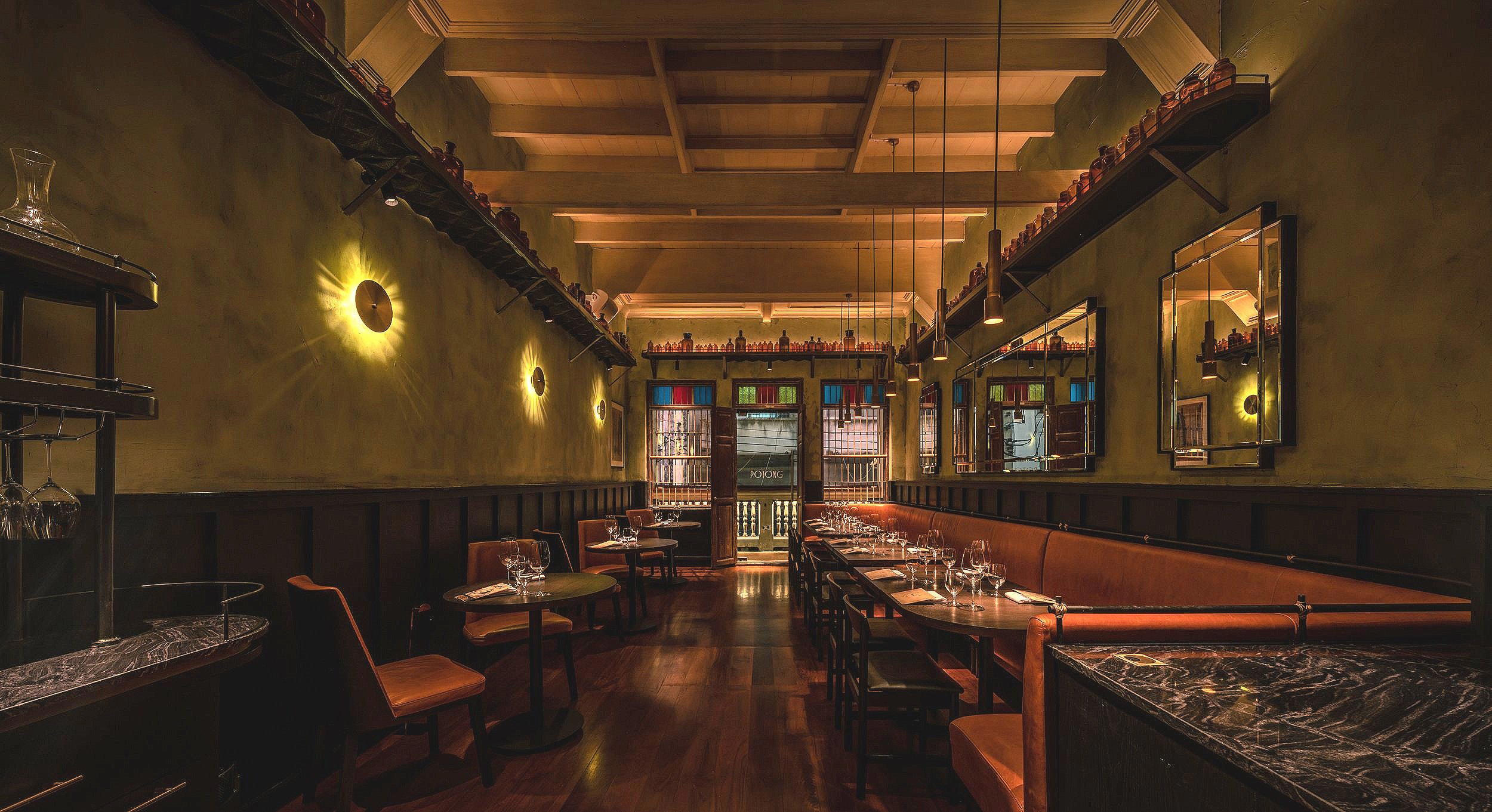
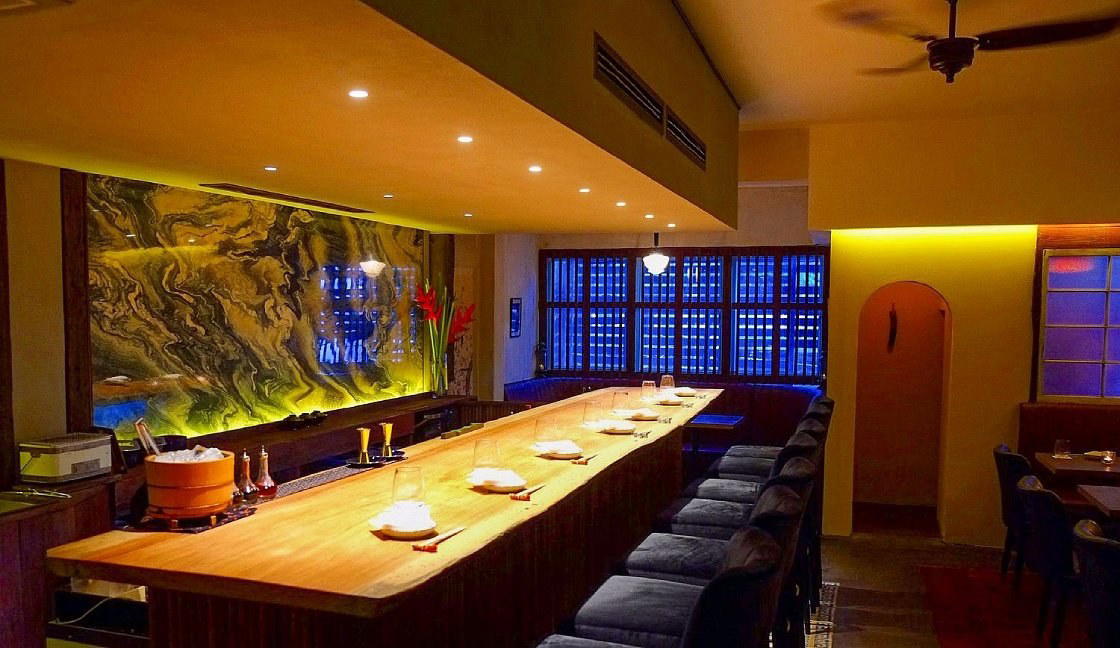
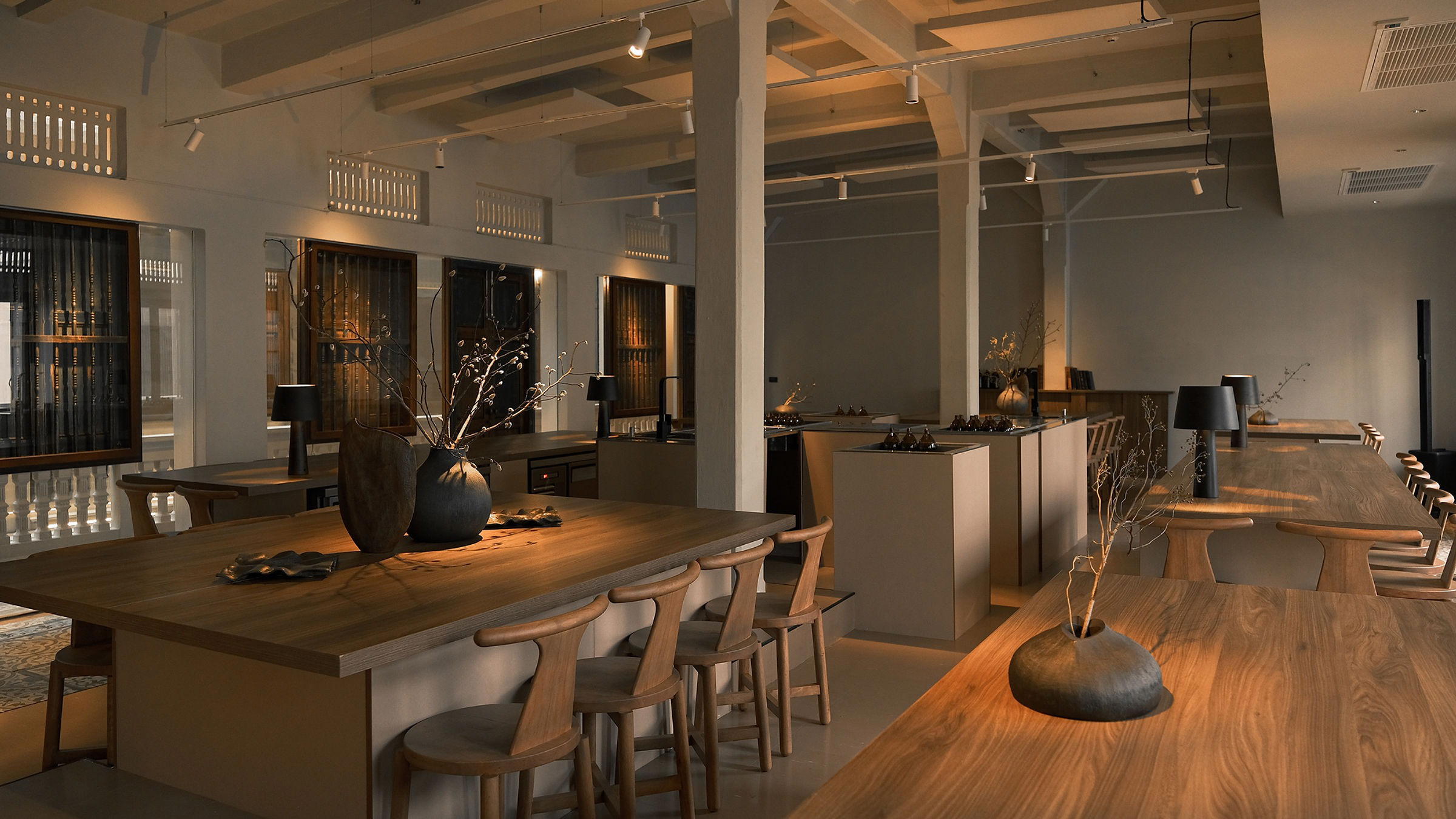
The Phra Nakhon district of Bangkok carries a different kind of weight than the city's commercial dining corridors. This is the old royal quarter, close to the Grand Palace, where the streets narrow and the architecture accumulates history rather than spectacle. In that context, a restaurant operating out of a former ice factory is not a novelty, it is a continuation of a neighbourhood habit of repurposing what already exists. At Sang Thatien, the industrial bones of that original structure remain visible: the spatial volume, the functional materiality, the sense that the room was built for something practical before it became a place to eat. Wooden furniture and vintage collectibles layer on top of that skeleton without softening it into nostalgia-kitsch. The effect is less designed than composed, closer to a well-curated home than a heritage-concept restaurant.
Bangkok's Michelin-recognised tier now spans a wide range of formats, from the ฿฿฿฿ tasting-menu rooms of places like Nahm, Aksorn, and Saneh Jaan down to mid-range operations where recognition reflects cooking quality rather than production value. Sang Thatien sits in the latter group. Its consecutive Michelin Plates in 2024 and 2025 signal a consistent kitchen rather than a single strong year, and its ฿฿฿ price positioning places it meaningfully below the formal fine-dining tier without abandoning seriousness of intent.
A Menu Structured Around the Produce Calendar
Thai home cooking has always been seasonally responsive in a way that restaurant menus often flatten out. The domestic cook adjusts to what is available at the market that morning; the restaurant kitchen, under pressure for consistency, often standardises. What makes the approach at Sang Thatien editorially interesting is the degree to which the menu resists that standardisation. Seasonal fruit appears not as garnish or dessert component but as a structural element in savoury dishes, which requires a different kind of compositional logic than classical Thai restaurant cooking.
The strawberry salad with shrimp paste is the clearest example of this philosophy in action. Strawberry salad is not a standard entry in the Thai repertoire, and positioning a fermented, pungent condiment like shrimp paste against the acidity and sweetness of fresh strawberries demands a specific calibration of salt, fat, and sourness. That this works as a dish, rather than as a concept, is the relevant fact. Similarly, the spicy plum mango salad operates in the same register: two fruits with overlapping but distinct acidity profiles, sharpened with chilli heat. Both dishes use the Thai flavour grammar of sweet-sour-salty-spicy but apply it to ingredients that most kitchens in this tradition would not reach for.
The crab meat with fresh herbs and spicy sauce represents the other pole of the menu: classical seafood technique, where the quality of the primary ingredient and the restraint of the seasoning carry the dish. Compared to the fruit-forward plates, this is a more legible reference point for diners less familiar with the kitchen's seasonal approach, and it functions as an anchor within a menu that otherwise rewards a degree of adventurousness.
This kind of menu architecture, where a few unconventional compositions sit alongside more recognisable dishes, is common in Bangkok's more considered mid-tier restaurants. Chim by Siam Wisdom and Samrub Samrub Thai both operate in adjacent territory, using Thai tradition as a framework for individual expression rather than a script to follow precisely.
Home-Cooking Style as a Critical Category
The phrase "home-cooking style" in a Michelin-context restaurant requires some unpacking. It does not mean rustic or unambitious. In the Thai culinary context, home cooking carries its own technical demands: the balance of a nam prik, the layering of a curry paste, the adjustment of a dressing to the specific ripeness of the fruit in hand. What it signals at the restaurant is a particular register of hospitality, one that prioritises personal expression and seasonal responsiveness over the replicability and uniformity that formal restaurant service typically demands.
That posture places the restaurant in an interesting position relative to Bangkok's broader Thai dining scene. The ฿฿฿฿ tier, represented by kitchens like Sorn (Southern Thai), Baan Tepa (Thai contemporary), and others pursuing formal tasting menus, increasingly frames Thai cuisine through the lens of fine-dining production values. The restaurant's ฿฿฿ positioning and home-cooking orientation suggest a different ambition: depth of flavour and ingredient fidelity over theatrical presentation.5 across 357 assessments support the view that this positioning lands well with a consistent audience.
For comparison with how Thai cooking is interpreted outside Thailand, Boo Raan in Knokke and Kin Khao in San Francisco both represent how the cuisine travels. Closer to home, AKKEE in Pak Kret, PRU in Phuket, Aeeen in Chiang Mai, Agave in Ubon Ratchathani, and Angeum in Phra Nakhon Si Ayutthaya each demonstrate the range of approaches to regional Thai cooking across different provinces. The Spa in Lamai Beach rounds out the picture of how Thai hospitality traditions extend beyond the capital.
Planning Your Visit
The restaurant's Phra Nakhon address puts it in one of Bangkok's most historically concentrated areas. The proximity to the Grand Palace and major temple sites means the neighbourhood draws significant tourist foot traffic during the day, but the restaurant's character is decidedly local in orientation. Visiting mid-week or at off-peak hours tends to reflect the room's more considered atmosphere better than a weekend lunch between sightseeing stops.
| Venue | Cuisine | Price | Michelin Status | Format |
|---|---|---|---|---|
| The restaurant | Thai (home-cooking style) | ฿฿฿ | Plate 2024 & 2025 | À la carte, casual |
| Saneh Jaan | Thai | ฿฿฿฿ | Michelin-recognised | Formal dining |
| Nahm | Thai | ฿฿฿฿ | Michelin-recognised | Tasting menu / à la carte |
| Chim by Siam Wisdom | Thai | ฿฿฿ | Michelin-recognised | Mid-format dining |
Just the Basics
Comparable venues nearby, for context on price, style, and recognition.
| Venue | Cuisine | Price | Notes |
|---|---|---|---|
| Sang ThatienThis venue — the venue you are viewing | Sanam Luang, Homestyle Thai | $$ | Not listed |
| Somboon Seafood (Bang Rak) | Not listed | $$ | Surawong, Thai Seafood with Fried Curry Crab |
| Baannok Bangkok | Not listed | $$$ | Suan Lumphini, Authentic Korat-Style Thai |
| Keawloon | Khlong Tan, Regional Thai Home Cooking | $$ | Not listed |
| Hia Wan Khao Tom Pla | Not listed | $$ | Bang Kholaem Khwaeng, Traditional Thai Khao Tom Pla |
| Maan Muang | Not listed | $$ | Bang Kapi Khwaeng, Authentic Northern Thai Lanna |
Recognition history
Dated appearances from independent guides and award organizations, with the underlying list record or original source where available.
Michelin Plate
Michelin
Michelin Plate
Michelin
Michelin Plate
Michelin
At a Glance
- Cozy
- Intimate
- Special Occasion
- Street Scene
Current opening hours
- Monday
- 1–9 PM
- Tuesday
- 1–9 PM
- Wednesday
- 1–9 PM
- Thursday
- 1–9 PM
- Friday
- 1–9 PM
- Saturday
- 1–9 PM
- Sunday
- 1–9 PM
Hours can change for holidays and private events. Last verified .
Cozy and intimate homestyle setting.