
Tabelog 100 #17
Our verdict
Sanchome no Teuchi Udon places Sayama’s everyday noodle culture in a serious hand-cut frame: udon, tempura, and curry udon at a lunch-friendly JPY 1,000–1,999 range. Its Tabelog 100 Udon EAST 2024 selection, 19-seat room, and house-restaurant setting make it a small-format stop for travelers reading Saitama through flour, broth, and local routine rather than ceremony.

Pearl is the En Primeur Club membership app, where members save venues, book tables and use the concierge.
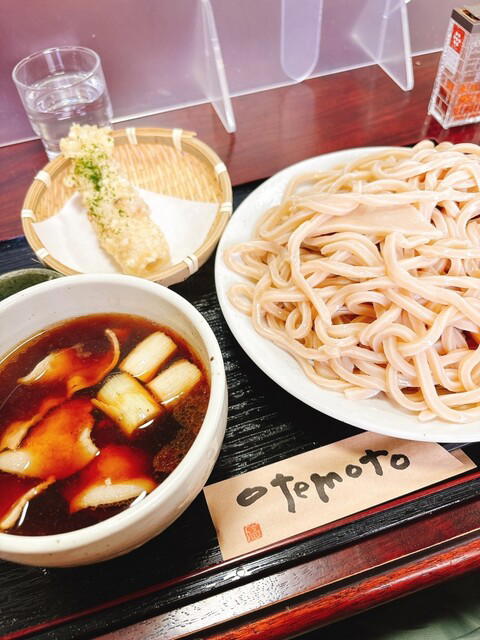
The menu
What to order
- Curry Udon
- Niku Tsuke Men (meat dipping udon)
- Vegetable Curry Tsuke Men
Approach Sayama and the dining rhythm changes from capital-city precision to a more local routine: low-key streets, everyday meal patterns, and the kind of udon shop where the format matters because it keeps the cooking honest. Saitama has a serious wheat-noodle culture, and teuchi udon here is less about performance than repetition: flour, water, salt, resting time, knife work, broth, and speed of service. Sanchome no Teuchi Udon fits that tradition at neighborhood scale, with a menu orbiting udon, tempura, and curry udon rather than a sprawling izakaya script.
The useful way to read this address is through sourcing and structure. Udon shops live or fail by basic inputs: wheat quality, dough handling, dashi discipline, frying oil management, and the timing between boiling and serving. A Tabelog Hyakumeiten 2024 selection puts Sanchome no Teuchi Udon in a regional conversation that includes specialist noodle counters rather than general Japanese restaurants. The score, 3.65, is not a luxury signal; it is a public-review signal for consistency in a category where a narrow menu and repeat local traffic matter more than theatrical plating.
Hand-cut udon in Sayama's wheat-noodle belt
Eastern Japan’s udon culture has several identities. Tokyo often prizes convenience and station-adjacent speed; Saitama and neighboring inland areas have deeper ties to thicker, chewier wheat noodles, partly because wheat has long mattered in local foodways. The handmade format makes that context visible. A hand-cut noodle is not automatically superior, but it gives the kitchen fewer places to hide: unevenness can be charm or flaw, thickness affects chew, and boiling time has to match the dough rather than a factory standard.
That is why the category mix here is editorially useful. Udon, tempura, and curry udon cover three different tests of a noodle shop. Plain or broth-led udon asks whether the noodle and dashi can carry the bowl. Tempura tests frying control and pacing. Curry udon measures whether the noodle can hold its shape under a heavier sauce. The format also places the shop within a casual Japanese dining register rather than a fast-food noodle stand, though the core appeal remains the bowl rather than any extras around it.
Price keeps the address in everyday territory. At JPY 1,000–1,999, it sits in the accessible range for a focused noodle meal, closer in spirit to other casual specialists than to occasion-led regional dining. That gap matters for travelers: this is not a splurge meal dressed down as local color. It is a low-ticket, high-specificity stop where the value lies in category focus.
A focused udon format changes the pace of the meal
The focused format shapes expectations before any bowl arrives. This is a local udon address rather than a design-led dining room built for destination traffic, and that matters for how the meal should be read. The experience is defined less by ceremony than by the directness of the category: noodles, broth, frying, and the rhythm of a kitchen built around repeat demand.
Service expectations should stay practical and low-friction. Sanchome no Teuchi Udon is best approached as an everyday noodle stop rather than a formal appointment restaurant, with the meal’s value coming from category focus and quick clarity. For visitors, the better strategy is to check current opening information before building a Sayama day around noodles, because specialist shops can be more schedule-dependent than larger destination restaurants.
Logistics also favor the locally mobile. The restaurant is in Sayama, so it fits most naturally into a local or regional food plan rather than a tightly choreographed luxury itinerary. Those details are not glamorous, but they define the meal as much as the noodle texture does. Japan’s serious everyday restaurants often remain most compelling in places where the format is modest and the cooking is the point.
How to place it in a wider Japan itinerary
Sanchome no Teuchi Udon makes the strongest case when Sayama is treated as part of a broader Saitama or local food day rather than a standalone detour from central Tokyo. The reward is specificity: teuchi udon in a Sayama setting, selected for Tabelog Hyakumeiten 2024, at a price point that keeps the meal casual. For travelers building a wider map, start with Our full Sayama restaurants guide, then layer in Our full Sayama hotels guide, Our full Sayama bars guide, Our full Sayama wineries guide, and Our full Sayama experiences guide.
The comparison becomes sharper when set against Japan’s broader casual-specialist dining. Different meals ask for different appetite and budget logic: some lean into grilled meat, seafood, café formats, contemporary cooking, or other narrow-format specialties. Within Sayama, the more useful frame is to compare Sanchome no Teuchi Udon with other local dining rooms and allowed regional references such as Udonya Kazu, Jikasei Temomi Men Suzunoki, CHOPPERS HAMBURGER & CAFE, CP RESTAURANT, and Unagiya Shubo Gasou Echigoya, while keeping the point clear: this address belongs first to the udon category.
The editorial call is simple: come for the category, not for spectacle. Sayama’s value here is the chance to eat a focused teuchi udon meal in its natural setting, where a modest local format and accessible price point point to a neighborhood operation built around repeat noodle demand. The Tabelog Hyakumeiten selection supplies the external signal; the stronger reason to care is how directly the format connects wheat, technique, and suburban Saitama dining culture.
Frequently asked questions
Is Sanchome no Teuchi Udon okay with children?
The provided venue details do not give a specific children policy. For families, it is best to confirm current arrangements with Sanchome no Teuchi Udon before visiting.
What is the atmosphere like at Sanchome no Teuchi Udon?
It reads as a practical udon shop in Sayama rather than a formal dining room. The appeal is focused on udon, tempura, and curry udon rather than spectacle.
What's the price range at Sanchome no Teuchi Udon?
Pricing at Sanchome no Teuchi Udon is listed as JPY 1,000 - JPY 1,999.
What is Sanchome no Teuchi Udon known for?
Sanchome no Teuchi Udon is known for udon, tempura, and curry udon in Sayama, and it was selected for Tabelog Hyakumeiten 2024.
Fast Comparison
Comparable venues by cuisine and price in the same metro.
| Venue | Cuisine | Price | Awards | Notes |
|---|---|---|---|---|
| Sanchome no Teuchi UdonThis venue (the venue you are viewing) | Musashino-style handmade udon | $1–10 | Tabelog 100 #17 | Not listed |
| 菊屋 | Traditional Japanese Noodles (Chanpon & Udon) | Not listed | Not listed | 中央町 (Chuo-cho) |
| Syokudoh TANUKI (食堂たぬき) | Traditional Japanese Canteen | Not listed | Not listed | Myoko City |
| Buta Daigaku (豚大学) | Grilled Pork Bowl (Butadon) | $1–10 | Not listed | Shimbashi |
| Musashino Dentou no Aji Ryotaro | Japanese Udon | Not listed | Tabelog 100 #88 | Tokorozawa |
| Chuka Soba Hirai | Ramen & Tsukemen Shop | $10–20 | Tabelog 100 #77 | Fuchu |
Recognition history
Dated appearances from independent guides and award organizations, with the underlying list record or original source where available.
Tabelog 100 #17 · No. 17
Tabelog · Tabelog 100 - Udon - EAST - 2024
Continue exploring
More in Sayama
Restaurants in Sayama
All restaurants in Sayama →



Bars in Sayama
Browse all →



Hotels in Sayama
Browse all →




Wineries in Sayama
Browse all →
Details
- Cozy
- Classic
- Solo
- Family
- Casual Hangout
- Group Dining
- After Work
- Standalone
- Local Sourcing
- A La Carte
A simple, homey neighborhood udon shop focused on substance over design, with a casual, family-friendly atmosphere typical of local Musashino udon eateries.