Saluggi's East
Saluggi's East on Grand Street has been feeding the Lower East Side long enough to become part of the neighbourhood's architectural memory. The room itself tells the story: a physical container shaped by decades of use rather than a single design intervention. For New York pizza traditionalists, it occupies a different register than the city's tasting-menu circuit.
Pearl is the En Primeur Club membership app — saves, bookings, and concierge access live there. Same editors, same standards.
- Address
- 399 Grand St, New York, NY 10002
- Phone
- +1 646 896 1163
- Website
- east.saluggis.com
- Directions
- Get directions
 Saves & bookings on Pearl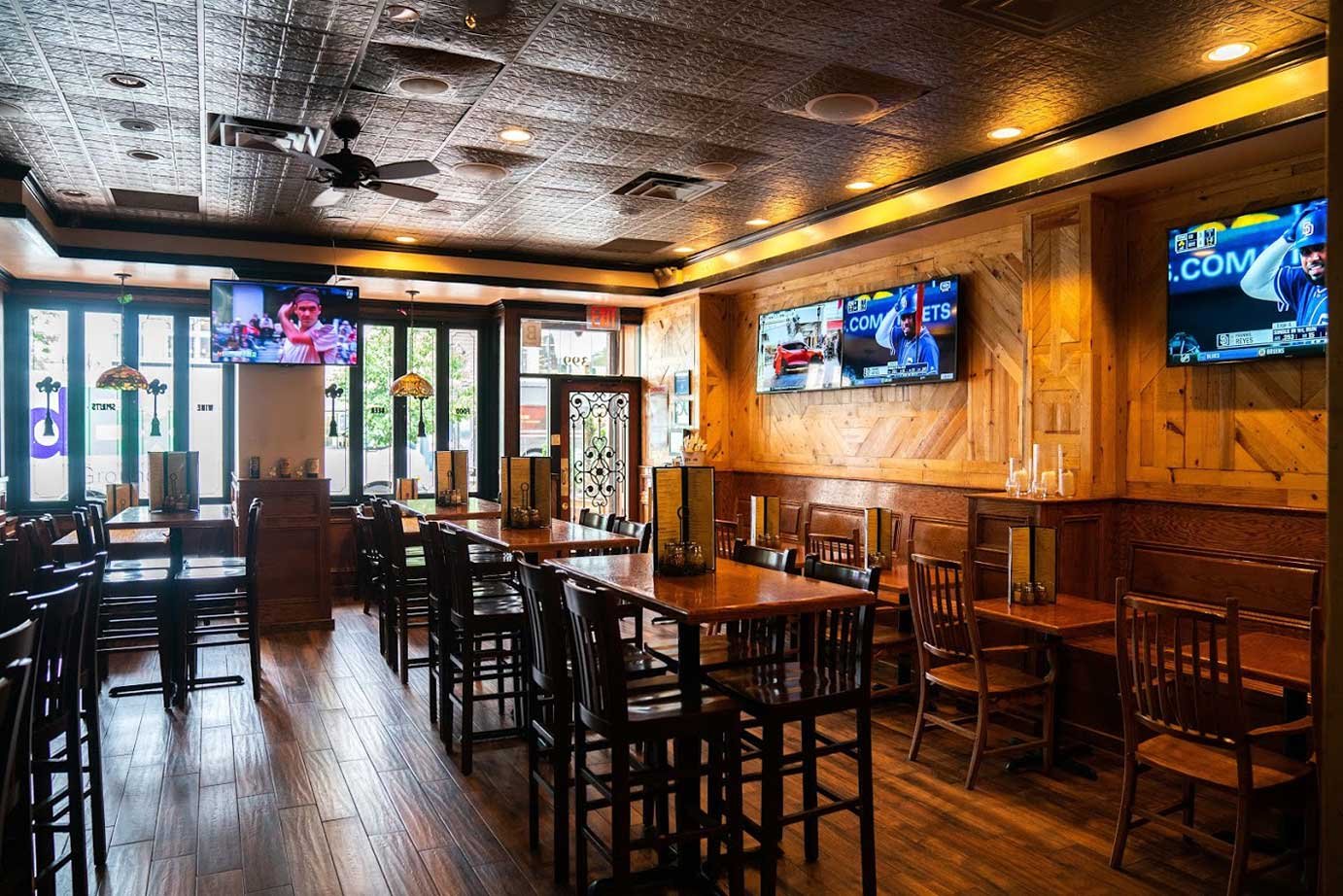
A Room Built by Time, Not by a Designer
New York's dining rooms fall into two broad categories: spaces conceived around a visual concept and spaces that have simply accumulated character through decades of continuous use. Saluggi's East, at 399 Grand St on the Lower East Side, belongs firmly to the second group. The physical container here was not handed to an interior architect with a brief about reclaimed wood and pendant lighting. It was shaped incrementally, the way neighbourhood restaurants in older American cities tend to be shaped, by the pressures of daily service, by the needs of regular customers, and by the slow accumulation of small decisions that no single designer would ever make.
That distinction matters more than it might seem. In a city where Eleven Madison Park operates out of a landmarked Art Deco dining room and Per Se was purpose-built to frame Central Park through floor-to-ceiling glass, the question of what a room communicates before a plate arrives is a real one. The Lower East Side has its own spatial vernacular, tighter floor plans, street-level frontage, the kind of proximity between tables that signals a neighbourhood institution rather than a destination restaurant.
Grand Street and the Geography of New York Pizza
The Lower East Side's identity as a dining neighbourhood has shifted considerably over the past two decades, but it retains a working-class pragmatism that sets it apart from the more theatrically curated blocks of the West Village or Tribeca. Grand Street in particular sits at the edge of several overlapping communities, historically Jewish and Chinese, more recently reshaped by younger renters and the restaurants that follow them. A pizza operation in this context is not just a food choice; it is a position in a neighbourhood argument about who the street belongs to and what kind of room a person should be able to walk into.
New York pizza, as a category, operates across an enormous range of price points and registers. At one end, Masa and Le Bernardin represent what the city's fine-dining tier looks like when it is fully resourced and internationally recognised. At the other end, the neighbourhood slice shop remains among the more durable formats in American urban eating. Saluggi's East operates in the tradition of the latter: a room built for repeated visits by people who live nearby, not for single-occasion dining by visitors working through a list.
That positioning places it in a specific competitive set, one defined less by price comparison with Atomix or Per Se and more by how it holds up against the practical standard that neighbourhood regulars apply: consistency, familiarity, the sense that the room knows you are coming back.
The Physical Logic of a Neighbourhood Pizzeria
The design logic of a long-running neighbourhood pizzeria is worth examining on its own terms, because it differs from the logic applied to, say, Blue Hill at Stone Barns outside the city or the considered ruralism of Single Thread Farm in Healdsburg. Those rooms are designed to communicate something specific about sourcing philosophy or agricultural connection. A neighbourhood pizzeria communicates through function: the counter placement, the sight lines to the oven, the way booths or tables are arranged to allow a solo diner the same dignity as a group of six.
At 399 Grand St, the address itself is informative. The Lower East Side's street grid produces a particular building typology, ground-floor retail or restaurant space with residential above, narrow frontages, the kind of room where the relationship between the street outside and the dining room inside is compressed rather than staged. This is not the open-kitchen theatrics of formats like Lazy Bear in San Francisco or the pastoral remove of The French Laundry in Napa. It is urban, immediate, and oriented toward the block it sits on.
Planning a Visit: What to Know Before You Go
Saluggi's East sits on Grand Street in the Lower East Side, reachable from the Delancey Street/Essex Street subway station, which serves the J, M, and Z lines, placing it within a short walk of the broader Lower East Side restaurant cluster.
The restaurant is recommended for reservations, so planning ahead is sensible if you want a smoother arrival. Coming earlier in the week or before the peak dinner rush on weekends is the practical approach for anyone who wants a calmer room.
For comparison, the planning calculus at Addison in San Diego, Smyth in Chicago, or The Inn at Little Washington involves months of lead time and formal reservation systems. The neighbourhood pizzeria inverts that entirely: accessibility is the point, and the room is built around the assumption of spontaneous use.
Comparable Spots, Quickly
Comparable venues nearby, for context on price, style, and recognition.
| Venue | Cuisine | Price | Notes |
|---|---|---|---|
| Saluggi's EastThis venue — the venue you are viewing | New York-Style Italian Pizza | $$ | Not listed |
| Paesano | Classic Italian-American Red Sauce | $$ | SoHo-Little Italy-Hudson Square |
| Trattoria Bianca | Casual Italian Trattoria | $$ | Chelsea-Hudson Yards |
| al di là Trattoria | Northern Italian Trattoria (Veneto) | $$ | Park Slope |
| BarDough | Brick Oven Pizza & Craft Cocktails | $$ | Hell's Kitchen |
| Piccola Cucina Osteria Siciliana | Sicilian Osteria | $$ | SoHo-Little Italy-Hudson Square |
Continue exploring
More in New York City
Restaurants in New York City
Browse all →

Bars in New York City
Browse all →
Hotels in New York City
Browse all →








At a Glance
- Lively
- Cozy
- Group Dining
- Casual Hangout
- Late Night
Current opening hours
- Monday
- 12 PM–2 AM
- Tuesday
- 12 PM–2 AM
- Wednesday
- 12 PM–2 AM
- Thursday
- 12 PM–2 AM
- Friday
- 12 PM–4 AM
- Saturday
- 12 PM–4 AM
- Sunday
- 12 PM–2 AM
Hours can change for holidays and private events. Last verified .
Cozy and lively atmosphere ideal for watching sports with friends, featuring house-made mozzarella and a casual vibe.