Sake Cafe
Our verdict
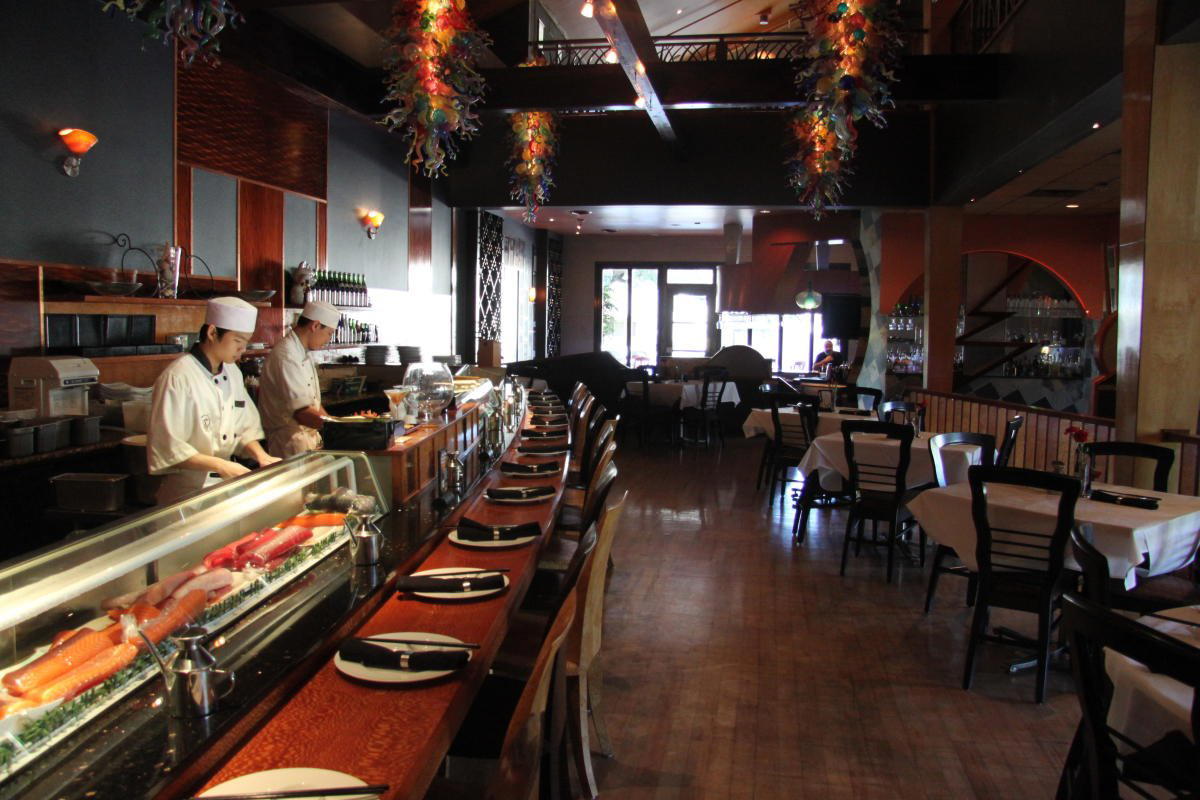
On Magazine Street, where the Garden District shades into Uptown, Sake Cafe occupies a strip that has long balanced neighborhood regularity with genuine culinary ambition. The address at 2830 Magazine St places it squarely in a corridor well-traveled by locals rather than tour groups, and the menu draws from Japanese tradition in a city more often associated with Creole and Cajun kitchens.

Pearl is the En Primeur Club membership app, where members save venues, book tables and use the concierge.
The menu
What to order
- Jazz Roll
- Uptown Roll
- New Orleans Roll
- Salmon Avocado Roll
- Sake Cafe Fried Rice
Magazine Street and the Question of Japanese Dining in a Cajun City
New Orleans has always absorbed outside culinary traditions on its own terms. The city's food culture is famously self-referential, Creole technique, French structure, West African seasoning, and restaurants that arrive carrying a different flag tend to either assimilate or remain curiosities. Japanese dining in New Orleans exists in that second category: present, appreciated by regulars, but never quite folded into the civic food identity the way, say, a po'boy or a bowl of red beans has been. That tension is part of what makes Sake Cafe on Magazine Street worth understanding on its own terms, separate from the headline Cajun and Creole establishments that define this city's national reputation.
Magazine Street itself sets the context. Stretching from the lower Garden District up through Uptown, it is a neighborhood artery lined with boutiques, wine bars, and restaurants that serve a largely local clientele. It is not the French Quarter, and it is not the tourist circuit. Dining here tends toward the habitual rather than the occasion-driven, which shapes what a restaurant can be. The address at 2830 Magazine St situates Sake Cafe in a stretch where the surrounding block functions more as a regular haunt than a destination reservation, a positioning that has its own logic for a Japanese concept in a city that does not have a deep Japanese dining infrastructure to lean on for credibility signals.
How the Menu Communicates Its Intentions
The editorial angle that matters most at Sake Cafe is not atmosphere in isolation but what the menu structure reveals about the restaurant's positioning and ambitions. In American cities with established Japanese dining scenes, think of the tightly sequenced omakase counters that have proliferated in New York and Los Angeles, or the kaiseki-adjacent programs at places like Atomix in New York City, menu architecture is often used as a credentialing device. Rigid format signals seriousness; the fewer choices on offer, the more confidence the kitchen is projecting in its own point of view.
In cities without that infrastructure, Japanese restaurants typically solve for a different problem: accessibility. The menu tends to span a wider range of formats, sushi alongside cooked preparations, izakaya-style small plates alongside larger composed dishes, because the customer base is heterogeneous and the restaurant cannot assume shared fluency with Japanese dining conventions. This breadth is not a compromise so much as a translation. It allows the kitchen to communicate across different levels of familiarity while still maintaining a Japanese culinary logic underneath.
What the address and neighborhood positioning suggest is a restaurant more oriented toward regulars than first-timers, which typically correlates with a menu that rewards return visits over a single showcase meal. That is a different proposition from the high-commitment tasting formats at The French Laundry in Napa or Alinea in Chicago, but it is not a lesser one. It serves a different purpose in the dining ecosystem of its city.
Placing Sake Cafe in the New Orleans Dining Conversation
New Orleans restaurant culture in 2024 and 2025 has grown considerably more diverse in its reference points. The city's upper tier still includes anchors in Creole and Cajun tradition, Emeril's represents the older guard of that canon, but newer openings have pushed the contemporary range considerably further. Saint-Germain at the higher price tier and Zasu in the American contemporary register both signal that the city's dining scene is not static. Bayona has for years demonstrated that New Orleans diners will support a globally inflected kitchen when the cooking is consistent enough to earn neighborhood loyalty.
That history matters for how to read a Japanese restaurant on Magazine Street. The city has shown it can sustain non-Creole concepts that build a regular clientele. The challenge for any Japanese dining concept here is that it operates without the peer-set density that helps restaurants in, say, San Francisco or Los Angeles, where a diner can triangulate between multiple Japanese restaurants and develop a comparative frame. New Orleans diners coming to Sake Cafe may be doing so without a strong competitive reference point, which puts more pressure on the restaurant to communicate its own value proposition through what is on the plate and how the menu is organized.
For readers building a fuller picture of what the city's restaurant scene currently offers, our full New Orleans restaurants guide maps the range from neighborhood staples to higher-commitment dining, including Re Santi e Leoni in the contemporary category. Internationally, the contrast between how Japanese cuisine operates in cities with deep infrastructure versus those without is illustrated by looking at Le Bernardin in New York City, Providence in Los Angeles, or even 8 1/2 Otto e Mezzo Bombana in Hong Kong as reference points for how culinary traditions travel and adapt to their host cities.
Other high-commitment American dining programs worth knowing for comparison include Single Thread Farm in Healdsburg, Lazy Bear in San Francisco, Blue Hill at Stone Barns in Tarrytown, Addison in San Diego, The Inn at Little Washington, and Bacchanalia in Atlanta. These are not peers to Sake Cafe in format or price tier, but they illustrate the full spectrum of how American restaurants build loyalty through menu discipline.
Know Before You Go
Address: 2830 Magazine St, New Orleans, LA 70115
Neighbourhood: Garden District / Uptown corridor, Magazine Street
Awards:
Leading approach: Magazine Street is accessible by the St. Charles streetcar (transfer at Louisiana Ave) or by car with street parking along the corridor
Frequently asked questions
Is Sake Cafe formal or casual?
Sake Cafe sits on Magazine Street, a corridor known for neighbourhood restaurants rather than white-tablecloth formality. The address and context suggest a setting where dressed-down works as well as dressed-up. No dress code is documented.
How do I find Sake Cafe?
Sake Cafe is located at 2830 Magazine St, New Orleans, LA 70115, New Orleans.
Does Sake Cafe fit into the broader shift toward diverse dining in New Orleans?
New Orleans restaurant culture has broadened considerably through 2024 and 2025, with non-Creole kitchens earning more sustained critical attention than in earlier decades. Sake Cafe on Magazine Street is part of that shift, representing a Japanese dining option in a city where the upper tier has historically been defined by French-Creole technique and Gulf seafood. Its longevity in the Uptown corridor is itself a data point worth registering.
What dish is Sake Cafe famous for?
What the menu structure communicates, as covered in the editorial above, is a Japanese kitchen operating within a city whose diners arrive with strong Creole-rooted expectations, that tension shapes what gets ordered most.
What makes Sake Cafe worth seeking out?
In a city where the dining conversation defaults to Creole and Cajun anchors, a Japanese restaurant that has held its position on Magazine Street long enough to enter editorial discussion occupies a distinct space. The interest is less about novelty and more about how a kitchen sustains a different culinary logic inside one of the most opinionated food cities in the United States.
Comparison Snapshot
Comparable venues nearby, for context on price, style, and recognition.
| Venue | Cuisine | Price | Notes |
|---|---|---|---|
| Sake CafeThis venue (the venue you are viewing) | Modern Japanese Sushi | $30–50 | Not listed |
| Nanami Sushi Diner & Onigiri | Japanese Omakase & Sushi | $100–150 | Garden District |
| Rock 'n' Sake | Modern Japanese Sushi & Sake Bar | $30–50 | Arts District |
| Wasabi Sushi & Asian Grill | Japanese Sushi & Asian Grill | $20–30 | Marigny |
| Nobu - Caesars New Orleans | Japanese-Peruvian Fusion | $100–150 | Central Business District |
| Brasa South American Steakhouse | South American Steakhouse | Not listed | French Quarter |