Dakar NOLA




Michelin Plate · World's 50 Best #4 · James Beard Award Best Chef: South
Our verdict
Dakar NOLA is a rarefied dining experience where Senegalese heritage is reimagined through the prism of New Orleans’s soulful abundance. In an intimate, reservation-only setting, a choreographed tasting menu unfolds like a travelogue—jolof rice elevated with jeweled aromatics, pristine Gulf seafood perfumed with attiéké and citrus, and cassava rendered silken beside deeply spiced stews. The cadence is gracious and unhurried, the storytelling vivid, the hospitality quietly magnetic. Here, West African technique speaks fluently with Creole terroir, revealing a cuisine that is both deeply rooted and thrillingly modern, designed for those who collect meals the way others collect art.

Pearl is the En Primeur Club membership app — saves, bookings, and concierge access live there. Same editors, same standards.
- Address
- 3814 Magazine St, New Orleans, LA 70115
- Phone
- (504) 493-9396
- Hours
- Mon ClosedTue–Sat 4:30–10 PMSun Closed
- Website
- dakarnola.com
- Directions
- Get directions
- Booking
- Book on OpenTable
Where Two Coastlines Meet on a Single Plate
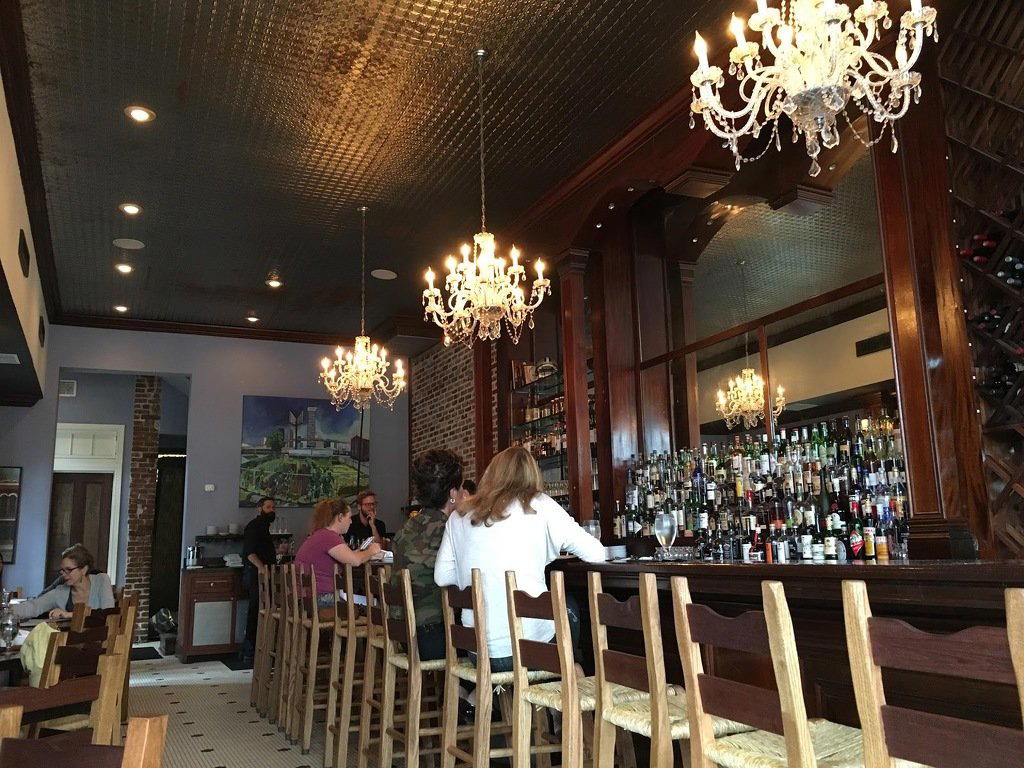
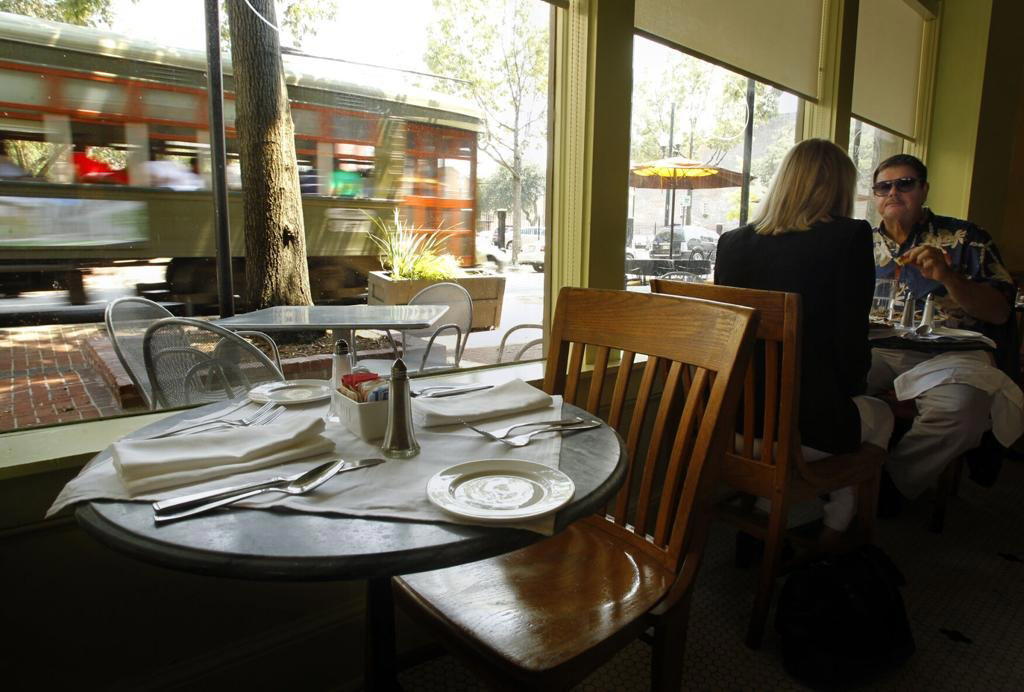
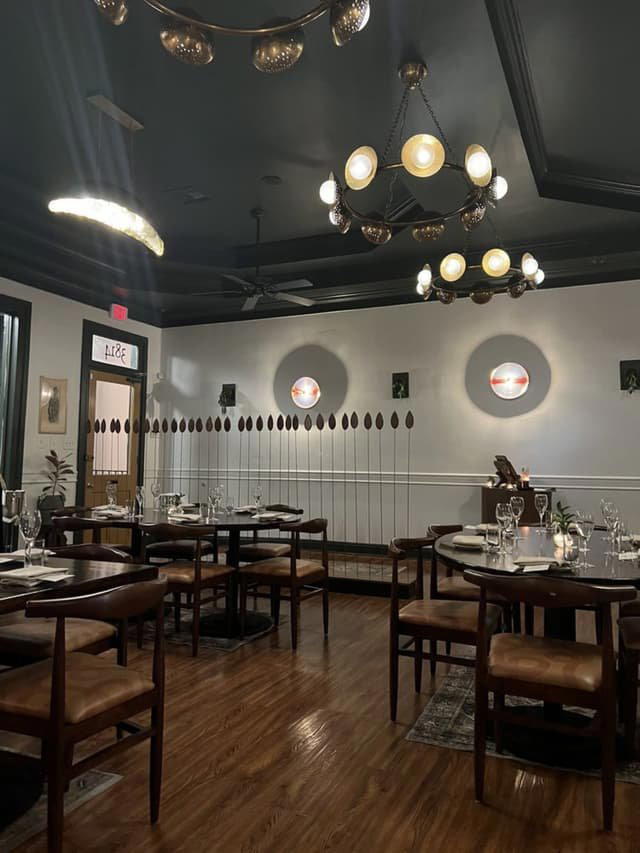
Walk into Dakar NOLA on Magazine Street and the first thing you register is sound: the low, warm hum of communal conversation bouncing off wooden surfaces and textured walls. A row of spear-like wooden rods divides the host area from the dining room, and a wall hung with West African masks catches the eye before your table does. This is an intimate room — the kind where neighbouring tables become part of your evening whether you plan for it or not — and the atmosphere that builds as each course lands is one of collective anticipation rather than hushed reverence. Diners lean in. Questions get asked. Stories surface.
The ingredient logic at Dakar NOLA operates on a geographic axis that most American tasting menus do not attempt: coastal Senegal mapped against coastal South Louisiana. Both traditions share a dependence on the sea, a use of bold aromatic layering, and centuries of accumulated technique. What the kitchen at 3814 Magazine St is doing is not fusion in the glossy, hotel-restaurant sense of the word. It is a case study in sourcing coherence, two coastlines sharing enough culinary DNA that their staple ingredients and cooking methods can speak directly to each other on the same plate.
The Ingredient Logic: Two Coastlines, One Menu
The West African larder that shapes the menu is not a prop or a mood board. Fonio, the ancient West African grain, appears in a salad dressed with citrus honey vinaigrette, a preparation that lets the ingredient speak without over-engineering it. Thiéboudienne-derived thiéré, a hand-rolled millet couscous central to Senegalese coastal cooking, replaces grits in a shrimp preparation that also incorporates coconut tamarind sauce. The substitution is not arbitrary: both grits and thiéré are grain-based, labour-intensive, and designed to anchor seafood and sauce. The swap is an argument, not a decoration.
Jollof rice, one of the most debated dishes across West and Central Africa, also appears in the eight-course progression, a move that invites comparison with every version a diner has encountered elsewhere and usually settles those comparisons decisively. The kitchen's decision to include a dish this culturally freighted signals confidence in the sourcing and execution. These are not safe choices, which is part of what the 2024 James Beard Award for Leading New Restaurant was recognising.
For context on how rare that award is: the James Beard Leading New Restaurant category draws submissions from across the United States, and winners typically share the shortlist with restaurants in New York, Los Angeles, and Chicago, cities where the sheer volume of openings gives any given entrant a statistical edge. A New Orleans tasting menu drawing directly from the Senegalese tradition winning that award in 2024 tells you something specific about where American fine dining attention is moving, and Dakar NOLA is now a data point in that shift.
New Orleans Has Always Been This Kind of City
New Orleans dining has a longer history of absorbing and transforming external culinary influences than almost any other American city. The Creole tradition itself is a product of French, Spanish, African, and Caribbean convergence. What Dakar NOLA adds to that history is a direct, named, and structurally honest engagement with the West African component that shaped the city's food culture but has rarely been centred in a fine-dining format.
The Magazine Street corridor runs through the Garden District and Uptown neighbourhoods, sitting at a remove from the French Quarter's tourist density. Other serious kitchens operate nearby, Bayona in the French Quarter has held its position as a benchmark for New American cooking in the city for decades, and Emeril's two Michelin stars sit within the same broader dining conversation.
Nationally, the tasting menu format that Dakar NOLA operates within has been refined by restaurants like Alinea in Chicago, Lazy Bear in San Francisco, and Le Bernardin in New York City. What those kitchens share is a commitment to a single coherent culinary argument delivered across a fixed number of courses. Dakar NOLA's eight-course structure fits that formal discipline. What it adds is a sourcing framework that none of those rooms are working with.
The comparison extends internationally. Atomix in New York City made a similar argument for Korean culinary heritage within a formal tasting menu context, with comparable award results. The pattern, a chef using a fixed-course format to advance a specific cultural sourcing thesis, is now well-established enough to be recognised as its own category of fine dining. Dakar NOLA is the clearest American example of that category drawing from African culinary tradition.
The Room and the Service
Co-owner Afua Richardson handles the front-of-house with the kind of presence that sets a room's temperature before the first course arrives. The service approach is described by multiple accounts as familial rather than formal, a significant tonal choice in a tasting menu format that can easily tip toward ceremony. When the team carries eight courses to a table with that quality of attention, the effect is that the room's communal energy and the kitchen's formal structure reinforce each other rather than working against each other.
Chef Serigne Mbaye's signed welcome note on the printed menu makes the sourcing intention explicit from the start: each dish is framed as a reflection of heritage, assembled with intention. That transparency is notable because it shifts the interpretive burden from the diner to the kitchen, you do not have to decode what you are eating or why. The menu tells you. This approach has parallels at kitchens like Single Thread Farm in Healdsburg and The French Laundry in Napa, where the sourcing narrative is made explicit as part of the dining contract. At Dakar NOLA, the cultural dimension of that narrative carries its own weight alongside the agricultural one.
That number also implies consistent execution over time, which for a kitchen working with this level of ingredient specificity is not a given.
Planning Your Visit
Dakar NOLA is at 3814 Magazine St, New Orleans, LA 70115, on the Magazine Street corridor in the Garden District, accessible by the Magazine Street streetcar line or by rideshare from the French Quarter in under fifteen minutes. The format is a fixed eight-course tasting menu, so this is a full-evening commitment rather than a drop-in dinner. Given the James Beard recognition and the size of the room, reservations should be secured well in advance; the volume of attention the restaurant has received since 2023 means that last-minute availability is unreliable. The restaurant's website is dakarnola.com and the listed phone number is (504) 891-8700.
For further reading on where Dakar NOLA sits within the city's broader dining picture, see our full New Orleans restaurants guide. For accommodation near Magazine Street, our New Orleans hotels guide covers the Garden District and beyond. Those building a wider New Orleans itinerary will also find relevant context in our New Orleans bars guide, our New Orleans experiences guide, and our New Orleans wineries guide. For comparison within the city's fine-dining tier, Saint-Germain and Re Santi e Leoni represent the contemporary end of the New Orleans tasting menu spectrum, while Zasu offers a different price point for American contemporary cooking in the city.
Frequently asked questions
Is Dakar NOLA better for a quiet night or a lively one?
Dakar NOLA runs communal tables in an intimate dining room, and the Michelin Plate-recognised space draws engaged, anticipatory diners whose conversation creates a warm, audible hum throughout service. It is not a hushed fine-dining room. If you want stillness and wide spacing, this is the wrong address; if you want a room that feels alive around an eight-course progression, 3814 Magazine St delivers exactly that.
Where is Dakar NOLA in New Orleans?
Dakar NOLA is located at 3814 Magazine St, New Orleans, LA 70115, New Orleans.
Is Dakar NOLA award-winning?
Dakar NOLA has received recognition including: Michelin Plate (2025); A tasting menu inspired by the coastal cuisines of Senegal and South Louisiana The vibe: You'll find buzzy chatter coming from the communal tables throughout the intimate and brilliant Dakar NOLA, a tasting menu resta….
What dish is Dakar NOLA famous for?
The menu's most-discussed plates connect Senegalese staples to Louisiana cooking: a shrimp and grits reworked with thiéré (Senegalese couscous) and coconut tamarind sauce, a fonio salad dressed with citrus honey vinaigrette, and a jollof course. These dishes are what earned Dakar NOLA the 2024 James Beard Award for Best New Restaurant and placement on Esquire's Best New Restaurants list in 2023.
How would you describe the cuisine at Dakar NOLA?
A Quick Peer Check
| Venue | Cuisine | Price | Awards | Notes |
|---|---|---|---|---|
| Dakar NOLAThis venue — the venue you are viewing | Modern Senegalese Pescatarian Tasting Menu | $150–200 | Michelin Plate · World's 50 Best #4 | Not listed |
| Emeril’s | Modern Creole-Cajun Fine Dining | $150–200 | 2 Michelin Stars · World's 50 Best #20 | Cajun |
| Re Santi e Leoni | Contemporary | Not listed | Michelin 1 Star | Not listed |
| Bayona | Modern Creole Fine Dining | $100–150 | World's 50 Best #45 · James Beard Award Best Chefs | New American |
| Commander’s Palace | Modern Creole | $50–100 | La Liste Top Restaurants · Star Wine List | Creole |
| Pêche Seafood Grill | Modern Seafood Grill | $50–100 | Michelin Plate · James Beard Award Semi Finalist | American Regional - Cajun Seafood |
Recognition history
Dated appearances from independent guides and award organizations, with the underlying list record or original source where available.
Michelin Plate
Michelin
World's 50 Best North America's Best Restaurants #4
World's 50 Best
James Beard Award Best Chef: South
James Beard Award
Esquire Best New Restaurants #26
Esquire
Full recognition history (8 entries)
James Beard Award Semi Finalist
James Beard Award
James Beard Award Nominee
James Beard Award
World's 50 Best North America's Best Restaurants #6
World's 50 Best
James Beard Award Best New Restaurant
James Beard Award