
Inside a historic palazzo a short walk from Nola's Cathedral, Re Santi e Leoni holds a Michelin star (2024) for Luigi Salomone's contemporary Campanian cooking. Three tasting menus and a dynamic à la carte draw on the region's ingredient depth, with house breads and a revisited pastiera among the standout expressions.
Pearl is the En Primeur Club membership app — saves, bookings, and concierge access live there. Same editors, same standards.
- Address
- Via Anfiteatro Laterizio, 92, 80035 Nola NA, Italy
- Phone
- +39 081 278 1526
- Website
- resantieleoni.com
- Directions
- Get directions
 Saves & bookings on Pearl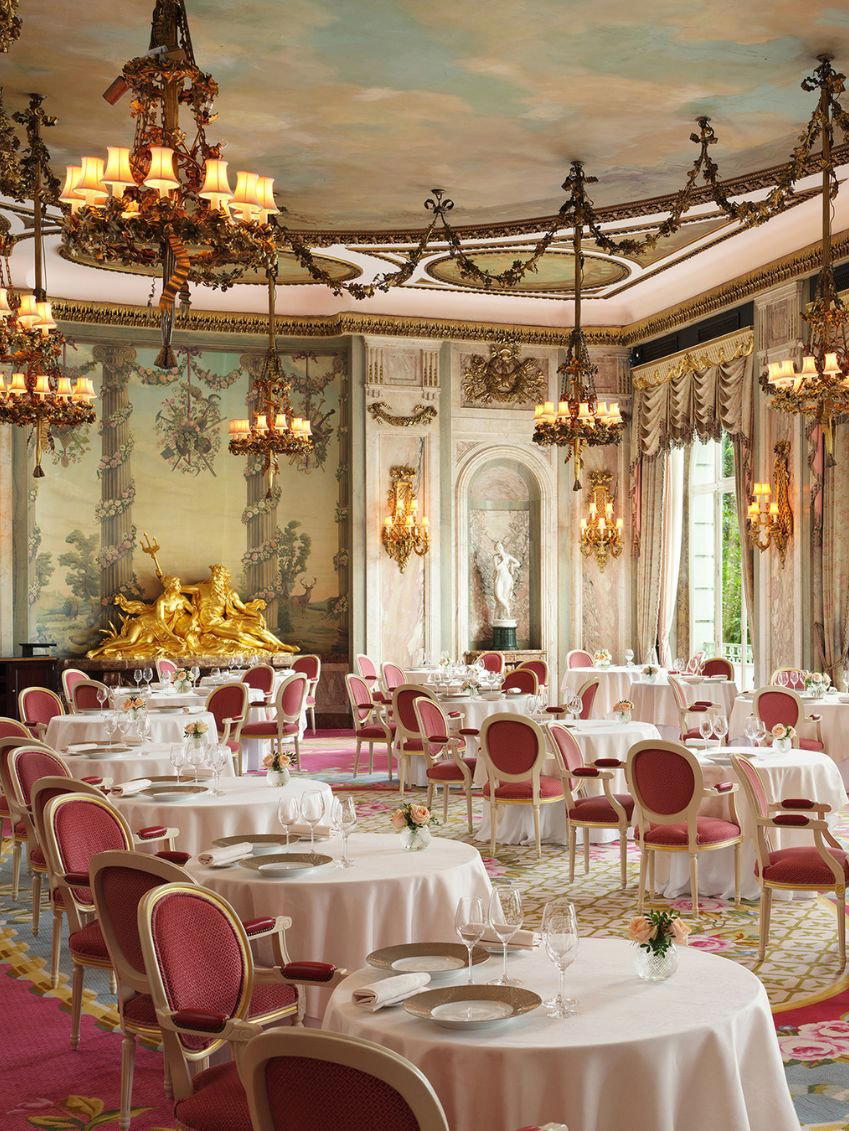
A Palazzo, an Open Kitchen, and the Weight of Campanian Tradition
The approach to Re Santi e Leoni sets expectations accurately. Via Anfiteatro Laterizio runs close to Nola's Cathedral, a town in the Neapolitan hinterland whose Roman amphitheatre and medieval centro storico carry the layered history typical of Campania. The restaurant itself occupies a historic palazzo, and the spatial logic inside is deliberate: a long corridor moves from the entrance past an understated contemporary dining room before arriving at the open kitchen. That sequencing, from architectural past to working present, mirrors something meaningful about how the leading contemporary Italian cooking actually operates, not in opposition to its regional inheritance, but in direct, honest dialogue with it.
Campania is one of Italy's most ingredient-rich regions, a fact that gets compressed into the shorthand of Neapolitan pizza and San Marzano tomatoes. What that shorthand omits is the depth of the region's larder: the livestock of the Caserta plains, the seafood of the Tyrrhenian coast, the citrus and dairy of the volcanic interior, and the pastry traditions that run through every town from Naples outward. A kitchen working at the level Re Santi e Leoni occupies, Michelin one star, awarded in 2024, has direct access to that material and the obligation to do something precise with it.
Where Contemporary Italian Cuisine Stands in Campania
The contemporary Italian restaurant category has matured significantly over the past two decades, moving from nouvelle-influenced Italian abstractions toward something more grounded and regionally specific. One coherent current expression of this tendency tends to be found not in major metropolitan centres but in restaurants that operate close to their ingredient sources, where the regional argument is self-evident and the kitchen doesn't need to import its identity.
Campania represents a particularly interesting case. The region's gastronomic reputation has historically been anchored by its street food and trattoria traditions rather than its fine dining. That is changing. A constellation of serious kitchens now operates across the Neapolitan area and its surrounding towns, working with local products at a technical level that engages with but doesn't mimic the northern Italian or French fine dining playbook. Re Santi e Leoni belongs to that cohort. For comparison within the broader Italian contemporary tier, consider the scale and ambition at Osteria Francescana in Modena or the regional seafood intelligence of Quattro Passi in Marina del Cantone, both illustrate the range within which serious contemporary Italian restaurants operate, from the globally prominent to the deeply place-specific.
Re Santi e Leoni sits firmly in the place-specific category. Its Michelin recognition in 2024 confirms a level of technical execution that places it in a competitive comparable set with other starred rooms in the Campania region, though its location in Nola rather than Naples gives it a different character, more local, less touristically pressured, with a clientele that skews toward the knowledgeable regional visitor rather than the international circuit.
The Format: Tasting Menus, À La Carte, and What That Choice Signals
Three tasting menus run alongside a dynamic à la carte. That dual-format structure is worth pausing on. Many starred Italian restaurants in this tier have moved to tasting-menu-only formats, which maximise kitchen control and minimise waste but limit the spontaneity of the meal. Retaining an active à la carte signals confidence in the kitchen's range and a deliberate hospitality choice to accommodate guests who want a single dish or a self-directed sequence. It also keeps the restaurant accessible to locals dining on a weeknight rather than positioning itself exclusively as a destination for occasion dining.
The tasting menu option, meanwhile, allows the kitchen to make an argument across a full sequence, to show not just technical ability in individual dishes but compositional intelligence across a meal. That's where precision, clarity of flavour, and balance, the qualities Michelin's assessors noted, become most legible. A single dish can demonstrate skill; a well-constructed menu sequence demonstrates a point of view.
The à la carte changes dynamically, which in practice means it tracks seasonal availability and kitchen evolution rather than locking into a fixed repertoire. That approach is common among restaurants working closely with regional suppliers, where the season, not the menu, sets the calendar.
The Pastiera and What It Represents
Among the kitchen's noted expressions, the revisited pastiera carries particular significance. The pastiera napoletana is one of Campania's most deeply embedded pastry traditions: a latticed tart made with ricotta, cooked wheat, eggs, orange blossom water, and candied citrus, historically prepared for Easter and tied to centuries of domestic ritual across Neapolitan households. Its cultural weight is considerable, the kind of dish that families argue about in the way other regions argue about ragu or risotto.
For a contemporary kitchen to engage with the pastiera is to take on that weight deliberately. The Michelin assessment specifically flags this revisiting as a standout, which suggests the kitchen's interpretation does something more than deconstruct for the sake of novelty. The distinction between innovation that illuminates a tradition and innovation that erases it is one of the central tensions in contemporary Italian cooking. The house bread program, also specifically noted, points in the same direction: bread at this level is a statement about sourcing, fermentation, and the kitchen's relationship to one fundamental category of Italian food.
For readers familiar with other Italian kitchens working at this intersection of tradition and technique, the approach has parallels in different regions: Dal Pescatore in Runate holds its regional Lombard tradition with similar seriousness, while Atelier Moessmer Norbert Niederkofler in Brunico pursues a comparable commitment to alpine ingredient specificity in the far north. The common thread is a refusal to treat regional identity as aesthetic decoration.
Re Santi e Leoni in the Wider Contemporary Dining Context
Beyond Italy, the contemporary fine dining category has produced a global conversation about what regional cooking means at a technical level. Jungsik in Seoul and César in New York City both represent versions of the contemporary format applied to different culinary inheritances, and the comparison is useful for understanding what distinguishes a restaurant like Re Santi e Leoni: the Campanian kitchen operates with the ingredient source essentially on its doorstep, which changes the nature of the creative problem. The question isn't how to express a distant tradition in a metropolitan context; it's how to do justice to a tradition you're standing inside.
Within Italy, Enrico Bartolini in Milan and Enoteca Pinchiorri in Florence represent the upper tier of the country's fine dining hierarchy in terms of star count and institutional status. The restaurant operates at a different scale and with a different ambition, and that's not a limitation, it's a distinct position.
Know Before You Go
- Address: Via Anfiteatro Laterizio, 92, 80035 Nola NA, Italy
- Price range: €€€
- Awards: Michelin One Star (2024) 8 (233 reviews)
- Lunch service: 12:30 PM – 3:00 PM (Monday, Wednesday–Sunday)
- Dinner service: 8:00 PM – 11:00 PM (Monday, Wednesday–Saturday)
- Sunday: Lunch only (12:30 PM – 3:00 PM); no dinner service
- Closed: Tuesday
- Format: Three tasting menus plus dynamic à la carte
- Booking: Contact details not listed; check directly via search or local listings
Awards and Standing
Comparable venues nearby, for context on price, style, and recognition.
| Venue | Cuisine | Price | Awards | Notes |
|---|---|---|---|---|
| Re Santi e LeoniThis venue — the venue you are viewing | Modern Italian Fine Dining | $$$$ | Michelin 1 Star | Not listed |
| Rear Restaurant | Modern Italian Seafood | $$$ | Michelin Plate | Nola |
| Le Baccanti | Modern Italian Seafood | $$$ | Michelin Plate | Nola |
| Taverna del Capitano | Modern Italian Seafood | $$$$ | Michelin 1 Star | Marina del Cantone |
| Il Buco | Modern Italian Fine Dining | $$$$ | Michelin 1 Star | Sorrento |
| Caracol | Modern Italian Seafood Fine Dining | $$$$ | Michelin 1 Star | Bacoli |
Recognition history
Dated appearances from independent guides and award organizations, with the underlying list record or original source where available.
Michelin 1 Star
Michelin
Michelin 1 Star
Michelin
Michelin 1 Star
Michelin
Continue exploring
More in Nola
Restaurants in Nola
Browse all →
Bars in Nola
Browse all →
Hotels in Nola
Browse all →
At a Glance
- Elegant
- Sophisticated
- Intimate
- Classic
- Special Occasion
- Date Night
- Business Dinner
- Open Kitchen
- Extensive Wine List
- Local Sourcing
Current opening hours
- Monday
- 12:30–3 PM, 8–11 PM
- Tuesday
- Closed
- Wednesday
- 12:30–3 PM, 8–11 PM
- Thursday
- 12:30–3 PM, 8–11 PM
- Friday
- 12:30–3 PM, 8–11 PM
- Saturday
- 12:30–3 PM, 8–11 PM
- Sunday
- 12:30–3 PM
Hours can change for holidays and private events. Last verified .
Elegant and comfortable environment with bright rooms, open kitchen, and welcoming staff in a historic renovated space.