Our verdict
A Vietnamese address on Getreidemarkt, positioned steps from the Secession building in Vienna's 6th district. Saigon Restaurant occupies a corner site where the city's appetite for Southeast Asian cooking meets a neighbourhood more commonly associated with Austrian fine dining. For Vienna's Vietnamese dining scene, it represents a longstanding presence in a category that the city's Michelin-starred circuit, led by houses like Steirereck im Stadtpark and Konstantin Filippou, leaves largely unaddressed.

Pearl is the En Primeur Club membership app, where members save venues, book tables and use the concierge.

The menu
What to order
- Pho
- Beef noodle
- Sticky rice with banana and coconut milk
- Spring rolls
- Duck dishes
Vietnamese Cooking in a City Built for Austrian Classicism
Vienna's restaurant culture has long centred on two poles: the grand Viennese Beisl tradition and a cluster of modern European fine-dining rooms that rank among the most decorated in German-speaking Europe. What sits between those poles, and particularly what arrives from Southeast Asia, occupies a quieter but persistent place in the city's eating life. Vietnamese restaurants have operated in Vienna for decades, sustained largely by a diaspora community that arrived in waves through the 1980s and 1990s, and by a broader Central European appetite for lighter, herb-driven cooking that contrasts with the richness of Austrian cuisine. Saigon Restaurant, at Getreidemarkt 7 on the corner of Lehárgasse, has been part of that longer story.
The address is telling. Getreidemarkt sits at the edge of the 6th district, close to the Naschmarkt corridor and within sight of the Secession building, one of Vienna's most recognisable Jugendstil landmarks. This is not the tourist-dense 1st district, nor is it the outer residential zones where many of the city's ethnic restaurants operate with less foot traffic. It is a working neighbourhood with a mixed clientele, where the proximity to the Musikverein and the Theater an der Wien means evening diners can arrive from a concert rather than a planning session. That geography shapes who walks through the door and, in turn, how daytime and evening service feel.
The Lunch and Dinner Divide
In Vietnamese restaurants across Central Europe, the gap between lunch and dinner service is often wider than the menu suggests. At midday, the format tends toward speed and value: bowl-based dishes, quick pho, rice plates eaten by workers from nearby offices and studios. The rhythm is utilitarian, the turnover brisk. By evening, the same kitchen shifts register. Tables linger. The herb platters that accompany many Vietnamese dishes become less of an afterthought and more of a ritual. A dish of bun bo Hue or a clay-pot preparation takes on different weight when the city outside has slowed down.
This pattern holds across Vienna's Vietnamese dining category. The lunch crowd at restaurants near Naschmarkt and along the 6th and 7th district corridors is younger, faster, more price-conscious. Dinner pulls in a different mix: couples, small groups, diners who want something lighter than the Tafelspitz or Wiener Schnitzel that dominates Austrian brasseries nearby. For venues like Saigon Restaurant, positioned on a corner with good visibility from the street, that evening foot traffic from the arts and cultural venues around Karlsplatz is a meaningful part of the trade.
The value differential between lunch and dinner in this category is also real. Vietnamese restaurants in Vienna generally price their midday service more aggressively, with set menus or smaller portions calibrated to compete with the sandwich-and-coffee model of the city's cafés. Evening pricing reflects longer service and more complex preparations. That gap matters for planning: a lunch visit to this part of the 6th district delivers a different proposition than arriving at 8pm on a Friday.
Where Saigon Restaurant Sits in Vienna's Wider Dining Picture
Vienna's fine-dining circuit operates at a significant remove from casual ethnic restaurants, and deliberately so. The city's leading creative tables Steirereck im Stadtpark, Amador, Mraz & Sohn, and Konstantin Filippou, operate tasting-menu formats at €€€€ price points with Michelin recognition and multi-week booking windows. Doubek represents a different register again. None of these directly competes with Vietnamese cooking for the same diner on the same evening.
Saigon Restaurant occupies a different tier entirely, one where the comparison set is other Southeast Asian and East Asian addresses in the city rather than the Michelin-decorated rooms. That tier has its own quality signals: freshness of ingredients, consistency of broth-based dishes, the handling of fresh herbs and rice-based preparations that are difficult to fake at scale. Vienna's Vietnamese category is not large, and the restaurants that have maintained a consistent presence over multiple decades have done so by serving a community that knows the cuisine well enough to notice when it is done poorly.
For context on what high-end cooking looks like elsewhere in Austria, the country's broader fine-dining circuit includes Döllerer in Golling an der Salzach, Ikarus in Salzburg, Obauer in Werfen, Griggeler Stuba in Lech, Landhaus Bacher in Mautern an der Donau, Gourmetrestaurant Tannenhof in Sankt Anton am Arlberg, Kräuterreich by Vitus Winkler in Sankt Veit im Pongau, Restaurant 141 by Joachim Jaud in Mieming, Schwarzer Adler in Hall in Tirol, and Ois in Neufelden. For travellers moving between Vienna and those rooms, Saigon Restaurant represents a different kind of meal entirely, casual, fast, neighbourhood-oriented, and is probably better understood as a midday or early-evening stop than as a destination in itself.
Internationally, the question of where Vietnamese cooking sits relative to a city's fine-dining establishment has been answered more decisively in cities like New York, where Korean tasting-menu restaurants such as Atomix operate at the same tier as European fine-dining rooms, and where seafood-focused houses like Le Bernardin have long occupied the best of the critical conversation. Vienna has not yet produced a Vietnamese or broader Southeast Asian address at that level. The category remains informal, which is not a criticism, it reflects what the cuisine does naturally at its finest.
Planning a Visit
Saigon Restaurant is located at Getreidemarkt 7, on the corner with Lehárgasse, in Vienna's 6th district. The Secession U-Bahn stop (U1, U2, U4) places it within a short walk, and the Naschmarkt, Vienna's principal food market, is a few minutes further along Linke Wienzeile. For anyone spending time in this part of the city, the restaurant is easy to incorporate into a daytime itinerary built around the market and the surrounding galleries. For a full picture of the city's dining options across all categories and price points, see our full Vienna restaurants guide.
Frequently asked questions
Is Saigon Restaurant a family-friendly restaurant?
At this price tier and in this neighbourhood, Vietnamese restaurants in Vienna generally accommodate families without difficulty, particularly at lunch.
What's the vibe at Saigon Restaurant?
The corner site on Getreidemarkt places it in a mixed-use part of the 6th district, where the clientele shifts between daytime workers and evening visitors from the nearby arts venues. Without Michelin recognition or a high price point, the atmosphere sits closer to neighbourhood casual than destination dining, which in Vienna's Vietnamese category is the norm rather than the exception.
What do people recommend at Saigon Restaurant?
In the broader Vietnamese dining category in Central Europe, broth-based dishes and rice preparations tend to draw the most consistent praise from regular diners, and a restaurant's handling of these is generally the clearest signal of kitchen consistency.
How far ahead should I plan for Saigon Restaurant?
For a neighbourhood Vietnamese restaurant in the 6th district, same-day availability at lunch is probable; weekend evenings may warrant a call ahead, but multi-week lead times are unlikely to apply here.
Is Saigon Restaurant a good option before or after visiting the Secession building?
The restaurant's address at Getreidemarkt 7, directly at the Secession corner, makes it a practical choice for a meal built around a visit to the exhibition space. The Secession building hosts rotating contemporary art exhibitions and is one of the most visited cultural sites in the 6th district; the proximity makes Saigon Restaurant a logical pre- or post-exhibition stop, particularly at midday when the area is active and the restaurant's lunch trade is at its most efficient.
Compact Comparison
Comparable venues nearby, for context on price, style, and recognition.
| Venue | Cuisine | Price | Notes |
|---|---|---|---|
| Saigon RestaurantThis venue (the venue you are viewing) | Authentic Vietnamese | $20–30 | Not listed |
| Vietthao | Authentic Vietnamese | $20–30 | Staatsoper, Authentic Vietnamese |
| BanMi | Vietnamese Street Food | $20–30 | Josefstadt, Vietnamese Street Food |
| Good Morning Vietnam | Modern Vietnamese | $20–30 | Alsergrund, Modern Vietnamese |
| Chinacy | Modern Chinese Tapas | $20–30 | Innere Stadt, Modern Chinese Tapas |
| The Epos | Mediterranean Turkish Greek | $20–30 | Hofburg, Mediterranean Turkish Greek |
Continue exploring
More in Vienna
Restaurants in Vienna
All restaurants in Vienna →
Bars in Vienna
All bars in Vienna →
Details
- Cozy
- Casual
- Classic
- Family
- Group Dining
- Casual Hangout
- Date Night
- Open Kitchen
- Standalone
- Beer Program
- Craft Cocktails
- A La Carte
- Family Style
- Beer
- Cocktails
- Wine
- Vegetarian Friendly
- Vegan Options
- Gluten Free Options
- Allergy Accommodating
Current opening hours
- Monday
- 11:30 AM–11 PM
- Tuesday
- Closed
- Wednesday
- 11:30 AM–11 PM
- Thursday
- 11:30 AM–11 PM
- Friday
- 11:30 AM–11 PM
- Saturday
- 11:30 AM–11 PM
- Sunday
- 11:30 AM–10 PM
Hours can change for holidays and private events. Hours as of .
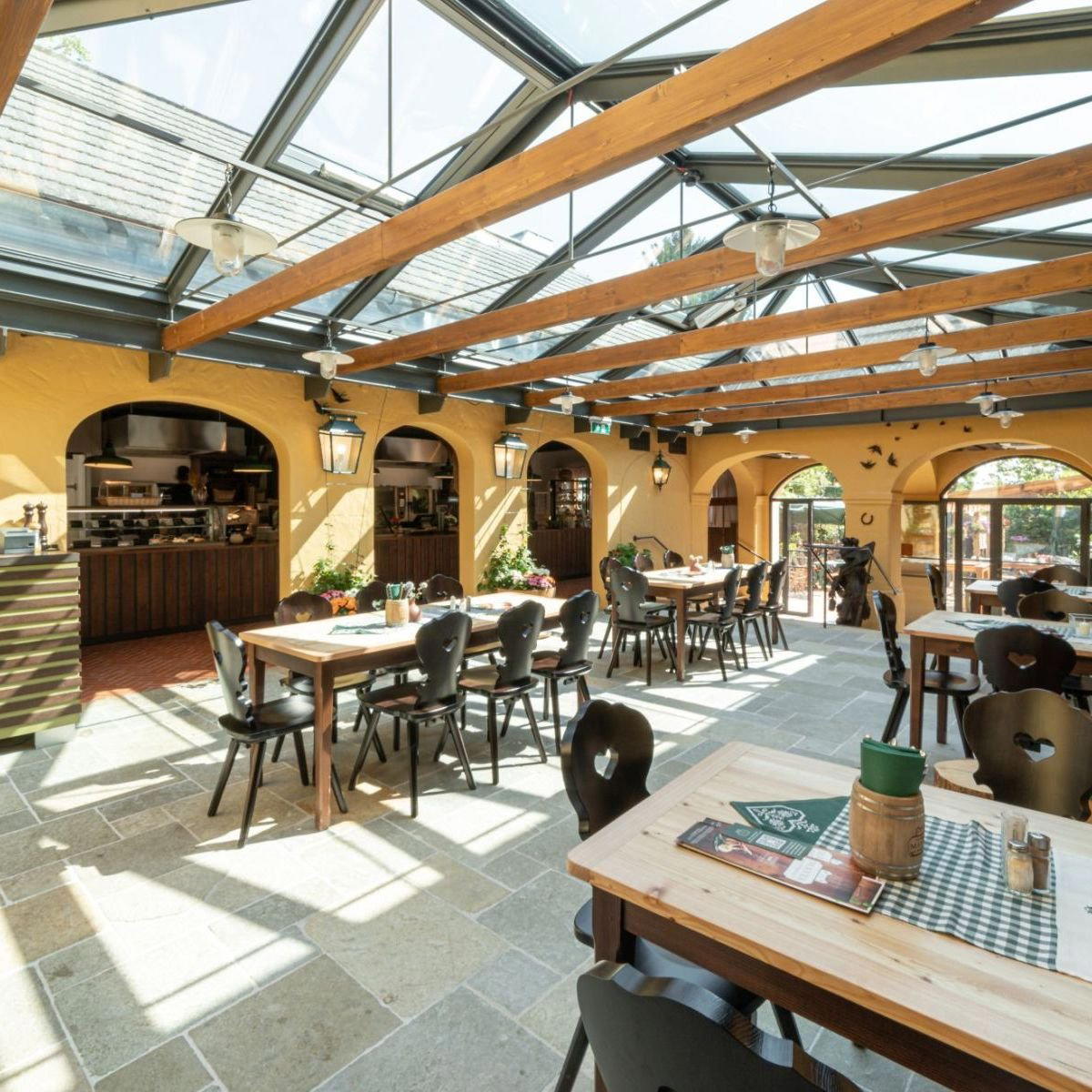
Casual and relaxing interior with neutral colors, calming atmosphere, and open kitchen visible from seating areas creating an engaging dining environment.