Our verdict
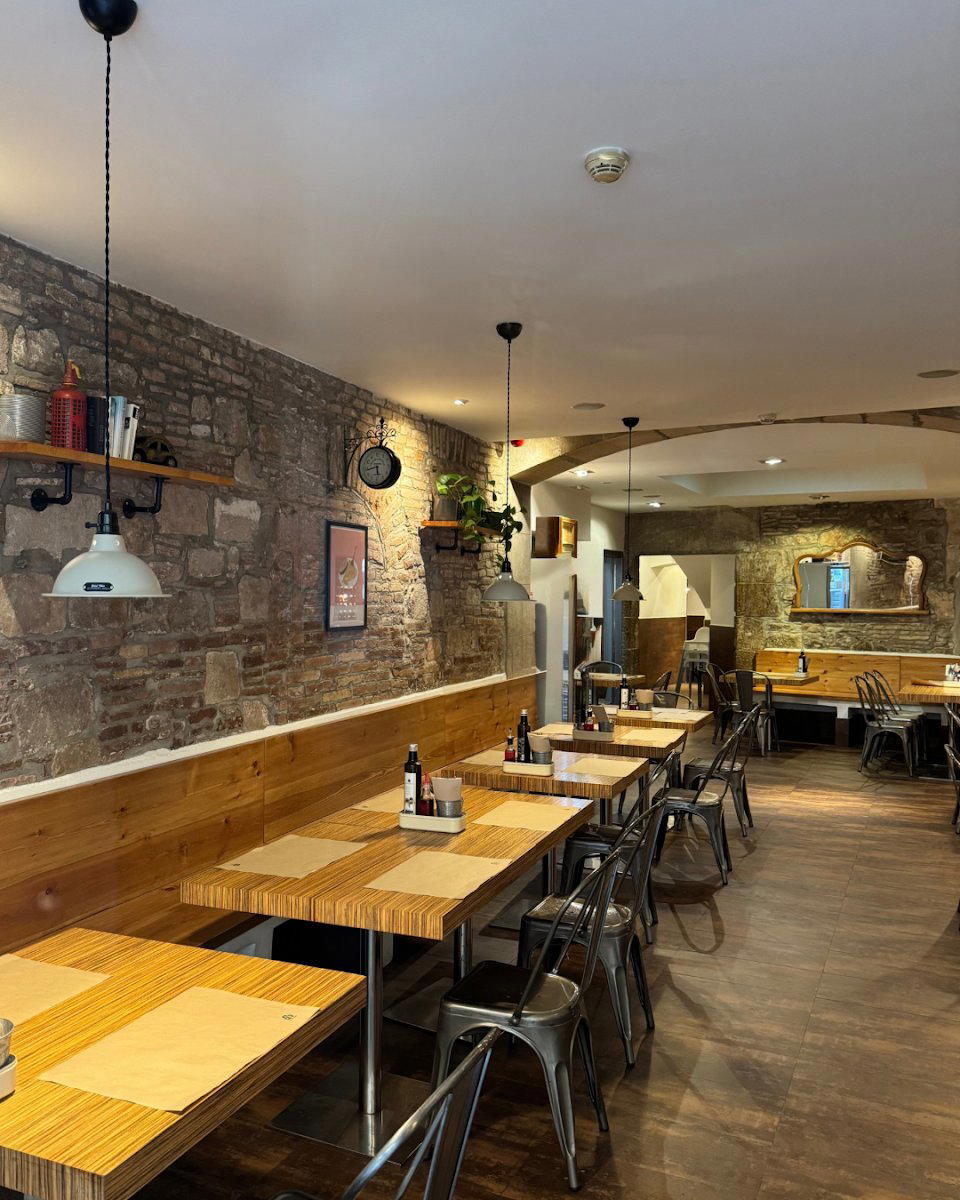
On Carrer de Ferran in the Barri Gòtic, Cafeteria Fernando occupies a stretch of Barcelona where the city's everyday eating culture plays out without theatrical pretension. The menu structure here tells you something about how the neighbourhood feeds itself: straightforward, affordable, and built around the rhythms of the local working day rather than the tourist itinerary.

Pearl is the En Primeur Club membership app, where members save venues, book tables and use the concierge.
The menu
What to order
- Homemade paellas
- Patatas bravas
- Grilled shrimp
Where the Barri Gòtic Eats Without Ceremony
Carrer de Ferran runs from the Ramblas toward Plaça de Sant Jaume, and for most of its length it functions as a corridor between monuments rather than a destination in itself. Yet the street's ground-floor addresses tell a different story about how Barcelona's oldest quarter actually sustains itself day to day. Cafeteria Fernando, at number 31, sits in this in-between zone: a Ciutat Vella address that belongs neither to the polished restaurant tier nor to the purely tourist-facing operations that have colonised much of the Gothic Quarter's retail. What it offers instead is a format that has long defined the backbone of Spanish urban eating, the cafeteria, a word that in its Spanish incarnation means something far more specific than its international connotations suggest.
The Cafeteria Format and What It Reveals
In Spanish cities, the cafeteria occupies a structural position in daily life that the rest of Europe tends to collapse into the café or the bistro. It opens early, handles breakfast, absorbs the mid-morning coffee rush, and pivots into a menú del día at lunch before winding down in the afternoon. The menu architecture of a functioning Spanish cafeteria is not aspirational, it is logistical. It tells you what a neighbourhood expects to eat, at what hour, and at what price point, without requiring a reservation or a considered aesthetic experience.
This is the lens through which Cafeteria Fernando makes most sense. The address on Carrer de Ferran is not a creative-cooking proposition. It does not position itself in the tier occupied by Barcelona's serious tasting-menu houses, the kind of technical ambition seen at Disfrutar, the seasonal rigour of Cocina Hermanos Torres, or the long-standing prestige of Lasarte. Those restaurants serve a different function in a different part of the city. Cafeteria Fernando serves the function of keeping the neighbourhood fed on a Tuesday at noon, and that is a role worth understanding on its own terms.
Reading the Menu as a Document
The editorial angle on any cafeteria worth considering is its menu structure, because that structure is itself an argument about who the place is for and what the kitchen believes its obligations are. A cafeteria that still runs a proper menú del día, starter, main, dessert, bread, and a drink, is making a commitment to the full rhythm of the Spanish lunch, not just selling plates. That format, legally pegged at accessible prices in Spain as part of a longstanding cultural norm, acts as a social contract between the kitchen and the neighbourhood. It assumes the customer is eating here five days a week, not five times a year.
In the Barri Gòtic specifically, that assumption is harder to sustain than it was two decades ago. The neighbourhood's residential population has thinned as short-term rentals have expanded, and many of the eating establishments that once served locals have repositioned toward higher-margin, tourist-facing formats. A cafeteria that continues to operate as a cafeteria in this context is functioning against the commercial grain of its postcode, which gives it a sociological interest that a more fashionable address would not have.
Positioning in the Barcelona Eating City
Barcelona's restaurant scene reads, at the upper end, as one of the most concentrated in Europe. Within the city, ABaC and Enigma represent the kind of multi-Michelin ambition that draws international visitors with research-heavy itineraries. Across Spain more broadly, the concentration of three-star cooking is remarkable: El Celler de Can Roca in Girona, Quique Dacosta in Dénia, Martin Berasategui in Lasarte-Oria, Arzak in San Sebastián, Azurmendi in Larrabetzu, Aponiente in El Puerto de Santa María, Mugaritz in Errenteria, and DiverXO in Madrid together make Spain's fine-dining map unusually dense for a country of its size. Ricard Camarena in València and Atrio in Cáceres extend that reach further into the regions.
Cafeteria Fernando exists at the opposite end of this spectrum, and that opposition is not a weakness, it is a category distinction. The cafeteria format has been under pressure in Spanish cities for the same reasons that the bistro has been under pressure in Paris and the greasy spoon in London: rising property costs, labour economics, and the cultural shift toward eating as occasion rather than routine. Where the format survives intact, it tends to do so because the operation has a long-established relationship with a specific local customer base, a lean menu that limits waste, and pricing that prioritises throughput over margin per cover.
For visitors whose Barcelona itinerary is built around the city's serious cooking, operations like Cafeteria Fernando provide context that a tasting menu cannot. They are the baseline, the daily-meal infrastructure against which the ambition of Disfrutar or the craft of Cocina Hermanos Torres is made legible. For broader reference points from the international end of the eating spectrum, the sustained technical discipline of Le Bernardin in New York or the collaborative dinner-party format of Lazy Bear in San Francisco represent the same kind of category clarity, just at the other end of the formality axis. See our full Barcelona restaurants guide for the complete picture across price tiers and neighbourhoods.
Know Before You Go
| Address | Carrer de Ferran, 31, Local, Ciutat Vella, 08002 Barcelona |
|---|---|
| Neighbourhood | Barri Gòtic, within the broader Ciutat Vella district |
| Format | Cafeteria, daily-meal format, breakfast through lunch |
| Booking | No booking data available; walk-in format typical of the category |
| Price | |
| Website / Phone | Not publicly listed |
Frequently asked questions
Where exactly is Cafeteria Fernando?
Cafeteria Fernando is located at Carrer de Ferran, 31, Local, Ciutat Vella, 08002 Barcelona, Spain, Barcelona.
Is Cafeteria Fernando worth visiting if you're staying near Las Ramblas in Barcelona?
Carrer de Ferran runs directly between Las Ramblas and Plaça de Sant Jaume, placing Cafeteria Fernando at number 31 within a few minutes' walk of most accommodation in the Ciutat Vella district. The relevance is less about convenience and more about contrast: the Ramblas corridor is almost entirely tourism-facing at street level, and a functioning local cafeteria on Carrer de Ferran represents a different register of Barcelona eating entirely. For visitors oriented around the Gothic Quarter, it fills the role that a neighbourhood bar-restaurant would in a less touristically pressured part of the city.
What's the best thing to order at Cafeteria Fernando?
Cafeteria Fernando sits on Carrer de Ferran in the heart of Ciutat Vella, and the cafeteria format it operates within points toward a specific kind of menu: short, rotation-based, built around the plat del dia structure that anchors midday eating across Barcelona's working cafeterias. Dish-level specifics are not on public record, so the practical move is to read the handwritten board on arrival rather than arrive with a fixed order in mind. In this format, the daily plate is almost always the better-value anchor of the menu.
Can I walk in to Cafeteria Fernando?
Yes. The cafeteria format at an address like Carrer de Ferran, 31 is structurally a walk-in operation, advance booking is not part of how these places function in Barcelona or anywhere else in Spanish city life. Timing matters more than planning: the midday service window fills faster than the morning or late-afternoon periods, particularly on a pedestrian corridor as trafficked as Carrer de Ferran.
How It Stacks Up
Comparable venues nearby, for context on price, style, and recognition.
| Venue | Cuisine | Price | Awards | Notes |
|---|---|---|---|---|
| Cafeteria FernandoThis venue (the venue you are viewing) | Traditional Spanish Tapas & Paella | $20–30 | Not listed | Not listed |
| Can Culleretes | Traditional Catalan | $30–50 | Macarfi 6.7 Food Rating | Barri Gotic |
| SAGÀS Pagesos i Cuiners | Catalan Farm-to-Table Sandwiches and Tapas | $20–30 | Not listed | Sant Pere, Santa Caterina i la Ribera |
| THE CHIPIRON | Traditional Spanish Seafood Tapas | $20–30 | Not listed | Port Vell |
| SantaGula | Seasonal Catalan Bistro with International Touches | $30–50 | Not listed | la Vila de Gracia |
| La Terrasseta del Lesseps | Spanish Tapas & Mediterranean Café | $20–30 | Not listed | Vallcarca i els Penitents |