Cafe Gia
Cafe Gia occupies a corner of Baltimore's Little Italy at 410 S High St, where the neighbourhood's Italian-American dining tradition runs deep.
Pearl is the En Primeur Club membership app — saves, bookings, and concierge access live there. Same editors, same standards.
- Address
- 410 S High St, Baltimore, MD 21202
- Phone
- +14106856727
- Website
- cafegiabaltimore.com
- Directions
- Get directions
 Saves & bookings on Pearl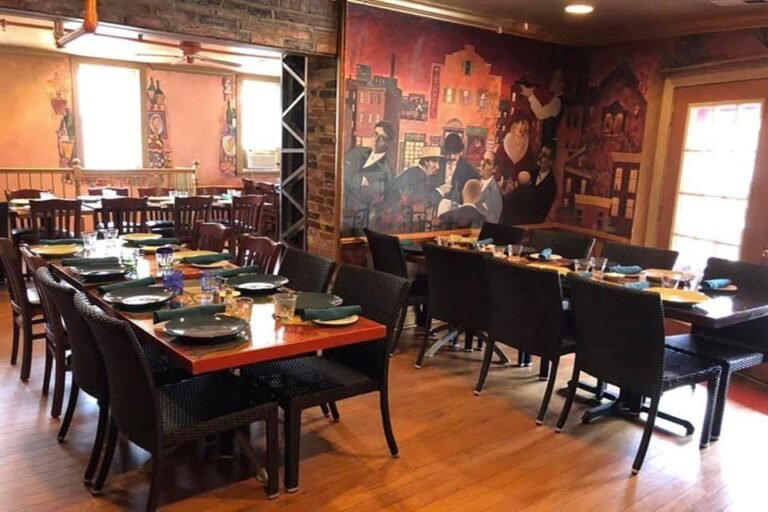
Little Italy's South High Street, and What It Asks of a Restaurant
Baltimore's Little Italy sits just east of the Inner Harbour, close enough to the tourist circuit to absorb foot traffic but coherent enough as a neighbourhood to sustain its own dining logic. South High Street is the artery that gives the district its north-south spine, and the blocks around it carry a specific character: brick rowhouses converted into dining rooms, red-checked tablecloth associations whether or not the tablecloths are actually there, and a dining public that includes both generations of Italian-American families and visitors arriving on recommendation. Into that context, Cafe Gia at 410 S High St reads as a neighbourhood incumbent rather than a statement restaurant — which is itself an editorial position worth examining. For a wider orientation to where Cafe Gia fits within the city's broader dining map, the full Baltimore restaurants guide provides useful triangulation across neighbourhoods and price tiers.
Menu Architecture: What the List Reveals
In Italian-American dining, the menu is not merely a list of dishes — it is a declaration of which version of the tradition the kitchen has chosen to honour. Restaurants in this register typically sort into two broad camps: those that chase Italianness through regional sourcing and northern refinement, and those that root themselves firmly in the red-sauce canon that Italian immigrants built in American cities across the twentieth century. The latter is a form worth taking seriously on its own terms. Neapolitan tomato work, long-braised proteins, house pasta, and the architecture of a three-course Italian-American meal, antipasto, primi, secondi, carry a culinary logic that is entirely separate from what a contemporary Italian fine-dining room in Rome or Milan would recognise. Cafe Gia's presence on South High Street places it within the second camp, where the measure of quality is execution fidelity rather than conceptual novelty.
That framing matters when setting expectations. Diners arriving from an encounter with, say, Smyth in Chicago or Atomix in New York City, rooms where menu architecture is itself the editorial argument, will find a different logic operating here. The Italian-American format rewards consistency and portioning discipline, not progression and surprise. The menu's job is to be reliable enough that regulars return to the same dishes across years, while offering sufficient range that a table of four with divergent preferences can each find a landing point. That is a hospitality model with real demands on the kitchen, even if those demands are invisible to the guest.
Little Italy's Competitive Position in Baltimore's Dining Scene
Baltimore's restaurant scene has diversified considerably over the past decade. Fells Point and Hampden have absorbed much of the city's culinary energy, pulling ambitious kitchens away from the older neighbourhood anchors. Little Italy has not transformed at the same pace, which means it operates on a different value proposition: depth of tradition rather than novelty of concept. This is comparable to the dynamic in other mid-Atlantic cities where immigrant neighbourhood dining districts hold their ground by offering something newer restaurant corridors cannot replicate, accumulated neighbourhood character and a dining public that has been coming back for decades.
Within Little Italy itself, the competitive set is a small cluster of Italian restaurants occupying similar formats and price positions. Cafe Gia's address on South High Street places it in the geographic heart of that cluster. For visitors who want to understand Baltimore's full dining range, the contrast with venues outside the Italian-American tradition is instructive: dede (Turkish) and Akbar represent the kind of specialist ethnic dining that Baltimore supports across its diverse neighbourhoods, while Cindy Wolf's Charleston anchors the city's fine-dining tier. Angeli's Pizzeria and 16 On The Park occupy still other registers within the city's dining geography.
The Italian-American Format in National Context
It is worth placing the Italian-American neighbourhood restaurant format against the national backdrop to understand what Cafe Gia is and is not competing with. The highest-recognition Italian cooking in America currently runs through a different register entirely: multi-course tasting menus at destination-level rooms, chef-driven progressions, and Michelin-tracked kitchens. At the opposite end, the Italian-American red-sauce canon is experiencing a genuine cultural rehabilitation, with food writers and younger diners rediscovering the craft embedded in decades-old neighbourhood restaurants that never sought press attention. Between those poles sits a large middle market of Italian-casual dining that competes primarily on price, convenience, and brand recognition.
Cafe Gia's South High Street position aligns it with the rehabilitation argument rather than the middle market, not because it is a press-courted destination, but because the neighbourhood carries that authenticity signal on its behalf. The same logic applies, at a radically different scale and price tier, to the argument for dining at Emeril's in New Orleans over a generic hotel Italian, or choosing Blue Hill at Stone Barns in Tarrytown over a farm-to-table facsimile, context and provenance carry real information. The comparison is scale-adjusted: Cafe Gia is a neighbourhood restaurant, not a destination property in the league of The French Laundry in Napa, Le Bernardin in New York City, or Providence in Los Angeles. But the principle of choosing a venue with genuine neighbourhood credentials over a polished substitute applies across all price tiers.
Planning a Visit
Cafe Gia is located at 410 S High St in Baltimore's Little Italy, a short distance from the Inner Harbour and accessible by foot from the waterfront hotel corridor. The neighbourhood is walkable from Fells Point to the east, making it a logical dinner stop for visitors spending an afternoon in that district. Visitors planning around a specific date, particularly on weekends when Little Italy draws higher foot traffic, would do well to confirm in advance. For broader trip planning across the city's dining range, the Baltimore restaurants guide covers the full spectrum from casual to formal.
Continue exploring
More in Baltimore
Restaurants in Baltimore
Browse all →
Bars in Baltimore
Browse all →
At a Glance
- Cozy
- Romantic
- Intimate
- Date Night
- Family
- Special Occasion
- Private Dining
- Terrace
- Extensive Wine List
- Street Scene
Current opening hours
- Monday
- 12–1:30 PM, 5–9 PM
- Tuesday
- 12–1:30 PM, 5–9 PM
- Wednesday
- 12–1:30 PM, 5–9 PM
- Thursday
- 12–1:30 PM, 5–9 PM
- Friday
- 12–1:30 PM, 5–10 PM
- Saturday
- 12–1:30 PM, 5–10 PM
- Sunday
- 4–9 PM
Hours can change for holidays and private events. Last verified .
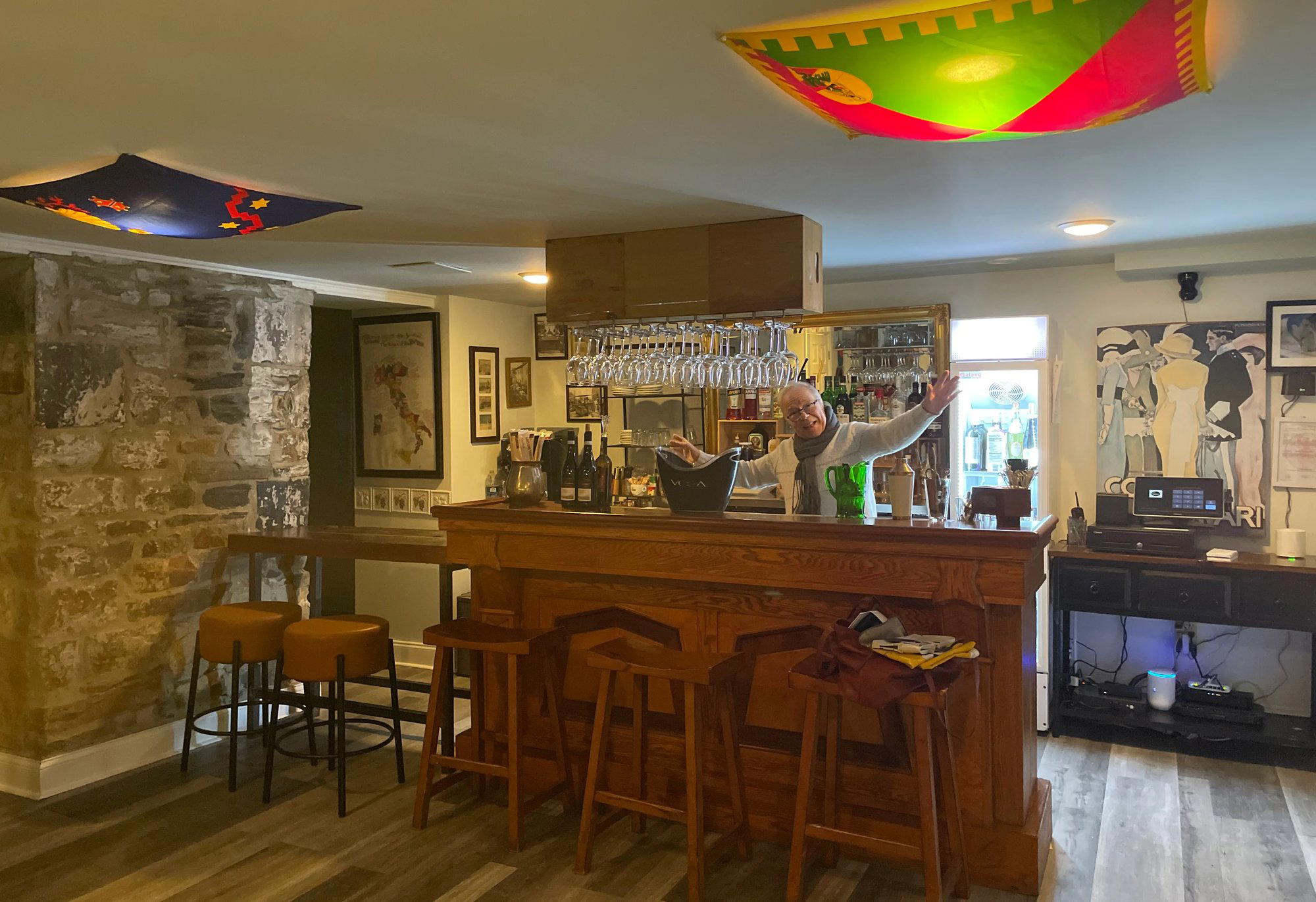
Warm and comfortable with hand-painted colorful murals evoking a Sicilian home.
Know Before You Go
- Getting there
- 410 S High St, Baltimore, MD 21202