Rose & Blanc Tea Room & Venue
Our verdict
Rose & Blanc Tea Room & Venue occupies the second floor of a Koreatown address on South Western Avenue, placing it inside one of Los Angeles's most culturally layered dining corridors. The format bridges the European afternoon tea tradition with the ingredient-forward sensibility that defines the city's contemporary hospitality scene. For seasonal afternoon bookings, it sits in a category that receives less editorial attention than LA's tasting-menu circuit, but draws a loyal neighborhood following.

Pearl is the En Primeur Club membership app, where members save venues, book tables and use the concierge.

The menu
What to order
- Egg salad sandwich
- Cucumber sandwich
- Smoked salmon sandwich
- Scones
- Macarons
Koreatown's Afternoon Tea Moment
Los Angeles has spent the past decade consolidating its reputation around tasting-menu counters and chef-driven dining rooms, with venues like Providence, Kato, and Hayato drawing national critical attention. What receives less coverage is the parallel category operating at street level and in second-floor walk-ups across the city's denser residential corridors: the afternoon tea room. Rose & Blanc Tea Room & Venue, at 301 S Western Ave in Koreatown, sits squarely in that category, and its address is itself an editorial point. South Western Avenue runs through one of the most culturally concentrated stretches of the city, where Korean bakeries, Japanese grocery importers, and pan-Asian hospitality traditions have shaped neighborhood taste for decades.
The afternoon tea format, exported from Victorian Britain and subsequently adapted across Hong Kong, Tokyo, and Seoul before arriving in American cities, carries a layered history that makes its presence in Koreatown something other than incongruous. Korean café culture, in particular, has developed one of the more sophisticated approaches to pastry presentation and tea service outside of Japan, and that tradition creates a receptive context for a room that takes the format seriously. Rose & Blanc operates at the intersection of those reference points: a European-derived ceremony, an Asian neighborhood that has refined its own version of refined hospitality, and a city that increasingly rewards venues willing to commit to a single format done with care.
The Room and What It Says About the Category
Second-floor venues in dense urban corridors carry a specific logic. They trade foot traffic for separation, asking guests to commit to a destination visit rather than an impulse stop. In cities like Hong Kong and London, second-floor tea rooms have historically used that remove to create environments that feel distinct from the street below. 8½ Otto e Mezzo Bombana in Hong Kong operates on a comparable premise at the fine dining tier: the physical remove from street-level commerce signals a different mode of dining. Rose & Blanc's address on the second floor of its Western Avenue building reads in the same register, even at a different price point.
The afternoon tea format also carries specific seasonal logic that distinguishes it from dinner-focused programming. Spring and early summer, when floral ingredients are at their most accessible and the city's outdoor light extends through afternoon hours, represent the format's natural peak. Venues in this category tend to see their strongest bookings between March and June, when the ceremony's associations with garden party culture align most directly with Los Angeles's actual climate and the city's appetite for daytime social occasions that don't require a full dinner commitment.
Local Ingredients, Imported Ceremony
The editorial angle that matters most for a venue like Rose & Blanc is the relationship between technique and terroir: specifically, how a format developed in a very different climate and agricultural context gets adapted to a city where the ingredient supply chain is genuinely distinct. Southern California's growing season is long and its proximity to specialty producers in Ventura County, the Central Valley, and local urban farms creates opportunities for afternoon tea menus that don't default to imported English preserves or out-of-season stone fruit.
Same tension operates at different scales across American fine dining. Blue Hill at Stone Barns in Tarrytown has built an entire identity around closing the distance between farm and plate. Single Thread Farm in Healdsburg applies Japanese kaiseki structure to Northern California produce. At the level of the afternoon tea room, the same principle applies with less fanfare: the question is whether the format is being imported wholesale or genuinely adapted to what grows nearby and what the neighborhood's palate expects.
Koreatown provides a specific set of ingredient references that distinguish it from, say, Beverly Hills or Pasadena as a setting for this format. The corridor's access to Korean confectionery traditions, East Asian tea varieties, and a customer base with sophisticated expectations around both pastry and tea service creates a different brief than the Anglo-centric afternoon tea rooms that dominated American hotel programming through the 1990s. Whether Rose & Blanc actively engages those references is a question the venue's own programming would answer; what the address makes certain is that the context for doing so is present.
Where This Fits in the Los Angeles Hospitality Map
Los Angeles's most-discussed dining venues tend to cluster around tasting-menu formats at the $$$$ tier, with Somni and Osteria Mozza representing different ends of the formal dining spectrum. The afternoon tea category operates in parallel, drawing a guest profile that often overlaps with the daytime occasion market: celebrations, visitor itineraries, and the growing segment of diners who want a structured, multi-course experience at a time of day when the city's traffic and light are more manageable than at dinner.
Nationally, the formal afternoon tea tradition has been sustained primarily through hotel programming, with properties using it to fill lobby revenue between lunch and dinner service. The standalone tea room, independent of a hotel infrastructure, represents a smaller and more committed format choice. Venues in this tier elsewhere in the country, from the East Coast corridor to the Pacific Northwest, have found that the format rewards specialization: the rooms that do well are those that treat the ceremony as a discipline rather than a revenue supplement. That framing applies to how Rose & Blanc sits relative to the broader Los Angeles scene covered in our full Los Angeles restaurants guide.
For comparison across the US fine dining and specialty hospitality spectrum, the venues that have built sustained reputations in their respective formats share a commitment to format integrity over category hedging. Le Bernardin in New York City, Alinea in Chicago, Addison in San Diego, and The French Laundry in Napa all operate in that mode. The afternoon tea room, at its most considered, belongs to the same principle at a different price tier and a different hour of the day.
Other reference points worth holding alongside Rose & Blanc when mapping this category: Lazy Bear in San Francisco built a reputation around communal-format dining that defied easy categorization; Atomix in New York City applies Korean tasting-menu discipline to a format the city had underestimated; Emeril's in New Orleans and Bacchanalia in Atlanta both demonstrate that regional hospitality identity can sustain venues outside the primary coastal critical markets. The Inn at Little Washington shows what happens when a venue commits fully to a single aesthetic register over decades. The tea room format, done seriously, operates on a comparable logic of commitment.
Planning Your Visit
Rose & Blanc Tea Room & Venue is located at 301 S Western Ave, second floor, in the Koreatown neighborhood of Los Angeles. The spring season, running roughly March through early June, represents the format's natural peak for afternoon tea in the city given both ingredient availability and the appeal of daytime bookings in longer-light months. Given the venue's size and the neighborhood's increasing draw for daytime occasions, advance booking is advisable, particularly for weekend afternoon slots and for party or event use of the venue format. Specific hours, pricing, and booking contact details should be confirmed directly with the venue before planning travel.
Quick reference: 301 S Western Ave #202, Los Angeles, CA 90020. Afternoon tea format. Koreatown neighborhood. Verify current hours and booking directly with the venue.
Frequently asked questions
Where exactly is Rose & Blanc Tea Room & Venue?
Rose & Blanc Tea Room & Venue is located at 301 S Western Ave #202, Los Angeles, CA 90020, Los Angeles.
Is Rose & Blanc Tea Room & Venue in Los Angeles suitable for a special occasion or celebration?
The name itself signals intent: the '& Venue' designation means private event programming is a structured part of the operation, not an afterthought. The second-floor setting at 301 S Western Ave in Koreatown provides the spatial separation that celebration dining generally requires. For milestone occasions, contacting the venue directly about private hire is the recommended first step.
What's the best thing to order at Rose & Blanc Tea Room & Venue?
The format here is afternoon tea, which means the tiered service is the logical entry point rather than ordering from a short à la carte list. A full tiered spread gives the clearest picture of what the kitchen is doing across savory, pastry, and sweet courses. Located at 301 S Western Ave in Koreatown, the room is built around that seated, multi-course rhythm rather than drop-in ordering.
Should I book Rose & Blanc Tea Room & Venue in advance?
For a second-floor destination tea room on South Western Ave in Koreatown, walk-in availability on weekends or during seasonal programming is not a reliable strategy. The venue also handles private events, which can reduce open seating capacity on any given afternoon. Booking ahead, particularly for groups or celebration visits, is the practical approach.
Similar Picks
Comparable venues nearby, for context on price, style, and recognition.
| Venue | Cuisine | Price | Notes |
|---|---|---|---|
| Rose & Blanc Tea Room & VenueThis venue (the venue you are viewing) | British Afternoon Tea | $30–50 | Not listed |
| Cinnies | Cinnamon roll bakery | $10–20 | Downtown Los Angeles |
| Ten Ramen | Japanese Ramen | Not listed | Wilshire Center |
| Gritz N' Wafflez | Southern Soul Food Brunch | $20–30 | Wilshire Center |
| Road to Seoul Korean BBQ | All-You-Can-Eat Korean BBQ | $20–30 | Harvard Heights |
| K-Team BBQ | Korean BBQ | $30–50 | Koreatown |

Continue exploring
More in Los Angeles
Restaurants in Los Angeles
All restaurants in Los Angeles →
Bars in Los Angeles
All bars in Los Angeles →
Hotels in Los Angeles
All hotels in Los Angeles →
Wineries in Los Angeles
All wineries in Los Angeles →

Details
- Romantic
- Elegant
- Cozy
- Whimsical
- Intimate
- Sophisticated
- Celebration
- Special Occasion
- Private Event
- Brunch
- Private Dining
- Set Menu
Current opening hours
- Monday
- Closed
- Tuesday
- Closed
- Wednesday
- Closed
- Thursday
- Closed
- Friday
- Closed
- Saturday
- 12–6 PM
- Sunday
- 12–6 PM
Hours can change for holidays and private events. Hours as of .
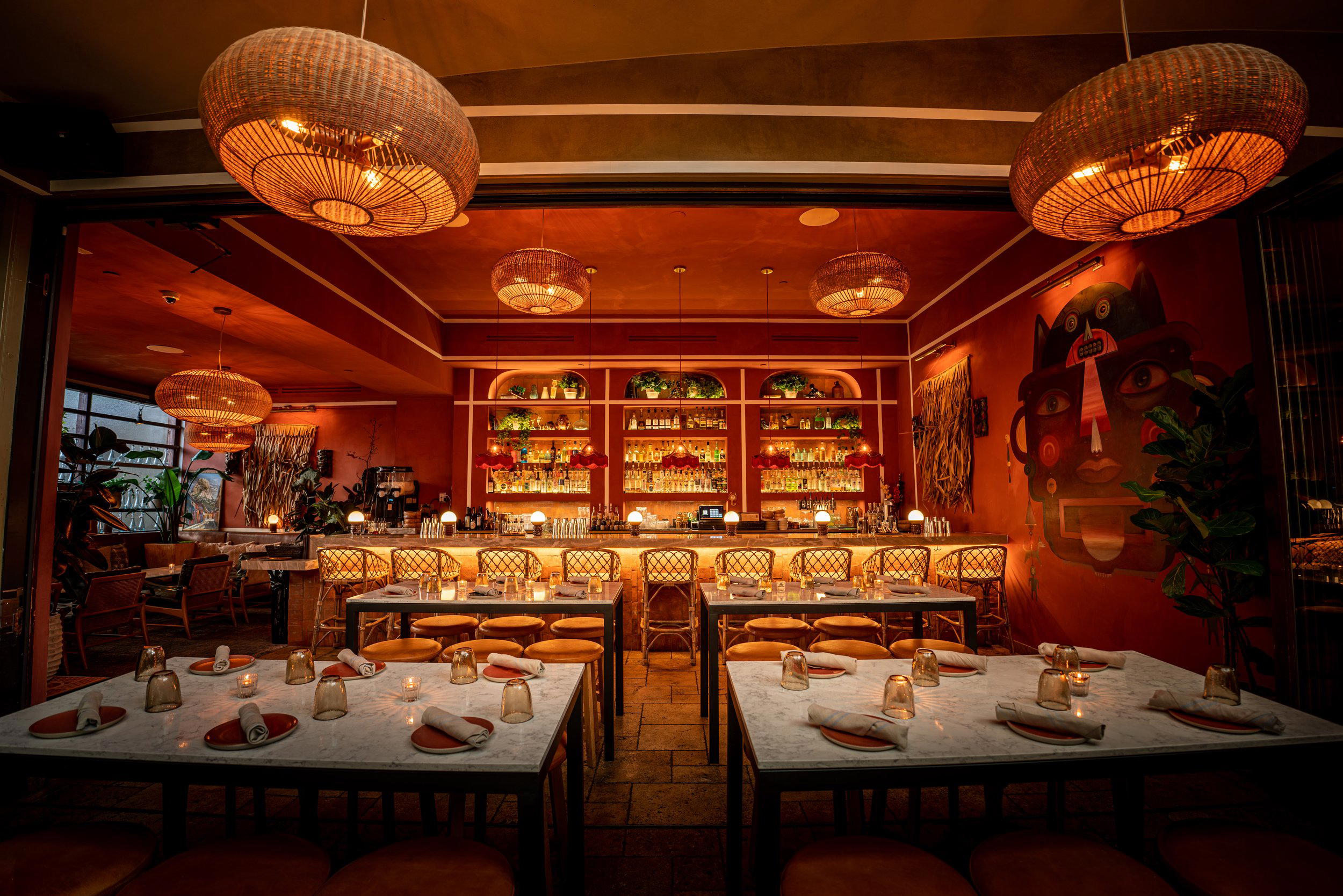
Pink and feminine interior modeled after European tea rooms, with whimsical charm, refined elegance, floral arrangements, vintage-inspired decor, and soft chandelier lighting.