K-Team BBQ
K-Team BBQ is a pork-focused Korean barbecue restaurant in Los Angeles operating within a city whose Korean dining scene ranks among the most developed outside Seoul. The format centers on tabletop grilling, a style that rewards group dining and demands little from the diner beyond attention to the fire. Practical details including hours, pricing, and booking method are best confirmed directly before visiting.
Pearl is the En Primeur Club membership app — saves, bookings, and concierge access live there. Same editors, same standards.
- Address
- 936 S Vermont Ave, Los Angeles, CA 90006
- Phone
- (213) 908-5463
- Website
- kteambbq.com
- Directions
- Get directions
 Saves & bookings on Pearl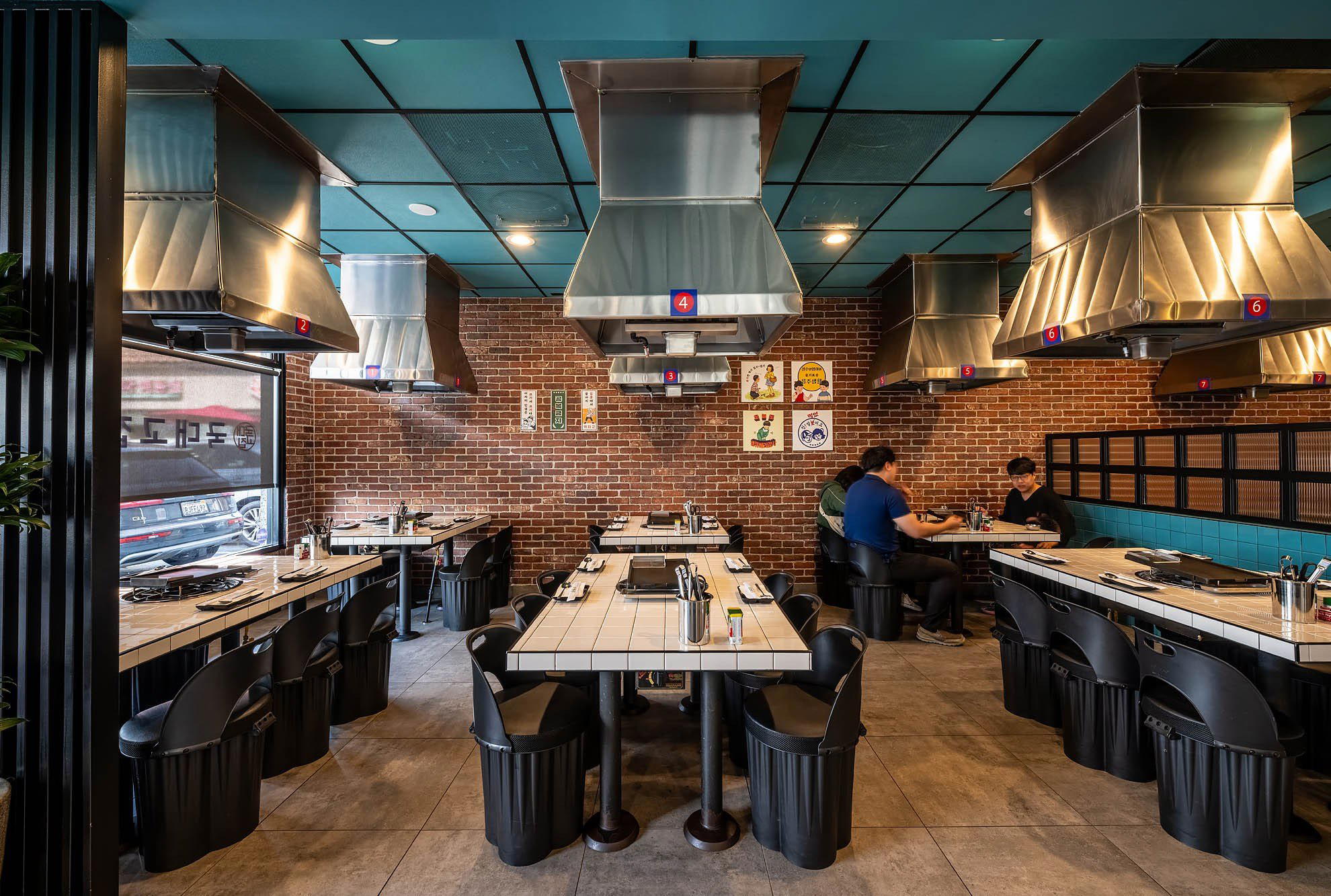
Korean Barbecue in Los Angeles: A Category With Depth
Los Angeles has the largest Korean population of any American city outside Korea, and that demographic weight shows in the dining infrastructure. Koreatown, roughly bounded by Olympic Boulevard and Western and Vermont Avenues, contains a density of Korean barbecue restaurants that functions less like a tourist quarter and more like a working neighborhood eating culture. Within that context, a pork-focused Korean barbecue operation like K-Team BBQ sits inside a category that rewards comparison shopping and repeat visits rather than one-and-done destination dining. The cuisine form itself, tabletop grilling with rotating cuts, banchan, and wrapping greens, has enough ritual and variation across restaurants that regulars develop strong opinions about individual spots. That specificity is exactly the kind of signal worth tracking in a city where the Korean barbecue tier runs from fast-casual to premium omakase-style formats.
Korean barbecue in Los Angeles is not a monolithic offering. The past decade has seen the format stratify considerably, with some operators moving toward curated tasting progressions of premium pork and beef while others hold to the high-volume, grill-it-yourself model that built the neighborhood's reputation. Pork-focused houses occupy a specific niche within that range: they tend to prioritize cut diversity and preparation technique around samgyeopsal and its variations rather than the wagyu-adjacent beef cuts that anchor the premium tier. For diners who know the category well, that focus signals something about what to expect from the kitchen and how the meal will be paced. For diners new to Korean barbecue in LA, it sets realistic and accurate expectations about the format's pleasures.
Planning a Visit: What the Booking Experience Actually Looks Like
K-Team BBQ's current booking method, hours, and reservation availability are not publicly confirmed in detail, which means the practical advice is the same as for most Korean barbecue spots in Koreatown: verify directly and plan with flexibility. Korean barbecue restaurants in this part of Los Angeles frequently operate on a walk-in or same-day call basis, particularly for weekday visits, while weekend evenings in Koreatown routinely produce queues that stretch past the building. The rhythm of the neighborhood means that arriving before peak service, typically the early-dinner window on weekday evenings, substantially improves the likelihood of a seat without a long wait. For group visits, calling ahead and confirming table availability is the standard move regardless of whether a formal reservation system is in place.
This matters more in Koreatown than in many other LA dining neighborhoods because the area's Korean barbecue scene draws both a deeply local clientele and a steady stream of visitors who have heard about the district's reputation. That dual pull means popular spots fill quickly and do not necessarily telegraph their capacity limits through visible queues until after the rush has begun. The lesson from Korean barbecue dining in this city is consistent: arrive with a backup option in mind, particularly on Friday and Saturday evenings, and treat any specific timing intelligence as worth confirming on the day of the visit.
LA's broader dining scene provides useful comparison points for travelers calibrating expectations across categories. At the formal end, restaurants like Providence (Contemporary Seafood) and Hayato (Japanese) operate on advance booking windows of weeks or months and reward early planning with structured, timed seatings. Korean barbecue in Koreatown operates on entirely different logistics, and that informality is part of the format's appeal. The experience at a neighborhood Korean barbecue house is structurally incomparable to the omakase format at Kato or the chef-driven tasting progressions at Somni, but that is the point. The category serves a different function in the city's dining ecosystem.
The Meal Itself: Format, Focus, and What to Order
A pork-focused Korean barbecue meal follows a recognizable arc regardless of venue. Banchan arrive first, a rotating selection of fermented, pickled, and seasoned small dishes that frame the table before any protein hits the grill. The grill itself, typically gas or charcoal depending on the house, is embedded in the table and managed either by the diner or by staff. Pork belly, known as samgyeopsal, is the anchor cut in a pork-focused operation, and its rendering over direct heat, the fat blistering, the edges crisping, produces the textural contrast that defines the format. Wrapping the cooked meat in ssam, perilla or lettuce leaves with fermented soybean paste and garlic, is the standard eating method and the moment that makes Korean barbecue a participatory meal rather than a passive one.
For diners visiting K-Team BBQ specifically, the pork focus suggests that ordering across the available pork cuts rather than defaulting to a single selection will produce the most informative meal. In Korean barbecue, the difference between thick-cut samgyeopsal and thinner, pre-marinated versions, or between neck cuts and shoulder cuts, is legible in the eating and worth exploring if the menu offers that range.
Koreatown in the Wider LA Context
Koreatown sits within a city that also contains some of America's most formally ambitious restaurants. Osteria Mozza holds a different position in the Italian-American canon; our full Los Angeles restaurants guide maps the full range from Koreatown to the Westside. Across the country, the Korean fine dining format has its own prestige tier represented by venues like Atomix in New York City, where the tasting menu format applies Korean culinary logic at a price point and with a formality that has no equivalent in Koreatown. That distinction matters: Koreatown's Korean barbecue operates as a neighborhood eating culture first, not as a destination dining proposition in the way that restaurants like Le Bernardin in New York City, The French Laundry in Napa, or Alinea in Chicago function in their respective cities.
Other ambitious American restaurant programs worth noting for travelers building a broader itinerary: Lazy Bear in San Francisco and Single Thread Farm in Healdsburg represent the Northern California fine dining mode; Blue Hill at Stone Barns in Tarrytown and The Inn at Little Washington anchor the East Coast prestige tier; and Addison in San Diego, Bacchanalia in Atlanta, and Emeril's in New Orleans each occupy distinct regional positions. 8 1/2 Otto e Mezzo Bombana in Hong Kong provides a useful international reference point for travelers who track fine dining across continents. K-Team BBQ sits in a different category entirely, and that is not a limitation. It is the operating mode of a cuisine that is at its finest when it functions as it was designed to: informal, communal, and built around fire.
Practical Notes for Your Visit
Because confirmed details on hours, pricing, and booking at K-Team BBQ are not available through public records, the practical guidance is to treat any visit as requiring same-day verification. Call ahead if a phone number is locatable, or arrive early in the dinner service window to assess wait times. Koreatown is accessible by Metro (the Purple Line runs through the neighborhood) and by car, though parking in the area during peak hours requires patience. Korean barbecue pricing in Koreatown generally runs below the city's fine dining tier, making it one of the more value-dense eating options in LA for a group of three or more, where the tabletop format scales efficiently and the meal tends to extend over at least ninety minutes of active grilling and eating.
How K-Team BBQ Los Angeles compares with similar nearby venues.
| Venue | Cuisine |
|---|---|
| K-Team BBQ | Korean barbecue (pork-focused) |
| Soowon Galbi | Korean BBQ |
| Soot Bull Jeep | Korean Barbecue |
Continue exploring
More in Los Angeles
Restaurants in Los Angeles
Browse all →
Bars in Los Angeles
Browse all →

Hotels in Los Angeles
Browse all →

Wineries in Los Angeles
Browse all →
At a Glance
- Lively
- Trendy
- Group Dining
- Casual Hangout
- Open Kitchen
- Sake Program
- Corkage Allowed
Energetic Korean BBQ atmosphere with grill smoke and lively dining.
Know Before You Go
- Getting there
- 936 S Vermont Ave, Los Angeles, CA 90006