Ten Ramen
Ten Ramen on West 6th Street sits inside the Koreatown corridor that has made Los Angeles one of the most contested ramen markets in the United States. The shop addresses a section of the city where Japanese noodle culture and Korean dining density intersect, producing a clientele with high baseline expectations and genuine point-of-view about broth. For visitors tracking LA's mid-range noodle scene, this address rewards attention.
- Address
- 3324 W 6th St ste a, Los Angeles, CA 90020
- Phone
- +12139085823
- Website
- tenramenla.com
- Directions
- Get directions
Ramen in the Koreatown Corridor
Los Angeles does not have a single ramen district the way Tokyo has Ikebukuro or Sapporo has Susukino. Instead, the city's noodle culture disperses across neighborhoods, with Koreatown functioning as one of the densest and most competitive zones. The stretch of Wilshire and 6th Street surrounding Ten Ramen's address at 3324 W 6th Street draws foot traffic from residents who eat out several nights a week and know the difference between a tonkotsu cut with pork back fat and one built on chicken tare. That context shapes what any ramen shop in this corridor has to achieve before a bowl even arrives at the table.
Koreatown's dining density is not incidental. The neighborhood houses one of the highest concentrations of restaurants per square mile in Los Angeles, spanning Korean barbecue, Japanese izakayas, Chinese regional kitchens, and a growing number of independent ramen counters that compete less on novelty and more on execution. In that environment, the sensory baseline is high: the smell of charcoal grills and simmering stock is ambient, the sound of busy dining rooms a constant. A ramen shop that wants to hold a regular clientele here has to deliver consistency across broth temperature, noodle texture, and seasoning every service.
For context on where this fits inside Los Angeles's broader dining range, the city's acclaimed tasting-menu tier includes venues like Kato (New Taiwanese, Asian) and Hayato (Japanese), both operating at the $$$$ price point with reservation windows that extend weeks out. Ten Ramen operates at a different register entirely, one where the transaction is faster and the decision to return is made bowl by bowl. See our full Los Angeles restaurants guide for the wider picture.
The Sensory Architecture of a Ramen Counter
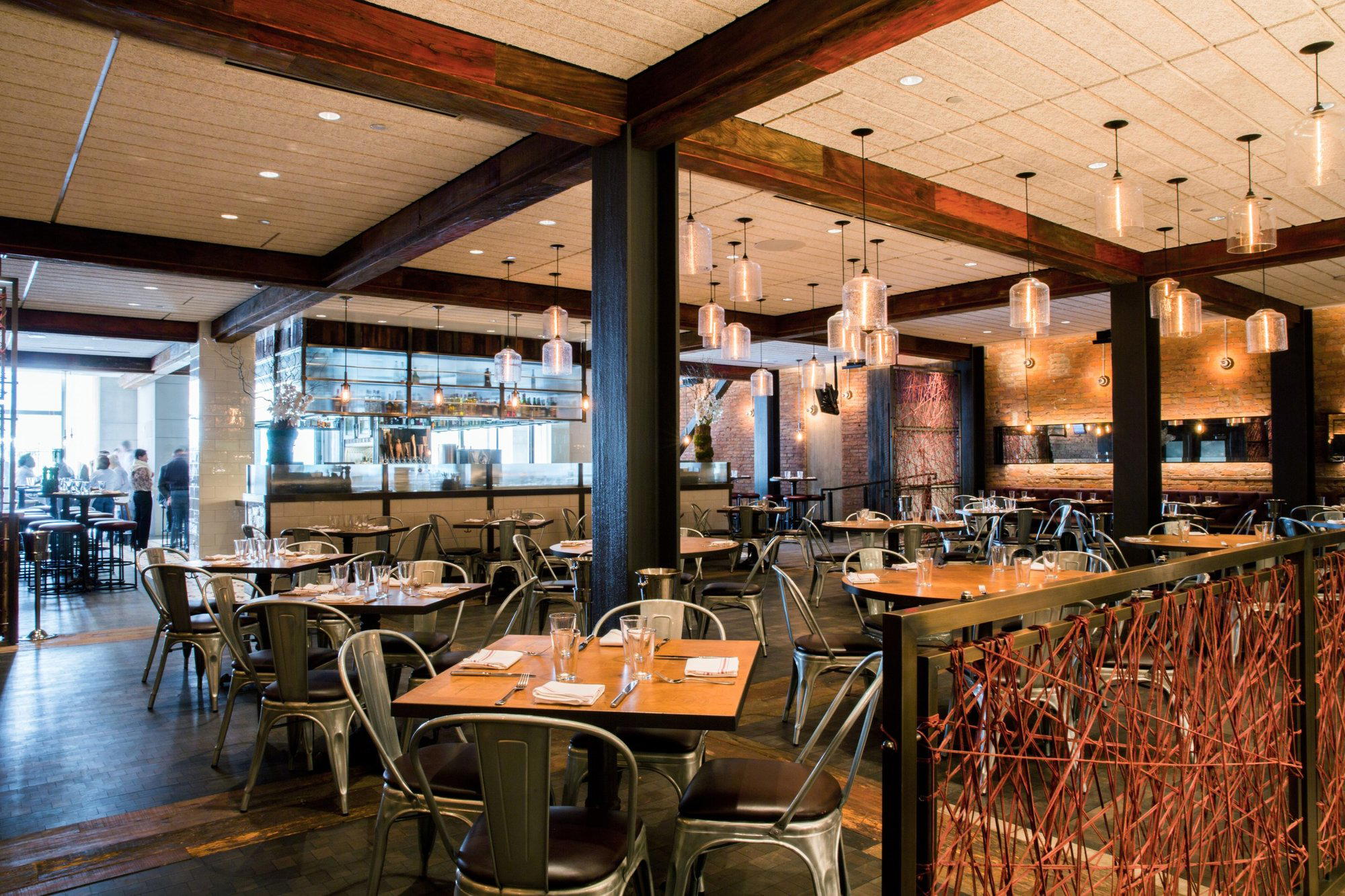
Ramen's appeal is inseparable from its atmosphere. The format is inherently sensory: steam rising from an open kitchen, the low percussion of ladles against stockpots, the smell of rendered fat and toasted aromatics moving through a small dining room. These are not incidental details but functional signals that tell a diner the broth has been worked. A shop that delivers on smell and sound before the bowl arrives has already established credibility.
In the Koreatown context, Ten Ramen occupies a suite-style space within a larger building on 6th Street, a format common to the neighborhood's more recent food operators who trade street-front visibility for lower overhead and a more controlled interior environment. The physical setting shapes the experience: the sound profile is contained, the lighting typically warmer than the fluorescent blast of older Japanese-run counters, and the spatial logic tends toward efficiency rather than theater.
Across the American ramen scene, the sensory template has evolved considerably since the early 2010s, when a wave of Japanese-trained operators opened in New York and Los Angeles and introduced domestic audiences to the precision of Hakata-style tonkotsu or the complexity of Tokyo shoyu. That wave created an informed customer base that now reads a bowl critically: the opacity of the broth signals fat content and cook time, the spring of the noodle indicates hydration and alkalinity, the placement of tare and aromatic oils signals intentionality. A Los Angeles ramen counter in 2024 is cooking for that audience whether it courts them explicitly or not.
Where Ten Ramen Sits in the LA Noodle Conversation
Los Angeles ramen divides broadly into three operating tiers. At the leading end, chef-driven shops with Michelin recognition or James Beard adjacency position their bowls as serious food, with prix-fixe-adjacent pricing and reservations. In the middle, a large cohort of neighborhood operators, many Japanese- or Korean-owned, run lunch-and-dinner services at accessible price points and build loyal local followings through volume and consistency. Below that, chain operations and fast-casual formats offer speed over depth.
Ten Ramen's Koreatown address places it in conversation with the middle tier, where the competition is densest and the margin for error narrowest. The shops that sustain themselves in this bracket do so not through press coverage but through repeat business from a neighborhood that eats ramen regularly and compares notes. That is a more demanding test than a single favorable review.
For reference, the broader American fine-dining context that surrounds Los Angeles includes venues like Providence (Contemporary Seafood) and Somni (Molecular) at the high end, alongside nationally recognized names such as Le Bernardin in New York City, Alinea in Chicago, The French Laundry in Napa, and Lazy Bear in San Francisco. These are different categories entirely, but they establish the wider dining culture within which a neighborhood ramen shop's positioning becomes legible. Other destination restaurants worth noting across the country include Single Thread Farm in Healdsburg, Blue Hill at Stone Barns in Tarrytown, Addison in San Diego, The Inn at Little Washington, Bacchanalia in Atlanta, Emeril's in New Orleans, Atomix in New York City, and 8 1/2 Otto e Mezzo Bombana in Hong Kong. Ten Ramen operates outside that conversation, but understanding the full range helps calibrate expectations at every price point.
Other Los Angeles restaurants worth considering across different cuisines and price points include Osteria Mozza (Italian), which occupies a different quadrant of the city's dining map entirely.
Planning Your Visit
Ten Ramen's address at 3324 W 6th Street, Suite A, in the 90020 zip code puts it within walking distance of the Koreatown retail and transit corridor, accessible by Metro bus lines that serve Wilshire and by street parking in the surrounding blocks, which is typically more available on 6th Street than on Wilshire proper. The suite designation means entering through a shared building entrance rather than a standalone storefront, so first-time visitors should allow a moment to orient.
Ramen shops in this neighborhood tend to operate at peak capacity during the lunch hour and again from 7 to 9 in the evening, when the after-work Korean barbecue crowd spills over into adjacent concepts. Arriving outside those windows generally means shorter waits and more attentive service.
Cost and Credentials
| Venue | Cuisine | Price | Awards |
|---|---|---|---|
| Ten RamenThis venue — the venue you are viewing | Not listed | This venue | Not listed |
| Kato | New Taiwanese, Asian | $$$$ | Michelin 1 Star |
| Hayato | Japanese | $$$$ | Michelin 2 Star |
| Vespertine | Progressive, Contemporary | $$$$ | Michelin 2 Star |
| Camphor | French-Asian, French | $$$$ | Michelin 1 Star |
| Gwen | New American, Steakhouse | $$$$ | Michelin 1 Star |
Continue exploring
More in Los Angeles
Restaurants in Los Angeles
Browse all →
Bars in Los Angeles
Browse all →

Hotels in Los Angeles
Browse all →

Wineries in Los Angeles
Browse all →
At a Glance
- Lively
- Trendy
- Casual Hangout
- Late Night
- Group Dining
- Open Kitchen
- Sake Program
Lively and casual atmosphere resembling a Tokyo ramen counter, popular for quick eats and group dining.
Know Before You Go
- Getting there
- 3324 W 6th St ste a, Los Angeles, CA 90020