Our verdict
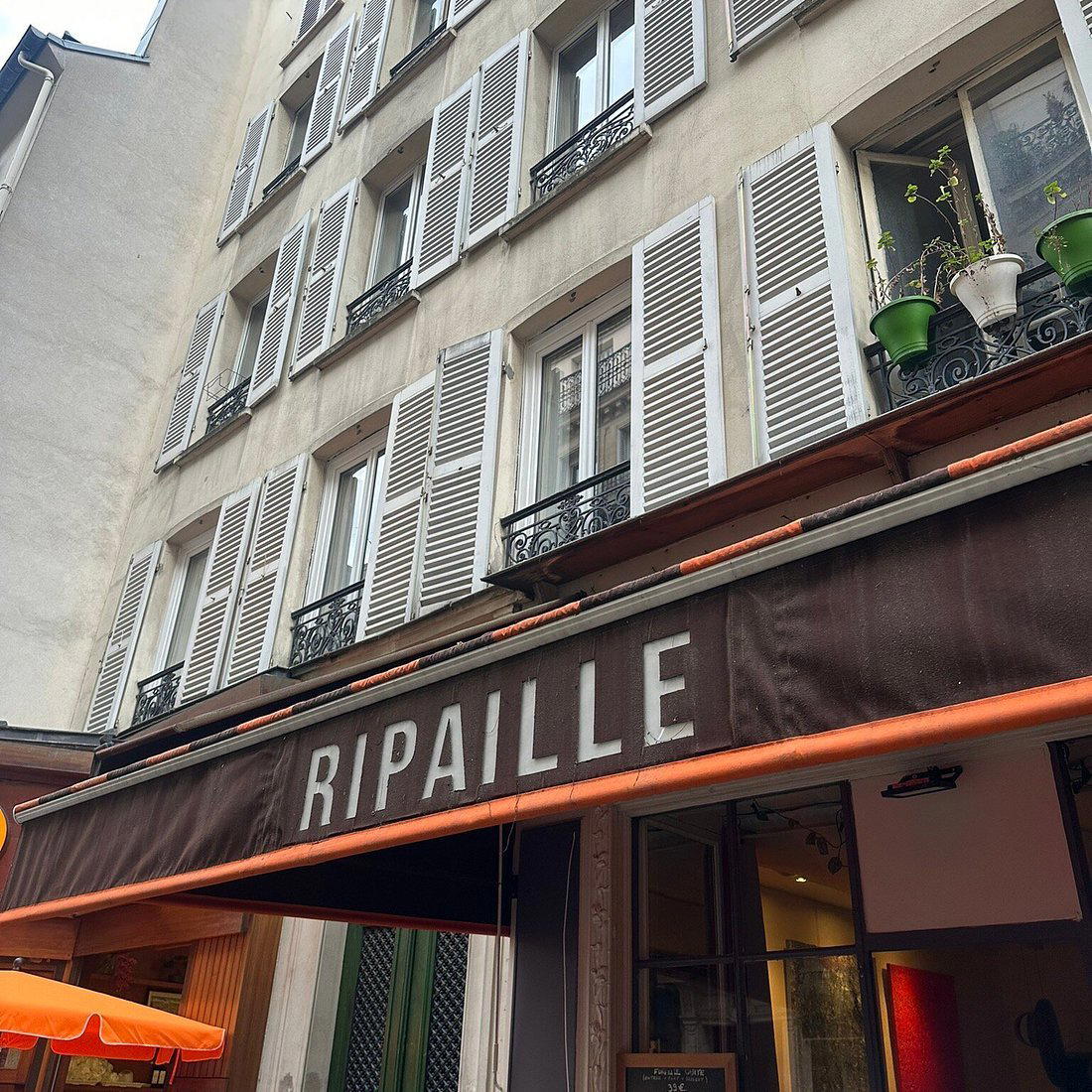
On Rue des Dames in the 17th arrondissement, Ripaille occupies the quieter register of Paris bistro dining — the kind of address that rewards local knowledge over algorithm. The menu reads as a record of French seasonal tradition rather than a platform for technique, positioning it closer to neighbourhood anchor than destination restaurant in the conventional sense.

Pearl is the En Primeur Club membership app — saves, bookings, and concierge access live there. Same editors, same standards.
- Address
- 69 Rue des Dames, 75017 Paris, France
- Phone
- +33 1 45 22 03 03
- Hours
- Mon–Thu 12–2 PM, 7:30–10 PMFri 12–2 PM, 7:30–10:30 PMSat–Sun Closed
- Website
- ripailleparis17.fr
- Directions
- Get directions
The menu
What to order
- Foie gras salad
- Beef entrecôte
- Chocolate pudding
Rue des Dames runs through the Batignolles quarter of the 17th arrondissement, a neighbourhood that has spent the better part of two decades repositioning itself from unremarkable inner suburb to a place with genuine dining texture. The street itself sits between the commercial bustle of Place de Clichy and the quieter residential grid that stretches toward Parc Monceau. This is not a postcode that trades on prestige addresses or three-figure tasting menus. The restaurants here earn their regulars through consistency and proportion, and Ripaille at number 69 belongs to that pattern.
The Room and Its Register
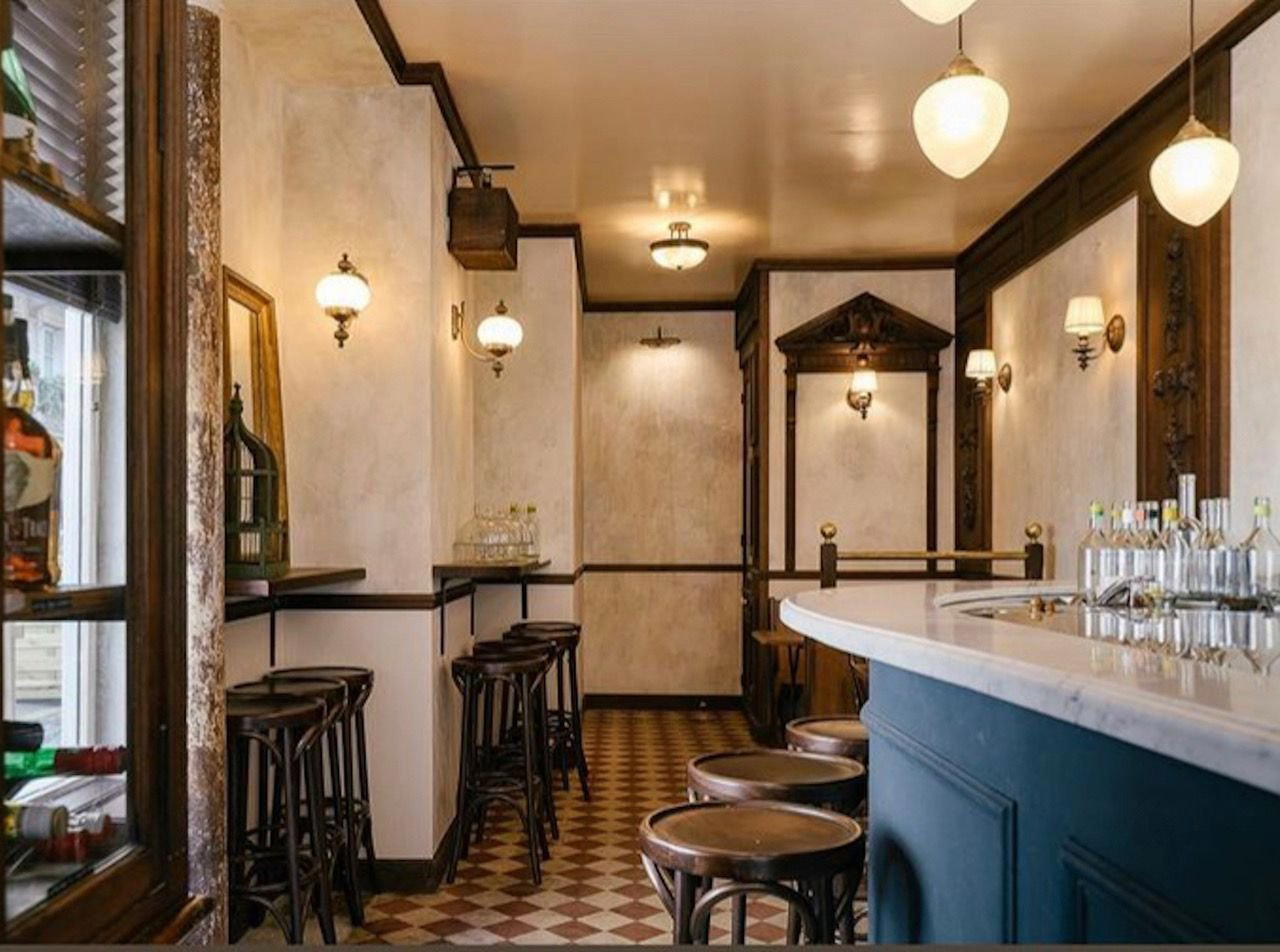
The Batignolles bistro at its finest does not announce itself. The interior grammar is familiar: close-set tables, a chalkboard or printed card that changes with the market, a wine list weighted toward natural and small-producer bottles rather than cellar depth. This is a format that Paris has refined across decades and that the 17th, away from the tourist circuits of the Marais or Saint-Germain, practices with less self-consciousness than its more photographed counterparts. Ripaille operates inside that format. What the room communicates, before a plate arrives, is that the transaction here is between the kitchen and the neighbourhood, not between the kitchen and an audience.
That distinction matters. The Parisian bistro has bifurcated sharply over the past decade. One strand has moved toward natural wine bars with small sharing plates and an aesthetic borrowed from Copenhagen. The other has held to the classical frame: a starter, a main, a dessert, portions sized for appetite rather than Instagram, and a bill that does not require planning. Ripaille sits in the second tradition, which in 2024 is a less crowded space than it was fifteen years ago, when every neighbourhood in every arrondissement had four versions of it within walking distance.
How the Menu Is Built
The editorial angle on a place like this is the menu architecture, and what that architecture reveals about the kitchen's priorities. A French bistro menu that changes regularly — daily or weekly — signals a particular relationship with suppliers and with labour. It means someone is making decisions every morning about what arrived and what it suggests for the afternoon service. That discipline tends to produce shorter menus: three or four starters, the same number of mains, two or three desserts. The constraint is the point. It forces selection rather than coverage, and selection is where a kitchen's actual palate shows up.
Menus in this register typically draw from the classic bistro repertoire, terrines, slow-braised cuts, fish cooked simply with a sauce built from the cooking juices, egg dishes that reward technical precision, but the quality signal is in how those dishes are calibrated rather than what they are. The difference between a competent bistro and a good one often comes down to seasoning, sourcing, and the decision not to overcomplicate. At the top end of the French fine dining spectrum, where addresses like Alléno Paris au Pavillon Ledoyen, Arpège, and Le Cinq at the Four Seasons George V operate, the menu is a composed argument about what French cooking can become. At the bistro level, the menu is a record of what French cooking already knows. Both are legitimate projects. They just demand different things from the kitchen.
For context on how this French bistro tradition has evolved at the regional level, the arc from grand maisons like Paul Bocuse's Auberge du Pont de Collonges and Auberge de l'Ill to the contemporary expressions at Mirazur in Menton or Bras in Laguiole clarifies what the bistro format is choosing not to do. The restraint is structural, not accidental. Equally, looking at how contemporary Paris restaurants like Kei and L'Ambroisie handle the classic French framework at a more formal price point shows the distance between the bistro register and its Michelin-starred counterparts.
The 17th as Context
The Batignolles quarter has become more food-literate over the past decade, partly because rising rents elsewhere pushed chefs toward neighbourhoods where the clientele is local and the overheads are more manageable. The 17th now has a range of serious cooking spread across price points, from casual wine bars to places that belong in any serious Paris shortlist. The result is a dining culture in the arrondissement that functions somewhat like a self-contained village: the same customers appear at different price levels, they know the producers, and they are generally less interested in novelty than in reliability. That is the audience a place like Ripaille is cooking for.
It is a different value proposition from the grand restaurant circuits of the 8th or the destination bistro tourism that concentrates around the Left Bank. For readers building a Paris itinerary that extends beyond the obvious addresses, the 17th offers a window into how the city actually eats when it is eating for itself. Our full Paris restaurants guide covers the range across all arrondissements and price tiers, from the neighbourhood level up through the Michelin bracket.
For comparison across French regional cooking traditions and the broader context of what French gastronomy looks like outside Paris, properties like Flocons de Sel in Megève, Troisgros in Ouches, Les Prés d'Eugénie in Eugénie-les-Bains, Auberge du Vieux Puits in Fontjoncouse, Georges Blanc in Vonnas, and La Table du Castellet each represent the regional anchor tradition at a significantly higher price point and formality level. Internationally, the French culinary influence exported through places like Le Bernardin in New York City or the communal dining format explored at Lazy Bear in San Francisco shows how differently the same tradition can be translated when context changes.
Know Before You Go
Address: 69 Rue des Dames, 75017 Paris, France
Neighbourhood: Batignolles, 17th arrondissement
Nearest Metro: Place de Clichy (lines 2 and 13) or Rome (line 2)
Price tier: Bistro register; specific in
Leading approach: Walk-in or telephone reservation during off-peak hours is standard practice for this category of Paris bistro
Frequently asked questions
Is Ripaille child-friendly?
The Batignolles quarter draws a local, mixed-age crowd, and a bistro format at 69 Rue des Dames tends to be more accommodating than a tasting-menu restaurant. That said, close-set tables and a convivial room mean it can get loud on a busy evening. A weekday lunch sitting is the more practical option with younger children.
What should I expect atmosphere-wise at Ripaille?
Ripaille reads as a neighbourhood room rather than a destination address: the 17th's Batignolles quarter has steadily attracted food-literate locals over the past decade, and the clientele reflects that. Expect conversation-level noise, close tables, and the rhythm of a kitchen that changes its card with the market. It is a bistro register, not a fine-dining register.
Is Ripaille worth visiting if you're staying outside the 17th arrondissement?
Ripaille at 69 Rue des Dames is a neighbourhood bistro by design, positioned in the Batignolles quarter of Paris's 17th arrondissement rather than on any tourist circuit. The case for crossing the city is precisely that: it operates for a local clientele rather than visitors, which keeps the kitchen honest and the room unperformed. For anyone tracking the Paris bistro scene beyond the standard Marais or Saint-Germain itinerary, the 17th is worth the detour.
What do regulars order at Ripaille?
The menu architecture at a Batignolles bistro like Ripaille is typically seasonal and chalkboard-driven, which means the dish that draws repeat visits shifts with the market. Regulars at this price point tend to anchor on the plat du jour and whichever wine-by-the-glass the kitchen is pushing that week. Arriving without a fixed plan is the correct posture.
Where is Ripaille in Paris?
Ripaille is located at 69 Rue des Dames, 75017 Paris, France, Paris.
Comparison Snapshot
Comparable venues nearby, for context on price, style, and recognition.
| Venue | Cuisine | Price | Notes |
|---|---|---|---|
| RipailleThis venue — the venue you are viewing | French Bistronomy | $30–50 | Not listed |
| Ferdi | French Brasserie with Latin American & Mediterranean Influences | $30–50 | Louvre / Palais-Royal |
| Inavoué | French-International Fusion Small Plates | $30–50 | Louvre/Palais-Royal |
| Cojean | French Healthy Fast Food | $10–20 | 8th Arrondissement |
| Le Bizetro | Traditional French Bistro | $30–50 | 16e Arrondissement |
| Le comptoir de la traboule | Creative French Bistro | $30–50 | Gros-Caillou |