Inavoué occupies a discreet impasse off the Rue Saint-Honoré in Paris's 1st arrondissement, placing it inside one of the city's most concentrated corridors of serious dining. The address alone signals intent. For a restaurant operating below the radar of major award circuits, the question of what it offers, and to whom, is precisely the right one to ask.
Pearl is the En Primeur Club membership app — saves, bookings, and concierge access live there. Same editors, same standards.
- Address
- 4 Imp. Gomboust, 75001 Paris, France
- Phone
- +33140200928
- Website
- inavoue.com
- Directions
- Get directions
 Saves & bookings on Pearl
A Quiet Address in a Loud Neighbourhood
Impasse Gomboust is the kind of address that requires a second look at the map. A short, closed-end lane feeding off the Rue Saint-Honoré in the 1st arrondissement, it sits within walking distance of particularly formally recognised dining in France. L'Ambroisie anchors the Place des Vosges a few kilometres east; Le Cinq at the Four Seasons George V commands the 8th. This stretch of the 1st has historically been the preserve of well-heeled Parisians who treat lunch as seriously as a board meeting, and the impasse format, a cul-de-sac, essentially, carries a particular signal in Paris: you are not here by accident.
Inavoué operates in that context. The name itself, translating roughly as "unacknowledged" or "unconfessed" in French, suggests a deliberate positioning outside the conventional acclaim circuit. In a city where restaurant identity is often constructed around Michelin stars, Gault&Millau points, and the press, a name that leans into the idea of being overlooked reads as a considered stance rather than an oversight.
The Sourcing Question, and Why It Matters Here
The broader shift in Paris dining over the past decade has been a reorientation toward ingredient provenance as the primary creative statement. Where an earlier generation of chefs built reputations on technical complexity, the sauce reduced to a glaze, the protein cooked to a fraction of a degree, the current wave increasingly positions the sourced ingredient as the argument itself. This is not a trend isolated to Paris. Bras in Laguiole built its identity on the Aubrac plateau's wild plants long before "foraging" became a menu word; Mirazur in Menton reorganised its entire menu structure around biodynamic garden cycles. What has changed in Paris specifically is that sourcing-led cooking has moved from a niche counter-signal into the mainstream of ambitious dining.
Within that context, a small restaurant on a quiet impasse in the 1st arrondissement carries a particular plausibility. The neighbourhood's proximity to Les Halles, historically the central market of Paris, relocated to Rungis in 1969 but still culturally embedded in how this part of the city thinks about food supply, gives addresses here a proximity argument that larger, more institutionalised venues in the 8th or 16th cannot always claim. The question, for any restaurant in this bracket, is whether that provenance argument is built into the cooking or merely gestured at on the menu.
At the level of the city's most recognised addresses, sourcing credentials are now table stakes. Alléno Paris at Pavillon Ledoyen has made extraction and fermentation central to its method, turning sourcing into a technical language of its own. Arpège converted its courtyard into a productive kitchen garden and built a supplier network that now defines the menu's identity as much as any individual technique. These are the reference points against which sourcing-led cooking in Paris is measured, and they set a demanding standard for any smaller address attempting to occupy the same conversation.
Where Inavoué Sits in the Paris Dining Order
Paris's restaurant tier structure has bifurcated sharply at the leading. The city's flagship addresses, L'Ambroisie, Le Cinq, Kei, operate at price points and formality levels that place them in a separate category from what might be called the serious middle tier: restaurants with genuine culinary ambition, a specific point of view, and a local following that does not depend on international tourist flows. Inavoué's address in the 1st places it geographically inside the top tier's territory while the name's counter-positioning suggests an alignment with the latter group.
This is a meaningful distinction. The serious middle tier in Paris tends to book differently, price differently, and attract a different kind of regular. It is also where some of the city's more interesting cooking happens, less constrained by the expectations attached to grand addresses, more willing to let an ingredient or a producer relationship drive the menu rather than the reverse. Comparable dynamics play out in other French regions: Flocons de Sel in Megève operates with mountain-sourcing specificity that would read as eccentric in a grand Parisian palace; Auberge du Vieux Puits in Fontjoncouse built its identity on southern produce in a village that barely appears on regional maps. The pattern, serious cooking, specific geography, deliberate distance from the capital's approval mechanisms, is consistent.
Internationally, the same model appears at AM par Alexandre Mazzia in Marseille, where a three-Michelin-star kitchen operates with a subtropical sourcing sensibility that would be difficult to replicate in a conventional Parisian fine-dining frame. The insight from all these addresses is that geographic and culinary specificity, when pursued seriously, creates a competitive position that award tallies alone do not fully capture. For Inavoué, operating from a quiet impasse in one of Paris's most food-conscious districts, that specificity is the implicit promise of the address.
Inavoué is located at 4 Impasse Gomboust in the 1st arrondissement, close to the Pyramides and Palais Royal metro stations, both within a short walk. Advance planning is advisable, and reservations are recommended.
Visitors with an interest in France's wider sourcing-led kitchens might also consider time at Troisgros in Ouches, Assiette Champenoise in Reims, or Auberge de l'Ill in Illhaeusern, each of which approaches regional ingredient identity from a distinct geographic and culinary angle. For those tracking how French culinary thinking travels, Le Bernardin in New York and Atomix offer useful reference points on how French technique is absorbed and reinterpreted in other dining cultures.
How It Stacks Up
Comparable venues nearby, for context on price, style, and recognition.
| Venue | Cuisine | Price | Notes |
|---|---|---|---|
| InavouéThis venue — the venue you are viewing | French-International Fusion Small Plates | $$ | Not listed |
| Arty | French Bistro | $$ | 2nd arrondissement (between Madeleine and Opéra) |
| La Tour Montlhéry - Chez Denise | Classic French Bistro | $$ | Les Halles |
| L'Artiste | Traditional French Bistro | $$ | Montmartre |
| La Gorgée | Traditional French Bistro | $$ | 6th arrondissement |
| Jaja | Modern French Bistro | $$ | Marais |
Continue exploring
More in Paris
Restaurants in Paris
Browse all →
Bars in Paris
Browse all →
Hotels in Paris
Browse all →
Wineries in Paris
Browse all →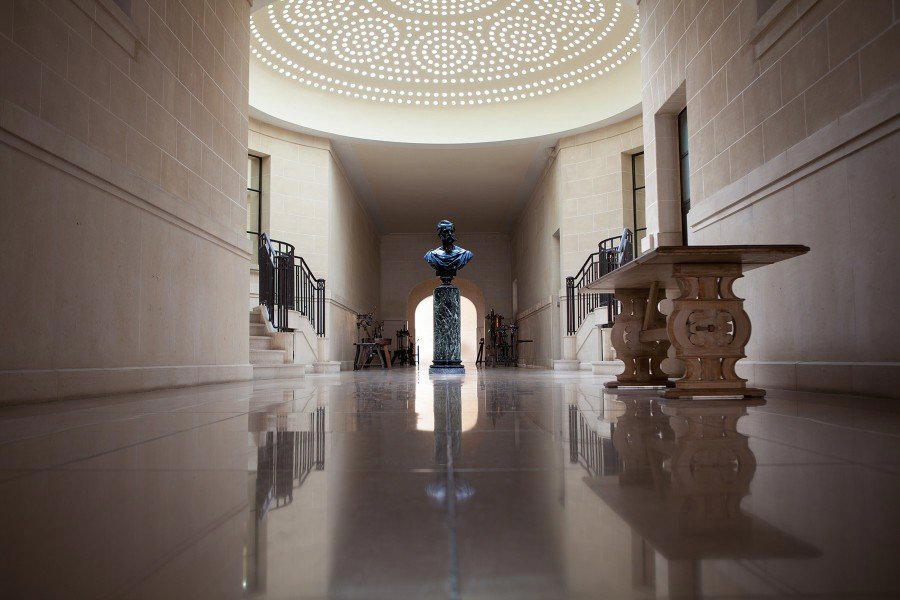
At a Glance
- Romantic
- Intimate
- Cozy
- Trendy
- Date Night
- Brunch
- Casual Hangout
- After Work
- Late Night
- Terrace
- Standalone
- Craft Cocktails
- Beer Program
- Organic
- Local Sourcing
Current opening hours
- Monday
- 11:30 AM–3 PM, 7 PM–12 AM
- Tuesday
- 11:30 AM–3 PM, 7 PM–12 AM
- Wednesday
- 11:30 AM–3 PM, 7 PM–12 AM
- Thursday
- 11:30 AM–3 PM, 7 PM–12 AM
- Friday
- 11:30 AM–3 PM, 7 PM–12 AM
- Saturday
- 11:30 AM–3 PM, 7 PM–12 AM
- Sunday
- 11 AM–4 PM
Hours can change for holidays and private events. Last verified .
Candlelit and intimate with a warm, confidential setting away from the bustle of central Paris; marble tables and a cozy terrace create an inviting, sophisticated yet relaxed environment.