Reverie Social Table
Our verdict
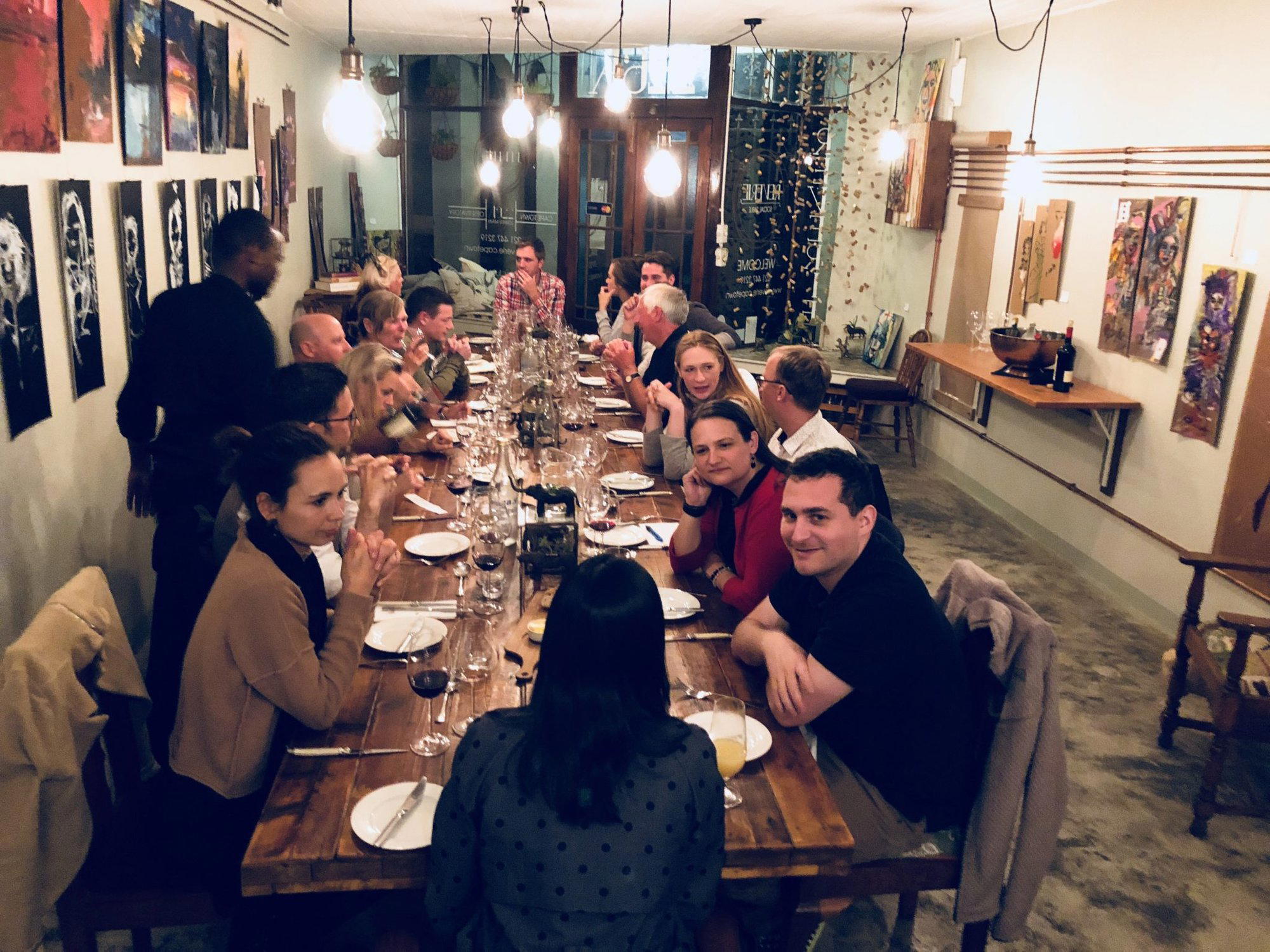
Reverie Social Table occupies a converted space on Lower Main Road in Observatory, one of Cape Town's most culturally layered neighbourhoods. The format centres on communal, social dining that sits outside the city's formal tasting-menu circuit. It draws a local crowd that prioritises convivial atmosphere over ceremony, placing it in a distinct tier from the Michelin-adjacent counters further south.

Pearl is the En Primeur Club membership app — saves, bookings, and concierge access live there. Same editors, same standards.
- Address
- 226A Lower Main Rd, Observatory, Cape Town, 7925, South Africa
- Phone
- +27790606971
- Hours
- Mon ClosedTue–Sat 6:30–11 PMSun Closed
- Website
- reverie.capetown
- Directions
- Get directions
The menu
What to order
- Miso-Glazed Trout
- Duck Breast
- Fresh Mussels
Observatory's Communal Table in Context
Cape Town's restaurant scene has, over the past decade, sorted itself into fairly legible tiers. At the leading sit the tasting-menu operations — Fyn, La Colombe, The Test Kitchen, Salsify at the Roundhouse — where multi-course precision and advance booking are the standard. Below that, a more fluid middle tier has emerged in neighbourhoods like Observatory, Woodstock, and Salt River, where the dining proposition is built around atmosphere, accessibility, and a less choreographed form of hospitality. Reverie Social Table at 226A Lower Main Road sits squarely in that second tier, and does so by design rather than default.
Observatory has long operated as Cape Town's most intellectually mixed neighbourhood, students from the adjacent university, long-term residents, creative professionals, and a transient international population all share the same stretch of Lower Main Road. The dining culture that has developed here reflects that mix: fewer white tablecloths, more shared plates, a preference for rooms that feel lived-in rather than staged. Reverie's name and format signal an alignment with that tradition. The word "social table" carries a specific meaning in contemporary hospitality, it implies communal seating, shared service rhythms, and a deliberate blurring of the boundary between strangers at adjacent seats.
The Team Dynamic at a Social Table
In the broader South African dining context, the social-table format places specific demands on front-of-house. When a meal is designed to move across a shared or semi-communal space, the coordination between kitchen output, floor pacing, and what might loosely be called the room's social temperature becomes more complex than in a traditional à la carte setting. The kitchen must send food at a rhythm that sustains conversation rather than interrupting it. The floor team must read whether a table wants to linger or move. The person managing wine or drink pairings must sequence without imposing a formal ceremony that would feel mismatched to the room's register.
This kind of calibrated informality is harder to execute consistently than it looks. Compare the model to what 95 at Parks does in a different Cape Town neighbourhood context, or to how regional operators like Wolfgat in Paternoster and Le Quartier Français in Franschhoek have built reputations on service that matches the physical and social character of their settings. In each case, the quality of the team's reading of the room is as consequential as what arrives from the kitchen. At Reverie, that dynamic is the product itself. The venue's identity depends on the floor team creating the conditions for the social experience to happen, not simply delivering food to a table.
Lower Main Road as a Dining Corridor
Lower Main Road has gradually accumulated enough independent restaurants, bars, and food businesses to function as a coherent dining corridor rather than a collection of isolated venues. It does not have the critical mass of the V&A Waterfront or the visibility of Bree Street, but it operates with a different logic: repeat custom from the neighbourhood, word-of-mouth from the university community, and a proportion of visitors who are specifically seeking out the less-packaged version of Cape Town's food scene. That last group tends to arrive with more patience and more curiosity than the typical tourist circuit demands.
It is closer to what Bread & Wine Vineyard Restaurant in Stellenbosch represents at the winelands end of the casual-premium spectrum, or to what EAT YOUR HEART OUT in Hillbrow and Foundry in Sandton represent in Johannesburg's equivalent neighbourhood-dining tier. The common thread is a model that prioritises local identity and social function over prestige signalling.
Cape Town's Communal Dining Shift
The social-table format is not unique to Cape Town, but it has found fertile ground here. Sharing plates and communal dining arrangements have become increasingly common across the city's mid-tier and neighbourhood restaurants, partly because they suit the outdoor and social culture of the city, partly because they allow kitchens to manage service flow more efficiently at lower price points. Internationally, the model has precedents in very different contexts, the counter culture at Atomix in New York City and the rigour of Le Bernardin in New York City represent what formal precision looks like at the opposite end of the spectrum, which makes the contrast instructive. The social-table format is a deliberate retreat from that precision, and its success depends on replacing it with something that is harder to systematise: genuine warmth and room intelligence.
Further afield, South Africa has produced operations that show what happens when the social and informal format is pushed toward culinary ambition, Klein Jan in Moshaweng Nu and La Sosta Restaurant in Swellendam each occupy unusual regional positions that reward the kind of reader willing to travel for a meal that does not fit a standard category. Reverie's position in Observatory is less remote but equally specific: it is a neighbourhood venue that functions for the neighbourhood first and for visitors second.
Planning Your Visit
Reverie Social Table is at 226A Lower Main Road, Observatory, Cape Town. Observatory is accessible from the city centre by car in under fifteen minutes under normal traffic, and the neighbourhood is walkable from several guesthouses and smaller hotels that serve the university area. Lower Main Road has on-street parking, though evenings can be competitive for spaces. For context on the broader Cape Town dining map and how this venue fits within it, the full Cape Town restaurants guide covers the city's major dining corridors and tiers. Those also considering day trips should note that Wolfgat in Saldanha Bay and the Franschhoek and Stellenbosch wine country restaurants represent a different register entirely and are leading planned as separate itinerary items rather than paired with an Observatory evening.
Frequently asked questions
What's Reverie Social Table's location?
Reverie Social Table is located at 226A Lower Main Rd, Observatory, Cape Town, 7925, South Africa, Cape Town.
Is Reverie Social Table suitable for a group dinner in Cape Town?
The social-table format at Reverie Social Table, located in Observatory on Lower Main Road, is structurally oriented toward groups rather than solo diners or couples. Communal seating and shared plates — the format's defining features in Cape Town's neighbourhood dining tier — make it a natural fit for gatherings where the meal is part of the social event itself.
What dish is Reverie Social Table famous for?
The social-table format at 226A Lower Main Road points toward a menu built around sharing plates rather than single headline dishes — consistent with how Cape Town's communal dining venues tend to structure their offering across the table.
Do they take walk-ins at Reverie Social Table?
Walk-in policy for Reverie Social Table has not been confirmed. Along Lower Main Road's dining corridor in Observatory, venues operating a social or communal format often work better with advance contact, since seating arrangements around a shared table depend on group size and timing. Reaching out before you visit is the practical approach.
A Pricing-First Comparison
Comparable venues nearby, for context on price, style, and recognition.
| Venue | Cuisine | Price | Awards | Notes |
|---|---|---|---|---|
| Reverie Social TableThis venue — the venue you are viewing | Seasonal South African Tasting Menu | $50–100 | Not listed | Not listed |
| The Bombay Bicycle Club | Bohemian South African Comfort Food | Not listed | Not listed | Higgovale, Bohemian South African Comfort Food |
| The Granary Café | Contemporary International | $50–100 | Not listed | Schotschekloof, Contemporary International |
| Arlecchino | Modern Italian–Mediterranean Café-Restaurant | $30–50 | Not listed | Sea Point, Modern Italian–Mediterranean Café-Restaurant |
| Bistro Sixteen82 | Contemporary Bistro and Tapas | $30–50 | Not listed | Westlake, Contemporary Bistro and Tapas |
| Grub & Vine Norval | Elevated Bistro | $30–50 | Star Wine List | Westlake, Polished Bistro |
Continue exploring
More in Cape Town
Restaurants in Cape Town
Browse all →
Bars in Cape Town
Browse all →
Hotels in Cape Town
Browse all →
Details
- Intimate
- Elegant
- Trendy
- Date Night
- Special Occasion
- Group Dining
- Private Dining
- Extensive Wine List
- Local Sourcing
- Sustainable Seafood
- Tasting Menu
- Set Menu
- Wine Pairing
- Vegetarian Friendly
Current opening hours
- Monday
- Closed
- Tuesday
- 6:30–11 PM
- Wednesday
- 6:30–11 PM
- Thursday
- 6:30–11 PM
- Friday
- 6:30–11 PM
- Saturday
- 6:30–11 PM
- Sunday
- Closed
Hours can change for holidays and private events. Last verified .
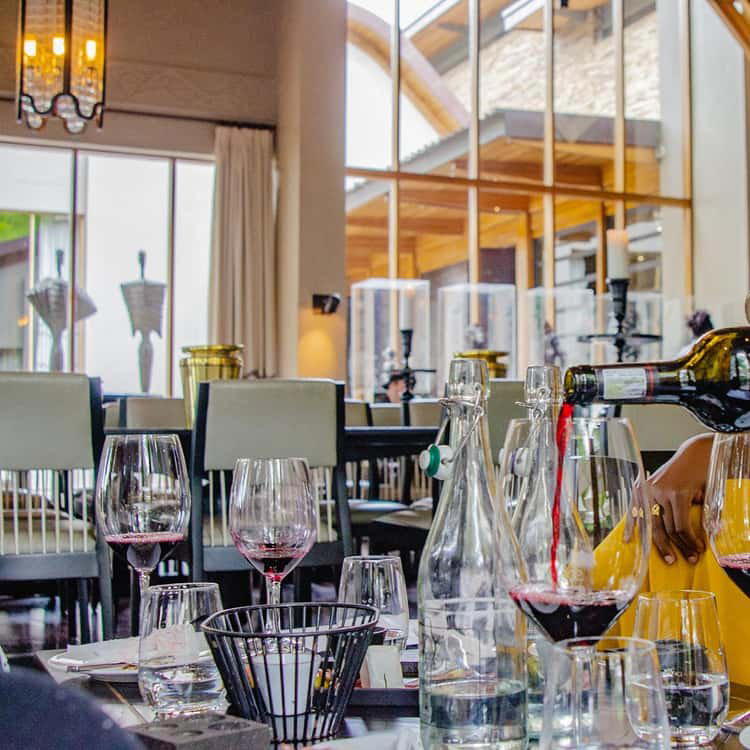
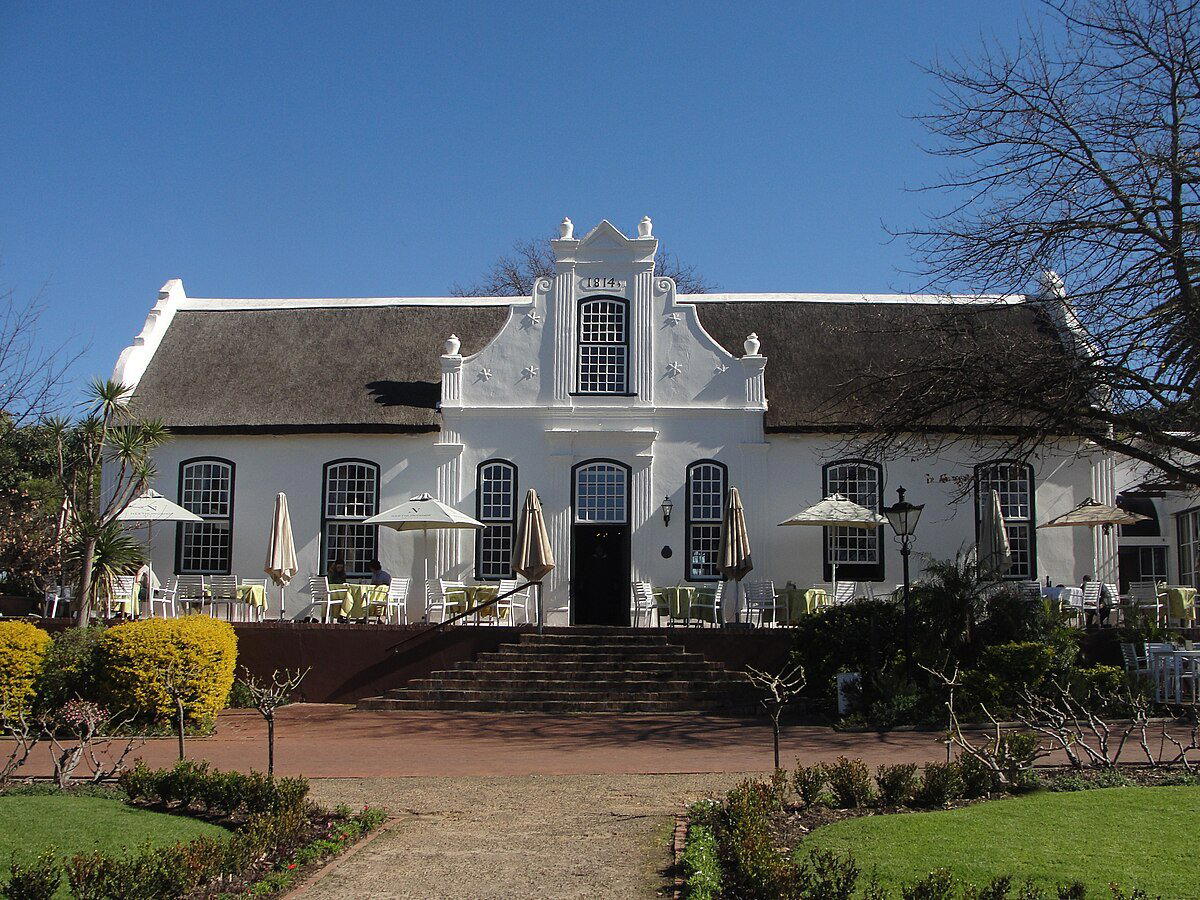
Charming eclectic space with a welcoming patio and warm communal atmosphere encouraging interaction among guests.