Wolfgat


Wolfgat sits at the edge of the Atlantic in the whitewashed fishing village of Paternoster, drawing its menu almost entirely from the surrounding coastline, dunes, and fynbos. Ranked 50th on the World's 50 Best Restaurants list in 2021, it represents a strand of South African cooking defined by foraged sea vegetables, local dairy, and whatever the fishermen bring in that morning. Advance booking is strongly advised.
Pearl is the En Primeur Club membership app — saves, bookings, and concierge access live there. Same editors, same standards.
- Address
- 10 Sampson St, Kliprug, Paternoster, 7381, South Africa
- Website
- wolfgat.co.za
- Directions
- Get directions
 Saves & bookings on Pearl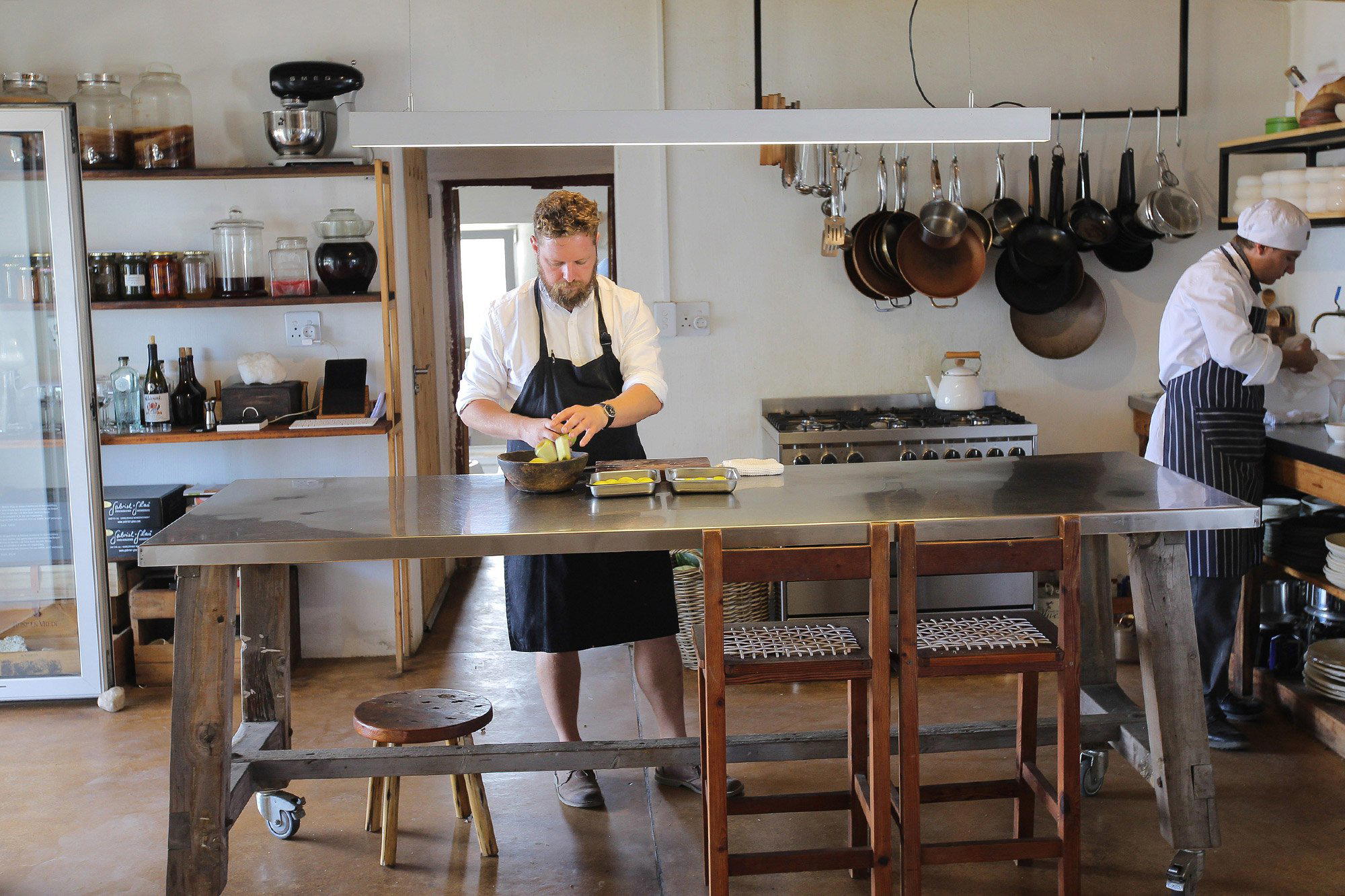
Where the West Coast Feeds the Kitchen
Paternoster sits roughly two and a half hours north of Cape Town along the R27 coastal road, and the drive itself is part of the reorientation. The Atlantic appears in flat, grey-green sheets rather than the dramatic crags of the Peninsula; the fynbos thickens; the human population thins. By the time you reach the village, a cluster of low whitewashed cottages that has changed little in outward character for decades, the idea that a restaurant here ranked 50th on the World's 50 Best Restaurants list in 2021 feels simultaneously improbable and exactly right.
Wolfgat occupies a modest building on Sampson Street, facing the sea. The structure gives nothing away. There is no signage designed to impress, no architectural flourish aimed at signalling a premium tier. The restraint is consistent with what the kitchen actually does: it draws from the immediate environment, the shoreline, the dunes, the shallow scrubland behind the village, and presents that environment on the plate with precision rather than transformation.
The Sourcing Logic Behind the Menu
The West Coast of South Africa has a foraging tradition that runs alongside its fishing culture, but the two have rarely been treated as equal contributors to the same plate. What Wolfgat represents, within the context of South African restaurant cooking broadly, is a disciplined insistence that the non-fish elements of this coastline carry as much weight as the catch itself. Sea vegetables, fynbos herbs, coastal flowers, watercress from local streams, wild dairy grains: these are not garnishes placed around a central protein. They are the argument the kitchen is making.
This approach places Wolfgat in a different competitive conversation from the Cape Town fine dining circuit, where restaurants like The Test Kitchen, La Colombe, and Salsify at the Roundhouse work with global technique applied to South African ingredients. The kitchen is less interested in that synthesis. The sourcing radius is smaller, the reference points are more local, and the result reads as a regional cuisine in the strict sense: food that could not convincingly be made anywhere else, because most of what is on the plate does not travel.
Fresh fish and seafood arrive from fishermen who work the immediate coastline, and that relationship with the catch is direct enough that the menu shifts with what is available. The vegetables, herbs, and foraged elements follow the same logic: what the dunes and low scrubland are producing on a given week determines what the kitchen can offer. This is not a marketing description of farm-to-table practice; it is a structural feature of how the restaurant operates, shaped partly by geography and partly by the particular ecology of the Paternoster coast.
Recognition and What It Signals
The 2021 World's 50 Best ranking placed Wolfgat alongside restaurants operating at a global scale of investment and ambition. That the restaurant reached that tier from a small fishing village, without a hotel group behind it or a celebrity chef narrative driving coverage, says something about how the international food world has shifted in its evaluation criteria. Sourcing integrity, regional specificity, and ecological coherence now carry weight in serious critical assessment that they did not carry twenty years ago.
A separate recognition from 2018 named Wolfgat the leading vegetable restaurant in South Africa, a designation that captures something the 50 Best ranking does not: the kitchen's commitment to the plant and foraged elements of this coastline is not secondary to the seafood. The two are in balance. The sea, the dunes, and what grows between them are treated as a single system, and the cooking reflects that relationship.
That combination of credentials places Wolfgat in a comparable set that includes South African restaurants recognised for sourcing-led cooking over spectacle, including Klein Jan in the Kalahari and Morukuru Family De Hoop, both of which operate within similarly defined ecological parameters. The common thread is food that takes its identity from a specific, non-metropolitan landscape. Wolfgat is one decorated example of that strand in South Africa.
The Dining Room and the Context Around It
6 across 558 reviews is a reasonable indicator of consistent execution, but it also reflects something about the audience the restaurant draws. Visitors travel specifically from Cape Town and further to eat here; the guest mix is not the local casual lunch crowd that sustains a neighbourhood restaurant. The journey to Paternoster functions as a kind of commitment, and that shapes how people arrive and how they receive what is in front of them.
The dining room faces the Atlantic, and the view is unobstructed. The setting is elemental rather than designed: you are eating food drawn from the coastline while looking at the coastline. That alignment between what is on the plate and what is outside the window is not incidental. It is the clearest articulation of what the restaurant is doing and why the setting matters as much as the cooking.
For context on how Paternoster sits within the broader Western Cape dining picture, the village is part of a regional food culture that has developed significant depth in recent decades. The Franschhoek and Stellenbosch corridors, anchored by restaurants like Le Quartier Français and Dusk, operate from a wine-country framework with a different set of sourcing and stylistic priorities. Wolfgat's distance from that circuit is geographical and also conceptual.
Planning a Visit
Given its recognition and the limited capacity that a small village building implies, Wolfgat requires advance planning. The restaurant's profile means it draws visitors from considerable distances, and tables at recognised restaurants operating at this scale of critical attention fill well ahead. Checking booking availability early is advisable, particularly for weekend visits or for travel aligned with the Southern Hemisphere summer, when the Paternoster coast is at its most accessible. The address is 10 Sampson Street, Kliprug, Paternoster, on the Atlantic-facing side of the village.
Paternoster is not a destination with an extensive infrastructure of options, which is part of its character. For those building a longer West Coast itinerary, the wider region supports a visit that takes in local wineries and the low-key coastal culture that defines this stretch of coastline.
Wolfgat occupies its own tier within that picture, defined by coastal ecology and regional specificity rather than the safari or urban frameworks that shape most of the country's fine dining conversation.
Side-by-Side Snapshot
Comparable venues nearby, for context on price, style, and recognition.
| Venue | Cuisine | Price | Awards | Notes |
|---|---|---|---|---|
| WolfgatThis venue — the venue you are viewing | West Coast Strandveld Fine Dining | $$$$ | World's 50 Best #50 | Not listed |
| Salsify at the Roundhouse | Modern South African Fine Dining | $$$$ | World's 50 Best #88 | Clifton |
| Fyn | Modern Japanese-South African Fusion | $$$$ | World's 50 Best #37 | City Bowl |
| The Test Kitchen | Avant-Garde Fine Dining Fusion | $$$$ | World's 50 Best #22 | Mowbray |
| Le Quartier Français | Modern South African Fusion Tasting Menu | $$$$ | World's 50 Best #31 | Franschhoek |
| Amura | Contemporary Spanish-influenced seafood fine dining | $$$$ | Not listed | City Bowl |
Recognition history
Dated appearances from independent guides and award organizations, with the underlying list record or original source where available.
We're Smart World 4 Radishes
We're Smart World
World's 50 Best Best Restaurants #50
World's 50 Best
Continue exploring
More in Paternoster
Restaurants in Paternoster
Browse all →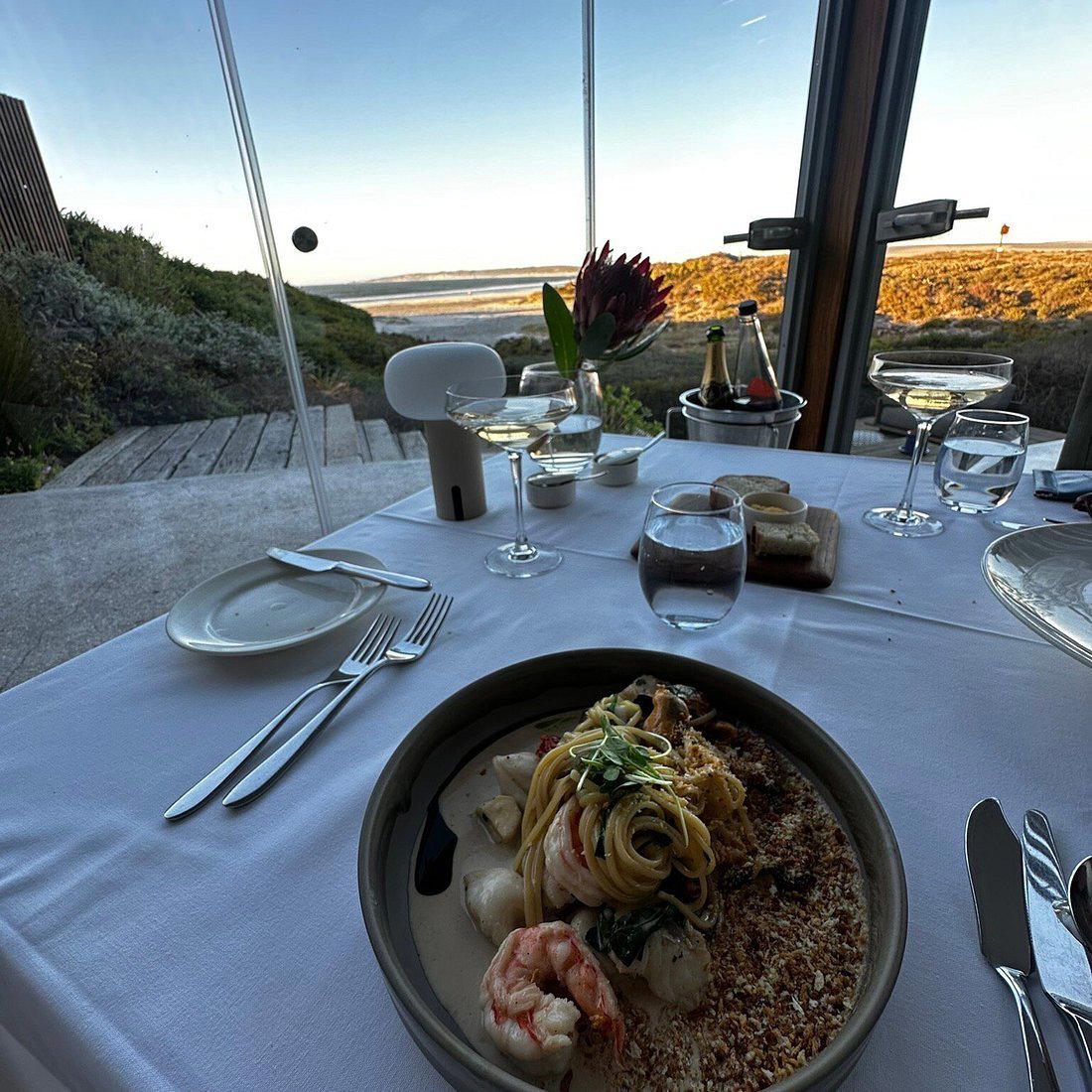
Hotels in Paternoster
Browse all →
At a Glance
- Rustic
- Intimate
- Scenic
- Elegant
- Special Occasion
- Waterfront
- Sommelier Led
- Local Sourcing
- Sustainable Seafood
- Waterfront
Current opening hours
- Monday
- Closed
- Tuesday
- Closed
- Wednesday
- 12:30–12:35 p.m.
- Thursday
- 12:30–12:35 p.m.
- Friday
- 12:30–12:35 p.m., 6:30–7 p.m.
- Saturday
- 12:30–12:35 p.m., 6:30–7 p.m.
- Sunday
- 12–12:05 p.m.
Hours can change for holidays and private events. Last verified .
Low-ceilinged open-plan fisherman's cottage sharing dining and kitchen space, with natural light, beach views from terrace, and a calm, unhurried atmosphere.