Thermal Country, Regional Table
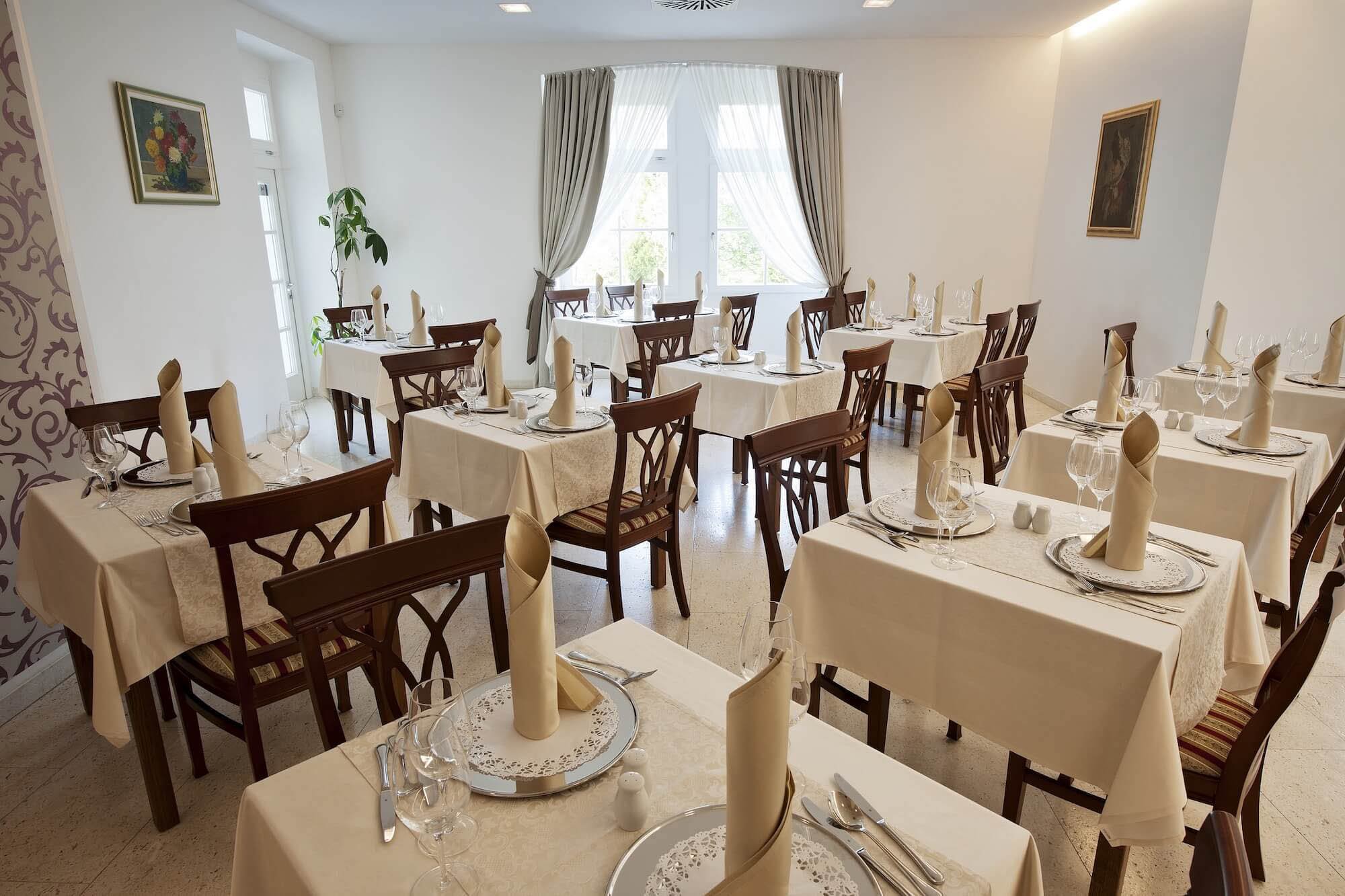
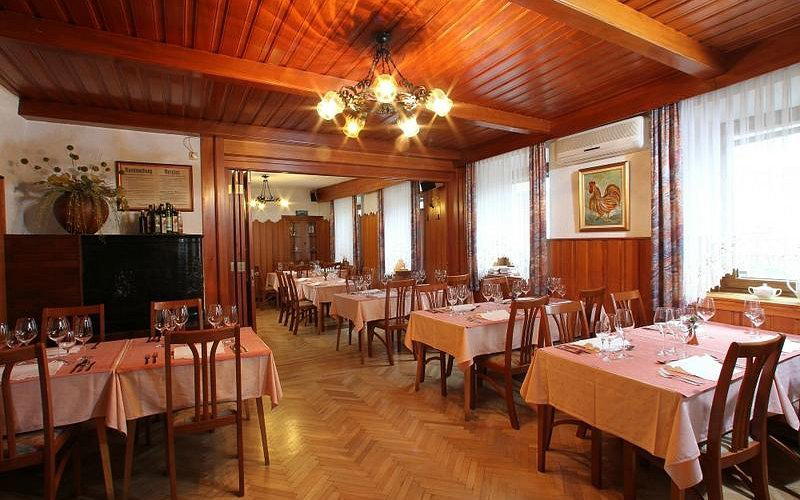
Slovenia's thermal belt runs through the lower Savinja Valley like a quiet corridor between the Alpine north and the Pannonian plains to the east. The spa towns along this stretch, Rimske Toplice among them, have long attracted a particular kind of visitor: one who arrives for the waters and stays for the food. Restavracija Sofija occupies that intersection, sitting at Toplice 10, 3272 Rimske Toplice, a few kilometres from the centre of Laško, the small city better known across the region for its brewery than its dining room. That geography matters more than it might first appear. Rimske Toplice sits at the edge of a farming corridor that produces some of central Slovenia's most consistent raw material: orchard fruit from the valley floor, foraged herbs from the forested hills above, and livestock raised on the kind of mixed-grass pasture that the wetter Savinja microclimate sustains particularly well.
In this context, the kitchen's relationship to its immediate landscape is not an affectation but a practical reality. Restaurants in Slovenia's thermal resorts have historically served a captive audience, relying on proximity to thermal facilities rather than culinary ambition to fill covers. The more interesting shift in recent years has been the gradual tightening of sourcing discipline in this category of dining, as guests arriving from Ljubljana, Graz, and further afield bring expectations shaped by Slovenia's rapidly improving national restaurant scene. The question, for any restaurant in this position, is whether its kitchen uses the agricultural advantages of the region deliberately or merely incidentally.
What the Savinja Valley Puts on the Plate
The editorial logic of ingredient sourcing in Slovenia operates differently from, say, a Michelin-circuit restaurant that curates its supply chain as a marketing instrument. In the Savinja Valley, proximity to farms and forests is simply the condition of operation. What separates the kitchens that make the most of this from those that don't is how consistently they draw on seasonal availability rather than defaulting to imported staples when the calendar makes local sourcing harder.
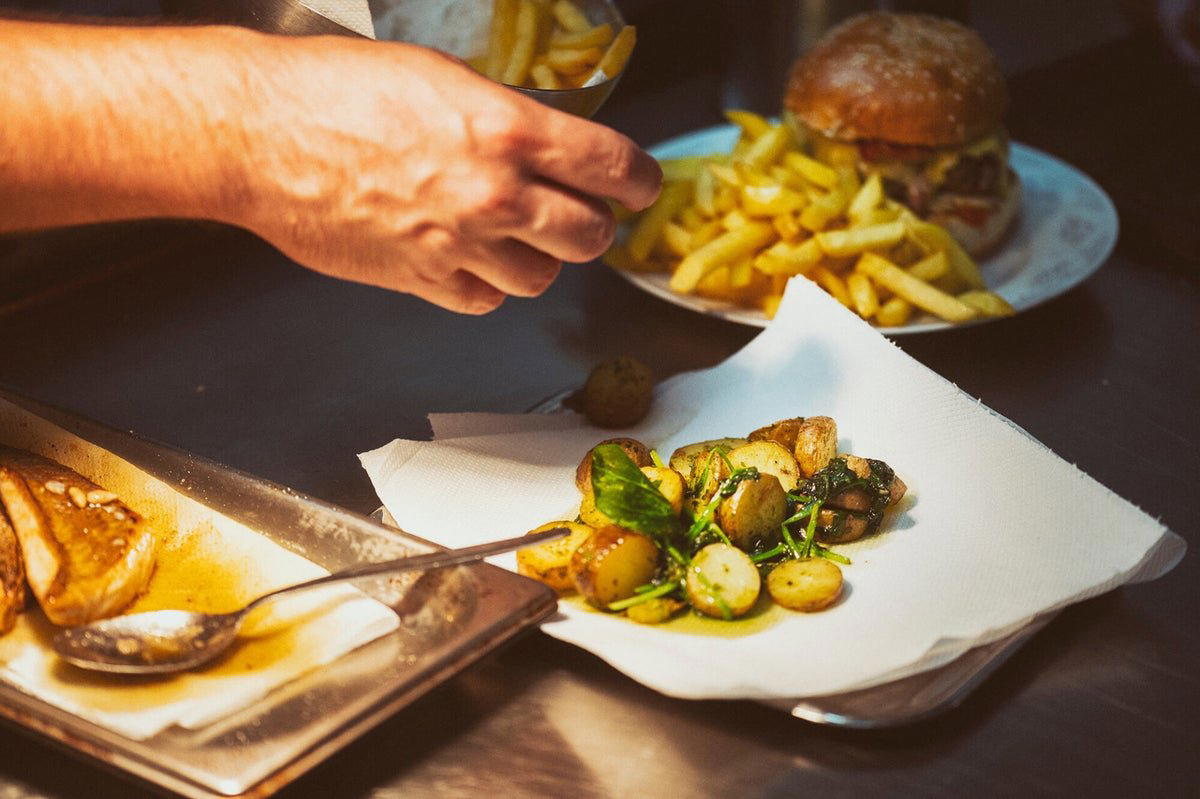
Slovenia's broader fine-dining scene has made this argument compellingly at the national level. Hiša Franko in Kobarid has become the international reference point for ingredient-led Slovenian cooking, with sourcing that extends to foraging and on-site fermentation. Further north, Milka in Kranjska Gora operates at the creative end of the mountain-adjacent ingredient tradition. In the Vipava Valley, Gostilna Pri Lojzetu and Dam in Nova Gorica have built their reputations around the specific terroir of the west. The thermal belt has its own version of this logic, quieter and less internationally documented, but grounded in real agricultural specificity. Restavracija Sofija operates within that local tradition, where the Savinja's hop fields, its river-fed meadows, and the wooded slopes above Rimske Toplice supply the conditions for a kitchen with genuine regional character.
For a sense of how Slovenia's farm-adjacent dining tradition plays out at different price points and in different geographic pockets, Grič in Šentjošt nad Horjulom offers one of the most cited farm-to-table formats in the country, while Turistična Kmetija Breg in Brda anchors a similar philosophy in the wine-country west. The eastern and central thermal zone, where Sofija sits, is the less-discussed chapter of that story.
Placing Sofija in the Regional Circuit
Laško itself does not have the dining density of Ljubljana or the international profile of the Soča Valley corridor. That means Restavracija Sofija functions less as a destination in isolation and more as the anchor of a short regional itinerary. Visitors combining the Rimske Toplice thermal facilities with wider Savinja Valley exploration would find it natural to pair a meal here with visits to Laško's brewery district or the rolling hills toward Celje, where Gostilna Oštirka extends the regional dining map by another half hour's drive. Further afield but within a credible day-trip radius, Gostišče Karavla 297 in Trzic and Gostilna Pr'Bizjak in Preddvor fill out a picture of how Slovenia's smaller-town restaurant tradition functions outside the major circuits.
Within Laško proper, Pavus occupies the modern-cuisine tier and represents the town's strongest current dining reference point. For a fuller account of what the area offers across formats and price points, our full Laško restaurants guide maps the local field. Nationally, those with a specific interest in Slovenia's most ambitious contemporary cooking should also consider Restavracija Strelec in Ljubljana, Hiša Denk in Zgornja Kungota, and Hiša Linhart in Radovljica as the reference tier against which regional options are measured. At the opposite end of the geographic range, Gostilna Mlinar in Idrija and Gostišče Neptun in Piran show how Slovenia's coastal and mountain-adjacent dining traditions diverge from the central thermal belt's own approach.
Planning a Visit
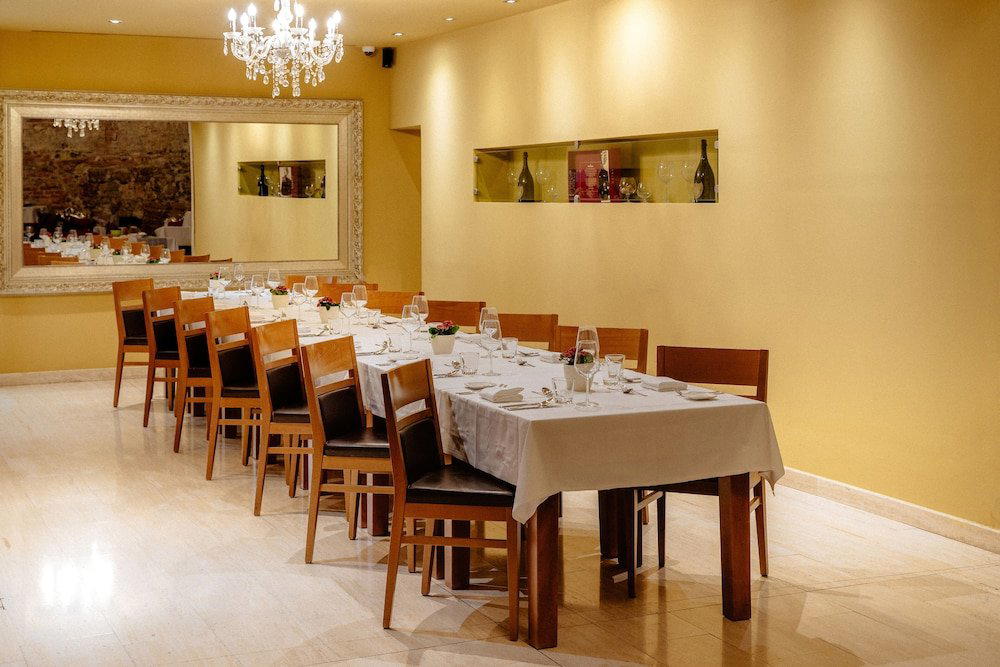
Rimske Toplice is most practically reached by car from Ljubljana (roughly 70 kilometres via the A1 motorway) or from Celje (under 20 kilometres). The thermal spa infrastructure in the area makes it a natural overnight or weekend destination rather than a short stopover, and the restaurant at Toplice 10 is positioned to serve both resort guests and visitors arriving specifically for a meal. Current contact details, hours, and reservation information are best confirmed directly through the venue, as published logistics were not available at time of writing. Given the spa-resort context, advance planning during peak summer and wellness-travel seasons is advisable, as occupancy at the surrounding thermal facilities directly affects dining capacity and table availability.
Those calibrating this visit against the wider horizon of European dining should note that Slovenia's best-known kitchens operate in a different competitive register entirely from, say, Le Bernardin in New York City or Atomix. The interest here is not formal ambition at that scale, but something more specific to place: the particular argument that a well-located central Slovenian kitchen makes about the Savinja Valley's agricultural identity, served in a setting where the thermal landscape and the dining room are part of the same experience.