
Michelin Bib Gourmand
Our verdict
A Michelin Bib Gourmand-recognised modern restaurant on Celje's central square, LALU Bistro draws on Italian influences and Slovenian regional produce at accessible price points. San Daniele ham sits alongside Savinjski želodec on a menu that treats the Štajerska wine region as a natural starting point.

Pearl is the En Primeur Club membership app, where members save venues, book tables and use the concierge.
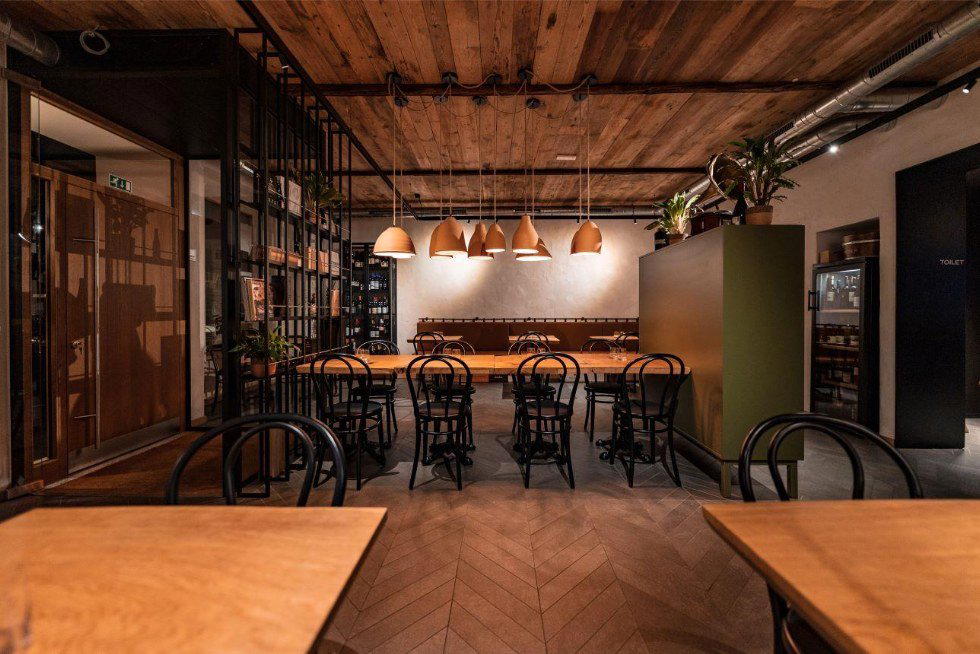
A Town Square Address and What It Tells You About Celje's Dining Scene
Trg celjskih knezov, Celje's central medieval square, functions as a reliable barometer for the city's restaurant culture. The square draws the full range of the town's visitors, from castle-bound tourists to local professionals on a weekday lunch, and the establishments that settle there tend to reflect where a mid-sized Slovenian city's culinary ambitions currently sit. LALU Bistro occupies a spot on that square and, with a Michelin Bib Gourmand awarded in 2024, it represents the accessible-but-considered tier that Michelin reserves for restaurants offering genuine quality at moderate prices. That recognition places it in a specific competitive bracket: not the €€€€ tasting-menu format of destinations like Hiša Franko in Kobarid or Milka in Kranjska Gora, but a single-euro-sign price point with inspector-level acknowledgement that the kitchen is doing something worth the detour.
Where the Ingredients Come From
The menu at LALU Bistro operates along a dual axis that reflects Slovenia's geographic position: Italian influence from the west, and the agricultural traditions of the Savinja Valley from its own immediate surroundings. That duality is not decorative. Slovenia shares a long border history with Italy, and ingredients like San Daniele ham, which comes from the Friuli region just across the border, have a regional logic here that they lack when deployed in kitchens further east. The Savinja Valley, meanwhile, has its own cured-meat tradition in the form of Savinjski želodec, a pressed and smoked pork stomach that carries protected geographical status and speaks directly to the region's smallholder farming heritage. Placing both on the same menu is less a fusion exercise than a documentation of how this particular corner of central Slovenia has always sat at a crossroads of food cultures.
That sourcing orientation connects LALU Bistro to a broader pattern visible across Slovenia's recognised restaurants. Properties like Gostilna Pri Lojzetu in Vipava and Hiša Denk in Zgornja Kungota also draw hard on the specificity of their sub-regional ingredient base. At the Bib Gourmand level, the requirement is that this rigour be delivered without the overhead of a premium tasting-menu operation, which makes the sourcing choices more visible rather than less: every line item on the plate has to earn its place at a price point that leaves no room for padding.
The Štajerska Wine Region as an Entry Point
Michelin's own notes for LALU Bistro suggest opening with a glass of Pinot Noir from the Štajerska region, the Slovenian name for what is broadly called Slovenian Styria. That recommendation carries editorial weight. Štajerska is one of Slovenia's three principal wine-producing areas and sits in the country's northeast, producing whites that have attracted increasing international attention, alongside reds that remain less exported and therefore more representative of local drinking culture. Starting a meal with a Štajerska Pinot Noir positions the experience within that local wine geography from the first pour, which is a more coherent entry point than reaching for a Bordeaux or a Burgundy to accompany dishes built around Savinjski želodec and local capers. For readers exploring Slovenia's wine scene further, our full Celje wineries guide covers the regional production in more detail.
The Format: Minimalist Room, Welcoming Tone
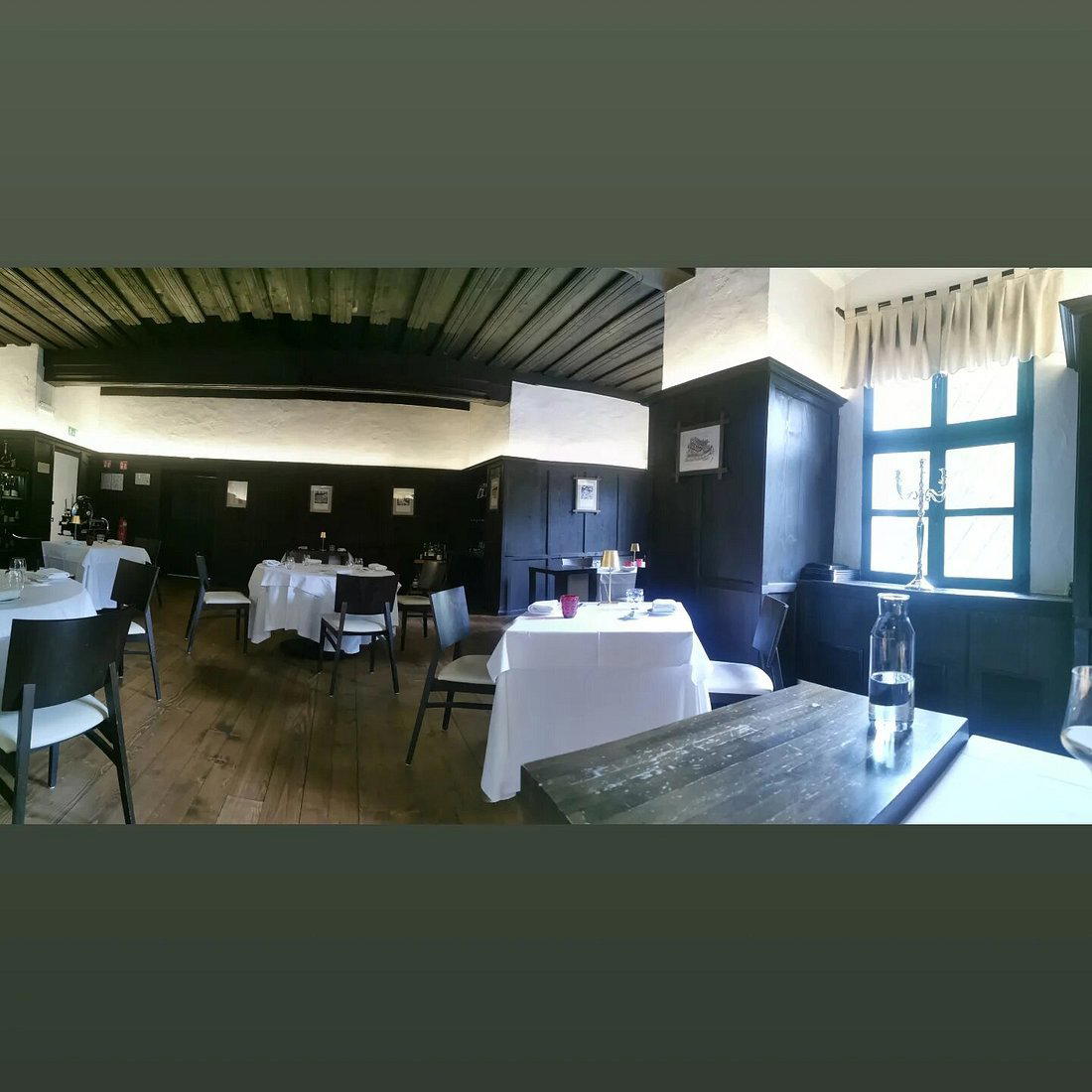
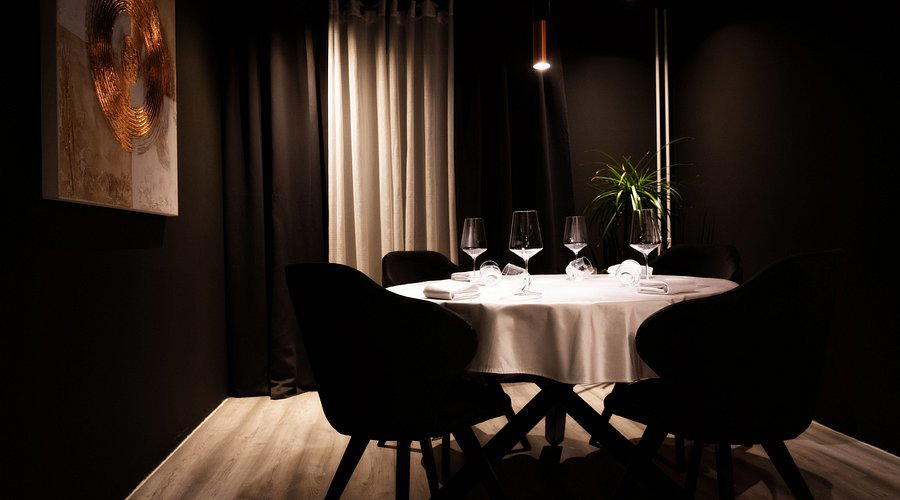
Small modern restaurants with minimalist interiors occupy a recognisable tier in European dining, one where the room is deliberately spare so that attention falls on the plate and the service rather than on décor investment. LALU Bistro fits that format. The space is compact, the aesthetic restrained, and the service described consistently as friendly in a way that distinguishes it from the more formal register of higher-priced Slovenian operations.
That consistency at the € price tier is arguably more difficult to sustain than at €€€ or €€€€ levels, where higher margins allow for more controlled pacing and lower table-turn pressure. The Bib Gourmand model rewards exactly this: reliable execution, accessible pricing, and a sense that the kitchen knows precisely what it is doing. For comparison, Pavus in Lasko and A3 in Brestanica operate in the same broader Savinja corridor and offer useful reference points for how regional Slovenian kitchens are approaching the mid-market.
The Dessert Position
Michelin's listing for LALU Bistro singles out the crème brûlée with passion fruit and coconut sorbet as a dish to seek out. That detail is worth reading carefully. A classic French brûlée shifted into a tropical register with passion fruit and coconut is a deliberate move away from local-only sourcing, and it signals something about the kitchen's range: the Italian and Slovenian ingredient logic that governs the savoury courses does not constrain the pastry section, which operates with broader creative latitude. This kind of structural contrast, rigorous local sourcing in savoury, more playful in dessert, is common in Bib Gourmand kitchens that want to demonstrate range without inflating their price point.
LALU Bistro in Slovenia's Wider Restaurant Conversation
Slovenia's Michelin-recognised restaurants cluster heavily around Ljubljana and the western wine valleys, with Hiša Franko in Kobarid serving as the country's highest-profile address internationally. The Bib Gourmand tier distributes more widely, and a recognition in Celje, a mid-sized city in the industrial Savinja Valley, says something about how Slovenia's food scene is developing beyond its capital and tourist circuits. Restavracija Strelec in Ljubljana and Hiša Linhart in Radovljica operate in the starred tier, while LALU Bistro and Gostilna Francl, which focuses on regional Slovenian cuisine in the same city, represent Celje's recognised dining at the accessible end of the spectrum. Dam in Nova Gorica and Grič in Šentjošt nad Horjulom also carry Michelin recognition and sit in the broader national conversation about where Slovenian cooking is heading. For anyone building a Slovenian restaurant itinerary, Celje merits inclusion as a working city with a genuine dining culture rather than a tourist-facing one. The full picture is available in our Celje restaurants guide.
Planning a Visit
LALU Bistro sits at Trg celjskih knezov 3, directly on Celje's central square, which makes it direct to combine with a visit to the old town and Celje Castle. The single-euro-sign pricing means a full meal with wine remains within reach of most travel budgets. For accommodation and other considerations when spending time in the city, our Celje hotels guide covers the available options, and our Celje bars guide and experiences guide fill in the rest of the day. Contact details and current hours are best confirmed directly, as these are not publicly listed at time of writing.
What Regulars Order at LALU Bistro
Michelin's own notes, which constitute the most authoritative public record of what distinguishes the kitchen, point to three anchor items: the Savinjski želodec served with olives and wild capers, the San Daniele ham, and the crème brûlée with passion fruit and coconut sorbet. The Savinjski želodec in particular is a dish with strong regional identity and limited visibility outside the Savinja Valley, making it the most informative order for a first visit. The Štajerska Pinot Noir as an opening wine is the inspector's own recommendation and aligns the drink with the food's local sourcing logic. The dessert, as noted, shifts register deliberately and represents the kitchen at its most playful. For broader context on what the Bib Gourmand designation signals about a kitchen's cuisine and chef approach, the Frantzén in Stockholm and FZN by Björn Frantzén in Dubai entries illustrate how modern cuisine operates at different price tiers and scales internationally.
Frequently asked questions
What do regulars order at LALU Bistro?
Michelin's 2024 Bib Gourmand notes, the most detailed public record of the kitchen's strengths, point to three anchors: Savinjski želodec (a cured local ham) served with olives and wild capers, San Daniele ham reflecting the Italian thread running through the menu, and the crème brûlée with passion fruit and coconut sorbet. That dessert is specifically flagged as worth seeking out, which is unusual attention for a single course in a Bib Gourmand listing. Opening with a glass of Pinot Noir from the nearby Štajerska region is also part of how the meal is meant to begin.
How much does it cost to eat at LALU Bistro?
Pricing at LALU Bistro is listed as €.
What's LALU Bistro's location?
LALU Bistro is located at Trg celjskih knezov 3, 3000 Celje, Slovenia, Celje.
Booking and Cost Snapshot
| Venue | Cuisine | Price | Awards | Notes |
|---|---|---|---|---|
| LALU BistroThis venue (the venue you are viewing) | Modern Slovenian Bistro | $20–30 | Michelin Bib Gourmand | Not listed |
| Dam | Modern Mediterranean with Slovenian-Italian Influences | $50–100 | 1 Michelin Star · La Liste Top Restaurants | Mediterranean, Modern Cuisine |
| Hiša Franko | Modern Slovenian Fine Dining | $300–500 | 3 Michelin Stars · World's 50 Best #69 | Modern European, Creative |
| Milka | Modern Alpine Fine Dining | $200–300 | 2 Michelin Stars · La Liste Top Restaurants | Creative |
| Gostilna Pri Lojzetu | Modern Slovenian Fine Dining | $50–100 | 1 Michelin Star · La Liste Top Restaurants | Modern Cuisine |
| Hiša Linhart | Modern Slovenian Farm-to-Table | $50–100 | 1 Michelin Star · Falstaff Restaurant - 95 Falstaff Points | Contemporary |
Recognition history
Dated appearances from independent guides and award organizations, with the underlying list record or original source where available.
Michelin Bib Gourmand
Michelin
Full recognition history (4 entries)
Michelin Bib Gourmand
Michelin
Michelin Bib Gourmand
Michelin
Michelin Bib Gourmand
Michelin
Continue exploring
More in Celje
Restaurants in Celje
All restaurants in Celje →
Bars in Celje
Browse all →

Details
- Cozy
- Modern
- Elegant
- Intimate
- Date Night
- Business Dinner
- Casual Hangout
- Open Kitchen
- Extensive Wine List
- Local Sourcing
- A La Carte
- Wine
- Craft Beer
- Vegetarian Friendly
- Vegan Options
Current opening hours
- Monday
- 12–10 PM
- Tuesday
- 12–10 PM
- Wednesday
- 12–10 PM
- Thursday
- 12–10 PM
- Friday
- 12–10 PM
- Saturday
- 12–10 PM
- Sunday
- Closed
Hours can change for holidays and private events. Hours as of .
Cosy, modern minimalist interior with welcoming atmosphere, pleasant lighting, and no street noise.