Our verdict
Korean Liberdade: Where the Neighbourhood Eats Rua da Glória sits near the heart of Liberdade, the São Paulo district that has anchored the city's East Asian community for more than a century. The street runs through a zone where Korean...

Pearl is the En Primeur Club membership app, where members save venues, book tables and use the concierge.
The menu
What to order
- Dolsot Bibimbap
- Sogalbi
- Yangnyeom samgyeopsal
Korean Liberdade: Where the Neighbourhood Eats
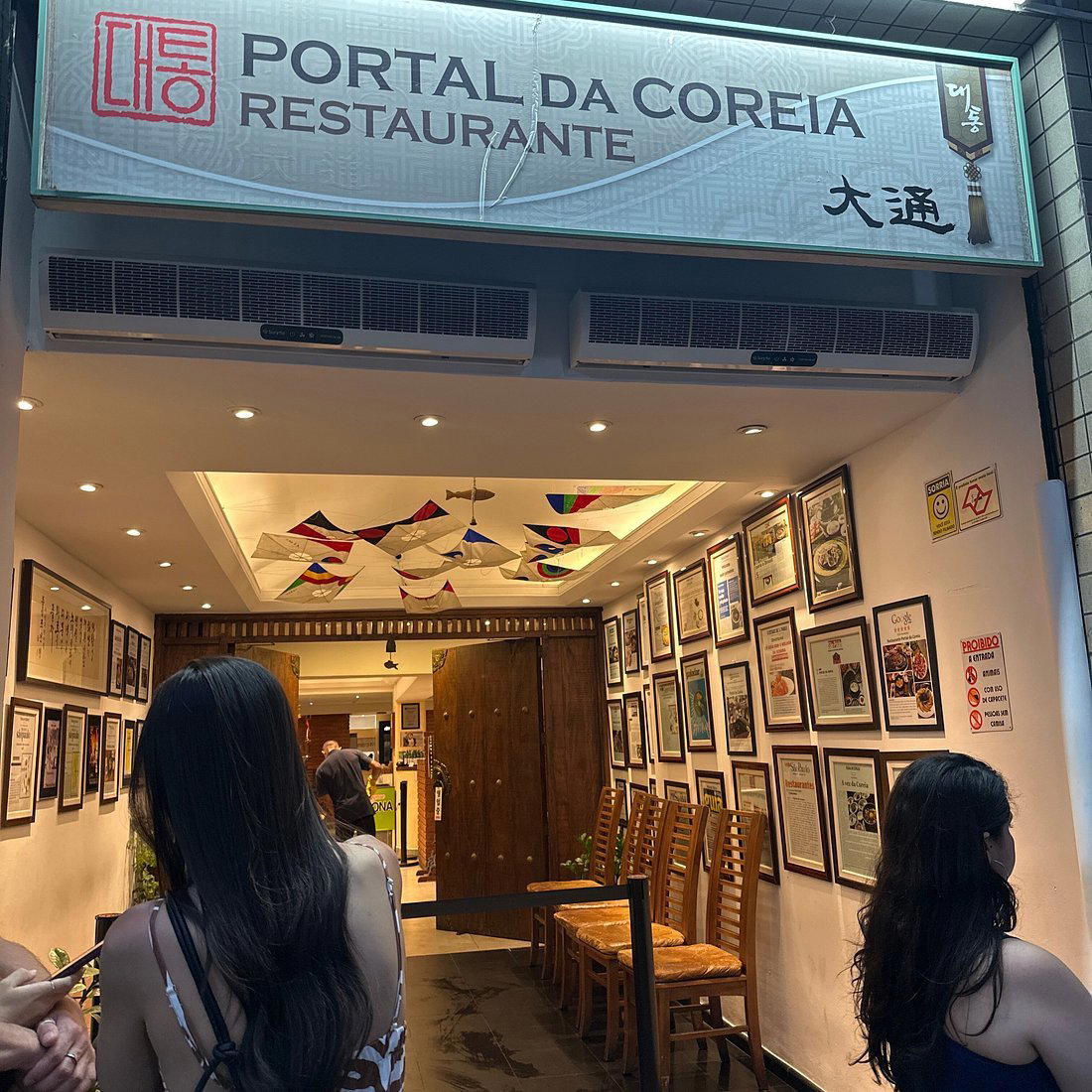
Rua da Glória sits near the heart of Liberdade, the São Paulo district that has anchored the city's East Asian community for more than a century. The street runs through a zone where Korean, Japanese, and Chinese commercial life layers over older Portuguese colonial architecture, and where the customer base for any given restaurant is drawn as much from the surrounding residential blocks as from visitors seeking novelty. Restaurante Portal da Coreia occupies this address in that neighbourhood logic: a Korean restaurant in a district where Korean food is a local staple, not an import.
That distinction matters. In parts of São Paulo where Korean cooking appears as a cultural curiosity, menus tend to moderate themselves, pulling back on fermented intensity or adjusting heat profiles for a broader audience. In Liberdade, no such adjustment is required. The community that has sustained Korean dining here across decades sets the baseline, and restaurants on Rua da Glória operate against that expectation. Regulars know what they are ordering, and they return because the kitchen meets that knowledge.
The Logic of Return
What draws repeat visitors to a neighbourhood Korean restaurant is rarely a single dish or a seasonal menu change. It is consistency: the same fermentation character in the banchan, the same calibration of heat, the same informal service rhythm that signals familiarity rather than performance. Korean dining in Liberdade functions in this register, where the social contract between kitchen and regular customer is built over months and years of repeated visits.
This is a different dynamic from the fine-dining circuit that defines São Paulo's international reputation. At the upper end of the city's restaurant scene, addresses like D.O.M. and Evvai trade in seasonal menus, chef reputation, and booking windows measured in weeks. Tuju and Maní similarly position their value through creative programmes and editorial recognition. Portal da Coreia operates in an entirely different tier, where the value proposition is not novelty but reliability, and where the regulars are not food tourists but neighbourhood residents with accumulated knowledge of the menu's rhythms.
That accumulated knowledge constitutes what might be called the unwritten menu: the understanding of which banchan pairings work, which protein preparations the kitchen handles with most confidence, and which days yield the freshest preparation cycles. It is transmitted through repetition, through conversation with the same server across a dozen visits, through the small details that only regular attendance reveals.
Korean Dining in Context: São Paulo's Liberdade District
São Paulo's Liberdade neighbourhood is home to one of the largest Japanese communities outside Japan, but the district's culinary geography extends well beyond Japanese cuisine. Korean migration to Brazil, concentrated heavily in São Paulo, has produced a Korean commercial corridor in and around Liberdade that functions as the city's primary site for Korean food and groceries. The critical mass of Korean residents and businesses means that restaurants here operate with supply chains, ingredient sourcing, and customer expectations that would be difficult to replicate in other parts of the city.
For anyone placing Korean food in São Paulo against the wider context of Korean dining elsewhere, two useful reference points are Atomix in New York City, which represents the fine-dining end of Korean cooking's global reach, and Le Bernardin, which illustrates how immigrant culinary traditions eventually produce tasting-menu formats with international recognition. Liberdade's Korean restaurants sit at a different coordinate entirely: community-facing, technically grounded, and measured by neighbourhood standards rather than international award calendars. The comparison is useful not to diminish local establishments but to clarify what they are doing and for whom.
Brazil's wider restaurant circuit, from Lasai in Rio de Janeiro to regionally grounded spots across the country, is documented through the EP Club São Paulo guide, which maps the city's dining options across price tiers and cuisine categories. Portal da Coreia sits within that broader structure, but its reference set is specifically the Korean and broader East Asian corridor of Liberdade rather than the creative-cuisine venues that anchor São Paulo's international profile.
Planning a Visit
Restaurante Portal da Coreia is located at Rua da Glória, 729, in the Liberdade neighbourhood of São Paulo, reachable by metro on the Liberdade station of Line 1. For visitors building a broader Brazilian itinerary, the EP Club also covers regional options including Cantina Pozzobon in Santa Maria, Bistro Fitz Carraldo in Manaus, Arte e Café Imperial in Angra Dos Reis, Casa da Dika in Bragança, Casa da Flor in Dourados, Aero Burguer in Santa Cruz do Sul, Casa da Picanha Penedo in Itatiaia, Famosa Pizza in Ribeirão Preto, and Fornazzo Pizzaria in Passo Fundo. No booking platform, dress code, or prix-fixe format is documented for this address, which is consistent with the informal, walk-in character of neighbourhood Korean dining in Liberdade. For comparison, the Italian-leaning Fame Osteria in São Paulo represents the kind of mid-tier restaurant that does maintain formal booking structures, illustrating where that boundary in the São Paulo dining scene tends to fall.
Frequently asked questions
What part of town is Restaurante Portal da Coreia in?
Restaurante Portal da Coreia is located at R. da Glória, 729 - Liberdade, São Paulo - SP, 01510-001, Brazil, São Paulo.
Is Restaurante Portal da Coreia a good option for Korean food near the Liberdade metro in São Paulo?
Portal da Coreia is located at Rua da Glória, 729, which is within the Liberdade neighbourhood and close to the Liberdade metro station, one of the more practical access points for diners coming from central São Paulo. Liberdade has hosted East Asian restaurants, including Korean, for decades, giving the district genuine culinary depth rather than novelty positioning. For travellers or locals seeking Korean food in this corridor, Portal da Coreia is a neighbourhood-rooted option rather than a destination-dining one.
What's the must-try dish at Restaurante Portal da Coreia?
As a Korean restaurant in Liberdade, São Paulo's established East Asian dining district, the kitchen likely follows the staples of the genre: fermented sides, grilled proteins, and broth-based dishes that define the neighbourhood's Korean tables. Visiting on a weekday gives you the best chance of ordering without rush.
How hard is it to get a table at Restaurante Portal da Coreia?
The restaurant sits at Rua da Glória, 729 in Liberdade, a neighbourhood with consistent foot traffic from both residents and visitors. For a neighbourhood Korean restaurant in this district, walk-in is typically the norm, but arriving early or off-peak reduces the risk of a wait.
What is Restaurante Portal da Coreia known for?
Portal da Coreia is a Korean restaurant embedded in Liberdade, the São Paulo district that has anchored the city's East Asian community for over a century. Its draw is consistency within a neighbourhood where diners return for the reliability of a familiar kitchen rather than a rotating concept. It sits on Rua da Glória, one of the district's central streets, placing it within walking distance of the Liberdade metro station.
Does Restaurante Portal da Coreia justify its prices?
Korean restaurants in Liberdade generally position at the accessible end of São Paulo's dining spectrum, making them among the more approachable options in the city for full table meals. The neighbourhood context, one of São Paulo's longest-established ethnic dining corridors, supports a value-for-portion expectation rather than a premium-format one.
Pricing, Compared
Comparable venues nearby, for context on price, style, and recognition.
| Venue | Cuisine | Price | Notes |
|---|---|---|---|
| Restaurante Portal da CoreiaThis venue (the venue you are viewing) | Traditional Korean | Not listed | Not listed |
| Izakaya Issa | Authentic Japanese Izakaya | $20–30 | Liberdade, Authentic Japanese Izakaya |
| LOCALE caffè | Pinheiros, Italian Caffè | $20–30 | Not listed |
| Restaurant Sushi Isao | Traditional Japanese Buffet | $30–50 | Se, Traditional Japanese Buffet |
| Modern Mamma Osteria | Modern Italian Trattoria | $30–50 | Pinheiros, Modern Italian Trattoria |
| Café Journal | Contemporary International Fusion | $20–30 | Moema, Contemporary International Fusion |