1 Michelin Star · La Liste Top Restaurants
Our verdict
São Paulo's most decorated sushi counter, Jun Sakamoto has held a Michelin star continuously since 2024 and sits among the top 60 restaurants in South America by Opinionated About Dining. Operating from a quiet address on Rua Lisboa in Pinheiros, the restaurant runs Tuesday through Saturday from 7 to 11 pm, placing it firmly within the city's evening fine-dining circuit.

Pearl is the En Primeur Club membership app — saves, bookings, and concierge access live there. Same editors, same standards.
- Address
- R. Lisboa, 55 - Pinheiros, São Paulo - SP, 05401-250, Brazil
- Phone
- +55 11 3088-6019
- Hours
- Mon–Sat 7–11 PMSun Closed
- Website
- junsakamoto.com.br
- Directions
- Get directions
Where São Paulo's Japanese Dining Tradition Arrives at Its Sharpest Point
Pinheiros has long been the neighbourhood where São Paulo's most thoughtful dining happens at street level rather than atop a tower. The low-rise blocks around Rua Lisboa concentrate a disproportionate share of the city's serious cooking, and the dynamic that plays out here differs from the high-wattage address strategy common in Jardins or Itaim Bibi. Restaurants on this side of the city tend to earn their standing through repetition and longevity rather than opening-week press coverage. Jun Sakamoto fits that pattern. It has been refining its position in Brazilian Japanese cuisine for long enough that it no longer needs to announce itself: a Michelin star held across both 2024 and 2025, alongside appearances at positions 52 and 59 in Opinionated About Dining's South America ranking across consecutive years, represent the kind of sustained peer recognition that comes only from consistency.
The Evolution of a Sushi Counter in the Brazilian Context
To understand what Jun Sakamoto represents today, it helps to understand what high-end Japanese dining in Brazil looked like before it. São Paulo has the largest Japanese diaspora community outside Japan, and the city's sushi culture grew from that community outward, passing through phases of popularisation, of casual conveyor formats, and of mid-market rolls adapted to local palate preferences. The counter-format omakase, with its strict sequence of courses and its demand for quiet attention from the guest, arrived as a corrective movement, one that asserted Japanese technique and seasonal ingredient logic as the primary language rather than a cultural backdrop to something else.
Jun Sakamoto belongs to the generation of practitioners who drove that corrective shift. What distinguishes the current iteration of the restaurant from its earlier years is a tighter editorial control over the offer. São Paulo's leading omakase counters now operate closer to the international reference frame: small capacity, fixed evenings, no shortcuts on sourcing. The La Liste score of 77.5 points in 2025, edging down marginally to 76 points in 2026, suggests a program stable in its ambitions rather than one in steep decline, and the Michelin star re-awarded for 2025 confirms the guide's continued alignment with what is happening in Pinheiros on Tuesday through Saturday evenings.
The comparison relevant here is not with casual Japanese restaurants elsewhere in the city, but with the Michelin one-star tier that Jun Sakamoto occupies alongside peers such as Maní, a Brazilian-international kitchen operating at the same price point with its own star. Within that São Paulo tier, Jun Sakamoto occupies the only position held by a sushi-focused operation, which means it is competing less against its direct city neighbours and more against the standard set by serious Japanese counters internationally, including Masa in New York City and Sushi Masaki Saito in Toronto. That it holds its own in cross-continental peer rankings speaks to the depth of execution at Rua Lisboa, 55.
The Dining Room and What It Signals
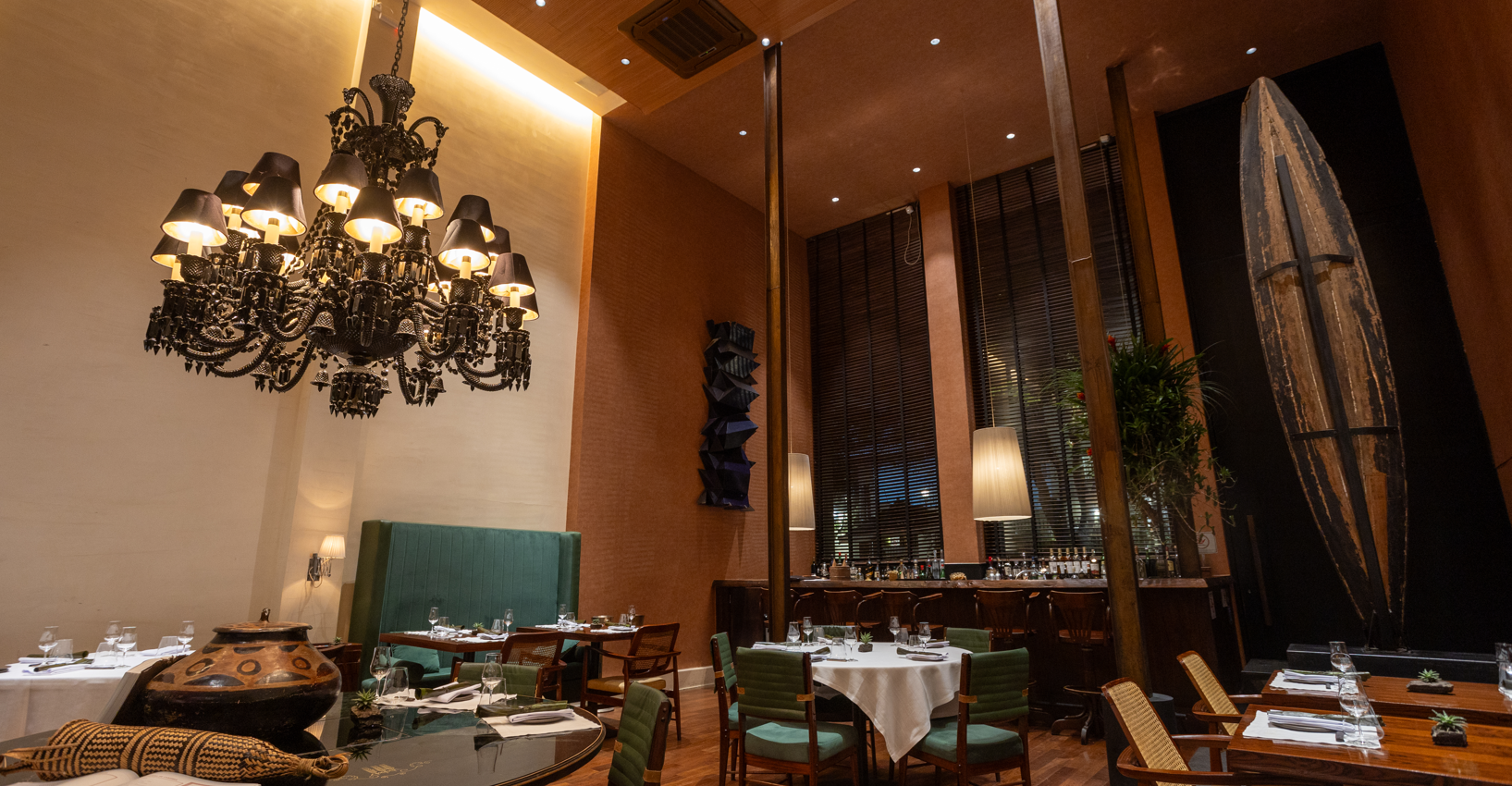
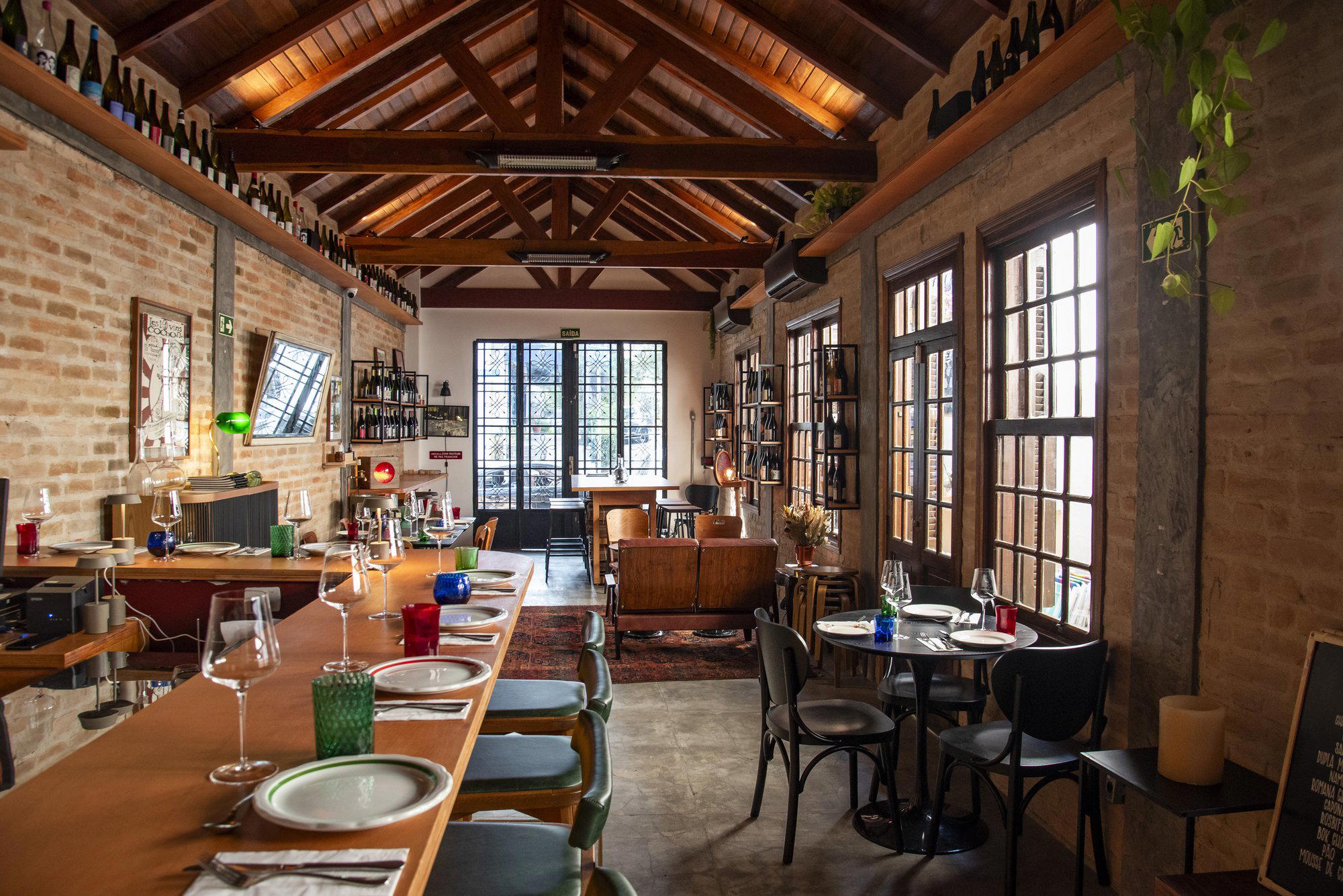
Counter dining of this kind works differently from the multi-course tasting room format that defines places like D.O.M. or Evvai, both operating in the two-star bracket above Jun Sakamoto's tier. At those addresses, the architecture of the room is part of the experience, the plating expressive, the service highly choreographed. The sushi counter operates under a different contract with the guest: the chef's movements are the theatre, the fish is the décor, and the conversation, when it happens, is about what is in front of you rather than the room around you.
That narrowing of focus to the counter and the cutting board is a discipline, not a limitation. It concentrates the guest's attention and raises the stakes for every piece served. There is nowhere to hide behind a spectacular room or a complex sauce when the product is raw fish on formed rice. For a city whose dominant fine-dining culture leans toward complexity and creative layering, whether in the modern Brazilian cooking of Tuju or the seasonal-produce driven approach at Fame Osteria, Jun Sakamoto's directness sits as a kind of counterpoint: less mediation between ingredient and palate, more pressure on the ingredient itself.
South America's Fine-Dining Circuit and Jun Sakamoto's Place in It
When Opinionated About Dining places Jun Sakamoto at position 59 in its 2025 South America ranking (up from 52 in 2024 — the year-on-year movement suggests ranking volatility rather than a directional slide), it is positioning the restaurant within a continent-wide conversation about where the most serious cooking is happening. That list is dominated by Brazilian addresses, with significant clusters in São Paulo, but also features relevant comparators from across the country: Lasai in Rio de Janeiro, Manu in Curitiba, and Manga in Salvador all represent different regional inflections of what premium dining looks like outside of São Paulo's centralised scene.
Within that wider Brazilian context, Jun Sakamoto is the clearest argument that Japanese technique, applied at a high level and sustained over time, belongs in the same conversation as the creative modern-Brazilian and international cuisine formats that dominate the country's critical discourse. The fact that the restaurant draws both recognition from a Latin America-focused guide like OAD and from the globally-aligned La Liste system suggests its positioning is not parochial.
Planning Your Evening at Rua Lisboa
The restaurant operates Tuesday through Saturday from 7 to 11 pm, with Sunday and Monday closed. That six-day evening-only schedule is standard for a counter-format kitchen running at this level: it concentrates effort and allows sourcing to be calibrated to the week's leading available fish rather than stretched across seven-day demand. The Pinheiros address on Rua Lisboa, 55 is accessible from multiple parts of the city, and the neighbourhood's density of serious restaurants means an evening here can be combined with drinks beforehand at nearby bars; our full São Paulo bars guide maps the options by neighbourhood. For those building a longer São Paulo stay around fine dining, our São Paulo hotels guide identifies properties well-positioned for the Pinheiros-Jardins dining corridor.
The price tier sits at $$$, meaning it is positioned below the $$$$ ceiling of D.O.M. and Evvai and level with Maní. For the omakase counter format, that price positioning represents reasonable value against international peers in the same Michelin tier. Booking is advised in advance given the counter format's limited capacity, though specific booking method details are not published.
Beyond Jun Sakamoto, São Paulo's dining circuit extends to venues worth pairing on a multi-day visit: Mina in Campos do Jordão and Castelo Saint Andrews in Gramado represent options for those extending itineraries beyond the city, while Orixás in Itacaré offers a contrasting regional perspective on Brazilian cuisine. Our full São Paulo restaurants guide covers the city's dining tiers in detail, and the São Paulo experiences guide maps cultural and specialist programming worth building around a serious dining itinerary. For those interested in the wine dimension of São Paulo's premium scene, our São Paulo wineries guide is a useful complement.
at Jun Sakamoto?
At a counter operating strict omakase format, the ordering decision belongs to the chef rather than the guest, and that is precisely the point. The sequence follows what is leading on a given evening, shaped by sourcing and season rather than a fixed printed menu. If the question is how to approach the meal, the answer is to default entirely to the chef's judgment and resist the instinct to request variations. The awards record — Michelin star, OAD South America top 60, La Liste recognition, is an argument for trusting the sequence as presented. Guests looking to influence the experience should communicate dietary restrictions at the time of booking rather than at the counter.
Frequently asked questions
Is Jun Sakamoto focused on a specific cuisine style?
Who runs the kitchen at Jun Sakamoto?
The chef associated with Jun Sakamoto is Jun Sakamoto.
What's the best thing to order at Jun Sakamoto?
Jun Sakamoto operates strict omakase format, meaning the sequence is determined by the chef rather than the guest. The counter format — recognised by Michelin with one star in both 2024 and 2025 — is built around that single tasting progression, so arriving with a preference for control over the menu runs against the entire structure of the meal. Dietary restrictions and serious allergies are worth communicating at the time of booking rather than at the counter.
Is Jun Sakamoto more mid-range or high-end?
Pricing at Jun Sakamoto is listed as $$$.
Peers Worth Knowing
A quick peer reference to anchor this venue in its category.
| Venue | Cuisine | Price | Awards | Notes |
|---|---|---|---|---|
| Jun SakamotoThis venue — the venue you are viewing | Japanese Omakase | $100–150 | 1 Michelin Star · La Liste Top Restaurants | Not listed |
| Evvai | Modern Italian-Brazilian Fusion | $200–300 | 3 Michelin Stars · World's 50 Best #95 | Contemporary Italian, Modern Cuisine |
| D.O.M. | Modern Brazilian Amazonian Fine Dining | $150–200 | 2 Michelin Stars · World's 50 Best #74 | Modern Brazilian, Creative |
| Maní | Modern Creative Brazilian | $50–100 | 1 Michelin Star · World's 50 Best #67 | Brazilian - International, Creative |
| A Casa do Porco | Modern Brazilian Pork-Centric | $30–50 | Michelin Bib Gourmand · World's 50 Best #25 | Regional Brazilian, Brazilian |
| Corrutela | Modern Brazilian Farm-to-Table | Not listed | Michelin Bib Gourmand | Brazilian, Seasonal Cuisine |
Recognition history
Dated appearances from independent guides and award organizations, with the underlying list record or original source where available.
Michelin 1 Star
Michelin
La Liste Top Restaurants
La Liste
Opinionated About Dining Top Restaurants in South America Ranked #69
Opinionated About Dining
Full recognition history (8 entries)
La Liste Top Restaurants
La Liste
Michelin 1 Star
Michelin
Opinionated About Dining Top Restaurants in South America Ranked #59
Opinionated About Dining
Michelin 1 Star
Michelin
Opinionated About Dining Top Restaurants in South America Ranked #52
Opinionated About Dining