Restaurante Cesaria
Our verdict
Restaurante Cesaria occupies a corner of Dorchester's Bowdoin Street that has long housed the neighborhood's Cape Verdean community, serving as one of the few dining rooms in Greater Boston where that culinary tradition holds the full attention of a menu. The restaurant draws regulars from across the city who come specifically for food rooted in the islands rather than adapted for a broader audience.

Pearl is the En Primeur Club membership app, where members save venues, book tables and use the concierge.
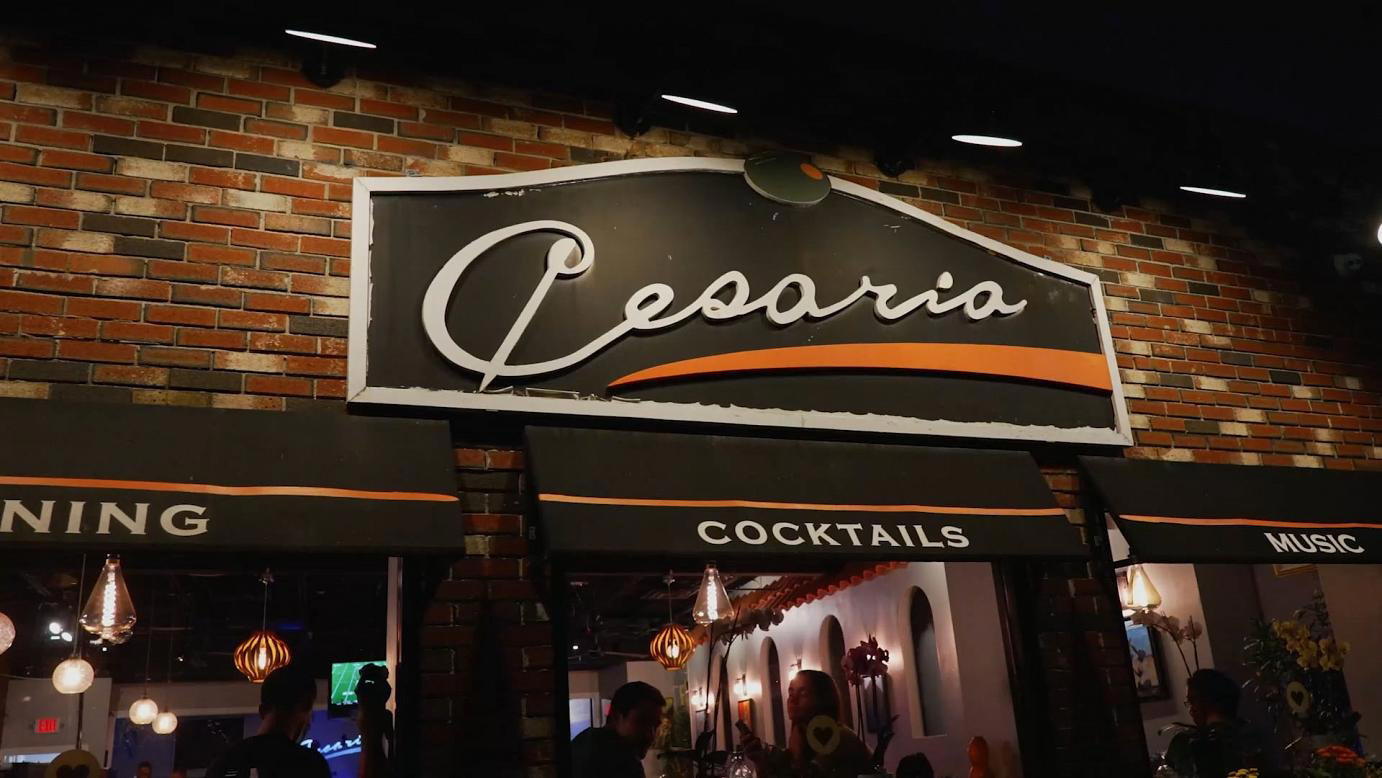
Where Cape Verdean Cooking Holds the Room
Bowdoin Street in Dorchester is one of those corridors that most Boston dining guides skip past on the way to something more photogenic. The block around 266 runs through a residential stretch where the Cape Verdean community has maintained a presence for decades, and Restaurante Cesaria sits inside that geography not as a novelty but as a neighborhood institution. Approaching from the street, the signage is modest and the room visible through the window is unpretentious in the way that restaurants focused on cooking rather than concept tend to be. There is no design statement here, no deliberate rusticity staged for visitors. The atmosphere is what happens when a place has been feeding a specific community long enough that it no longer needs to explain itself.
A Menu Built Around the Islands, Not Around the Neighborhood
The editorial angle that matters at a restaurant like Cesaria is menu architecture: what a kitchen chooses to cook, and what that selection reveals about its priorities and its audience. Cape Verdean cuisine sits at a specific crossroads of West African, Portuguese, and Atlantic island cooking traditions, and menus that represent it honestly tend to resist the simplifications that make regional food easier to sell to outside audiences. The cachupa, a slow-cooked stew of corn, beans, and meat or fish that functions as the national dish of Cape Verde, is the kind of dish that tells you immediately whether a kitchen is cooking for the community or for the curious. It requires patience in preparation and a willingness to present something that rewards familiarity over novelty.
That orientation, where the menu assumes a diner who already knows what they are ordering rather than one who needs persuading, places Cesaria in a particular tier of neighborhood dining. It is not performing Cape Verdean food for an outside gaze. The structure of the menu reflects a kitchen that starts from the tradition and works outward, rather than starting from approachability and working backward toward authenticity.
Within Dorchester's dining scene, that specificity is relatively rare. Restaurants like Comfort Kitchen operate with a pan-diaspora frame that deliberately speaks to multiple communities at once, while dbar and 110 Grill anchor the neighborhood's more mainstream American dining tier. 224 Boston Street and MOMO riverfront park represent different registers again. Cesaria occupies a narrower band: cooking tied to a single national tradition, served without translation, for an audience that largely already understands the vocabulary.
Cape Verdean Cooking in the Context of Boston's Immigrant Dining
Boston's relationship with immigrant cooking has historically been filtered through the city's older European communities, particularly Italian and Irish, with more recent arrivals filling in through specific corridors rather than citywide distribution. Dorchester carries a disproportionate share of the city's culinary diversity precisely because of its role as a first-landing neighborhood for successive immigrant waves. Cape Verdeans have been part of that pattern for over a century, making the community's presence here older and more rooted than many visitors realize.
What that history produces, in dining terms, is restaurants that do not need to perform authenticity because they predate the market demand for it. Cesaria exists in a similar position to the kind of family-run trattoria in a working Italian neighborhood that has no interest in Michelin attention: the regulars are consistent, the cooking is stable, and the restaurant's identity is not contingent on outside validation. Compare that positioning to destinations like Le Bernardin in New York City or Alinea in Chicago, where the menu architecture is explicitly designed to communicate prestige and precision to a global audience. Cesaria operates from a completely different set of assumptions, and that difference is worth understanding before you go.
The broader American fine dining circuit, anchored by properties like The French Laundry in Napa, Blue Hill at Stone Barns in Tarrytown, or Single Thread Farm in Healdsburg, has spent the last decade building menus around provenance narratives and seasonal precision. Restaurants like Atomix in New York City, Providence in Los Angeles, Addison in San Diego, and The Inn at Little Washington each frame their menus as curated experiences with explicit intellectual frameworks. Cesaria's menu architecture operates from a different tradition entirely: the logic of domestic cooking scaled for a dining room, where the dish itself carries the meaning rather than the presentation around it. That is not a lesser approach; it is a different one, and it represents a form of culinary intelligence that the prestige circuit often misses.
Internationally, restaurants rooted in specific diaspora traditions, such as 8 1/2 Otto e Mezzo Bombana in Hong Kong or Emeril's in New Orleans and Lazy Bear in San Francisco, eventually codify their local traditions into something legible to an international audience. Cesaria has not taken that path, and whether it should is a question that depends entirely on what you think restaurants are for.
Planning Your Visit
Cesaria sits at 266 Bowdoin Street in the Bowdoin-Geneva section of Dorchester, accessible via the MBTA Red Line at the JFK/UMass station or the Fairmount Line, with street parking available in the surrounding residential blocks. The restaurant draws a neighborhood crowd during lunch and early dinner, so timing around those peaks will affect availability. Because this is a community-anchored restaurant rather than a reservation-forward destination, walking in during off-peak hours is often feasible, though calling ahead when possible is sensible. For a fuller picture of where Cesaria sits relative to Dorchester's dining options, our full Dorchester restaurants guide maps the neighborhood's range across price points and cuisines.
Frequently asked questions
Where is Restaurante Cesaria in Dorchester?
Restaurante Cesaria is located at 266 Bowdoin St, Dorchester, MA 02122, Dorchester.
Is Restaurante Cesaria a good option for experiencing Cape Verdean food for the first time?
Cesaria, located at 266 Bowdoin Street in Dorchester, is well-positioned as an entry point because Cape Verdean cooking draws on Portuguese, West African, and Atlantic island influences that many diners will find approachable. Dishes like cachupa are filling and ingredient-forward, making them accessible without requiring prior familiarity with the cuisine. The Bowdoin-Geneva neighborhood context adds an authenticity that purpose-built tourist restaurants rarely carry.
What's the best thing to order at Restaurante Cesaria?
Cachupa is the dish to benchmark here. The slow-cooked stew of hominy, beans, and meat is the foundation of Cape Verdean cooking, and how a kitchen executes it signals how seriously the tradition is being observed. At a restaurant like Cesaria on Bowdoin Street, it is the most direct measure of what the kitchen is actually about.
Can I walk in to Restaurante Cesaria?
Walk-ins are a reasonable approach at a neighborhood restaurant in the Bowdoin-Geneva section of Dorchester, where the room functions more like a community dining destination than a reservation-driven destination. Friday and Saturday evenings are likely the busiest windows, so arriving earlier or on a weeknight improves your chances of getting a table without a wait.
What makes Restaurante Cesaria worth seeking out?
Cesaria occupies a position in Boston's dining geography that is difficult to replicate: a full-service dining room at 266 Bowdoin Street where Cape Verdean cooking is the entire point, not a footnote on a broader menu. Dorchester holds one of the largest Cape Verdean populations in Massachusetts, and Cesaria is one of the clearest expressions of that community's culinary tradition in a sit-down restaurant format.
Accolades, Compared
Comparable venues nearby, for context on price, style, and recognition.
| Venue | Cuisine | Price | Awards | Notes |
|---|---|---|---|---|
| Restaurante CesariaThis venue (the venue you are viewing) | Cape Verdean | $20–30 | Not listed | Not listed |
| dbar | Contemporary American | $30–50 | Not listed | Dorchester |
| Comfort Kitchen | African Diaspora Global Comfort Food | $30–50 | James Beard Award Semi Finalist | Upham's Corner |
| The Pearl | American Gastropub | Not listed | Not listed | South Bay |
| 224 Boston Street | American Comfort Food | $20–30 | Not listed | Dorchester |
| MOMO riverfront park | Dining | $20–30 | Not listed | Park Circle |
Continue exploring
More in Boston
Restaurants in Boston
All restaurants in Boston →
Bars in Boston
All bars in Boston →

Details
- Cozy
- Romantic
- Casual
- Casual Hangout
- Brunch
- Group Dining
- Live Music
- Craft Cocktails
- A La Carte
- Vegetarian Friendly
Current opening hours
- Monday
- 11 AM–10 PM
- Tuesday
- 11 AM–10 PM
- Wednesday
- 11 AM–10 PM
- Thursday
- 11 AM–10 PM
- Friday
- 11 AM–11 PM
- Saturday
- 11 AM–11 PM
- Sunday
- 11 AM–10 PM
Hours can change for holidays and private events. Hours as of .
Cozy, romantic, and casual atmosphere well-suited for casual dinners and dancing.