On Carrer d'Avinyó in Barcelona's Barri Gòtic, Restaurante Avinyo 10 occupies a street that threads between the Ramblas and the Born, placing it inside one of the city's most historically dense dining corridors. The address situates it within walking distance of the Gothic Quarter's main arteries, a neighbourhood where casual tapas bars and more considered restaurants share the same medieval streetscape.
Pearl is the En Primeur Club membership app — saves, bookings, and concierge access live there. Same editors, same standards.
- Address
- Carrer d'Avinyó, 10, Ciutat Vella, 08002 Barcelona, Spain
- Phone
- +34932503329
- Website
- avinyo10.com
- Directions
- Get directions
 Saves & bookings on Pearl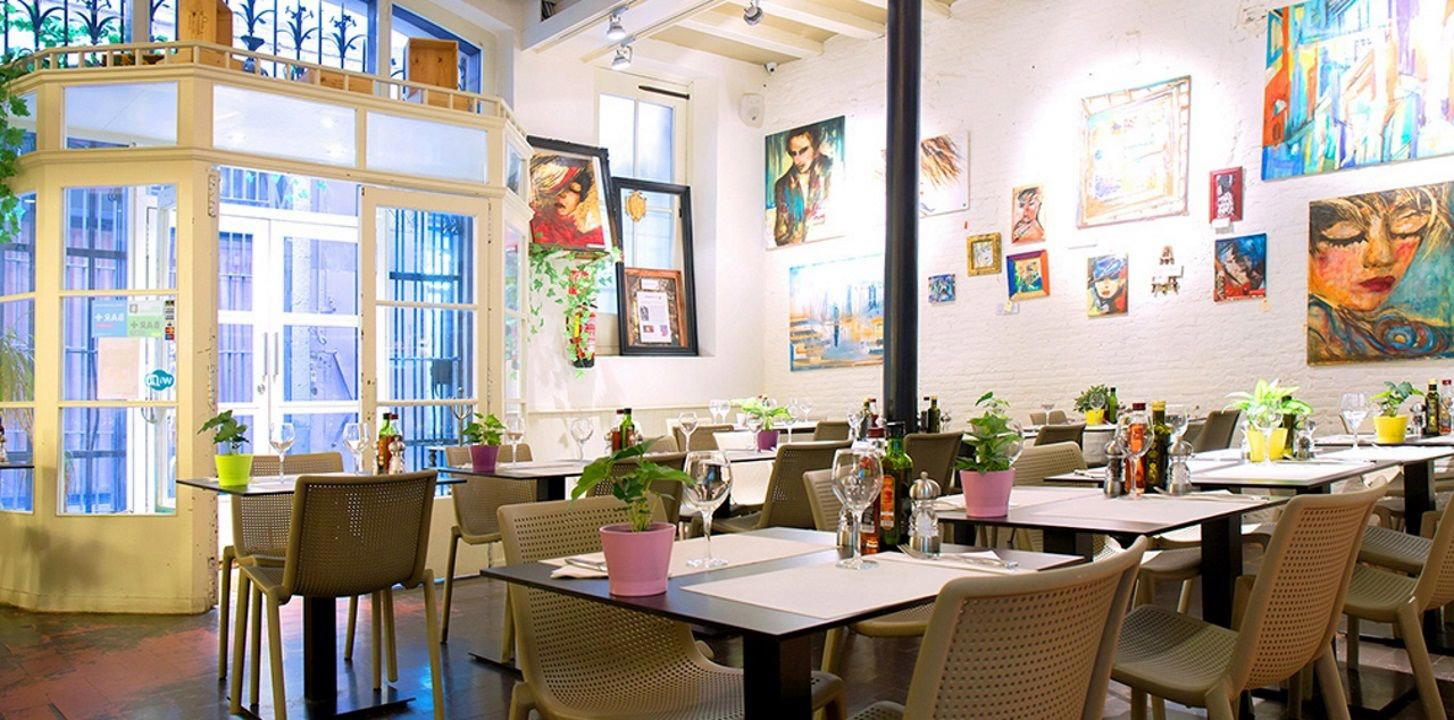
A Street That Sets the Terms
Restaurante Avinyo 10 is a Mediterranean tapas and paella restaurant in Barcelona's Ciutat Vella, with a casual dress code and a recommended reservation policy. Carrer d'Avinyó has long operated as one of the Gothic Quarter's more characterful thoroughfares. It runs south from the Plaça de George Orwell, through a stretch of Barri Gòtic that sits between the tourist saturation of Las Ramblas to the west and the more locally rooted El Born to the east. The street itself attracted a certain creative and commercial density in the late twentieth century, and the dining options that took root here tend to reflect that dual identity: serving both the neighbourhood's working population and the visitors drawn through Ciutat Vella by proximity to the waterfront and the cathedral district. Restaurante Avinyo 10 takes its name directly from this address, a signal that the location is the foundational reference point.
In Barcelona's wider restaurant geography, the Gothic Quarter occupies an interesting middle position. The city's highest-profile creative restaurants, places like Disfrutar, ABaC, and Lasarte, are distributed across Eixample and the upper city, where real estate allows for the larger kitchen and dining room footprints that multi-course tasting menus demand. Barri Gòtic, by contrast, tends toward smaller formats: tighter rooms, more compressed menus, and a dining rhythm that fits the neighbourhood's pedestrian pace. That physical context shapes the experience before any dish arrives.
Barri Gòtic's Place in the City's Dining Architecture
Barcelona's restaurant scene has stratified clearly over the past decade. At one end, the Michelin-tracked creative houses, including Cocina Hermanos Torres and Enigma, operate as destination restaurants with booking windows measured in weeks or months and price points that position them against international peers rather than local competition. At the other end, the Gothic Quarter's denser grid sustains a category of restaurant that functions differently: accessible by foot from most central accommodation, operating in historic buildings with the spatial constraints that implies, and pricing against a visitor economy that is both broad and unpredictable in its expectations.
The Avinyó street address places this restaurant within that second category geographically, though the name suggests a deliberate anchoring to the specific location rather than a broader neighbourhood identity. Across Spain, restaurants that make their address their name tend to be signalling permanence and place-specificity. It is a convention seen in several contexts: in the Basque Country, in Catalonia, and in cities like Girona, where El Celler de Can Roca built its identity around a family address before its reputation became international. The gesture is modest by comparison, but the logic is similar.
The Neighbourhood as Context for the Experience
Approaching from the Plaça Reial end, Carrer d'Avinyó narrows noticeably. The street's medieval geometry, stone facades with shallow setbacks, and the compressed scale of the ground-floor commercial units create a physical environment that most contemporary restaurant design could not replicate and would not attempt to. For a restaurant operating at number 10, that context is a given rather than a design choice. The Barri Gòtic dining experience differs from Eixample in precisely this way: the room you sit in was not built to be a restaurant, and the weight of the building above the dining space is felt in a way it simply is not in a purpose-built twentieth-century block.
This physical anchoring to an older urban grain is something that Catalonia's dining culture handles with particular confidence. The region's restaurant tradition is comfortable with the idea that a great meal can happen in a room with low ceilings and irregular walls, that the formality of the food does not need to be matched by the formality of the space. That sensibility distinguishes Catalan dining from the service-forward grandeur of some Madrid establishments and connects it more to the Basque approach, where places like Arzak in San Sebastián built their reputations in rooms that felt domestic before they felt prestigious.
Where Avinyo 10 Sits in Barcelona's Offer
For a visitor constructing a Barcelona dining itinerary, the central question is usually how to distribute evenings across the city's distinct tiers. The multi-Michelin bracket, where Lasarte and Disfrutar operate, requires advance planning and a specific kind of commitment: long tasting menus, formal service, and a price per head that often exceeds €200 before wine. The Gothic Quarter tier operates on different terms. Dinner here tends to be shorter in duration, more adaptable in format, and easier to book within a shorter window. That is not a compromise position; it is a different proposition suited to a different moment in a trip.
Spanish creative cooking more broadly has built an international reputation through its flagship addresses: Aponiente in El Puerto de Santa María, Mugaritz in Errenteria, Azurmendi in Larrabetzu, Quique Dacosta in Dénia, and DiverXO in Madrid. What that headline tier sometimes obscures is the volume and quality of the mid-tier and neighbourhood-level restaurants that sustain the country's actual dining culture on a daily basis. Carrer d'Avinyó operates in that register. For a fuller picture of how Barcelona's restaurant offer maps across categories and price points, see our full Barcelona restaurants guide.
Planning Your Visit
The Carrer d'Avinyó location is walkable from most Barri Gòtic and El Born accommodation, and sits within a ten-minute walk of the Liceu Metro station on Line 3. The street is pedestrianised in sections and can be approached from the Plaça Reial to the south or from the Carrer de Ferran to the north. Open daily from 12 PM to 12 AM. The venue's reservation policy is recommended.
Price and Recognition
Comparable venues nearby, for context on price, style, and recognition.
| Venue | Price | Notes |
|---|---|---|
| Restaurante Avinyo 10This venue — the venue you are viewing | $$ | Not listed |
| La Terraza de Anna | $$ | la Dreta de l'Eixample, Mediterranean Tapas with Asian Fusion |
| Noble Barcelona | $$ | l'Antiga Esquerra de l'Eixample, Contemporary Mediterranean Bistró |
| SUPERLOCAL | $$ | la Vila Olimpica del Poblenou, Sustainable Mediterranean |
| Ocaña | $$ | Barri Gotic, Mediterranean Tapas with Bohemian Flair |
| Port Vela Barcelona | $$ | Port Vell, Mediterranean Seafood & Paella |
Continue exploring
More in Barcelona
Restaurants in Barcelona
Browse all →
Bars in Barcelona
Browse all →
Hotels in Barcelona
Browse all →
At a Glance
- Cozy
- Casual Hangout
- Group Dining
- Historic Building
- Local Sourcing
Current opening hours
- Monday
- 12 PM–12 AM
- Tuesday
- 12 PM–12 AM
- Wednesday
- 12 PM–12 AM
- Thursday
- 12 PM–12 AM
- Friday
- 12 PM–12 AM
- Saturday
- 12 PM–12 AM
- Sunday
- 12 PM–12 AM
Hours can change for holidays and private events. Last verified .
Original and welcoming informal atmosphere with art on the walls creating a cozy, artistic dining environment.