Noble Barcelona occupies a measured position on Carrer d'Enric Granados, one of the Eixample's quieter pedestrian corridors, where the restaurant sits inside a broader shift toward ingredient-led, sourcing-conscious cooking that has reshaped Barcelona's mid-to-upper dining tier over the past decade. The kitchen frames its output through provenance as much as technique, placing it in a comparable set that prioritises what arrives at the back door over what happens on the pass.
Pearl is the En Primeur Club membership app — saves, bookings, and concierge access live there. Same editors, same standards.
- Address
- Carrer d'Enric Granados, 110, Eixample, 08008 Barcelona, Spain
- Phone
- +34936295555
- Website
- linktr.ee
- Directions
- Get directions
 Saves & bookings on Pearl
Carrer d'Enric Granados and the Eixample's Quieter Register
Barcelona's dining conversation tends to cluster around the same handful of addresses: the marquee creative houses, the tourist-facing seafood terraces, the increasingly crowded natural wine bars of El Born. Carrer d'Enric Granados operates at a different frequency. The street was pedestrianised and redesigned in the early 2010s, and the result is one of the Eixample's more considered stretches, wide enough for terrace tables, shaded by trees, with foot traffic that moves slowly rather than surging. Restaurants here don't benefit from the footfall that drives covers elsewhere, which means the ones that endure tend to be doing something that keeps people coming back rather than passing through. Noble Barcelona is a contemporary Mediterranean bistró in Barcelona’s Eixample, at Carrer d'Enric Granados, 110.
Ingredient Sourcing as Editorial Lens
The shift toward provenance-conscious cooking in Barcelona mirrors a broader European movement, but it has taken a particular form in Catalonia. The region's access to Pyrenean producers, Mediterranean fishing communities, and a dense network of small-scale market gardeners gives kitchens here a different starting inventory than restaurants working from centralised wholesale networks. Noble Barcelona's kitchen works with ingredient-led cooking, where what arrives from the market shapes what appears on the menu rather than the other way around.
This approach carries implications beyond the plate. It requires different logistics, tighter daily decision-making, and a kitchen team that can adapt as supply shifts. It also places the restaurant in a competitive conversation with a specific comparable set in Barcelona's mid-to-upper tier: houses like Cocina Hermanos Torres, which operates its Creative programme inside a former industrial space with sourcing discipline built into its identity, and Enigma, where ingredient selection is part of the tasting experience itself. Noble's position on Granados suggests a somewhat more accessible register than those addresses, though the sourcing logic remains consistent with that cohort.
Barcelona's Creative Tier and Where Noble Sits Within It
Barcelona's fine and upper-casual dining scene has stratified considerably since the early 2000s. At the apex sit a cluster of addresses with Michelin recognition and international visibility: Disfrutar carries two stars and a consistent presence in the World's 50 Best rankings; Lasarte holds three stars under the Berasategui group; ABaC operates as a hotel-restaurant combination with two stars. These are destination restaurants in the formal sense, and the price point reflects their position at the summit of the category.
Below that tier, the city supports a range of serious kitchens working with creative ambition but without the same international profile. This is the layer where most of Barcelona's most interesting day-to-day eating happens, and it is where ingredient sourcing tends to function as the primary differentiator rather than technical spectacle. Noble Barcelona operates in this space, which means it competes on the quality of its raw materials, the coherence of its cooking, and the consistency of its execution across services rather than on the draw of a famous name or a star count.
Spain's broader creative restaurant culture provides useful context here. The country has produced some of Europe's most technically ambitious kitchens over the past three decades: El Celler de Can Roca in Girona, Mugaritz in Errenteria, Arzak in San Sebastián, and Azurmendi in Larrabetzu each represent different expressions of what Spanish fine dining can mean. Closer to home, Quique Dacosta in Dénia and Aponiente in El Puerto de Santa María have built their identities around hyperlocal sourcing with considerable rigour. Ricard Camarena in València and Atrio in Cáceres demonstrate that the provenance-led approach extends well beyond the Basque Country and Catalonia. Noble's orientation connects it to this national current, even if its scale and format place it at a different point in the conversation.
The Eixample Context: What the Neighbourhood Tells You
The Eixample, Barcelona's 19th-century grid expansion, houses a disproportionate share of the city's serious restaurants. The grid's wide boulevards and deep residential base support a clientele of locals who eat out regularly rather than tourists visiting once, and that distinction matters for how kitchens calibrate their menus. Restaurants in the Eixample are generally less reliant on the high-turnover tourist trade that shapes cooking decisions in the Gothic Quarter or the Barceloneta waterfront. They cook for people who will come back, which tends to encourage investment in sourcing and consistency over visual spectacle or portion amplification.
Carrer d'Enric Granados sits in the northern section of the Eixample, close to the Gràcia boundary. The pedestrian redesign has made it a destination for a specific kind of eating: unhurried, with outdoor seating that functions even in the shoulder months. It is not a street of destination restaurants in the international sense, but it is a street where neighbourhood reputation carries weight, and where a kitchen that takes its sourcing seriously can build a sustained following.
Comparative Reference Points Beyond Spain
For readers calibrating their expectations against international reference points, Noble's approach to ingredient-led cooking connects to a broader movement visible across European cities. In New York, for instance, Le Bernardin has long defined itself through sourcing discipline at the high end of the seafood category, while Atomix represents a tasting-menu format built around ingredient narrative as much as technique. The shared logic across these different contexts is that provenance-conscious cooking requires the kitchen to cede some control to the supply chain, a discipline that separates restaurants that commit to it from those that list sourcing language on a menu without adjusting how they actually cook.
For a broader picture of how Noble sits within Barcelona's dining tier, Barcelona's restaurant map runs from three-star creative houses to neighbourhood naturals. Also relevant for context: Martin Berasategui in Lasarte-Oria and DiverXO in Madrid each show how Spain's upper-tier creative restaurants position their sourcing as foundational rather than supplementary.
Know Before You Go
Address: Carrer d'Enric Granados, 110, Eixample, 08008 Barcelona, Spain
Neighbourhood: Eixample (northern section, near Gràcia boundary)
Street context: Pedestrianised corridor with terrace seating; foot traffic is slow-paced rather than tourist-heavy
Reservations: Recommended
Price tier: About $35 per person
Accessibility: Metro access via Diagonal (L3/L5) or Provença (FGC), both within a short walk
Cost and Credentials
Comparable venues nearby, for context on price, style, and recognition.
| Venue | Cuisine | Price | Notes |
|---|---|---|---|
| Noble BarcelonaThis venue — the venue you are viewing | Not listed | $$ | Not listed |
| Restaurant Gabriel Barcelona | Barri Gotic, Mediterranean Tapas | $$ | Not listed |
| La Dolça Herminia | Not listed | $$ | Sant Pere, Santa Caterina i la Ribera, Traditional Catalan with Modern Mediterranean Twists |
| Restaurante Sea Breeze Beach House | la Barceloneta, Mediterranean Seafood | $$ | Not listed |
| CACHO | Not listed | $$ | el Parc i la Llacuna del Poblenou, Modern Mediterranean with International Influences |
| San Telmo | Not listed | $$ | Sant Gervasi - Galvany, Modern Mediterranean Tapas |
Continue exploring
More in Barcelona
Restaurants in Barcelona
Browse all →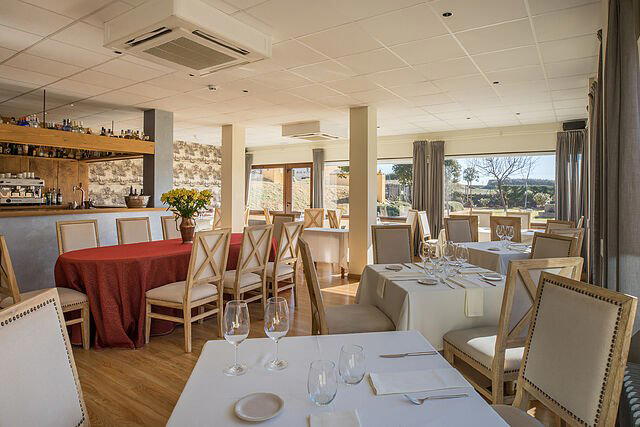
Bars in Barcelona
Browse all →
Hotels in Barcelona
Browse all →

At a Glance
- Cozy
- Intimate
- Elegant
- Date Night
- Casual Hangout
- Late Night
- Natural Wine
- Craft Cocktails
- Local Sourcing
Current opening hours
- Monday
- Closed
- Tuesday
- 1–3:30 PM, 7–11:30 PM
- Wednesday
- 1–3:30 PM, 7–11:30 PM
- Thursday
- 1–3:30 PM, 7–11:30 PM
- Friday
- 1–3:30 PM, 7–11:30 PM
- Saturday
- 1–3:30 PM, 7–11:30 PM
- Sunday
- Closed
Hours can change for holidays and private events. Last verified .
Cozy and intimate atmosphere well-suited for casual hangouts or romantic dinners with attentive service.