An Italian-accented restaurant on Kleiner Hillen in Hanover's eastern residential quarter, Restaurant Tropeano Di-Vino GmbH occupies a niche where wine-led dining and Southern Italian cooking tradition intersect. The name's Di-Vino suffix signals the dual ambition: cucina and cantina treated with equal seriousness. Hanover's fine-dining corridor runs through the city centre, which makes an address at Kleiner Hillen 4 a deliberate step away from the obvious circuit.
Pearl is the En Primeur Club membership app — saves, bookings, and concierge access live there. Same editors, same standards.
- Address
- Kleiner Hillen 4, 30559 Hannover, Germany
- Phone
- +495113533138
- Website
- restaurant-tropeano.de
- Directions
- Get directions
 Saves & bookings on Pearl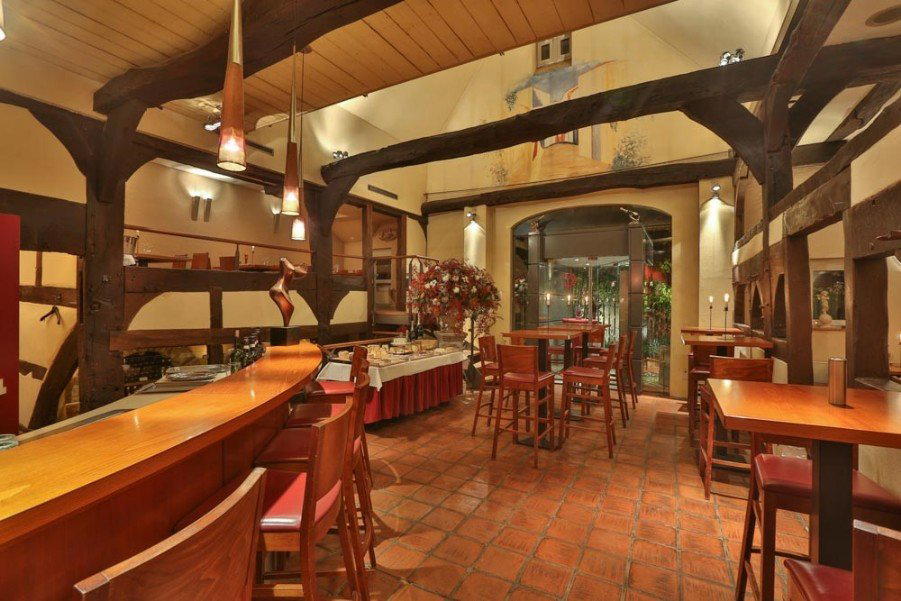
A Southern Italian Table in Hanover's Eastern Quarter
Hanover's restaurant scene distributes itself unevenly across the city. The dense concentration of ambitious kitchens sits in and around the Mitte, where addresses like Jante and Votum operate within easy walking distance of each other, feeding a competitive fine-dining circuit. Restaurant Tropeano Di-Vino GmbH, at Kleiner Hillen 4 in the 30559 postcode, sits at a remove from that corridor, in a quieter residential eastern pocket where the dining proposition has to carry itself on its own terms, without the gravitational pull of a restaurant district doing the work for it.
The name does a reasonable amount of signalling before you arrive. Tropeano points south, toward Calabria's Tyrrhenian coast, while Di-Vino carries the obvious double reading: of wine, and of something more than wine. That kind of naming choice tends to indicate a kitchen that takes its Italian regional identity seriously rather than operating as a generic Mediterranean address. In a city where Handwerk and Marie anchor the modern European tier, an Italian address with a specific regional orientation occupies a different competitive position entirely.
Where the Ingredients Come From, and Why That Framing Matters
Southern Italian cooking is, structurally, an ingredient-sourcing argument. The canonical dishes of Calabria, Campania, and Sicily are not technically elaborate constructions; their quality depends almost entirely on what arrives in the kitchen before the cooking begins. Pressed olive oil from the Aspromonte foothills, 'nduja from Spilinga, dried pasta from semolina grown under a specific sun, the sourcing chain is the recipe. Any restaurant carrying a Calabrian-adjacent name and framing its wine list as central to the experience is implicitly making a claim about its supply relationships, even if those claims are never printed on the menu.
This matters for how you assess a restaurant like Tropeano Di-Vino against Hanover's wider field. The city's most technically ambitious kitchens, places discussed in the same breath as Aqua in Wolfsburg or the multi-star houses further south like Vendôme in Bergisch Gladbach, tend to frame their sourcing around hyper-local German producers, seasonal foraged material, and named farms. The Italian regional model runs on different logic: imported specificity rather than local provenance. The DOP anchors are in Calabria, not Niedersachsen. Neither approach is inherently superior; they are answering different questions about what a meal should demonstrate.
The Di-Vino component of the name suggests the wine program carries genuine weight here, which is consistent with how Southern Italian dining culture actually functions. In Calabria and across the Mezzogiorno, the table and the cantina are not separated hierarchically, wine is not an accompaniment but a co-equal protagonist. Gaglioppo-based Cirò, Greco di Bianco, Ciro Rosso Classico: these are not wines that appear on most Hanover lists, and a restaurant with this naming logic and address presumably draws from producers that require some effort to source in northern Germany.
Hanover's Italian Address Problem
Germany's Italian restaurant tier has a structural challenge that applies in every major city: the category runs from fast-casual pizza operations all the way up to serious regional cooking, with no single naming convention that reliably signals where on that spectrum a given address falls. Hanover is no exception. The city has enough Italian-flagged restaurants that the category label alone carries little information.
What differentiates the more serious addresses from the middle of the market is usually three things: the specificity of the regional framing (Calabrian vs. generic Italian), the integrity of the wine program (Italian regional and natural wines vs. bulk-import house pours), and the level of sourcing discipline in the kitchen. Tropeano Di-Vino's name performs well on the first measure. The other two require a visit to assess properly.
For context on how Hanover's dining options distribute across price and format, Albertz. and the wider Hanover restaurants guide map the city's options across several categories. Tropeano Di-Vino sits in a different register from the creative tasting-menu format of Jante or the modern-cuisine positioning of Handwerk. The Italian regional model operates on a different set of conventions around how meals are structured, what constitutes a complete dining experience, and how much theatre the format involves.
The German Fine-Dining Context
To understand where a restaurant like Tropeano Di-Vino sits in the broader German dining picture, it helps to know what the upper tier of that picture looks like. Germany's most decorated kitchens, from Schwarzwaldstube in Baiersbronn and Victor's Fine Dining by Christian Bau in Perl to Waldhotel Sonnora in Dreis and ES:SENZ in Grassau, operate in a heavily French-influenced fine-dining idiom, with multi-course tasting structures and European classical technique at the center. Restaurant Haerlin in Hamburg and Schanz in Piesport work within similar frameworks.
An Italian regional address with a wine-forward identity sits outside that formal Michelin-starred conversation by design. The comparison set is different: you are not measuring Tropeano Di-Vino against the tasting-menu establishments above, any more than you would measure JAN in Munich against a Neapolitan trattoria in Schwabing. The question is whether the Italian regional address executes its specific proposition well, sourcing discipline, wine program integrity, kitchen technique appropriate to the cuisine, not whether it competes with the starred circuit.
For contrast from further afield, the precise sourcing rigor that defines the upper end of this kind of cuisine-and-wine integration is visible in places like CODA Dessert Dining in Berlin, which applies an unusual level of structural rigour to a format that most restaurants treat casually. Internationally, the standard set by Le Bernardin in New York City for ingredient-led cooking, or the technique-and-provenance seriousness of Atomix in New York City, illustrates what full commitment to a sourcing argument looks like at the highest level.
Planning a Visit
Restaurant Tropeano Di-Vino GmbH is located at Kleiner Hillen 4, 30559 Hannover, in the eastern residential zone of the city. The address sits away from the main dining districts, which means arrival by public transport or taxi is worth planning in advance rather than assuming you can walk from central Hanover comfortably. Current hours, pricing, and booking availability are best confirmed directly with the restaurant, as this information is subject to change. Given the wine-forward framing in the name, arriving with some interest in Italian regional wine, and with time to work through the list properly, is the way to get full value from the format the restaurant appears to have designed around.
Recognition Snapshot
Comparable venues nearby, for context on price, style, and recognition.
| Venue | Cuisine | Price | Notes |
|---|---|---|---|
| Restaurant Tropeano Di-Vino GmbHThis venue — the venue you are viewing | Northern Italian in Historic Setting | $$$ | Not listed |
| Botticelli Ristorante | Authentic Italian | $$$ | List |
| Farina Spritz | Roman Pizza alla Pala | $$ | Altstadt |
| Da Toni | Italian Pizza Bistro | $$ | List |
| THE LIVING - room - | Modern European Fine Dining | $$$ | Hannover Mitte |
| Gallo Nero | Modern Italian & Mediterranean | $$$ | Buchholz |
At a Glance
- Romantic
- Cozy
- Intimate
- Classic
- Date Night
- Special Occasion
- Historic Building
- Extensive Wine List
Current opening hours
- Monday
- Closed
- Tuesday
- 5:30–11:30 PM
- Wednesday
- 5:30–11:30 PM
- Thursday
- 5:30–11:30 PM
- Friday
- 5:30–11:30 PM
- Saturday
- 5:30–11:30 PM
- Sunday
- Closed
Hours can change for holidays and private events. Last verified .
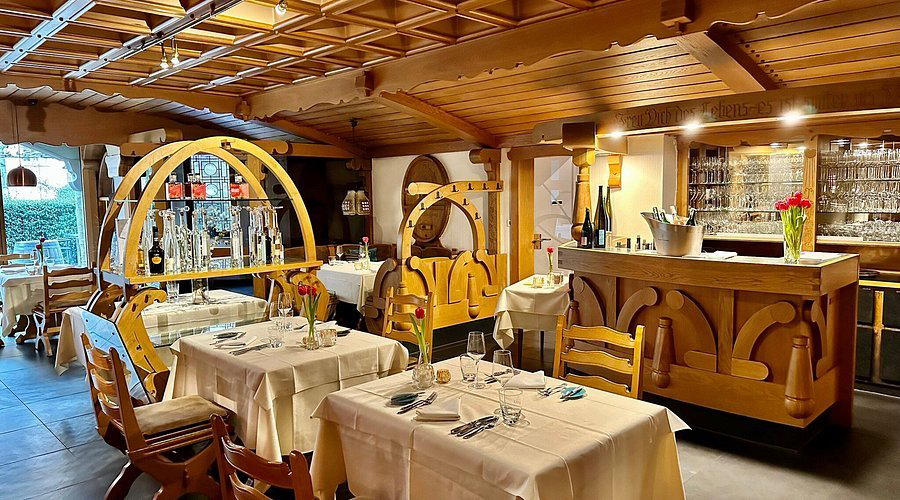
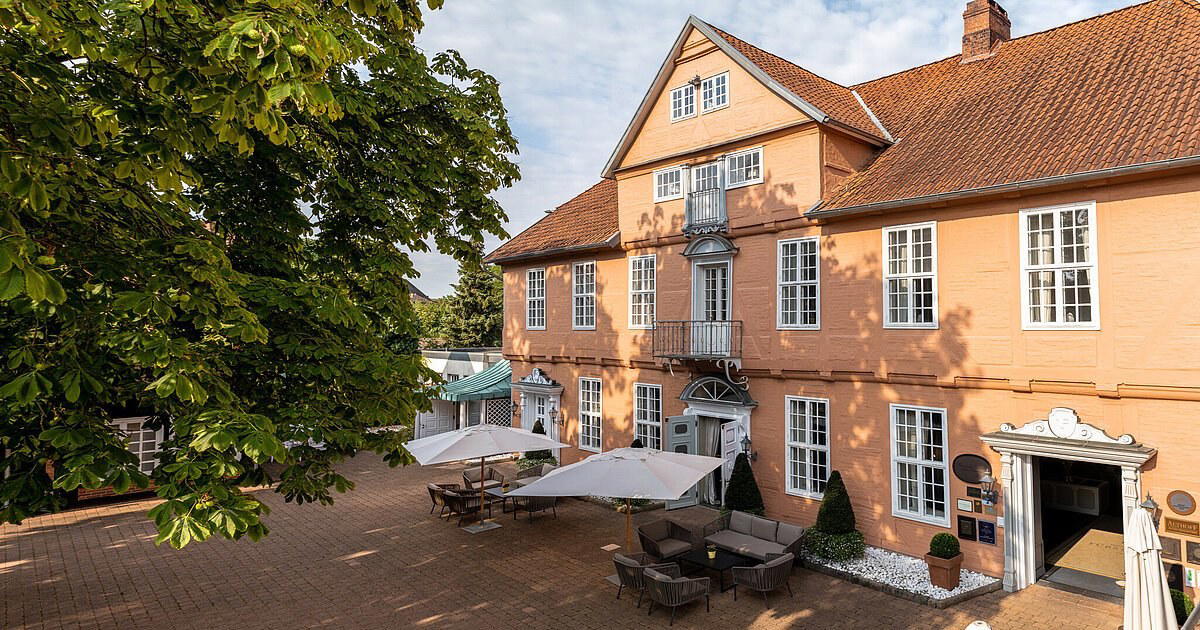
Cozy and romantic atmosphere in a historic timber-framed house with charming, intimate lighting.