Restaurant Puk
Restaurant Puk occupies a considered position in Copenhagen's inner-city dining scene, operating from Vandkunsten 8 in the Latin Quarter district. The address places it within walking distance of the canal-lined corridors that define central Copenhagen, where multi-course format restaurants have become the dominant grammar of serious dining. For visitors building a Scandinavian table itinerary, Puk represents one entry point into a city whose restaurant culture has reshaped how Europe thinks about Nordic produce.
Pearl is the En Primeur Club membership app — saves, bookings, and concierge access live there. Same editors, same standards.
- Address
- Vandkunsten 8, 1467 København, Denmark
- Phone
- +4533111417
- Website
- restaurantpuk.dk
- Directions
- Get directions
 Saves & bookings on Pearl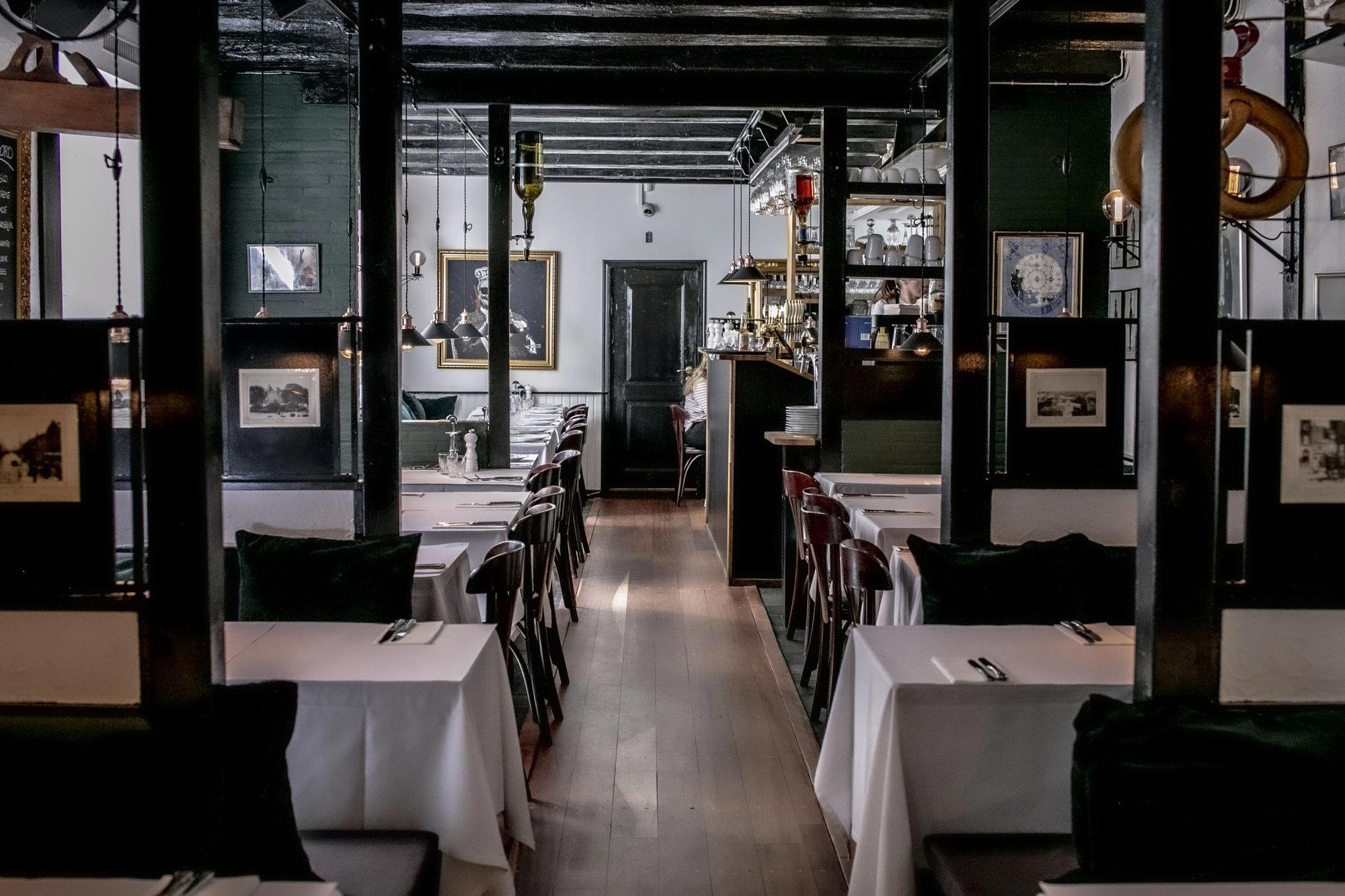
Where Copenhagen's Inner City Hosts Its Quieter Ambitions
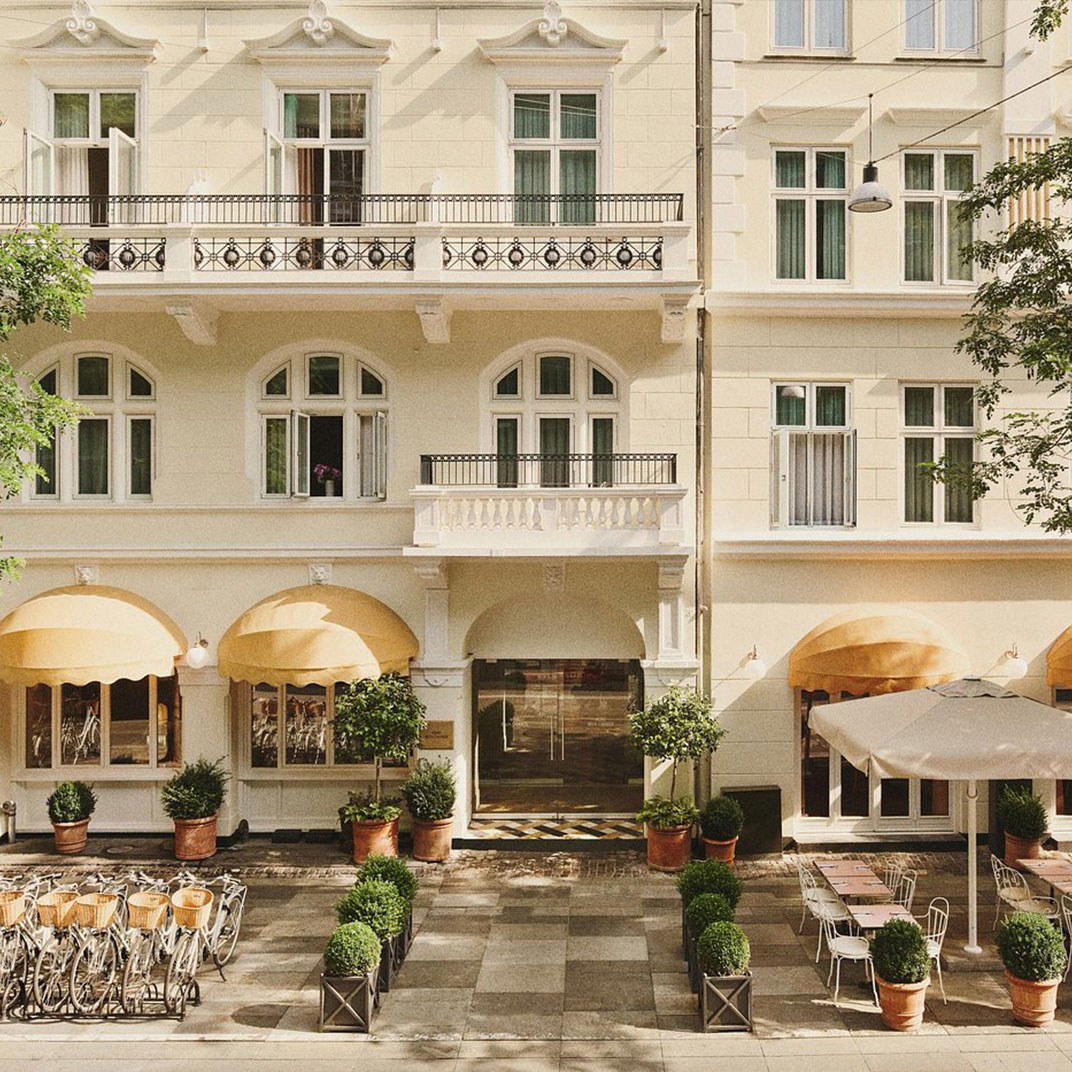
Vandkunsten is one of those Copenhagen addresses that rewards attention. The square sits at the edge of the Latin Quarter, a few blocks from the Strøget pedestrian corridor, and its low-scale architecture creates the kind of enclosure that makes a restaurant feel like a destination rather than a stopover. Arriving at Restaurant Puk, the surrounding context matters: this is a neighbourhood where the city's older civic fabric remains intact, where the scale is human and the streets narrow enough that the sound of kitchen activity can carry. It is precisely the kind of setting where Copenhagen's mid-tier fine dining has found room to operate away from the harbour-front spectacle that attracts international attention.
Copenhagen's serious restaurant scene is now layered in ways that weren't true a decade ago. At the leading, a handful of addresses — Geranium, Alchemist, and the now-closed-then-reopened Noma — function as global reference points, attracting diners who fly in specifically for the table. Below that, a denser layer of multi-course restaurants operates with serious intent but without the international booking pressure. Puk operates in that second tier, where the meal is the primary reason to visit but the experience is shaped more by neighbourhood rhythm than by reservation scarcity.
The Shape of a Copenhagen Multi-Course Meal
To understand how a meal at Restaurant Puk is likely to read, it helps to understand the structural logic that governs most serious Copenhagen dining. The city has converged, over the past fifteen years, on a particular format: multi-course progression, seasonal produce as the organising principle, and a kitchen that treats the sequence of dishes as a compositional argument rather than a list of options. This format owes a structural debt to the New Nordic movement that Noma catalysed in the 2000s, but it has since become city-wide grammar rather than the property of any single house.
In practice, a tasting progression in this context typically moves from light and sharp to dense and sustaining, fermented dairy or cured fish early in the sequence, root vegetables and preserved elements in the middle register, game or aged proteins toward the close. The dessert courses tend toward restraint, favouring acidity and grain-based compositions over sugar-forward confections. Kadeau has made this arc familiar to international audiences with its Bornholm produce focus; Koan has layered kaiseki structure over New Nordic ingredients to extend the format's expressive range. Restaurant Puk works within a city where this progression is the shared expectation, and where the differences between restaurants lie in sourcing decisions, kitchen philosophy, and the particular confidence with which the arc is executed.
What the Address Signals About the Experience
Vandkunsten 8 is a central Copenhagen postcode, which carries practical implications. The Latin Quarter location means the restaurant is accessible on foot from most of the city's inner-district hotels, and it sits within the zone where Copenhagen's daytime cultural infrastructure, the National Museum, the Round Tower, the canal-side galleries, is densely concentrated. Visitors combining a serious meal with a cultural day in the city will find the location genuinely convenient rather than requiring a deliberate detour.
The neighbourhood's character also suggests something about the restaurant's positioning. This part of Copenhagen does not carry the post-industrial warehouse aesthetic of Vesterbro or the harbour-regeneration context of Nordhavn, where many of the city's more architecturally self-conscious openings have clustered. The Latin Quarter rewards restaurants that work with existing urban texture rather than against it, and that choice of address, whether deliberate or circumstantial, places Puk in a different register from the large-format destination restaurants that have come to define Copenhagen's international reputation.
Copenhagen's Restaurant Scene as Context
For visitors planning a broader Scandinavian table itinerary, Restaurant Puk sits within a city that remains one of Europe's most consequential dining destinations. The concentration of serious restaurants per capita is high, and the competition for attention is real. Beyond Copenhagen, Denmark's serious dining has spread geographically: Jordnær in Gentofte holds three Michelin stars just north of the city, while outside the capital, Frederikshøj in Aarhus, Henne Kirkeby Kro, Alimentum in Aalborg, ARO in Odense, Domæne in Herning, Dragsholm Slot Gourmet, Frederiksminde in Præstø, LYST in Vejle, and MOTA in Nykøbing Sjælland together represent a national fine dining geography that extends well beyond the capital. Copenhagen itself, however, remains the primary concentration, and a multi-day visit built around serious restaurants can be structured without needing to leave the city.
For comparison outside the Nordic context, the kind of progressive multi-course format that defines Copenhagen's serious restaurants finds analogues in New York's most disciplined tasting-menu houses: Le Bernardin applies comparable precision to seafood-forward progression, while Atomix uses Korean culinary structure to achieve a similar narrative arc through a fixed sequence. The comparison is instructive less for the specific cuisines than for the shared commitment to course-by-course compositional logic that Copenhagen has made its dominant mode.
Our full Copenhagen restaurants guide maps the broader landscape for visitors building a multi-day dining itinerary across the city's different neighbourhoods and price tiers.
Know Before You Go
- Address: Vandkunsten 8, 1467 København, Denmark
- Neighbourhood: Latin Quarter, central Copenhagen
- Format: Inner-city restaurant; multi-course dining consistent with Copenhagen's dominant serious-dining format
- Accessibility: Walkable from most inner-city Copenhagen hotels; well-served by public transport
- Seasonal note: Copenhagen's serious restaurant menus shift substantially with the seasons, autumn and winter bring preserved, fermented, and aged produce to the fore, while spring and summer see raw and pickled preparations dominate early courses
How Restaurant Puk Copenhagen compares with similar nearby venues.
| Venue | Cuisine |
|---|---|
| KØBENHAVNS BAGERI | Bakery |
Continue exploring
More in Copenhagen
Restaurants in Copenhagen
Browse all →
Bars in Copenhagen
Browse all →
Hotels in Copenhagen
Browse all →

At a Glance
- Classic
- Historic
- Cozy
- Historic Building
- Local Sourcing
Current opening hours
- Monday
- 12 PM–12 AM
- Tuesday
- 12 PM–12 AM
- Wednesday
- 12 PM–12 AM
- Thursday
- 12 PM–12 AM
- Friday
- 12 PM–12 AM
- Saturday
- 12 PM–12 AM
- Sunday
- 12 PM–12 AM
Hours can change for holidays and private events. Last verified .
Charming and historic atmosphere with polished service evoking classic Danish hospitality.
Know Before You Go
- Getting there
- Vandkunsten 8, 1467 København, Denmark