Restaurant Johann's
Our verdict
Restaurant Johann's sits in the village of Marloffstein, just outside Erlangen in Bavaria, where the surrounding Franconian countryside shapes both the setting and the sourcing approach. The address alone — Atzelsberg 1 — signals a remove from urban dining circuits, placing this within a small cohort of German destination restaurants that ask diners to travel to them. For our full coverage of the area, see our Marloffstein restaurants guide.

Pearl is the En Primeur Club membership app — saves, bookings, and concierge access live there. Same editors, same standards.
The menu
What to order
- Seasonal 5-Course Tasting Menu
- Sous Vide Entenbrust
A Franconian Address That Demands the Drive
Germany's fine dining map has long rewarded those willing to leave city centres behind. The pattern is well established: from Waldhotel Sonnora in Dreis to Schwarzwaldstube in Baiersbronn, some of the country's most serious kitchens operate from village addresses where the surrounding terrain is as much a part of the proposition as anything on the plate. Restaurant Johann's, at Atzelsberg 1 in Marloffstein — a settlement of a few hundred residents on the wooded ridge east of Erlangen — belongs to that tradition. The approach from Erlangen takes you through agricultural land and pine forest before the building comes into view. That sequence is not incidental. Rural placement at this level signals a deliberate choice: the kitchen draws on proximity to Franconian producers, farms, and forests in a way that an urban address makes structurally harder to sustain.
Franconia as a culinary region sits in an interesting position within German gastronomy. It has a strong identity in regional cooking, Bratwürste, Schäufele, carp from the pond farms of the Aischgrund, but a comparatively low international profile compared to the Black Forest or the Rhine valley. That gap between local depth and external recognition has historically made it fertile ground for chefs willing to work with regional ingredients at a higher level of technique, without competing against entrenched fine dining reputations. The village of Marloffstein, and by extension Restaurant Johann's, operates within that context. See our full Marloffstein restaurants guide for broader coverage of the area.
Where the Ingredients Come From, and Why That Shapes the Menu
In contemporary German fine dining, the sourcing conversation has moved from background detail to front-of-house emphasis. Kitchens at ES:SENZ in Grassau and AURA by Alexander Herrmann and Tobias Bätz in Wirsberg have built part of their identity around Bavarian and Franconian supply chains, using regional provenance as a credibility signal alongside technical credentials. The logic is direct: a kitchen located in agricultural countryside has direct access to produce that urban restaurants must source through longer, less responsive chains. Seasonal availability becomes more literal, not a menu language choice, but a practical consequence of working with farmers and foragers whose output changes with the week and the weather.
The Franconian landscape surrounding Marloffstein supports that kind of sourcing. The Aischgrund carp farms are within reach. The forests of the Franconian Switzerland region, beginning just to the north, provide foraged material. Fruit orchards and market gardens characterise the agricultural land between Erlangen and the ridge villages. A kitchen in this position, at this level of ambition, has the raw material to construct a menu with genuine regional specificity, not the generic Central European fine dining vocabulary that travels well between cities, but something that reflects the particular ecology of this corner of Bavaria.
That specificity is what separates destination rural restaurants from their urban counterparts at a comparable price point. When Schanz in Piesport or Bagatelle in Trier draw on Moselle valley produce, the connection between geography and plate is direct and legible. The same logic applies here. The reader travelling from Nuremberg, Erlangen, or further afield is not simply visiting a restaurant, they are visiting a point in a food system, where the distance from farm to kitchen is measured in kilometres rather than supply chain tiers.
The Format and the Room
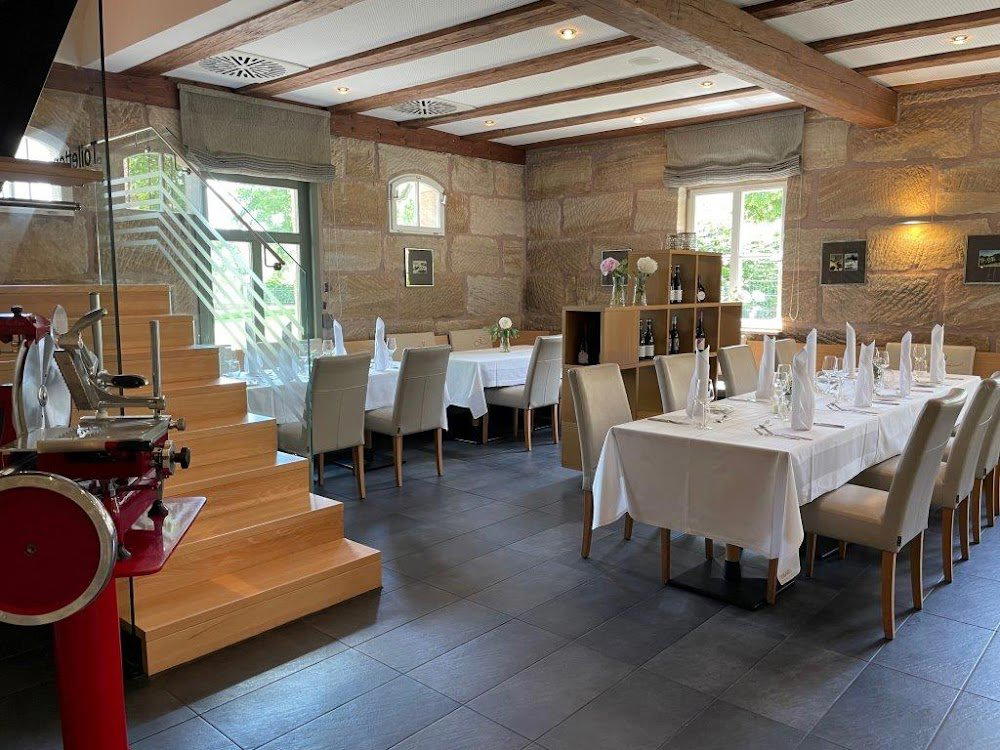
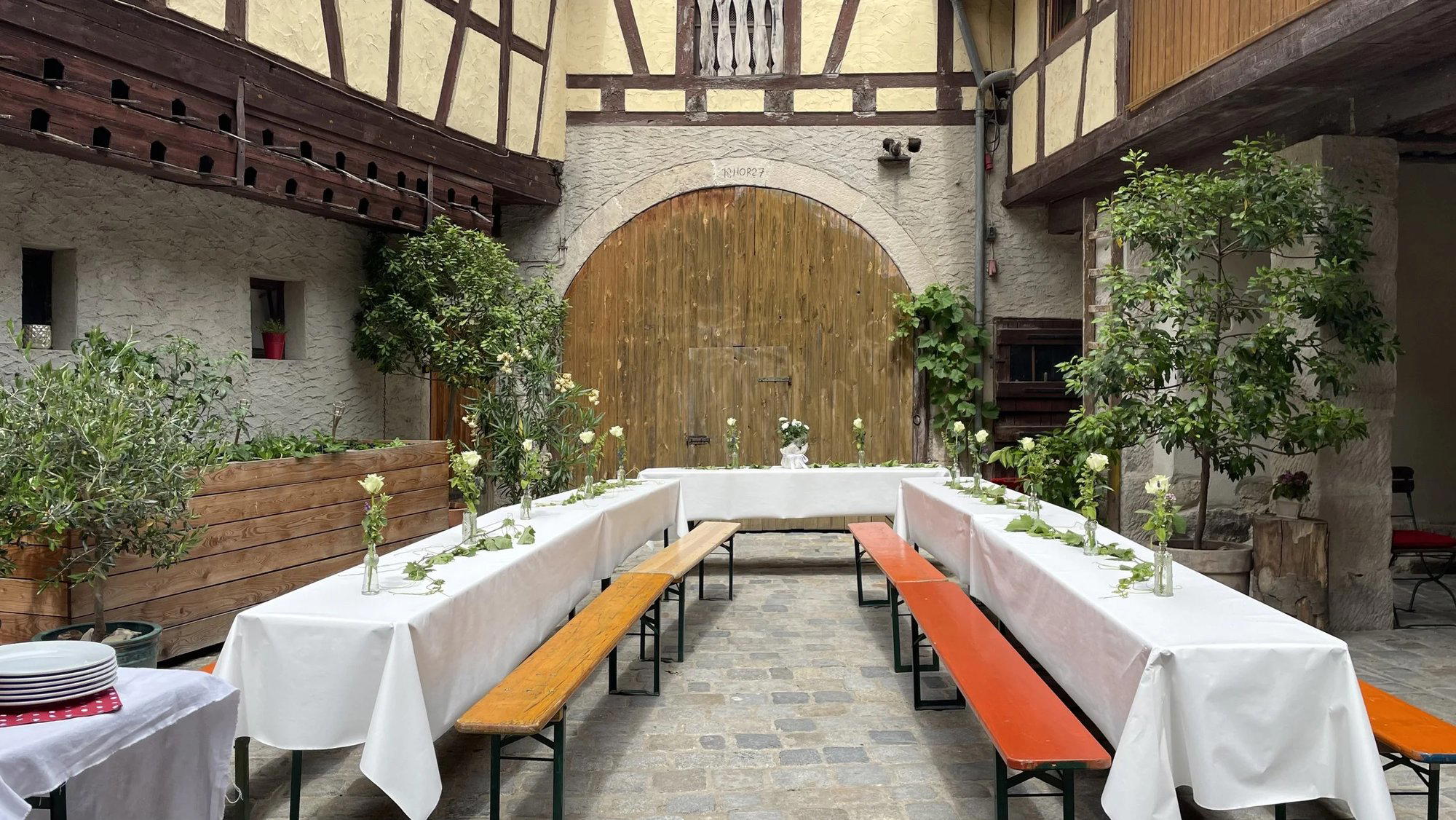
Rural destination restaurants in Germany tend toward one of two physical formats: converted farmhouses with a sense of accumulated history, or purpose-designed spaces that use the countryside setting as contrast rather than context. That physical grounding is consistent with the sourcing emphasis that characterises serious rural kitchens in this region.
In the broader German fine dining tier, the room format matters to the experience in ways that go beyond aesthetics. At AUGUST in Augsburg or JAN in Munich, the urban setting creates one kind of dining rhythm. A rural address like Marloffstein creates another: the journey itself functions as a decompression from city pace, and the meal operates in a different temporal register as a result. Longer, quieter, with less of the ambient noise that urban fine dining rooms carry. That shift in pace is part of what the category offers, and it is worth factoring into the decision about whether this kind of destination makes sense for a given visit.
How Johann's Sits Within the German Fine Dining Field
Germany's serious restaurant tier has expanded geographically over the past decade. Recognition has spread beyond Munich, Hamburg, and Berlin to kitchens in smaller cities and rural addresses, a pattern visible in the Michelin Germany selections year on year. Aqua in Wolfsburg, Victor's Fine Dining by Christian Bau in Perl, and Restaurant Haerlin in Hamburg each demonstrate that geography is not a constraint on ambition or recognition in the German context. Franconia has its own entries in that expanding map, and Restaurant Johann's occupies a position within it, a kitchen operating at the level where regional sourcing, technical ambition, and destination-worthy execution converge.
For those building a wider tour of serious German cooking, the region around Nuremberg and Erlangen sits within driving range of Wirsberg to the north and the Bavarian Alps to the south, making it a viable anchor point for a longer itinerary that might include ATAMA by Martin Stopp in Sankt Ingbert or, further afield, ammolite in Rust. Those planning international reference points alongside German stops might consider how the sourcing-led approach here compares to what Le Bernardin in New York does with provenance at the other end of the formality spectrum, or how tasting menu discipline at Atomix in New York relates to the European rural destination model. And for those whose interest runs to the more experimental end of contemporary fine dining, CODA Dessert Dining in Berlin and Vendôme in Bergisch Gladbach represent different points on the German creative spectrum.
Planning a Visit
Marloffstein is accessible from Erlangen by car in under fifteen minutes, and from Nuremberg in approximately thirty. There is no urban public transport connection of note, which means a visit effectively requires a car or a taxi arrangement, a practical reality that reinforces the destination character of a meal here.
Frequently asked questions
Does Restaurant Johann's work for a family meal?
The village address at Atzelsberg 1 in Marloffstein and the destination-restaurant format place Johann's firmly in the category of adult occasion dining. Families with young children would likely find the setting and register a poor match. A special celebration for older family members is a more natural fit.
Is Restaurant Johann's formal or casual?
The Marloffstein address signals a deliberate rural destination, which in the German fine dining context typically means a relaxed but attentive atmosphere rather than strict urban formality. Expect considered service and a room that takes the food seriously, without the pressed-tablecloth rigidity of a city grand restaurant. Arrive dressed for a serious dinner, not a neighbourhood bistro.
Is Restaurant Johann's accessible from Erlangen as a dinner destination?
Marloffstein sits under fifteen minutes by car from Erlangen, making Johann's one of the most geographically convenient rural destination restaurants for Erlangen residents. There is no meaningful public transport connection to the Atzelsberg address, so a car or taxi is necessary. The short drive puts it in direct competition with in-city Erlangen dining options on convenience grounds alone.
What do people recommend at Restaurant Johann's?
Confirmed menu specifics are not available in verified form, so dish-level recommendations would be speculative. What the Franconian setting consistently produces at this level of destination restaurant is regionally anchored cooking with strong sourcing credentials. Checking directly with the restaurant before your visit is the reliable way to understand the current menu direction.
Where is Restaurant Johann's located?
Restaurant Johann's is located at Atzelsberg 1, 91080 Marloffstein, Germany, Marloffstein.
How far ahead should I plan for Restaurant Johann's?
Four to six weeks ahead is a practical minimum for a weekend table. Rural German destination restaurants at the serious end of the market fill Friday and Saturday slots well in advance, particularly when the drive from a city like Nuremberg (approximately thirty minutes) makes them viable for a single evening out. Midweek bookings allow more flexibility.
At-a-Glance Comparison
Comparable venues nearby, for context on price, style, and recognition.
| Venue | Cuisine | Price | Notes |
|---|---|---|---|
| Restaurant Johann'sThis venue — the venue you are viewing | Modern German Fine Dining | Not listed | Not listed |
| Gut Obermühle Alex(z)ander's | Elevated Franconian Fusion | Not listed | Hersbrucker Schweiz |
| Das Muskat | Organic German-Mediterranean | $30–50 | Hauptstraße |
| Restaurant Zur Forelle | Traditional German Seafood in Historic Setting | $30–50 | Fischerviertel |
| Sansibar by Breuninger | Modern German with Seafood Influences | Not listed | Gablenberg |
| Brückenbaron | Modern Franconian with Seasonal Fine Dining | $50–100 | Sonderhofen, Lower Franconia |
Continue exploring
More in Marloffstein
Restaurants in Marloffstein
All restaurants in Marloffstein →
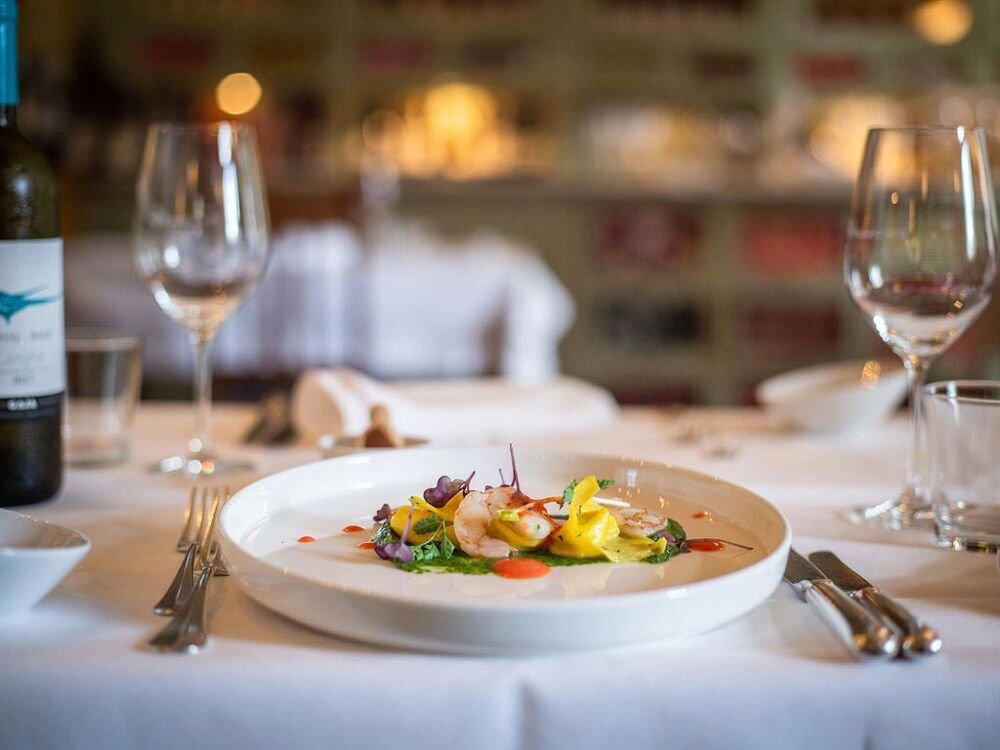
![[w]einklang restaurant in Nuremberg](https://cdn.enprimeurclub.com/storage/v1/object/public/images/locations/rec2OpfvDJLj7d0zO/hero1.jpg?width=3840&quality=75)
Bars in Marloffstein
Browse all →
Hotels in Marloffstein
Browse all →

Restaurant Johann's
The wine
- Wine program
- Curated wine list
- Extensive wine list
Details
- Elegant
- Rustic
- Sophisticated
- Special Occasion
- Terrace
- Extensive Wine List
- Local Sourcing
- Tasting Menu
- Vegetarian Friendly
Current opening hours
- Monday
- Closed
- Tuesday
- Closed
- Wednesday
- Closed
- Thursday
- 6 PM–12 AM
- Friday
- 6 PM–12 AM
- Saturday
- 6 PM–12 AM
- Sunday
- Closed
Hours can change for holidays and private events. Last verified .
rustic yet elegant ambiance