
Holzgarten holds back-to-back Michelin Bib Gourmand recognition for 2024 and 2025, placing it among the more consistent value-driven seasonal tables in Franconia. At the €€ price point, the kitchen's commitment to ingredient-led cooking sits well above the city's mid-market average. For Erlangen, that combination is a reliable signal worth booking around.
Pearl is the En Primeur Club membership app — saves, bookings, and concierge access live there. Same editors, same standards.
- Address
- Holzgartenstraße 3, 91054 Erlangen, Germany
- Phone
- +49 9131 9701444
- Website
- holzgarten.restaurant
- Directions
- Get directions
 Saves & bookings on Pearl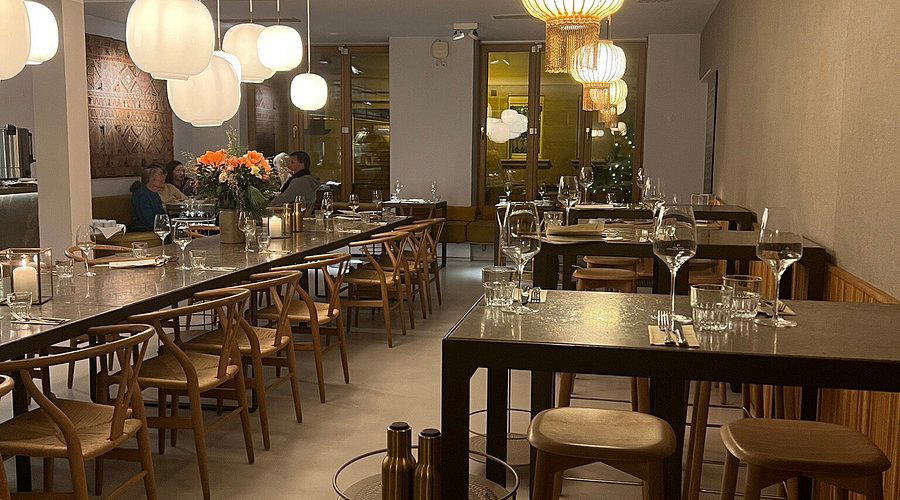
Franconia's Seasonal Cooking at Street Level
Erlangen is not a city that generates much noise in German restaurant discourse. It sits in the shadow of Nuremberg's better-publicised food scene, and its university-town character tends to pull the dining market toward the casual and affordable. That makes the presence of a Michelin-recognised seasonal table at the €€ price tier genuinely significant. Holzgarten, on Holzgartenstraße in the city's older quarter, occupies a position that most mid-sized German cities would be glad to claim: a kitchen working at a standard high enough to earn back-to-back Bib Gourmand recognition in 2024 and 2025, at a price point that keeps the room accessible rather than aspirational.
The Bib Gourmand designation, for readers unfamiliar with Michelin's internal logic, is specifically reserved for restaurants offering meals of notable quality at moderate prices. It is a harder standard to sustain than it might appear, because the cost discipline forces kitchens to source and cook efficiently without falling back on cheaper, lower-effort ingredients. Venues that hold the designation for consecutive years, as Holzgarten has, are demonstrating consistency rather than a single strong season. That consecutive recognition, in a city with limited fine-dining infrastructure, is the clearest available signal of the kitchen's reliability.
Where the Ingredient Logic Starts
Seasonal cuisine as a category covers a wide range of ambition levels, from kitchens that update a standard menu four times a year to those that rebuild their offering around what regional producers are delivering week to week. The more rigorous version of the format asks the kitchen to treat the supply chain as the primary creative constraint, letting the availability and condition of ingredients determine the menu rather than the reverse. Bavaria and Franconia have the agricultural infrastructure to support that approach: the region produces game, river fish, root vegetables, foraged herbs, and orchard fruit across a growing season that runs well into autumn.
At the €€ tier, sourcing decisions carry more weight because the margin for error is smaller. A tasting menu priced in the €€€€ bracket, like those at Aqua in Wolfsburg or Schwarzwaldstube in Baiersbronn, can absorb the cost of premium imports and rare proteins. A kitchen working at Holzgarten's price point has to earn its Michelin acknowledgment by making excellent decisions within tighter parameters, which typically means leaning harder on regional supply, shorter supply chains, and produce-driven cooking where the ingredient carries the dish rather than elaborate technique masking its ordinariness.
Franconian seasonal cooking at its more thoughtful end draws on that regional discipline: the Fränkische Schweiz hinterland, the Aischgrund carp ponds to the west, and the vegetable-growing areas around the Rednitz valley all feed into kitchens that know how to work with what the region actually produces. That context matters when reading a seasonal menu in this part of Bavaria. The cooking is not reaching toward Mediterranean warmth or Scandinavian austerity; it is working from a Central European larder that has its own logic and its own seasonal rhythms.
Price Tier and Competitive Position
Germany's Bib Gourmand pool is well-populated, but the concentration of recognised kitchens at the €€ tier in mid-sized Franconian cities is thin. Nuremberg holds a handful of recognitions, but Erlangen's position as a smaller, less tourist-dependent city means that Holzgarten is effectively operating without close local competition at the same standard. Readers planning a trip to the Nuremberg metropolitan area who want a high-quality seasonal meal at a price that does not require a tasting-menu budget should factor it into the itinerary seriously.
For context on what the €€ tier means in a German Michelin framework: dinner for two with wine at a Bib Gourmand-level restaurant in a mid-sized German city typically runs between €60 and €110, depending on what you drink. That places Holzgarten in a peer group that includes recognised seasonal tables across Germany, but at a remove from the €€€€ creative fine-dining venues like CODA Dessert Dining in Berlin or Vendôme in Bergisch Gladbach. The comparison is not about quality hierarchy but about format and expectation: Holzgarten belongs to a different, more grounded category of dining, and should be read on those terms.
Internationally, seasonal kitchens working at the accessible end of the Michelin-recognised spectrum include Fields by René Mathieu in Luxembourg and Kirchenwirt in Leogang, both of which share a similar orientation toward regional produce and non-luxury price positioning. The format rewards repeat visits because the menu moves with the season, meaning a table in late autumn will cover different ground than one in early spring.
Planning a Visit
Holzgarten sits at Holzgartenstraße 3 in central Erlangen, within walking distance of the city's historic core and the university district. Erlangen is served by S-Bahn from Nuremberg, with journey times in the 20-minute range, which makes it a practical option for visitors based in Nuremberg who want a meal outside that city's more crowded restaurant scene. The €€ price point and Bib Gourmand profile suggest a room that is full on weekends and busier than the city's general hospitality average, so advance booking is advisable rather than optional.
For a broader picture of what Erlangen offers beyond this single address, our full Erlangen restaurants guide covers the city's range. If you are building a longer stay, the Erlangen hotels guide and Erlangen bars guide round out the practical picture. The Erlangen wineries guide and Erlangen experiences guide are worth consulting if you are extending the trip into Franconia's wider cultural and wine offer.
Readers interested in other German seasonal tables in different price brackets might consider JAN in Munich, ES:SENZ in Grassau, or Restaurant Haerlin in Hamburg for a sense of where the seasonal format operates at different levels of the market. For Moselle and Rhineland seasonal cooking, Schanz in Piesport, Victor's Fine Dining by Christian Bau in Perl, Waldhotel Sonnora in Dreis, and Bagatelle in Trier provide useful comparative reference points across the western German market.
Fast Comparison
| Venue | Cuisine | Price | Awards |
|---|---|---|---|
| HolzgartenThis venue — the venue you are viewing | Seasonal Cuisine | €€ | Bib Gourmand |
| Schwarzwaldstube | French, Classic French | €€€€ | Michelin 3 Star |
| Aqua | Contemporary German, Italian/Japanese, Creative | €€€€ | Michelin 3 Star |
| CODA Dessert Dining | Creative | €€€€ | Michelin 2 Star |
| Tantris | Modern French, French Contemporary | €€€€ | Michelin 2 Star |
| Vendôme | Modern European, Creative | €€€€ | Michelin 2 Star |
Recognition history
Dated appearances from independent guides and award organizations, with the underlying list record or original source where available.
Michelin Bib Gourmand
Michelin
Michelin Bib Gourmand
Michelin
Michelin Bib Gourmand
Michelin
Continue exploring
More in Erlangen
Restaurants in Erlangen
Browse all →
Bars in Erlangen
Browse all →
Hotels in Erlangen
Browse all →

At a Glance
- Lively
- Modern
- Cozy
- Trendy
- Date Night
- Casual Hangout
- Special Occasion
- Open Kitchen
- Terrace
- Extensive Wine List
- Local Sourcing
Current opening hours
- Monday
- 5–11 PM
- Tuesday
- 5–11 PM
- Wednesday
- 5–11 PM
- Thursday
- 5–11 PM
- Friday
- 5–11 PM
- Saturday
- 12–11 PM
- Sunday
- Closed
Hours can change for holidays and private events. Last verified .
Trendy modern interior with soft practical lighting, open kitchen, mix of high and standard tables creating active yet relaxed atmosphere.