
Michelin Plate
Our verdict
Zöllner's Weinstube in Forchheim holds both a Michelin Plate (2025) and Bib Gourmand (2024), placing it firmly in the tier of Franconian dining that takes classic cuisine seriously without inflating prices to match. At €€, it occupies a position rarely achieved in German Michelin circles: recognised cooking at a price point that reflects the region rather than the restaurant's ambitions.

Pearl is the En Primeur Club membership app — saves, bookings, and concierge access live there. Same editors, same standards.
- Address
- Sigritzau 1, 91301 Forchheim, Germany
- Phone
- +49 9191 13886
- Hours
- Mon–Tue ClosedWed–Sun 5–10 PM
- Website
- zoellners-weinstube.de
- Directions
- Get directions
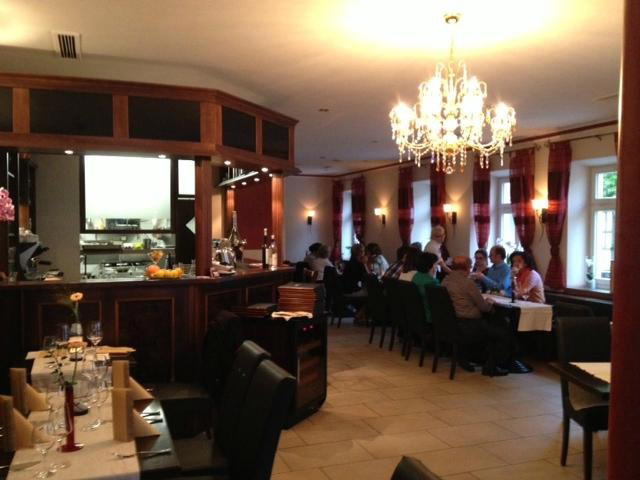
A Franconian Weinstube That Earns Its Michelin Recognition
There is a particular kind of German dining room that announces itself before you read a single menu item. The Weinstube format — wood-panelled walls, a wine list anchored to the region, tables close enough that conversations occasionally blur — is one of the most enduring structures in Central European hospitality. In Franconia, that format carries specific weight: this is a wine-growing region with its own grape identity, its own cooking logic, and a local dining culture that tends to reward restraint over spectacle. Zöllner's Weinstube, located at Sigritzau 1 in Forchheim, operates inside that tradition and does so with sufficient discipline to hold both a Michelin Plate in 2025 and a Bib Gourmand recognition in 2024.
Those two designations together tell a story worth reading carefully. The Bib Gourmand signals that Michelin's inspectors found quality cooking at a price that sits below the fine-dining bracket, the guide reserves the award for restaurants offering good food at moderate cost. The Plate, awarded the following cycle, confirms that the cooking remains consistent and technically sound.
Where the Food Comes From, and Why It Shapes What Arrives at the Table
Classic cuisine, the category under which Zöllner's operates, is a designation that functions differently in a Franconian Weinstube than it does in, say, a Munich brasserie or a Rhineland hotel dining room. In this part of Bavaria, classic means something rooted: seasonal produce from the surrounding agricultural belt, proteins sourced through established regional supply chains, and cooking methods that prioritise the ingredient rather than the technique applied to it. The Franconian countryside around Forchheim produces game, freshwater fish from the rivers feeding into the Main, and vegetables from the market gardens of the Aisch valley. A kitchen working within the classic cuisine tradition here is making a statement about provenance as much as preparation.
This sourcing orientation is not incidental to the Bib Gourmand recognition. Michelin's mid-tier award consistently skews toward restaurants that convert regional ingredients into coherent, honest cooking rather than importing prestige products to justify higher prices. The logic is direct: when the supply chain is local and the kitchen understands what it is working with, the food improves and the price stays grounded. That correlation is visible across Germany's Bib Gourmand list, from village gasthouses in the Mosel to Bavarian market-town kitchens. Zöllner's fits that pattern, and the recognition reflects it.
For context on where this sits within the broader German dining hierarchy, consider that venues at the opposite end of the price spectrum, Schwarzwaldstube in Baiersbronn, Aqua in Wolfsburg, or Vendôme in Bergisch Gladbach, operate at €€€€ with entirely different sourcing economies and price expectations. The Bib Gourmand tier, by contrast, asks whether a kitchen can deliver genuine cooking without that infrastructure. Zöllner's answer, according to two consecutive Michelin cycles, is yes.
Forchheim's Dining Position and What It Means for a Visit
Forchheim sits in Upper Franconia, roughly between Nuremberg and Bamberg, in a corridor that punches well above its scale for food culture. Bamberg's smoked beer and its own Michelin-recognised dining have drawn international attention, but Forchheim operates with less tourist overlay and a dining scene that tends to serve its own residents first. That dynamic shapes what a visit to Zöllner's looks like: this is a room where the local audience sets the register, and the cooking responds to that audience's expectations of seasonal, grounded food rather than to the preferences of passing food tourism.
The €€ price positioning reinforces this. Zöllner's operates in a range where a full meal remains accessible to regular diners, which in turn sustains the kind of repeat clientele that allows a kitchen to refine its seasonal rotation. Restaurants at this price point that hold Michelin recognition in Germany tend to be genuinely embedded in their communities rather than dependent on destination traffic, a structural difference from, for instance, JAN in Munich or Restaurant Haerlin in Hamburg, both of which operate in markets with significant visitor economies.
If you are spending time in Upper Franconia for the region's other draws, the medieval old town in Forchheim itself, the Franconian wine route, or a day trip between Nuremberg and Bamberg, Zöllner's represents a dining stop with verifiable culinary credibility rather than one selected on reputation alone. For broader planning, our full Forchheim restaurants guide covers the wider dining picture, while our Forchheim hotels guide, bars guide, wineries guide, and experiences guide provide context for a full stay.
Classic Cuisine in a European Frame
The classic cuisine category positions Zöllner's within a tradition that extends well beyond Franconia. Restaurants working in this mode, grounded technique, regional sourcing, restrained presentation, appear across Germany and France as a counterpoint to the creative and avant-garde formats that dominate the upper Michelin tiers. In Munich, KOMU operates in a comparable register at the city level, while Maison Rostang in Paris represents the French lineage of the same tradition. At the far end of the creative spectrum, venues like CODA Dessert Dining in Berlin or ES:SENZ in Grassau illustrate how different the ambition and the price point become once a kitchen departs from the classic framework.
Zöllner's does not compete in that arena and makes no claim to. Its position is specific: a Weinstube working classic cuisine in a Franconian context, recognised by Michelin at the level appropriate to that ambition, and priced in a way that makes the recognition meaningful rather than aspirational. Other German venues worth comparing at different price and style points include Schanz in Piesport, Waldhotel Sonnora in Dreis, Victor's Fine Dining by Christian Bau in Perl, and Bagatelle in Trier.
Planning a visit requires checking current opening hours and booking availability directly, as neither is available in public records at time of writing. Given the Bib Gourmand profile and the local clientele dynamic, booking ahead is advisable, particularly for weekend evenings when Franconian dining rooms at this recognition level tend to fill with regulars. The address, Sigritzau 1, 91301 Forchheim, places the restaurant within the city's fabric rather than on its outskirts, accessible by car and reachable from Forchheim's rail connections on the Nuremberg-Bamberg line.
Frequently asked questions
Is Zöllner's Weinstube a family-friendly restaurant?
The Weinstube format — rooted in Franconian hospitality traditions — tends toward a relaxed, inclusive dining room rather than a formal one. Zöllner's mid-range price point (€€) and Michelin Bib Gourmand recognition, awarded for quality at accessible value, both point to a room that welcomes a broad range of guests. check the venue's official channels at Sigritzau 1, Forchheim to confirm specific arrangements for children or groups.
What's the vibe at Zöllner's Weinstube?
This is a classic Franconian Weinstube: the format implies wood-panelled warmth and a pace set by the kitchen rather than the clock. Two consecutive Michelin recognitions — the Bib Gourmand in 2024 and the Michelin Plate in 2025 — confirm it operates at a level above the typical regional inn without crossing into formal fine-dining territory. The €€ price range reinforces that positioning: serious cooking in an unpretentious setting.
Does Zöllner's Weinstube have a Michelin star or similar recognition?
Zöllner's Weinstube has received recognition including: Michelin Plate (2025); Michelin Bib Gourmand (2024).
What's the signature dish at Zöllner's Weinstube?
The kitchen operates under the classic cuisine designation, which in a Franconian Weinstube context typically means regional technique applied to local ingredients — think braised meats, seasonal accompaniments, and cooking grounded in the Upper Franconian larder. For current dishes, contact the restaurant at Sigritzau 1, Forchheim.
Comparable Spots, Quickly
| Venue | Cuisine | Price | Awards |
|---|---|---|---|
| Zöllner's WeinstubeThis venue — the venue you are viewing | Regional Franconian with Mediterranean Influences | $50–100 | Michelin Plate |
| Schwarzwaldstube | French, Classic French | Not listed | Michelin 3 Star |
| Aqua | Contemporary German, Italian/Japanese, Creative | Not listed | Michelin 3 Star |
| CODA Dessert Dining | Creative | Not listed | Michelin 2 Star |
| Tantris | Modern French, French Contemporary | Not listed | Michelin 2 Star |
| Vendôme | Modern European, Creative | Not listed | Michelin 2 Star |
Recognition history
Dated appearances from independent guides and award organizations, with the underlying list record or original source where available.
Michelin Plate
Michelin · 2026 Michelin Plate
Full recognition history (3 entries)
Michelin Plate
Michelin
Michelin Bib Gourmand
Michelin
Continue exploring
More in Forchheim
Restaurants in Forchheim
Browse all →
Bars in Forchheim
Browse all →
Hotels in Forchheim
Browse all →

Zöllner's Weinstube
The wine
- Wine program
- Curated wine list
- Extensive wine list
Details
- Cozy
- Rustic
- Intimate
- Classic
- Elegant
- Date Night
- Special Occasion
- Terrace
- Historic Building
- Wine Cellar
- Extensive Wine List
- Local Sourcing
- Garden
- A La Carte
- Franconian Wines
- Vegetarian Friendly
Current opening hours
- Monday
- Closed
- Tuesday
- Closed
- Wednesday
- 5–10 PM
- Thursday
- 5–10 PM
- Friday
- 5–10 PM
- Saturday
- 5–10 PM
- Sunday
- 5–10 PM
Hours can change for holidays and private events. Last verified .
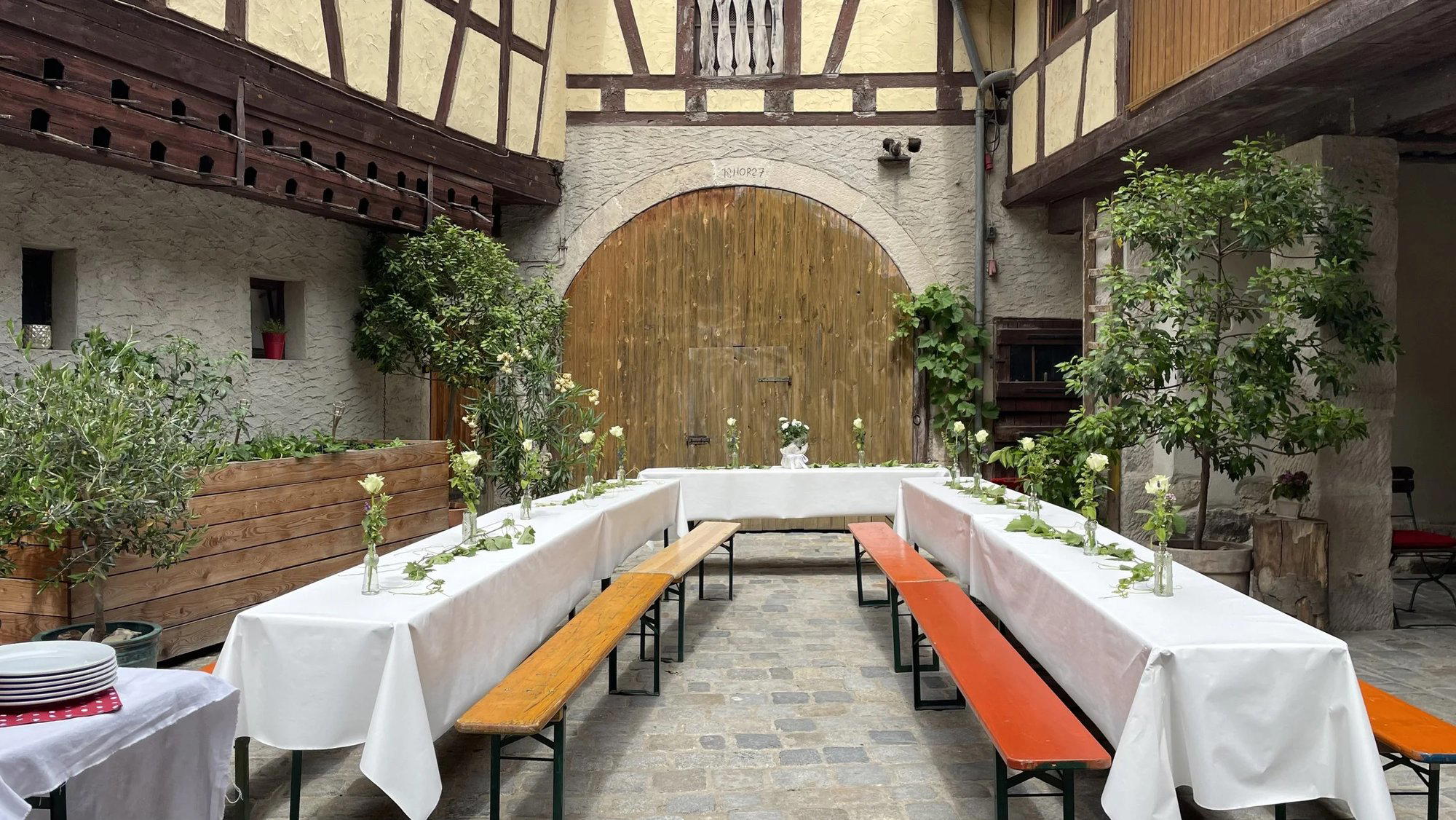
Charming interior with striking vaulted ceilings, cozy and gemütlich atmosphere in a renovated historic sandstone building surrounded by gardens; warm terrace dining in summer.