Our verdict
On the Passeig Marítim in Barceloneta, Restaurant Agua occupies a stretch of Barcelona's waterfront where Mediterranean cooking and the sea's immediate presence shape the experience. The kitchen works with the coastal larder that defines this part of the city, placing it in a dining tradition that runs from neighbourhood seafood bars to more technically ambitious waterfront tables. For visitors orienting around Barcelona's seafood scene, Agua sits at a useful mid-point between casual and composed.

Pearl is the En Primeur Club membership app, where members save venues, book tables and use the concierge.

The menu
What to order
- Arròs Negre
- Fideuà
- Bomba de la Barceloneta
- Entrecot al Roquefort
Where the City Meets the Water
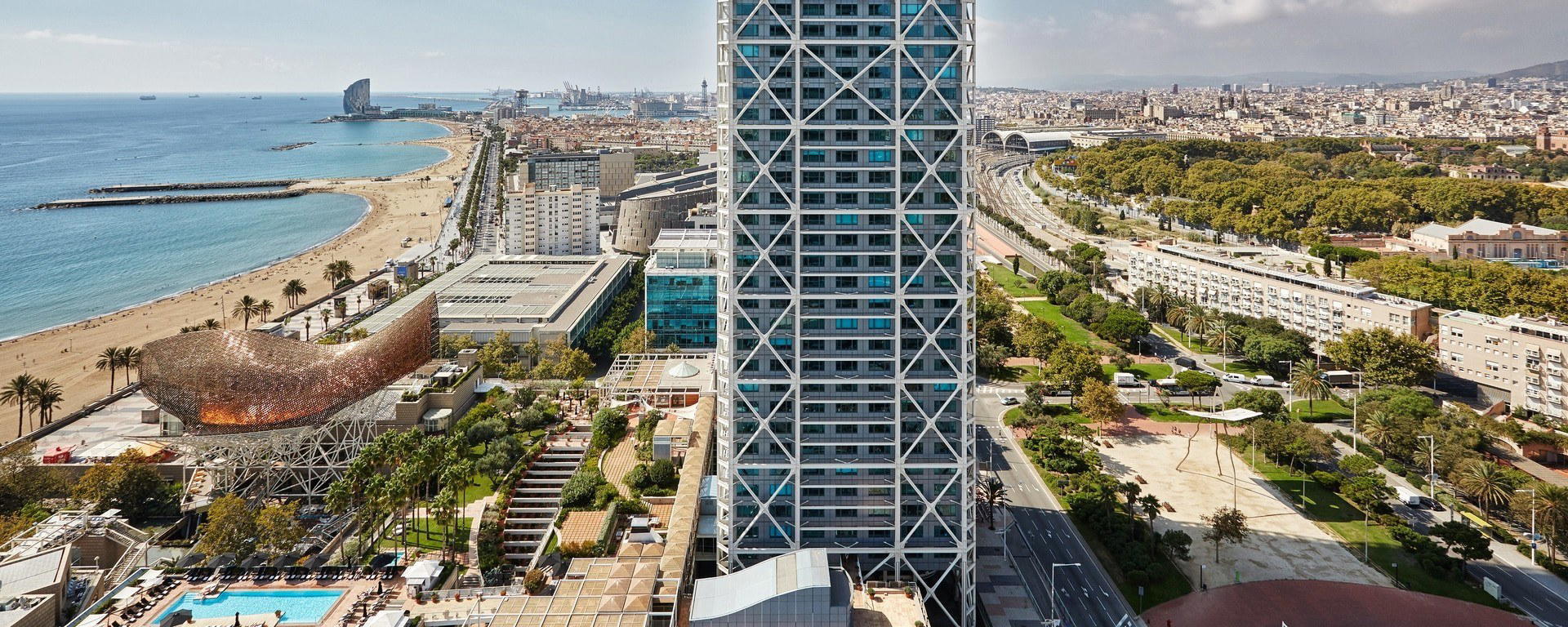
Barcelona's waterfront has always operated on its own logic. The Passeig Marítim stretches along Barceloneta with the Mediterranean visible from almost every table, and the dining culture here reflects that proximity in practical ways: the fish tends to be local, the cooking tends to be direct, and the room tends to face outward. Restaurant Agua sits on this promenade at number 30, and its position is not incidental. The address places it within a cluster of seafood-focused tables that have long served as Barcelona's most accessible argument for eating beside the water rather than inland.
The waterfront dining tier in Barcelona occupies a different register from the city's tasting-menu circuit. Houses like Disfrutar, Lasarte, and Cocina Hermanos Torres operate in the upper bracket of Spanish creative cooking, with multi-course formats and Michelin recognition that positions them against national peers like El Celler de Can Roca in Girona or Mugaritz in Errenteria. The Barceloneta waterfront works differently. Its strongest tables compete on immediacy and ingredient quality rather than technique for its own sake, and Agua has built its reputation within that framework.
The Mediterranean Larder and How It Gets Used Here
The editorial angle worth exploring at Agua is how the kitchen handles the tension between local sourcing and broader culinary influence. Mediterranean seafood cooking in Catalonia draws on a tradition that pre-dates the modernist wave associated with elBulli and its successors, and the leading waterfront kitchens in Barcelona tend to honour that substrate rather than replace it. The fish that arrives at Barceloneta restaurants, sea bass, bream, red mullet, cephalopods from nearby waters, carries enough intrinsic quality that heavy intervention typically signals inexperience rather than ambition.
Where Agua fits into this is as a table that applies sufficient technique to add coherence without overwhelming the ingredient. This is a meaningful distinction on a promenade where some neighbours lean heavily on tourist volume and the kitchen suffers for it. The Spanish coastal kitchen that does this well tends to share instincts with the approach you find at Quique Dacosta in Dénia or Aponiente in El Puerto de Santa María: rigorous about provenance, selective about when to step back. Agua operates at a considerably less rarified level than either of those, but the underlying logic is shared.
The same instinct shows up in the rice and pasta preparations that anchor Mediterranean coastal menus in this part of Spain. Arròs, the Catalan term that covers both rice dishes and their cooking method, is a reliable signal of kitchen confidence on any waterfront menu. A well-executed seafood rice requires calibrated heat management and stock depth that volume-only kitchens rarely maintain. When it appears at a waterfront address with Agua's longevity on the promenade, it tends to carry some of that institutional knowledge.
Locating Agua Within Barcelona's Broader Dining Map
For visitors building a multi-day dining plan in Barcelona, understanding where a table like Agua fits avoids both over-expectation and dismissal. The city's premium creative tier, ABaC, Enigma, and Disfrutar, requires advance planning, fixed-format bookings, and a specific appetite for chef-driven progression. Agua does not compete in that space and does not try to.
That positioning matters more than it might initially seem. Barcelona's tourism volume is high enough that waterfront tables without genuine kitchen standards drift quickly toward caricature: the view becomes the product, and the food becomes a formality. The restaurants that hold their ground in Barceloneta over time do so because they maintain enough culinary seriousness to attract both visitors and locals, a balancing act that is harder to sustain than it looks. Spain's coastal dining tradition has produced some of its most ambitious work in recent years, Ricard Camarena in València and Arzak in San Sebastián both demonstrate how regional coastal identity and technical ambition can occupy the same space, and the waterfront tables that survive at the mid-level are the ones absorbing those influences at an accessible price point.
Internationally, the challenge of maintaining seafood kitchen integrity at a location defined by its view is not unique to Barcelona. Le Bernardin in New York City represents one end of that spectrum, where the setting recedes and the fish becomes purely the subject. Lazy Bear in San Francisco approaches the local-ingredient question from a completely different angle. Agua sits in a more quotidian register than either, but the question it answers is the same: what does this place, with its specific geography and supply chain, put on the plate?
Planning a Visit
The Passeig Marítim address is direct to reach from the Barceloneta metro station (L4), a short walk along the seafront. As a waterfront table with external terrace seating, Agua is most in demand during the warmer months, and the summer terrace fills quickly. Visitors coming in spring or autumn will find the same address with shorter waits and more temperate conditions that suit the Mediterranean cooking on the menu. Barcelona's dining rhythm runs late by northern European standards: lunch service extends well into mid-afternoon, and dinner is rarely underway before 9pm for locals. Arriving at the edges of these windows tends to improve both service attention and table availability. For context on how Agua fits within a broader Barcelona itinerary, the full Barcelona restaurants guide covers the city's dining tiers in detail, from the Martin Berasategui lineage tables to neighbourhood-level finds. Those planning wider travel in Spain's creative dining circuit might also consider how Azurmendi in Larrabetzu, DiverXO in Madrid, and Atrio in Cáceres map against Barcelona's own upper tier.
Frequently asked questions
What part of town is Restaurant Agua in?
Restaurant Agua is located at Pg. Marítim de la Barceloneta, 30, Ciutat Vella, 08003 Barcelona, Spain, Barcelona.
How easy is it to reach Restaurant Agua from central Barcelona?
Agua's address at Passeig Marítim de la Barceloneta 30 in Ciutat Vella is a short walk from Barceloneta station on the L4 metro line, making it accessible without a taxi from most central neighbourhoods. The seafront promenade connects directly to the restaurant, so arriving on foot along the waterfront from the port area is a practical alternative.
What's the best thing to order at Restaurant Agua?
The venue's address on Passeig Marítim de la Barceloneta places it directly within the zone where Mediterranean catch arrives daily, so seafood-led dishes reflect the kitchen's natural advantage. Without a current published menu on record, the safest approach is to ask staff what is market-driven that day, which at most Barceloneta waterfront kitchens changes with the morning's supply.
Do they take walk-ins at Restaurant Agua?
Waterfront tables along the Passeig Marítim draw consistent foot traffic, particularly at lunch on weekends, so arriving early in the service window reduces wait time. Contacting the venue directly before visiting is the most reliable way to confirm availability.
What's the standout thing about Restaurant Agua?
The address at Passeig Marítim de la Barceloneta 30 is the concrete differentiator: Agua sits on one of Barcelona's few genuinely seafront dining strips, with the Mediterranean visible from the terrace. That proximity to the water is a structural advantage that most central Barcelona restaurants cannot replicate regardless of kitchen quality.
Do they accommodate allergies at Restaurant Agua?
Spanish law requires restaurants to provide allergen information on request, so staff should be able to identify the 14 major EU-listed allergens across dishes. Communicating requirements clearly at the time of booking or arrival is advisable.
Is a meal at Restaurant Agua worth the investment?
Pricing data for Agua is not currently on record, which makes a direct cost-to-value assessment difficult to substantiate. What the Passeig Marítim 30 address does offer is a combination of seafront positioning and proximity to Barceloneta's beach that commands a premium across most venues on that strip. Whether that trade-off suits a given itinerary depends on how much the outdoor waterfront setting factors into the decision.
Reputation First
| Venue | Cuisine | Price | Awards | Notes |
|---|---|---|---|---|
| Restaurant AguaThis venue (the venue you are viewing) | Mediterranean Rice Dishes & Seafood | $50–100 | Not listed | Not listed |
| Cocina Hermanos Torres | Modern Spanish Fine Dining | $300–500 | 3 Michelin Stars · World's 50 Best #69 | Creative |
| Disfrutar | Avant-Garde Catalan Fine Dining | $300–500 | 3 Michelin Stars · World's 50 Best #1 | Progressive, Creative |
| Lasarte | Modern Basque-Mediterranean Fine Dining | $300–500 | 3 Michelin Stars · La Liste Top Restaurants | Progressive Spanish, Creative |
| Cinc Sentits | Modern Catalan Fine Dining | $150–200 | 2 Michelin Stars · La Liste Top Restaurants | Modern Spanish, Creative |
| Enoteca Paco Pérez | Modern Mediterranean Seafood | $200–300 | 2 Michelin Stars · La Liste Top Restaurants | Modern Spanish, Modern Cuisine |