

Michelin Plate · Tabelog Bronze #355
Our verdict
Daikanyama’s quieter side gives this French table its shape: small-scale, reservation-led, and more domestic in rhythm than Ginza formality. recte sits in Tokyo’s serious French category with Tabelog Award Bronze recognition for 2026, Michelin Plate listings for 2024 and 2025, and a format built around charcoal and wood-fired kamado cooking rather than grand-room theatre.

Pearl is the En Primeur Club membership app, where members save venues, book tables and use the concierge.
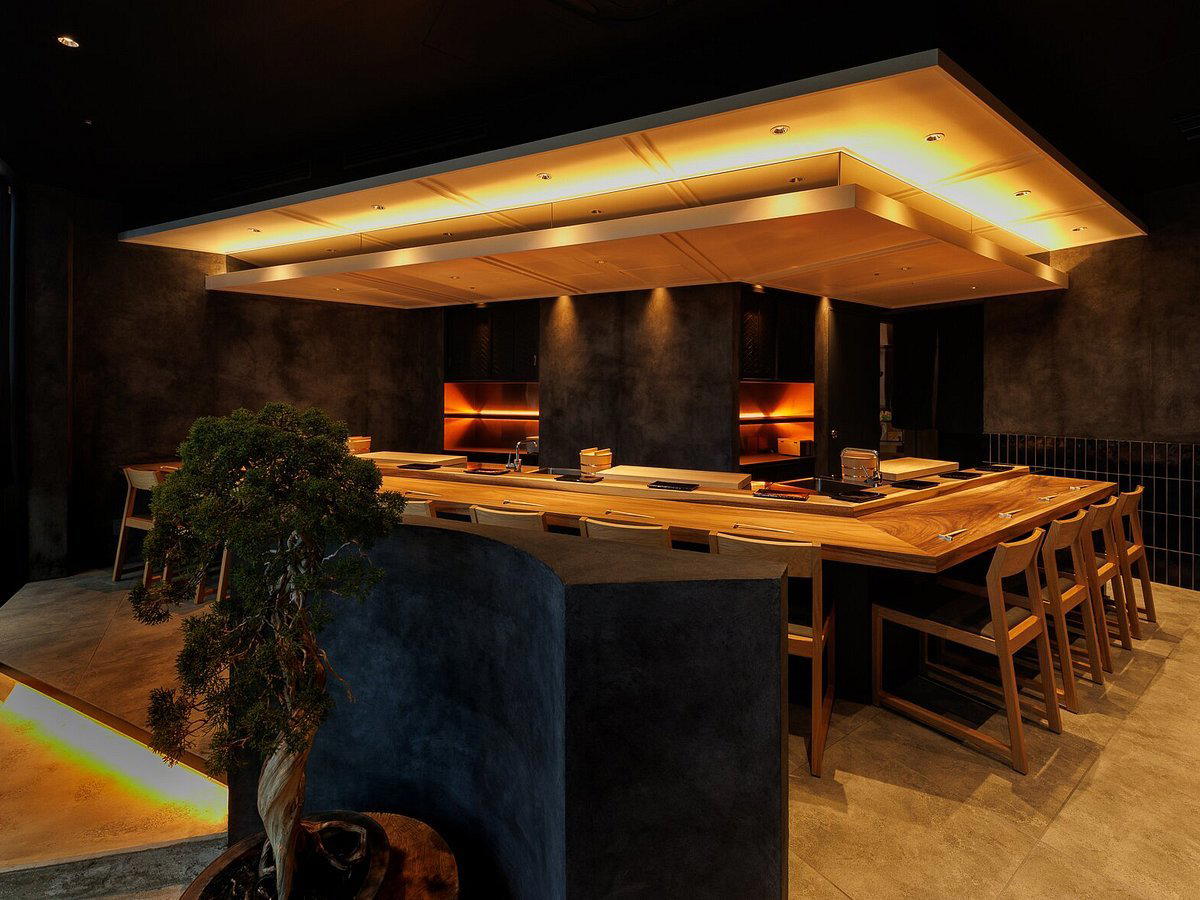
Daikanyama changes register quickly once the boutiques and station-side cafés fall away: streets tighten, pace drops, and the dining rooms that fit are smaller, quieter, and more focused on precision than spectacle. That matters. Tokyo French often divides between hotel polish, wine-bar looseness, and intimate rooms that apply French technique through a Japanese register of season, restraint, and ingredient focus. recte belongs to that last category.
The recognition places it in a serious Tokyo French tier, not a casual neighbourhood bracket: Tabelog Award Bronze in 2026, earlier Bronze recognition in 2018, 2019, and 2020, selection for Tabelog French TOKYO “Tabelog 100” in 2021, 2023, and 2025, plus Michelin Plate listings for 2024 and 2025. In a city where French cooking is a mature, competitive language, those signals matter. A Bronze-level French room in Daikanyama must justify itself against tasting-menu ambition across Tokyo, not just nearby date-night restaurants.
Daikanyama French, scaled down and made more personal
The useful comparison is not Paris transplanted to Tokyo, but the Parisian neighbourhood restaurant as an idea: local in scale, exacting in standards, with regulars, wine, and produce carrying more weight than ceremony. Daikanyama gives that idea a Tokyo setting: polished without Marunouchi corporate gloss, residential without backstreet-bistro looseness, and close enough to Ebisu to draw diners who want seriousness without the performance of some central luxury rooms.
Within Tokyo French, the peer field is varied. Simplicité sits in a comparable price band, abysse moves into a more expensive bracket, Äta reads more casual by price, while Le Coq and Saucer occupy adjacent mid-to-upper French territory. That spread shows how broad “French in Tokyo” has become: seafood-led tasting rooms, counter-leaning formats, wine-driven small restaurants, and chef-owned dining rooms all compete for the same sophisticated diner. recte’s position is narrower: compact dining room, table seating, and a cuisine identity that makes fire and fish visible.
The kamado element is the key distinction. In Japan, a kamado is not decorative nostalgia; it carries long associations with controlled heat, grain, smoke, and domestic cooking. In a French context, it pushes the restaurant away from sauce-heavy classicism toward produce, charcoal, wood, and measured technique. The result is not fusion as slogan, but French structure treated through Japanese heat logic.
Fire, fish, wine, and the limits of theatre
Tokyo’s French dining scene has spent decades absorbing French grammar, then trimming away what feels overbuilt. The persuasive rooms understand what to leave out: grand gestures, plate architecture for its own sake, and excess ceremony, replaced by confidence in a clear cooking medium. Here, the emphasis on fish and wine places the table in a familiar but demanding lane. Fish-led French cooking in Tokyo faces a high bar because the city’s baseline seafood culture is severe; diners know freshness, handling, and timing from sushi, kappo, tempura, and izakaya traditions, so luxury vocabulary is not enough.
That makes the charcoal and wood-fired frame editorially interesting. Fire gives French technique a different centre of gravity. Rather than reading the meal through elaborate garnish or named signature dishes, the diner pays attention to heat, pacing, and ingredient shape. Scale matters too. A 20-seat dining room with five tables suggests control over volume, while private rooms for small groups reinforce the neighbourhood-restaurant reading: intimate, contained, and suited to conversation alongside serious cooking.
The price tier confirms the ambition. Dinner sits in the JPY 30,000 to JPY 39,999 band, with lunch at JPY 10,000 to JPY 14,999, before the separate service charge. This is not entry-level French in Tokyo, but it is not the city’s maximal luxury tier either. Read it as value by concentration: compact room, recognized cooking, and a technique-led identity, not expense justified by imported grandeur.
How to read the room before choosing it
This is a reservation-only restaurant, and the policy reveals the format. Ingredients are prepared according to the booking, dietary restrictions must be communicated at least two days in advance, and cancellation charges apply from the day before. That is not administrative fussiness; it is how small, ingredient-led kitchens protect the economics and rhythm of a meal. For travelers, this is a planned dinner, not a flexible fallback between Shibuya and Ebisu.
The rules also define the mood. Credit cards are accepted; electronic money and QR code payments are not. The dining room is non-smoking, casual clothing such as flip-flops or tank tops is discouraged, and children under elementary school age are not admitted. None is unusual in Tokyo’s serious dining tier, but together they describe the table: adult, composed, and best for diners comfortable with a slower, reservation-bound meal.
Daikanyama’s geography helps. The restaurant sits within walking range of both Daikanyama and Ebisu, two areas suited to a grown-up night out without the heavier formality of Ginza or the hotel-dining circuit. That makes it useful for travelers already along the Shibuya-Ebisu axis, where Tokyo’s contemporary food culture is dense but not always legible from the street.
The broader city context sits in Our full Tokyo restaurants guide, with parallel planning references in Our full Tokyo hotels guide, Our full Tokyo bars guide, Our full Tokyo wineries guide, and Our full Tokyo experiences guide. For a wider Japan and French-language contrast set, see -Grilled beef Sukiyaki- KAMAKURA TANUKIAN 鎌倉 たぬき庵 in Kamakura.cafe in Osaka.know in Kumamoto, (Shoku) Vietnam in Kawasaki, [Curry Senmon Ten] Maruyama Kyoju. in Sapporo, [ki:] in Kyoto, 3 Fils Counter, French in Dubai, and 3G Trois Gourmands, French in Ho Chi Minh City.
The verdict is less about chasing a famous chef name than understanding a Tokyo category. recte is for diners who want French technique disciplined by Japanese scale: a small Daikanyama room, serious recognition, fire-led cooking, wine focus, and enough reservation structure to signal that the meal is built in advance. In a city crowded with luxury claims, that specificity is the point.
Frequently asked questions
What cuisine category does recte fall under?
recte serves French cuisine.
How much does it cost to eat at recte?
Pricing at recte is listed as ¥¥¥.
Is recte open every day?
Hours at recte: Mon: 11:30 AM–2:30 PM, 6–11 PM; Tue: 11:30 AM–2:30 PM, 6–11 PM; Wed: Closed; Thu: 11:30 AM–2:30 PM, 6–11 PM; Fri: 11:30 AM–2:30 PM, 6–11 PM; Sat: 11:30 AM–2:30 PM, 6–11 PM; Sun: 11:30 AM–2:30 PM, 6–11 PM.
What is recte known for?
recte is primarily known for French in Tokyo.
Comparable venues nearby, for context on price, style, and recognition.
| Venue | Cuisine | Price | Awards | Notes |
|---|---|---|---|---|
| recteThis venue (the venue you are viewing) | Kamado French Fine Dining | $200–300 | Michelin Plate · Tabelog Bronze #355 | Not listed |
| ete | Modern French Fine Dining | $200–300 | La Liste Top Restaurants · Tabelog Silver #20 | Shibuya |
| Signature at the Mandarin Oriental | Modern French Fine Dining | $200–300 | Michelin Plate · Tabelog 100 #56 | Chūō |
| Nœud. TOKYO | Sustainable Vegetable-Centric French | $150–200 | Michelin Plate · We're Smart World 5 Radishes | Chiyoda |
| Ne Quittez pas | French Fine Dining with Avant-Garde Soil Course | $100–150 | Michelin Plate | Shinagawa |
| Unis | Modern French | Not listed | Michelin Plate · Tabelog Bronze #498 | Minato |
Recognition history
Dated appearances from independent guides and award organizations, with the underlying list record or original source where available.
Michelin Plate
Michelin
Tabelog Bronze #355
Tabelog
Full recognition history (5 entries)
Michelin Plate
Michelin
Tabelog 100 #92 · No. 92
Tabelog · Tabelog 100 - French - TOKYO - 2025
Michelin Plate
Michelin
Continue exploring
More in Tokyo
Restaurants in Tokyo
All restaurants in Tokyo →


Bars in Tokyo
All bars in Tokyo →



Details
- Elegant
- Intimate
- Sophisticated
- Quiet
- Special Occasion
- Date Night
- Celebration
- Business Dinner
- Private Dining
- Open Kitchen
- Extensive Wine List
- Local Sourcing
- Tasting Menu
- Prix Fixe
Current opening hours
- Monday
- 11:30 AM–2:30 PM, 6–11 PM
- Tuesday
- 11:30 AM–2:30 PM, 6–11 PM
- Wednesday
- Closed
- Thursday
- 11:30 AM–2:30 PM, 6–11 PM
- Friday
- 11:30 AM–2:30 PM, 6–11 PM
- Saturday
- 11:30 AM–2:30 PM, 6–11 PM
- Sunday
- 11:30 AM–2:30 PM, 6–11 PM
Hours can change for holidays and private events. Last verified .
Posh, quiet, and relaxing with spaced-out tables in a small, hidden space featuring relaxing atmosphere and sofa seating.