


Michelin Plate · Tabelog 100 #56
Our verdict
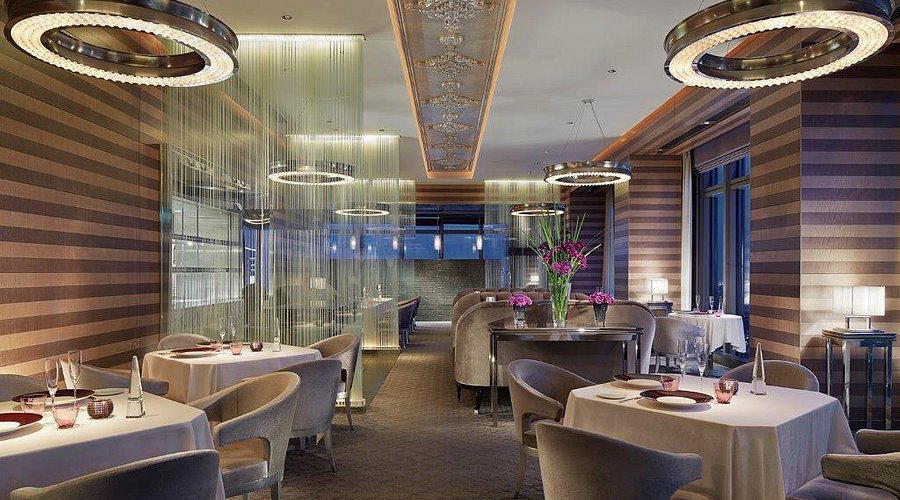
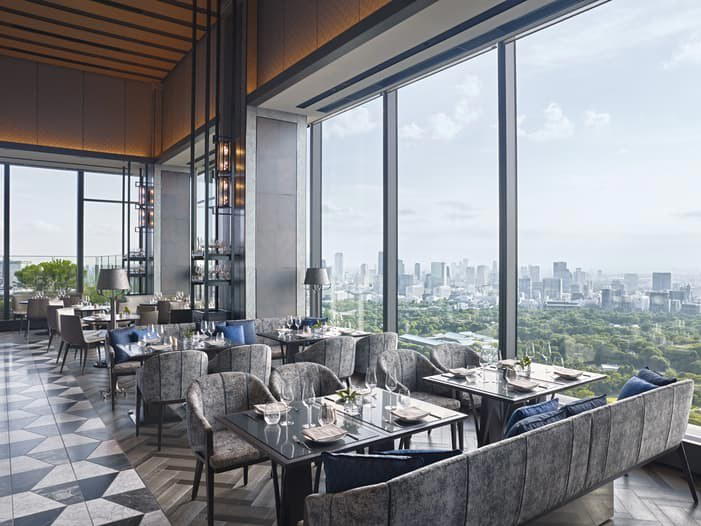
At the Mandarin Oriental Tokyo in Nihonbashi, Signature brings a French kitchen rooted in classical technique and historical recipes to one of the city's most recognisable luxury hotel addresses. Chef Nicolas Boujéma works through a repertoire anchored in French sauces, with herbs and vinegar moderating the weight. The room is dressed entirely in blue, with city views and a Michelin Plate recognition in 2025.

Pearl is the En Primeur Club membership app, where members save venues, book tables and use the concierge.
French Classical Cooking in Nihonbashi
Tokyo's French dining tier has grown considerably more nuanced over the past two decades. Where the city once sorted its European restaurants simply by price and hotel affiliation, the current field distinguishes between tasting-menu-only omakase-style French operations, chef-driven neighbourhood bistros, and the hotel dining rooms that have repositioned themselves as serious culinary addresses rather than default business banquet venues. Signature at the Mandarin Oriental sits in this third category, a hotel French restaurant that has moved beyond the conventions of its format and built a programme with a clear culinary argument.
The broader context matters here. Tokyo hosts some of the most technically accomplished French cooking outside France. Sézanne and L'Effervescence operate at the upper end of the independent French field, while Château Restaurant Joël Robuchon represents the legacy grand-dining tradition. Florilège and ESqUISSE have carved a mid-to-upper register that emphasises the dialogue between French technique and Japanese ingredient philosophy. Signature occupies a different position in that conversation: its programme is grounded in French culinary history rather than cross-cultural fusion, treating classical recipes as living documents rather than museum pieces.
A Kitchen Built Around French History
The dishes associated with Signature, pâté en croûte, fish bouillabaisse, lamb baked in pie crust, are not innovations in the modernist sense. They are preparations with deep roots in French regional and bourgeois cooking, each requiring considerable technique to execute well and easy to identify as weak when done poorly. Pâté en croûte, in particular, has seen a revival in serious French kitchens over the past decade, partly because it demands the kind of patient, layered construction that distinguishes disciplined kitchens from shortcut ones. That a hotel restaurant in Tokyo maintains this kind of repertoire signals a deliberate programme, not a default menu.
Culinary approach attributed to chef Nicolas Boujéma treats French sauces as the structural centre of the menu, with herbs and vinegar used to pull the finish away from heaviness. This is not a trivial choice. French sauce cookery at its classical peak is rich, butter-dependent, and easy to make cloying. Using acidity and fresh aromatics to lighten the close without abandoning the depth of the base technique is a specific and coherent strategy. It also positions the kitchen within a broader current in contemporary French cooking that seeks to preserve classical rigour while reducing the dietary weight of a full multi-course service.
Sustainability and Sourcing Within Classical French Cooking
French classical cuisine carries assumptions about ingredient provenance that are worth examining directly. Historically, the canon depended on specific regional products: butter from Normandy, lamb from the salt marshes of the Atlantic coast, fish from the Mediterranean for bouillabaisse. Replicating that canon in Tokyo requires either importing those ingredients at considerable environmental cost or building an equally credible sourcing argument from Japanese suppliers. The kitchens that have handled this question most intelligently in Tokyo tend to combine selective imports for products with no credible Japanese equivalent and strong domestic sourcing for everything else, particularly proteins, seasonal vegetables, and aromatics.
At Signature's price tier (¥¥¥ on a three-tier scale), the sourcing question is implicitly part of the value proposition. Restaurants operating at this level cannot credibly maintain a serious culinary programme while relying on commodity supply chains. The use of vinegar and herbs as structural elements rather than afterthoughts is one signal of a kitchen that thinks about ingredient quality and flavour integration rather than coverage. Herb quality, particularly the freshness and variety of what is available in a kitchen, tends to reflect how seriously a programme takes its supply relationships.
Wider Japan offers instructive comparisons on how French kitchens in the region approach ethical sourcing. HAJIME in Osaka has built an explicit environmental philosophy into its menu architecture, while akordu in Nara draws on regional producers as a core part of its identity. In this context, the classical-French-in-Japan format is not inherently at odds with local sourcing; it requires, rather, a more deliberate negotiation between canon and geography.
The Room and the Service Register
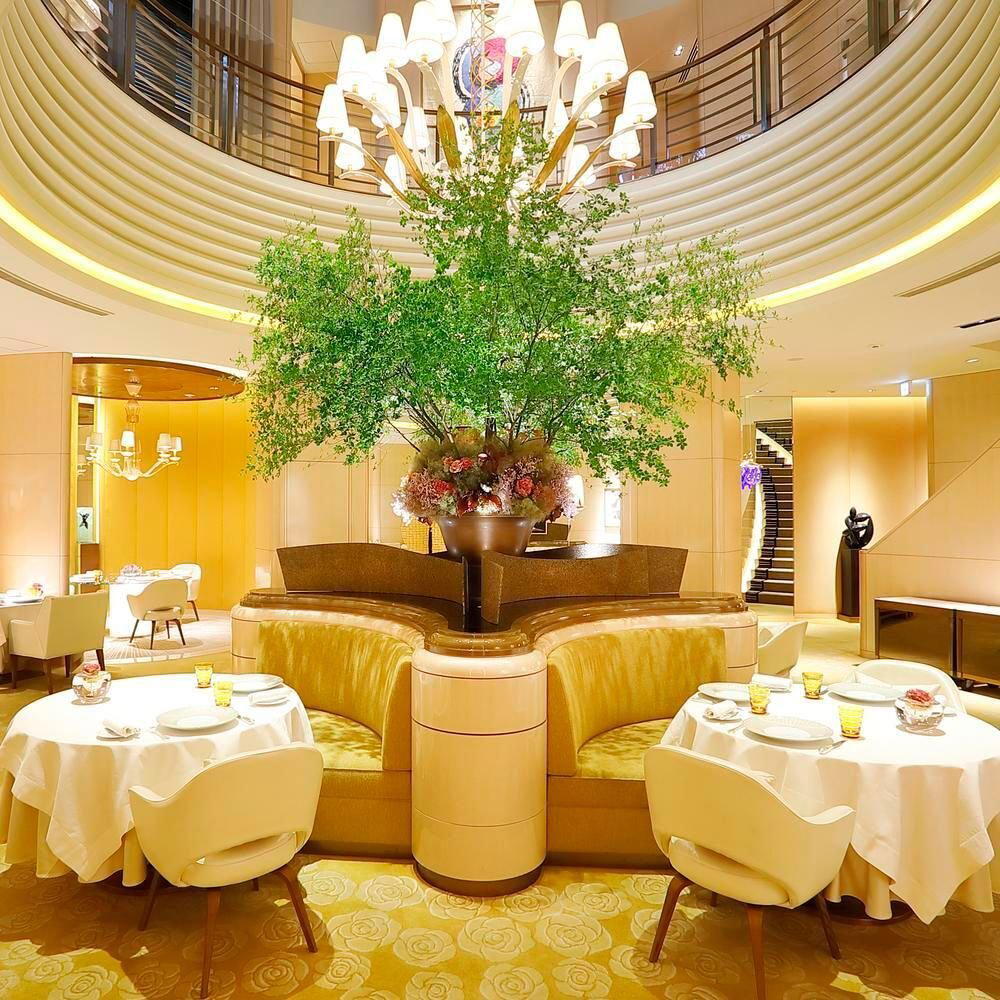
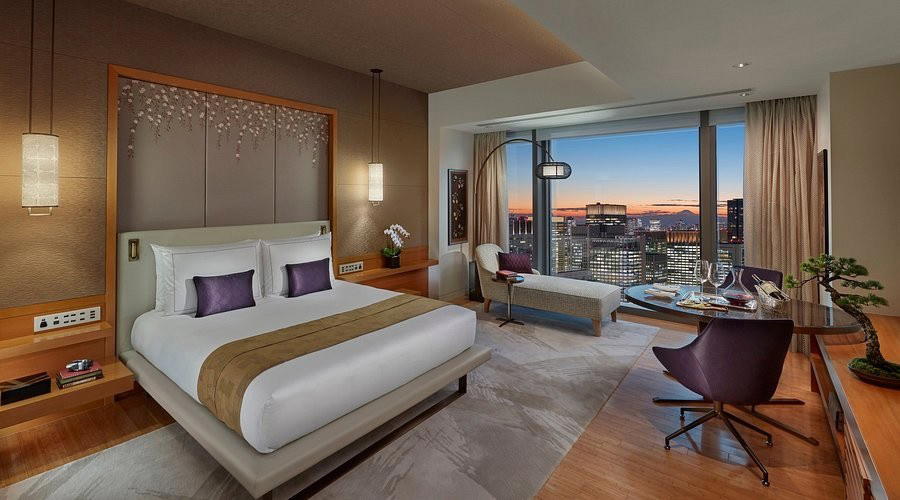
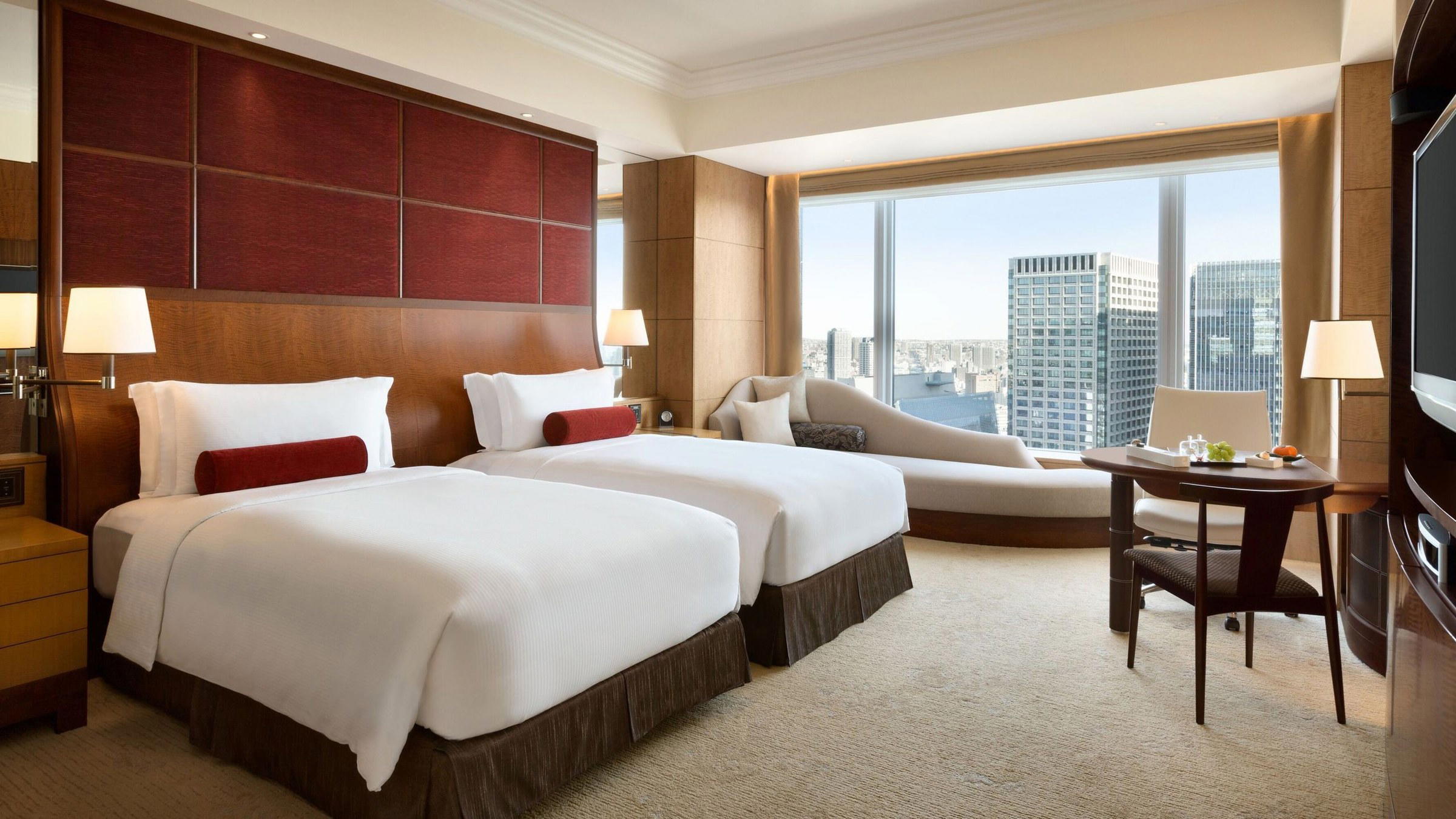
The dining room at Signature is dressed throughout in blue, a specific, declared visual identity rather than the safe neutral palettes that hotel dining rooms often default to. From the Mandarin Oriental Tokyo's position in Nihonbashi, the outlook carries considerable weight; the views into the city from the upper floors of this building have been cited explicitly in the restaurant's recognition materials as part of the overall experience. The service disposition described in Michelin's 2025 Plate citation notes a team whose manner is notably relaxed rather than stiffly formal, a meaningful attribute in a hotel dining context, where service can tip easily toward theatre or rigidity.
The Michelin Plate awarded in 2025, combined with steadily rising positions in the Opinionated About Dining rankings for Japan (Highly Recommended in 2023, ranked 314th in 2024, and 383rd in 2025), suggests a kitchen tracked by serious diners and the trade over at least three consecutive assessment cycles.
Context Across Japan and Europe
For readers building a French dining itinerary across Japan, the regional picture is worth mapping. Gion Sasaki in Kyoto and Goh in Fukuoka represent the Japanese-led end of the fine dining spectrum, while 1000 in Yokohama and 6 in Okinawa extend the geography further. For benchmarks in the French classical tradition itself, Hotel de Ville Crissier in Crissier and Les Amis in Singapore illustrate how that tradition is interpreted at the formal end of the spectrum across different geographies.
For broader planning in Tokyo, see our full Tokyo restaurants guide, our full Tokyo hotels guide, our full Tokyo bars guide, our full Tokyo wineries guide, and our full Tokyo experiences guide.
Planning Your Visit
Address: 2 Chome-1-1 Nihonbashimuromachi, Chuo City, Tokyo 103-8328. Hours: Monday through Sunday, 11:30 am–1:30 pm and 6:00–9:00 pm. Budget: ¥¥¥ tier; hotel French dining at this level in Tokyo typically falls in the ¥15,000–¥30,000 per person range for dinner depending on menu and beverage choices, though guests should confirm current pricing directly with the restaurant. Reservations: Advisable, particularly for evening sittings; contact the Mandarin Oriental Tokyo directly. Location note: Nihonbashi places this restaurant in one of central Tokyo's most historically layered commercial districts, accessible via Mitsukoshimae Station on the Ginza and Hanzomon lines.
Frequently asked questions
What kind of setting is Signature at the Mandarin Oriental?
Signature occupies the upper floors of the Mandarin Oriental Tokyo in Nihonbashi, one of central Tokyo's established luxury hotel addresses. The dining room is dressed throughout in blue, a deliberate visual identity that sets it apart from the neutral palettes common to hotel dining. The Michelin Guide singles out the view as a defining feature of the room, and the service register is described as putting guests at ease. Hours run lunch and dinner daily from 11:30 am to 9:00 pm.
What price level is Signature at the Mandarin Oriental?
Pricing at Signature at the Mandarin Oriental is listed as ¥¥¥.
What kind of recognition has Signature at the Mandarin Oriental received?
Signature at the Mandarin Oriental has received recognition including: Pâté en croûte, fish bouillabaisse, lamb baked in pie crust: SIGNATURE breathes modern elements into recipes interwoven with French history. The chef reveres French sauces, while using herbs and vinegar for a light finish. From the dining r….
What should I order at Signature at the Mandarin Oriental?
The dishes most closely associated with the programme are pâté en croûte, fish bouillabaisse, and lamb baked in pie crust, preparations drawn from the French classical canon rather than modernist reinvention. Chef Nicolas Boujéma grounds the kitchen in French sauce tradition while using herbs and vinegar to keep the finish light. These three dishes are specifically cited in Signature's Michelin Plate recognition for 2025, making them the most evidenced starting point for a first visit.
Accolades, Compared
| Venue | Cuisine | Price | Awards | Notes |
|---|---|---|---|---|
| Signature at the Mandarin OrientalThis venue (the venue you are viewing) | Modern French Fine Dining | $200–300 | Michelin Plate · Tabelog 100 #56 | Not listed |
| Harutaka | Edo-Style Omakase Sushi | $200–300 | 3 Michelin Stars · World's 50 Best #76 | Sushi |
| RyuGin | Modern Kaiseki | $500+ | 3 Michelin Stars · World's 50 Best #41 | Kaiseki, Japanese |
| L'Effervescence | Modern French with Japanese Influences | $200–300 | 3 Michelin Stars · World's 50 Best #69 | French |
| HOMMAGE | Modern French with Japanese Influences | $150–200 | 2 Michelin Stars · World's 50 Best #78 | Innovtive French, French |
| MAZ | Innovative Peruvian-Japanese Fusion | $150–200 | 2 Michelin Stars · World's 50 Best #28 | Innovative |
Recognition history
Dated appearances from independent guides and award organizations, with the underlying list record or original source where available.
Michelin Plate
Michelin
Opinionated About Dining Top Restaurants in Japan Recommended
Opinionated About Dining
Tabelog 100 #56
Tabelog
Full recognition history (7 entries)
Michelin Plate
Michelin
Opinionated About Dining Top Restaurants in Japan Ranked #383
Opinionated About Dining
Opinionated About Dining Top Restaurants in Japan Ranked #314
Opinionated About Dining
Opinionated About Dining Top Restaurants in Japan Highly Recommended
Opinionated About Dining
Continue exploring
More in Tokyo
Restaurants in Tokyo
All restaurants in Tokyo →

Bars in Tokyo
All bars in Tokyo →

Details
- Elegant
- Sophisticated
- Ornate
- Date Night
- Special Occasion
- Celebration
- Hotel Restaurant
- Panoramic View
- Extensive Wine List
- Skyline
- Tasting Menu
- Prix Fixe
- Wine Pairing
- Vegetarian Friendly
Current opening hours
- Monday
- 11:30 AM–1:30 PM, 6–9 PM
- Tuesday
- 11:30 AM–1:30 PM, 6–9 PM
- Wednesday
- 11:30 AM–1:30 PM, 6–9 PM
- Thursday
- 11:30 AM–1:30 PM, 6–9 PM
- Friday
- 11:30 AM–1:30 PM, 6–9 PM
- Saturday
- 11:30 AM–1:30 PM, 6–9 PM
- Sunday
- 11:30 AM–1:30 PM, 6–9 PM
Hours can change for holidays and private events. Last verified .
Understated elegance with warm lighting, luxurious atmosphere, and exhilarating panoramic city views from high above Tokyo.