Raw Omakase
.png)
Raw Omakase in Washington, DC presents a Modern Japanese omakase on an intimate counter above Takara 14. Chef John Yi guides under-ten guests through focused 15- and 18-course tastings featuring a pan-fried tomato with onion mayo and salmon roe, seared kinmedai nigiri, Hokkaido scallop finished with yuzu and flaky salt, and torch-charred salmon belly. The tasting closes with a bright honeydew sorbet with yuzu. With limited nightly seatings, a curated aged-sake list, and recognition from the Michelin Guide, Raw Omakase delivers precise technique, seasonal fish, and close-up service that makes each bite feel like a private discovery.
 Discover on Pearl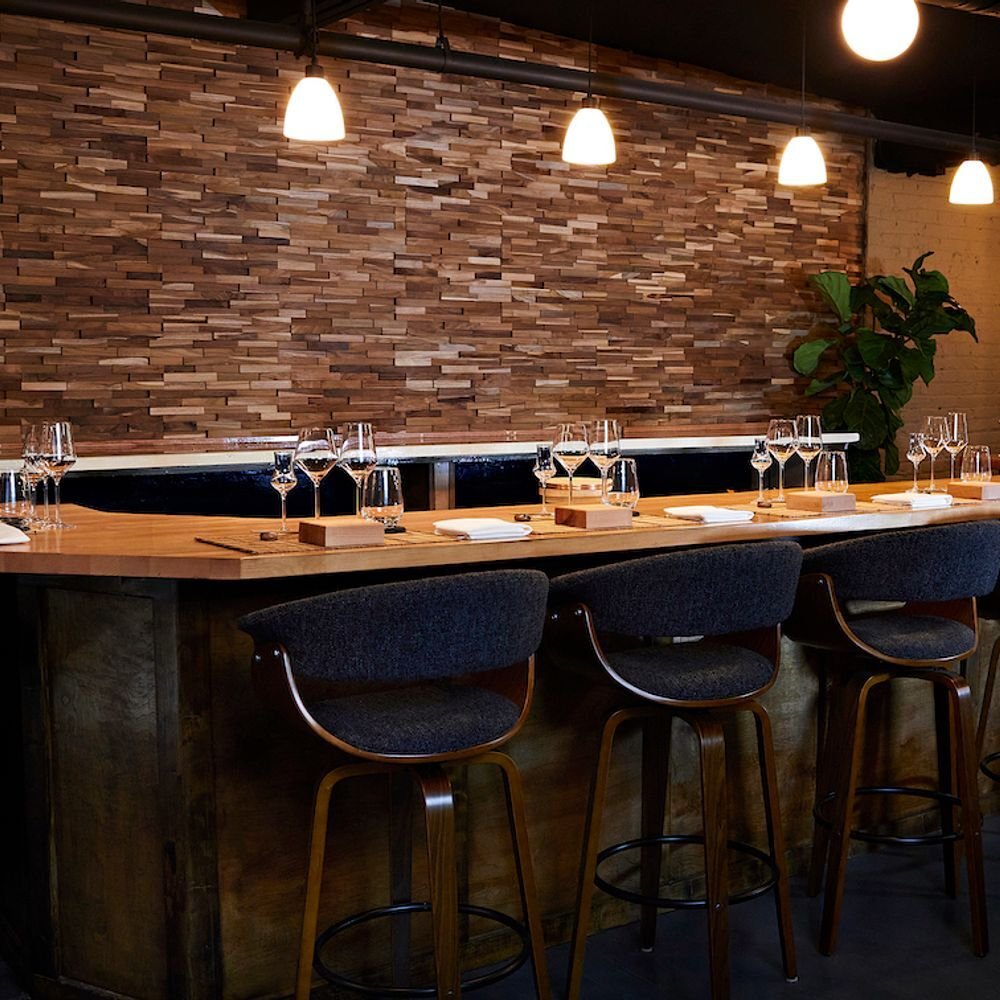
Above the Noise on 14th Street
The approach matters at Raw Omakase. You pass the foot traffic of 14th Street NW, move through the entrance of Takara 14, and climb to the third floor before finding the counter. That physical separation from Logan Circle's familiar restaurant row is not incidental. It sets the register for what follows: fewer than ten seats, two seatings per night, and a format that asks for your full attention from the first course to the last.
Washington's omakase scene has matured considerably over the past decade. What was once a format concentrated in New York and San Francisco — think Atomix in New York City or the precision-driven counters that grew up around the kaiseki tradition — has found serious practitioners in DC. The small-counter omakase now positions itself in the same premium tier as destination tasting-menu restaurants. Where The Inn at Little Washington defines one end of the capital's high-end dining spectrum through classical American ambition, Raw Omakase occupies a different niche: Japanese counter discipline applied with evident technical care and seasonal awareness.
The Sequence at the Counter
The format at Raw Omakase follows the logic that governs premium omakase counters in most major cities: the chef controls the arc, the guest follows, and seasonal availability drives the menu rather than a fixed card. What distinguishes this counter is how it opens. A pan-fried tomato placed over onion mayo and finished with salmon roe arrives early in the progression, and it does something that good omakase openers should do: it surprises through contrast and combination without showing off. The acidity of the tomato, the richness of the mayo, and the salinity of the roe work together at a level that signals attentive cooking from the outset.
The nigiri progression is where the counter demonstrates its range. Kinmedai receives a brief sear, which lifts the fat in the fish and introduces warmth to what can otherwise read as a cool, delicate bite. Hokkaido scallop arrives with yuzu and flaky salt, a combination that keeps the scallop's natural sweetness intact while adding brightness. Salmon belly is torched, giving the fatty cut a textural shift that separates it from its raw counterpart. These are not arbitrary variations. Each preparation choice responds to the specific protein and what that protein needs to read clearly on the palate.
Meal closes with honeydew sorbet finished with yuzu , a pairing that extends the citrus register introduced mid-progression and brings the temperature of the experience down cleanly. It is an unhurried, considered conclusion rather than a theatrical flourish.
Sake as a Parallel Track
Premium omakase counters increasingly treat their sake lists with the same seriousness applied to European wine lists at destination dining rooms. The list at Raw Omakase leans into aged sake, a category that remains relatively unfamiliar to most diners but rewards those willing to explore it. Aged sake develops complexity over time in ways that parallel certain aged white wines: oxidative notes, deepened umami, and a texture that changes how it sits alongside fatty fish or rich preparations. For a counter of this size and format, a list that prioritizes aged sake over crowd-pleasing standards is a deliberate curatorial choice, and one that aligns Raw Omakase with the more serious end of its category.
For context on how Washington approaches drinks programs more broadly, our full Washington bars guide maps the capital's evolving cocktail and beverage scene.
Logan Circle and the Counter Format
14th Street NW has accumulated enough restaurants over the past fifteen years that it no longer needs individual additions to validate it as a dining destination. What it does need , and what formats like Raw Omakase provide , is depth at the premium end. The street is well-served by accessible, mid-range dining, but small, seat-limited counters operating at the level of care that omakase demands are a different proposition entirely.
Washington's dining scene has found its footing across a wide range of cuisines and formats. Elmina and Karravaan represent the capital's confidence in non-European culinary traditions, while PhoXotic and Gerard's Place occupy different points on the range from casual to classical. Raw Omakase sits apart from all of these , not better or worse, but operating according to different rules of engagement. The counter format, the fixed progression, the limited seating, and the seasonal driver together place it in a peer set that includes counters in cities better known for omakase than DC.
For a fuller picture of where this counter sits within the city's premium dining options, our full Washington restaurants guide covers the range from neighbourhood staples to high-format experiences. For those building a longer trip around the capital, our full Washington hotels guide, our full Washington wineries guide, and our full Washington experiences guide map the wider picture.
Comparative Context: What This Counter Sits Beside
At the national level, small-counter omakase formats have produced some of the most discussed dining experiences in American cities. Lazy Bear in San Francisco and Alinea in Chicago apply comparable counter-and-progression discipline to non-Japanese formats. The French Laundry in Napa and Single Thread Farm in Healdsburg represent the tasting-menu tradition at its most resource-intensive. The seafood precision of Le Bernardin in New York City and the Korean-American counter craft of Atomix share the same premium tier. Raw Omakase does not yet carry the name recognition of any of these, but it operates within the same structural logic: limited capacity, chef-driven progression, and a format that invests the dining experience with concentration. Internationally, that same logic is legible at counters like 8 1/2 Otto e Mezzo Bombana in Hong Kong and celebrated American establishments like Emeril's in New Orleans, however different their cuisines.
Planning Your Visit
Raw Omakase is located on the third floor of 1326 14th St NW, Washington, DC 20005, above Takara 14. The counter seats fewer than ten guests, with two seatings offered each evening. The limited capacity means demand outpaces availability quickly, and booking well ahead is the practical approach. Given the format , fixed progression, seated at arrival, no à la carte option , arriving on time is less courtesy than structural necessity. The aged sake list is worth treating as a pairing component rather than an afterthought; ask what the kitchen is pouring alongside the current progression.
Frequently Asked Questions
Nearby-ish Comparables
A compact peer snapshot based on similar venues we track.
| Venue | Cuisine | Price | Notes |
|---|---|---|---|
| Raw Omakase | This venue | ||
| The Inn at Little Washington | New American | New American | |
| Elmina | |||
| Karravaan | |||
| PhoXotic | |||
| Providencia |
Need a table?
Our members enjoy priority alerts and concierge-led booking support for the world's most difficult tables.
Get Exclusive Access